Custom Walk in Sarajevo, Bosnia-Herzegovina by amystillwellcox_f5b88e created on 2026-05-05
Guide Location: Bosnia-Herzegovina » Sarajevo
Guide Type: Custom Walk
# of Sights: 16
Tour Duration: 3 Hour(s)
Travel Distance: 5.8 Km or 3.6 Miles
Share Key: YG3PV
Guide Type: Custom Walk
# of Sights: 16
Tour Duration: 3 Hour(s)
Travel Distance: 5.8 Km or 3.6 Miles
Share Key: YG3PV
How It Works
Please retrieve this walk in the GPSmyCity app. Once done, the app will guide you from one tour stop to the next as if you had a personal tour guide. If you created the walk on this website or come to the page via a link, please follow the instructions below to retrieve the walk in the app.
Retrieve This Walk in App
Step 1. Download the app "GPSmyCity: Walks in 1K+ Cities" on Apple App Store or Google Play Store.



Step 2. In the GPSmyCity app, download(or launch) the guide "Sarajevo Map and Walking Tours".
Step 3. Tap the menu button located at upper right corner of the "Walks" screen and select "Retrieve custom walk". Enter the share key: YG3PV
1) Sarajevo City Hall (must see)
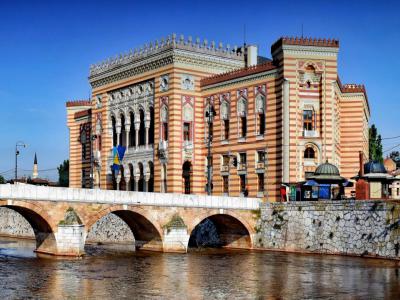
Sarajevo City Hall, known as Vijecnica, is a symbol of Sarajevo and one of the most beautiful monuments from the Austro-Hungarian period. It is the seat and headquarters of the Mayor of Sarajevo and the Sarajevo City Council. The building has been used for various municipal purposes since its construction, including as a City Court and Parliament House until 1949, when it became the National and University Library of Bosnia and Herzegovina, through the late 20th century.
Construction of the City Hall began in 1891 and was completed in 1896. It was first designed by Czech architect Karel Parik. After he was removed from the job by Baron Beni Kallay, the Austrian-Hungarian architect Alexander Wittek took over. Wittek died before the construction could be completed, so Ciril Ivekovic, a Croatian architect, finished the project. The building was inspired by Spanish and Northern Africa Islamic art.
The City Hall was destroyed in 1992 during the Siege of Sarajevo. About 700 manuscripts, including unique publications, were lost. Reconstruction of the building began in 1996 and was completed in 2014. Since its reopening, the space has been used as an exhibition hall, a concert venue, and the National Library. It is now considered a National Monument of Bosnia and Herzegovina.
Construction of the City Hall began in 1891 and was completed in 1896. It was first designed by Czech architect Karel Parik. After he was removed from the job by Baron Beni Kallay, the Austrian-Hungarian architect Alexander Wittek took over. Wittek died before the construction could be completed, so Ciril Ivekovic, a Croatian architect, finished the project. The building was inspired by Spanish and Northern Africa Islamic art.
The City Hall was destroyed in 1992 during the Siege of Sarajevo. About 700 manuscripts, including unique publications, were lost. Reconstruction of the building began in 1996 and was completed in 2014. Since its reopening, the space has been used as an exhibition hall, a concert venue, and the National Library. It is now considered a National Monument of Bosnia and Herzegovina.
2) Baščaršija (Old Bazaar) and Sebilj Fountain (must see)
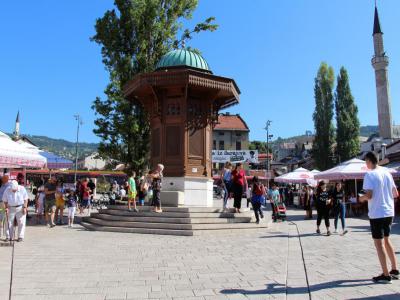
The Old Bazaar (Bascarsija) is the historical and cultural center of Sarajevo. It was built by Isa-Bey Ishakovic, the founder of Sarajevo, at the time the city was founded in the 15th century.
The first construction of the Old Bazaar was in 1462. An inn and several shops were built in the area. Mosques were also added, including the Gazi Husrev-beg Mosque, which was constructed in 1530. In addition to the Mosques, the Old Orthodox Church was established around 1539, and the Old Synagogue was built in 1587.
There are many important, historical buildings and structures in and around the Old Bazaar. Among these are the Gazi Husrev-beg Mosque and the Sebilj Fountain.
Sebilj Fountain is a symbol of Sarajevo. The Ottoman-style wooden fountain built by Mehmed Pasha Kukavica in 1753, was relocated by Austrian architect Alexander Wittek in 1891. Legend states that anyone who drinks from the Sebilj Fountain will return to Sarajevo.
The fountain is so famous that it has inspired numerous replicas around the world. There are copies of the Sebilj Fountain in Belgrade, Serbia; Saint Louis, Missouri; Bursa, Turkey; and Rozaje, Montenegro.
The first construction of the Old Bazaar was in 1462. An inn and several shops were built in the area. Mosques were also added, including the Gazi Husrev-beg Mosque, which was constructed in 1530. In addition to the Mosques, the Old Orthodox Church was established around 1539, and the Old Synagogue was built in 1587.
There are many important, historical buildings and structures in and around the Old Bazaar. Among these are the Gazi Husrev-beg Mosque and the Sebilj Fountain.
Sebilj Fountain is a symbol of Sarajevo. The Ottoman-style wooden fountain built by Mehmed Pasha Kukavica in 1753, was relocated by Austrian architect Alexander Wittek in 1891. Legend states that anyone who drinks from the Sebilj Fountain will return to Sarajevo.
The fountain is so famous that it has inspired numerous replicas around the world. There are copies of the Sebilj Fountain in Belgrade, Serbia; Saint Louis, Missouri; Bursa, Turkey; and Rozaje, Montenegro.
3) Sarači Street
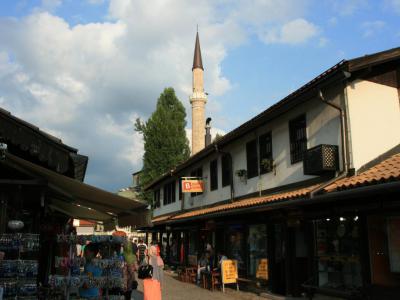
Saraci Street, formerly known as Petar II Karadordevic Street, is one of the main pedestrian streets in Sarajevo. The street runs east to west from Bascarsija (Old Bazaar) to Ferhadija Street, respectively.
The pedestrian street is known for its shops that sell traditional handicrafts. Visitors can shop for jewelry, candy, books, accessories, and perfumes. They can even stop at a gallery to appreciate local art.
There are numerous places for tourists to stop to have coffee, drinks, and Bosnian baked goods. Visitors can try falafel or kebab at an indoor restaurant or at one of the open-air tables.
Saraci is also known for its historic buildings. Some of these are the Gazi Husrev-beg Mosque and Museum; and the Morica Han.
The street gains its name from the Turkish word "sarach," which refers to saddlemakers. Having existed since 1462, it was one of the first-named streets in the city. Sarači Street was declared a National Monument of Bosnia and Herzegovina in 2014.
The pedestrian street is known for its shops that sell traditional handicrafts. Visitors can shop for jewelry, candy, books, accessories, and perfumes. They can even stop at a gallery to appreciate local art.
There are numerous places for tourists to stop to have coffee, drinks, and Bosnian baked goods. Visitors can try falafel or kebab at an indoor restaurant or at one of the open-air tables.
Saraci is also known for its historic buildings. Some of these are the Gazi Husrev-beg Mosque and Museum; and the Morica Han.
The street gains its name from the Turkish word "sarach," which refers to saddlemakers. Having existed since 1462, it was one of the first-named streets in the city. Sarači Street was declared a National Monument of Bosnia and Herzegovina in 2014.
4) Gazi Husrev-beg Mosque (must see)
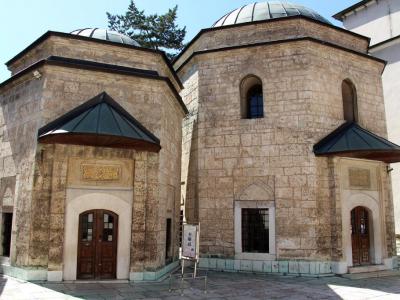
Gazi Husrev-beg Mosque is a Sunni Islam mosque in the historic center of Sarajevo. This 16th-century mosque was designed by architect Acem Esir Ali using Early Period, Classical Ottoman architecture. Construction was completed in 1530. Along with the mosque, the plans included Islamic primary and secondary schools, a public bath, and a marketplace.
The mosque was retrofitted with electricity and indoor lighting in 1898 under the Austro-Hungarian Empire. It was the first mosque in the world to have these modern conveniences.
The mosque was targeted by Serbians during the Siege of Sarajevo. It suffered major destruction, but reconstruction efforts began almost immediately at the end of the siege. The new interior was designed by contemporary Bosnian calligrapher Hazim Numanagic.
Gazi Husrev-beg Mosque is considered the largest historical mosque in the country. It is also one of the city's most popular tourist attractions. Visitors are welcome to tour the mosque and its museum daily from 9 AM to 7 PM.
The mosque was retrofitted with electricity and indoor lighting in 1898 under the Austro-Hungarian Empire. It was the first mosque in the world to have these modern conveniences.
The mosque was targeted by Serbians during the Siege of Sarajevo. It suffered major destruction, but reconstruction efforts began almost immediately at the end of the siege. The new interior was designed by contemporary Bosnian calligrapher Hazim Numanagic.
Gazi Husrev-beg Mosque is considered the largest historical mosque in the country. It is also one of the city's most popular tourist attractions. Visitors are welcome to tour the mosque and its museum daily from 9 AM to 7 PM.
5) Ferhadija Street
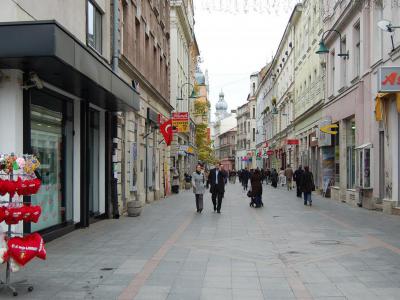
Ferhadija Street is one of the primary pedestrian streets in Sarajevo. It runs east to west from Saraci Street to Marshal Tito Street. It is known as the home to several important buildings and structures, making it a favorite street for tourists.
Some of the significant places on Ferhadija Street are Sarajevo Market hall, Sacred Heart Cathedral, the Ferhadija Mosque, and multiple foreign embassies. Ferhadija Street is also home to the Eternal Flame, a memorial to military and civilian casualties in World War II.
The street provides easy access to shopping and dining establishments. Outdoor art proliferates the street, especially in the form of graffiti. Visitors can find street vendors selling souvenirs from carts outside, featuring the most popular tourist locations. Ferhadija Street also offers easy access to the Museum of Crimes Against Humanity and Genocide.
Ferhadija Street was named after the Ferhadija Mosque, built by Ferhad-bey Vukovic-Desisalic, governor during Ottoman rule in the 16th century. It was renamed twice. Once from 1928 to 1941 after King Peter II Karadjordjevic and again from 1945 to 1993 after Yugoslavian hero Vaso Miskin Crni. Since 1993, the old name Ferhadija has been restored.
Some of the significant places on Ferhadija Street are Sarajevo Market hall, Sacred Heart Cathedral, the Ferhadija Mosque, and multiple foreign embassies. Ferhadija Street is also home to the Eternal Flame, a memorial to military and civilian casualties in World War II.
The street provides easy access to shopping and dining establishments. Outdoor art proliferates the street, especially in the form of graffiti. Visitors can find street vendors selling souvenirs from carts outside, featuring the most popular tourist locations. Ferhadija Street also offers easy access to the Museum of Crimes Against Humanity and Genocide.
Ferhadija Street was named after the Ferhadija Mosque, built by Ferhad-bey Vukovic-Desisalic, governor during Ottoman rule in the 16th century. It was renamed twice. Once from 1928 to 1941 after King Peter II Karadjordjevic and again from 1945 to 1993 after Yugoslavian hero Vaso Miskin Crni. Since 1993, the old name Ferhadija has been restored.
6) Gallery 11/07/95 (must see)
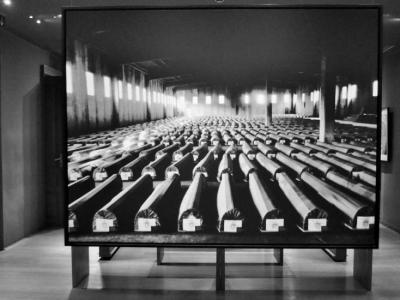
Gallery 11/07/95 is an art gallery that honors the 8,372 people killed in the Srebrenica genocide. The memorial art gallery was established in 2012 by photographer Tarik Samarah and the Governments of Turkey and Sarajevo Canton.
The goal of Gallery 11/07/95 is to decry the horrors of wars and violence while also reminding the world of the Srebrenica genocide. Srebrenica, the small mountain town in the eastern part of Republika Srpska, an entity of Bosnia and Herzegovina, was declared under the United Nations' protection. Approximately 40,000 Muslim refugees have been placed in Srebrenica, during the Bosnian War.
Though Srebrenica was under protection, it was still targeted by the Army of Republika Srpska. A military operation called Krivaja 95 resulted in the murder of over 8,000 Bosnian Muslim men, women, and children. Gallery 11/07/95 seeks to give voice to those whose life were lost.
There are approximately 10,000 items in the Gallery 11/07/95 collection. The permanent exhibits feature archival material from Srebrenica. Materials include images, maps, videos, and audio from the genocide, which occurred in July 1995.
Portraits of victims are part of the permanent exhibit. There are more than 600 personal photos collected of those who were killed. The Wall of Death displays the names of all those who have been identified. There is also an interactive area called "Mapping Genocide" and a memorial film directed by documentarian Leslie Woodhead.
The gallery's temporary exhibits feature works from artists, photographers, and photojournalists. Some of the artists who have had work displayed at Gallery 11/07/95 include Narciso Contreras, Ron Haviv, Luc Delahaye, Manuel Rivera-Ortiz, and Michelangelo Pistoletto. Some of these temporary exhibits have featured postcards from Sarajevo, anti-Masonic posters, war journals, and photographs from the Siege of Sarajevo.
The goal of Gallery 11/07/95 is to decry the horrors of wars and violence while also reminding the world of the Srebrenica genocide. Srebrenica, the small mountain town in the eastern part of Republika Srpska, an entity of Bosnia and Herzegovina, was declared under the United Nations' protection. Approximately 40,000 Muslim refugees have been placed in Srebrenica, during the Bosnian War.
Though Srebrenica was under protection, it was still targeted by the Army of Republika Srpska. A military operation called Krivaja 95 resulted in the murder of over 8,000 Bosnian Muslim men, women, and children. Gallery 11/07/95 seeks to give voice to those whose life were lost.
There are approximately 10,000 items in the Gallery 11/07/95 collection. The permanent exhibits feature archival material from Srebrenica. Materials include images, maps, videos, and audio from the genocide, which occurred in July 1995.
Portraits of victims are part of the permanent exhibit. There are more than 600 personal photos collected of those who were killed. The Wall of Death displays the names of all those who have been identified. There is also an interactive area called "Mapping Genocide" and a memorial film directed by documentarian Leslie Woodhead.
The gallery's temporary exhibits feature works from artists, photographers, and photojournalists. Some of the artists who have had work displayed at Gallery 11/07/95 include Narciso Contreras, Ron Haviv, Luc Delahaye, Manuel Rivera-Ortiz, and Michelangelo Pistoletto. Some of these temporary exhibits have featured postcards from Sarajevo, anti-Masonic posters, war journals, and photographs from the Siege of Sarajevo.
7) Cathedral of Jesus' Heart
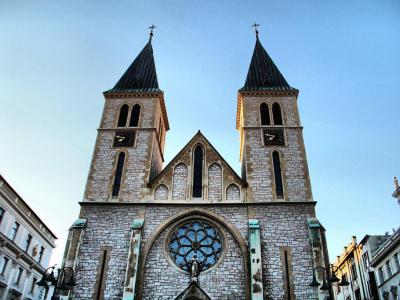
The Cathedral of Jesus' Heart is a Roman Catholic Cathedral in the historic center of Sarajevo. The 19th-century building goes by many names. Some refer to it as the Sacred Heart Cathedral, Sarajevo Cathedral, or the Cathedral of Jesus' Sacred Heart. It is the archdiocese of Vrhbosna, a small region in today's central Bosnia and Herzegovina.
The Cathedral was constructed between 1884 and 1887 and was consecrated in 1889. Architects Josip Vancas and Baron Karl Schwarz designed the Cathedral of Jesus' Heart in the Neo-Gothic architectural style with Romanesque Revival influences. It was modeled after Notre Dame in Dijon, France.
The religious edifice, which is the largest in Bosnia and Herzegovina, has two bell spires with six bells. On the main building, between the spires, is a rosette and a statue of the Sacred Heart. Inside, the Cathedral has a marble altar designed by Josip Vancas and side altars dedicated to the Immaculate Conception and the apostles of the Slavs.
The Siege of Sarajevo caused some damage to the structure. Unlike many of the other buildings in the city, the Cathedral was not destroyed. It was repaired and continued to host services.
The Cathedral was constructed between 1884 and 1887 and was consecrated in 1889. Architects Josip Vancas and Baron Karl Schwarz designed the Cathedral of Jesus' Heart in the Neo-Gothic architectural style with Romanesque Revival influences. It was modeled after Notre Dame in Dijon, France.
The religious edifice, which is the largest in Bosnia and Herzegovina, has two bell spires with six bells. On the main building, between the spires, is a rosette and a statue of the Sacred Heart. Inside, the Cathedral has a marble altar designed by Josip Vancas and side altars dedicated to the Immaculate Conception and the apostles of the Slavs.
The Siege of Sarajevo caused some damage to the structure. Unlike many of the other buildings in the city, the Cathedral was not destroyed. It was repaired and continued to host services.
8) Eternal Flame
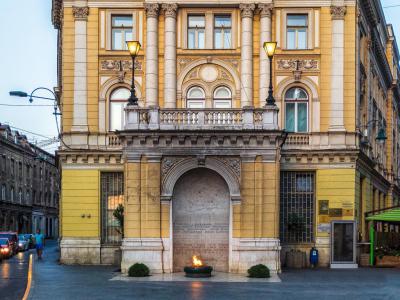
The Eternal Flame is a memorial to military and civilian casualties of World War II. It is located in the historic center of Sarajevo at the intersection of Ferhadija Street and Marshal Tito Street.
The memorial was designed by architect Juraj Neidhardt. It was dedicated in 1946 to the anniversary of the liberation of Sarajevo from Nazi Germany.
The memorial appears as a gate with an arched doorway. In front of the memorial is an eternal flame. Inside, a cemented plaque is inscribed in Bosnian with the following:
"With courage and the jointly spilled blood of the fighters of the Bosnian-Herzegovinian, Croatian, Montenegrin, and Serbian brigades of the glorious Yugoslav Army; with the joint efforts and sacrifices of Sarajevan patriots Serbs, Muslims and Croats on 6 April 1945 Sarajevo, the capital city of the People's Republic of Bosnia and Herzegovina was liberated. Eternal glory and gratitude to the fallen heroes for the liberation of Sarajevo and our homeland on the first anniversary of its liberation - a grateful Sarajevo."
The memorial was designed by architect Juraj Neidhardt. It was dedicated in 1946 to the anniversary of the liberation of Sarajevo from Nazi Germany.
The memorial appears as a gate with an arched doorway. In front of the memorial is an eternal flame. Inside, a cemented plaque is inscribed in Bosnian with the following:
"With courage and the jointly spilled blood of the fighters of the Bosnian-Herzegovinian, Croatian, Montenegrin, and Serbian brigades of the glorious Yugoslav Army; with the joint efforts and sacrifices of Sarajevan patriots Serbs, Muslims and Croats on 6 April 1945 Sarajevo, the capital city of the People's Republic of Bosnia and Herzegovina was liberated. Eternal glory and gratitude to the fallen heroes for the liberation of Sarajevo and our homeland on the first anniversary of its liberation - a grateful Sarajevo."
9) Central Post Office
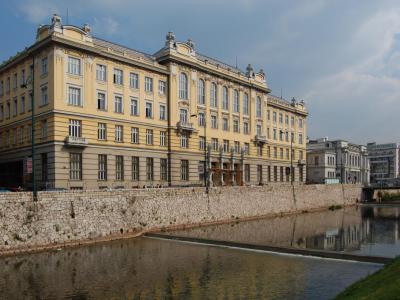
The Central Post Office was the primary postal service building in Bosnia and Herzegovina. It was designed by architect Josip Vancas in 1911. Built in the Neoclassical architectural style, it was based on Postsparkasse, the Viennese Postal Savings Office. The Central Post Office officially opened in 1913.
The building was greatly damaged by the Yugoslav National army in 1992. Like many buildings in Sarajevo, the Central Post Office was engulfed in flames. It remained in ruins for many years but was restored in 2001. The interior glass ceiling, chandeliers, and brass counters were all replaced or refurbished to mirror what it looked like when it was first built nearly 100 years earlier.
While the post office was in ruins, it served as a reminder of the war. It was even used as the backdrop for a performance of Moliere's play "Tartuffe" in 1997. Today, the Central Post Office once again functions as a government-run postal center.
The building was greatly damaged by the Yugoslav National army in 1992. Like many buildings in Sarajevo, the Central Post Office was engulfed in flames. It remained in ruins for many years but was restored in 2001. The interior glass ceiling, chandeliers, and brass counters were all replaced or refurbished to mirror what it looked like when it was first built nearly 100 years earlier.
While the post office was in ruins, it served as a reminder of the war. It was even used as the backdrop for a performance of Moliere's play "Tartuffe" in 1997. Today, the Central Post Office once again functions as a government-run postal center.
10) Sarajevo Assassination Memorial Plaque
The Assassination Memorial Plaque in Sarajevo marks one of the most significant turning points in modern history. On June 28, 1914, Archduke Franz Ferdinand of Austria and his wife, Sophie, Duchess of Hohenberg, were shot and killed here by Gavrilo Princip, a young Bosnian Serb nationalist. Princip was linked to revolutionary groups seeking independence from Austro-Hungarian rule, and his act was intended as a strike against imperial authority.
The assassination reverberated far beyond the Balkans. Within weeks, Austria-Hungary declared war on Serbia, igniting a chain reaction of alliances and hostilities that escalated into World War I. What began as a local act of political violence in Sarajevo soon engulfed Europe and much of the world in unprecedented conflict, making this site a key reference point in the narrative of the 20th century.
The plaque itself has a layered history. First installed in 1915 by the Austro-Hungarian authorities, it was later removed after World War I when Sarajevo became part of the Kingdom of Yugoslavia. During the communist period, it was reinstated and has remained in place since then. Today, visitors can find it mounted on the wall at the exact spot where Princip fired the fatal shots.
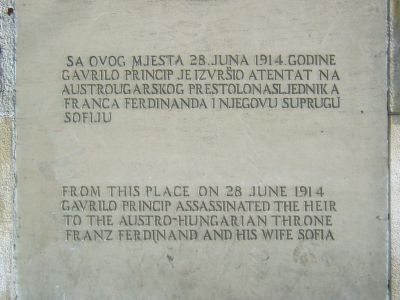
Simple in design, the rectangular stone tablet bears an inscription in both Serbian and English: “FROM THIS PLACE ON JUNE 28 1914 GAVRILO PRINCIP ASSASSINATED THE HEIR TO THE AUSTRO-HUNGARIAN THRONE FRANZ FERDINAND AND HIS WIFE SOPHIA.” More than a local landmark, it stands as a sober reminder of how a single moment in Sarajevo altered the course of world history.
The assassination reverberated far beyond the Balkans. Within weeks, Austria-Hungary declared war on Serbia, igniting a chain reaction of alliances and hostilities that escalated into World War I. What began as a local act of political violence in Sarajevo soon engulfed Europe and much of the world in unprecedented conflict, making this site a key reference point in the narrative of the 20th century.
The plaque itself has a layered history. First installed in 1915 by the Austro-Hungarian authorities, it was later removed after World War I when Sarajevo became part of the Kingdom of Yugoslavia. During the communist period, it was reinstated and has remained in place since then. Today, visitors can find it mounted on the wall at the exact spot where Princip fired the fatal shots.
Simple in design, the rectangular stone tablet bears an inscription in both Serbian and English: “FROM THIS PLACE ON JUNE 28 1914 GAVRILO PRINCIP ASSASSINATED THE HEIR TO THE AUSTRO-HUNGARIAN THRONE FRANZ FERDINAND AND HIS WIFE SOPHIA.” More than a local landmark, it stands as a sober reminder of how a single moment in Sarajevo altered the course of world history.
11) Latin Bridge (must see)
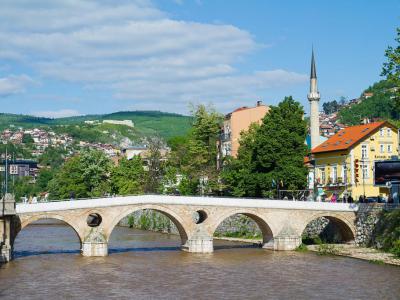
Latin Bridge is a stone bridge that spans the river Miljacka in Sarajevo. The bridge, made from gypsum, is closed to road traffic. Only pedestrians and cyclists may use Latin Bridge.
Latin Bridge connects Obala Kulina Bana Street to the north and Obala Isa-bega Ishakovica Street to the south. North of the Bridge, just beyond the Archduke's memorial plaque, lies the Sarajevo Museum. Southwest of the Bridge is Park Mejdan, which houses Archaeological Museum and Music Pavilion.
There are no historical records that show the exact date of construction of the Latin Bridge though it is known to be one of the oldest bridges in the city. The earliest known reference to it was in 1541, detailing a bridge built by the leather worker Hussein, son of Sirmerd. It is thought that the original bridge was made of wood, but was later replaced with a stone structure. In 1791, the bridge was damaged by a flood and was rebuilt in 1799.
The bridge is referred to as the Latin bridge because it connected the rest of the city to the Catholic quarter, which was called Latin (Latinluk). From 1918 to 1993, the bridge was renamed Princip's Bridge after Gavrilo Princip, the assassin that killed Archduke Franz Ferdinand and his wife, Sofie.
The Latin Bridge is notable for that infamous moment in history. Archduke Franz Ferdinand and his wife were assassinated at the northern end of the bridge in 1914. This event is widely known as the catalyst of a conflict that would lead to World War I. There is now a plaque that shows the location of the assassination.
Latin Bridge connects Obala Kulina Bana Street to the north and Obala Isa-bega Ishakovica Street to the south. North of the Bridge, just beyond the Archduke's memorial plaque, lies the Sarajevo Museum. Southwest of the Bridge is Park Mejdan, which houses Archaeological Museum and Music Pavilion.
There are no historical records that show the exact date of construction of the Latin Bridge though it is known to be one of the oldest bridges in the city. The earliest known reference to it was in 1541, detailing a bridge built by the leather worker Hussein, son of Sirmerd. It is thought that the original bridge was made of wood, but was later replaced with a stone structure. In 1791, the bridge was damaged by a flood and was rebuilt in 1799.
The bridge is referred to as the Latin bridge because it connected the rest of the city to the Catholic quarter, which was called Latin (Latinluk). From 1918 to 1993, the bridge was renamed Princip's Bridge after Gavrilo Princip, the assassin that killed Archduke Franz Ferdinand and his wife, Sofie.
The Latin Bridge is notable for that infamous moment in history. Archduke Franz Ferdinand and his wife were assassinated at the northern end of the bridge in 1914. This event is widely known as the catalyst of a conflict that would lead to World War I. There is now a plaque that shows the location of the assassination.
12) Sarajevska Pivara (Sarajevo Brewery)
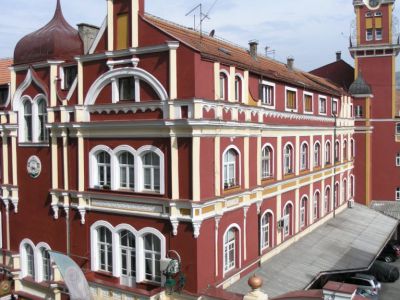
Sarajevo Brewery (Sarajevska Pivara) is a brewery that was founded in Sarajevo in 1864. It was known as the first local industry in the city. Soon after it was established, the Sarajevo Brewery became one of the top producers of beers and lagers in Bosnia.
The brewery produces beers, lagers, soft drinks, and water. The brewery distills the brands Sarajevsko Lager, Sarajevsko Premium, 0% Beer, and Lejla Water. These products are light and dark lagers as well as alcohol-free beer.
It is also licensed to produce Pepsi and Oettinger products. Sodas produced at the facility vary from the Sweet Ace, made with carrot and peach juice, to carbonated water.
Those visiting the brewery will enjoy a museum that covers the company's history from its establishment during the Ottoman Empire through the Austro-Hungarian Empire, Yugoslavian rule, and the war in Bosnia.
The museum is open from Monday through Saturday from noon to 7 PM. Both the museum and the brewery are closed on Sundays.
The brewery produces beers, lagers, soft drinks, and water. The brewery distills the brands Sarajevsko Lager, Sarajevsko Premium, 0% Beer, and Lejla Water. These products are light and dark lagers as well as alcohol-free beer.
It is also licensed to produce Pepsi and Oettinger products. Sodas produced at the facility vary from the Sweet Ace, made with carrot and peach juice, to carbonated water.
Those visiting the brewery will enjoy a museum that covers the company's history from its establishment during the Ottoman Empire through the Austro-Hungarian Empire, Yugoslavian rule, and the war in Bosnia.
The museum is open from Monday through Saturday from noon to 7 PM. Both the museum and the brewery are closed on Sundays.
13) Memorial to the Murdered Children of Besieged Sarajevo
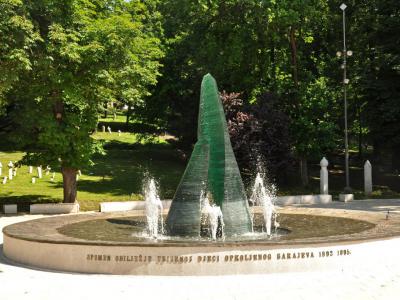
The Memorial to the Murdered Children of Besieged Sarajevo is a monument that honors the memory of the children killed during the Siege of Sarajevo. The siege took place from 1992 through 1995. During that period, 1,621 children were killed.
The Memorial is located in Veliki Park (Great Park), one of the central places of Sarajevo. It was erected in 2009, on the initiative of the “Association of the Parents of the Murdered Children in the Besieged Sarajevo 1992–1995.” The monument consists of a glass sculpture placed on a bronze ring. The ring is made from shell casings and ammunition fired in Sarajevo. The glass sculpture features two cylindrical forms leaning toward each other. These represent a mother protecting her child.
The monument includes seven pedestals behind the plateau. They are engraved with the first and last names of each child, the names of their fathers, their birth years, and the year the child was killed. Currently, there are only 521 names etched into the pedestals.
The memorial was designed by Bosnian sculptor Mensud Kecho.
The Memorial is located in Veliki Park (Great Park), one of the central places of Sarajevo. It was erected in 2009, on the initiative of the “Association of the Parents of the Murdered Children in the Besieged Sarajevo 1992–1995.” The monument consists of a glass sculpture placed on a bronze ring. The ring is made from shell casings and ammunition fired in Sarajevo. The glass sculpture features two cylindrical forms leaning toward each other. These represent a mother protecting her child.
The monument includes seven pedestals behind the plateau. They are engraved with the first and last names of each child, the names of their fathers, their birth years, and the year the child was killed. Currently, there are only 521 names etched into the pedestals.
The memorial was designed by Bosnian sculptor Mensud Kecho.
14) Museum of Crimes Against Humanity and Genocide
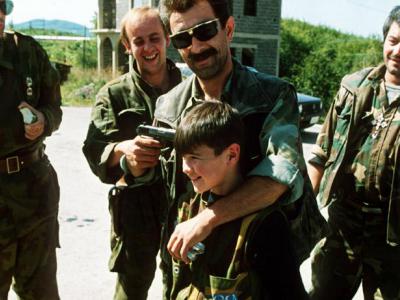
The Museum of Crimes Against Humanity and Genocide is a museum that showcases war crimes committed during the war in Bosnia that lasted from 1992 to 1995. The museum opened in 2016 as an initiative to sustain the memory of all the victims of the war. The founders of the museum themselves are victims who survived the war.
The museum began as a collection of photos, but many artifacts have been added to the museum since it was founded. Some of these artifacts include personal items of the victims, instruments of torture, a mock-up minefield, a reconstructed torture cell, and a replica of a mass grave.
The museum is divided into themes. Some of these include concentration camps in Bosnia and Herzegovina, the mass killings at Srebrenica, torture, and children as victims of war.
Visitors to the museum can see works of art, including the sculpture of a man, made from bread. The sculpture symbolizes those individuals killed while waiting in line for food. Three films provide educational material to museum patrons. They cover sexual violence, the Siege of Sarajevo, and first-hand accounts of war crimes.
The museum began as a collection of photos, but many artifacts have been added to the museum since it was founded. Some of these artifacts include personal items of the victims, instruments of torture, a mock-up minefield, a reconstructed torture cell, and a replica of a mass grave.
The museum is divided into themes. Some of these include concentration camps in Bosnia and Herzegovina, the mass killings at Srebrenica, torture, and children as victims of war.
Visitors to the museum can see works of art, including the sculpture of a man, made from bread. The sculpture symbolizes those individuals killed while waiting in line for food. Three films provide educational material to museum patrons. They cover sexual violence, the Siege of Sarajevo, and first-hand accounts of war crimes.
15) Sarajevo Rose
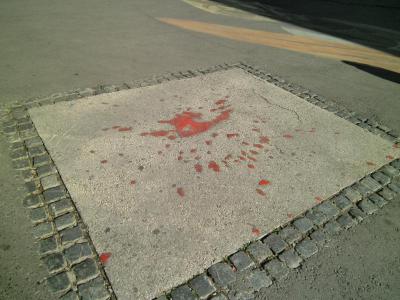
Sarajevo Rose is a memorial dedicated to the Siege of Sarajevo. Though there are about 200 of these roses located throughout the city, the primary rose is located in the walkway at Marsala Tita (Marshal Tito) next to Veliki Park (Great Park). It signifies the location of the first Markale massacre.
The memorials found throughout the city use impressions left behind in the concrete and asphalt by mortar shell explosions. The rounds created unique patterns that resemble floral arrangements. They were filled with red resin. Each marks a location where at least three people were killed.
Some of the memorials are official roses that were marked by the Ministry of Veterans Affairs of Canton Sarajevo. Others were marked by citizens of the city without official permission.
Many of the memorials have been damaged over the years due to regular pedestrian and vehicular wear and tear. Various types of protection have been attempted over the years, but they have proven to be impractical due to the locations of each rose.
The memorials found throughout the city use impressions left behind in the concrete and asphalt by mortar shell explosions. The rounds created unique patterns that resemble floral arrangements. They were filled with red resin. Each marks a location where at least three people were killed.
Some of the memorials are official roses that were marked by the Ministry of Veterans Affairs of Canton Sarajevo. Others were marked by citizens of the city without official permission.
Many of the memorials have been damaged over the years due to regular pedestrian and vehicular wear and tear. Various types of protection have been attempted over the years, but they have proven to be impractical due to the locations of each rose.
16) War Childhood Museum
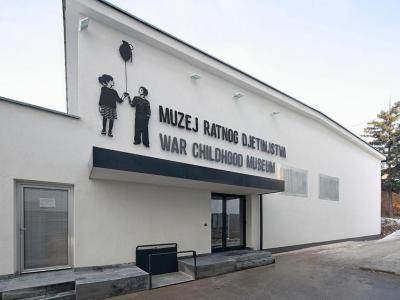
War Childhood Museum is the world's only museum exclusively focused on the experience of childhood affected by war. The museum, founded in 2017 by Jasminko Halilovic, a Bosnian author and editor, shows the history of the war in Bosnia through the eyes of children. It uses personal objects and videos to showcase the accounts of children in war.
Halilovic, a war child himself, started collecting first-hand accounts from other war children in 2010. With over 1,000 personal accounts, Halilovic started seeking artifacts from these former war children. With over 3,000 objects and numerous oral testimonies, the War Childhood Museum opened.
Collections in the museum include diaries, toys, clothing, and photographs. Patrons can also listen to testimonies from war children and read some of the interviews conducted by Halilovic.
The War Childhood Museum was awarded the 2018 Council of Europe Museum Prize as part of the 2018 European Museum of the Year Award.
The museum is open daily from 11 AM to 7 PM. Admission is free for children under five. The museum also offers free admission from 5 PM to 7 PM on the last Thursday of each month.
Halilovic, a war child himself, started collecting first-hand accounts from other war children in 2010. With over 1,000 personal accounts, Halilovic started seeking artifacts from these former war children. With over 3,000 objects and numerous oral testimonies, the War Childhood Museum opened.
Collections in the museum include diaries, toys, clothing, and photographs. Patrons can also listen to testimonies from war children and read some of the interviews conducted by Halilovic.
The War Childhood Museum was awarded the 2018 Council of Europe Museum Prize as part of the 2018 European Museum of the Year Award.
The museum is open daily from 11 AM to 7 PM. Admission is free for children under five. The museum also offers free admission from 5 PM to 7 PM on the last Thursday of each month.
