

Chinatown Walking Tour (Self Guided), Singapore
Chinatown is one of Singapore’s most culturally layered districts, shaped over two centuries by the Chinese community, which today makes up the majority of the local population. Here, history, heritage, and the irresistible smell of good food all try to grab your attention at once.
The story began in 1819, when Stamford Raffles set up Singapore as a trading post and drew up a town plan that neatly sorted ethnic groups into different quarters. The area that evolved into Chinatown soon filled with newcomers from the Fujian and Guangdong provinces of China—men and women chasing opportunity in trade, shipping, and hard labour. They built their own dialect-based enclaves, complete with temples, clan houses, and support networks that helped strangers become neighbours.
By the mid-19th century, Chinatown had grown into a bustling maze of narrow lanes and shophouses, where commerce thrived, and living conditions didn’t always keep up. Prosperous merchants and cramped “coolie houses” existed side by side, and the district gained a reputation for gambling dens and opium stalls that stayed busy long after sunset. Yet this was also a place where traditions were kept alive. Temples such as Thian Hock Keng, completed in 1842, anchored the community, while clan halls, schools, and charitable societies made sure cultural ties stayed strong.
The early 20th century brought more waves of migration and a busier commercial scene, followed by darker years during the Japanese occupation, when air raids and shortages left deep scars. After Singapore’s independence in 1965, sweeping urban renewal reshaped the neighbourhood. Many residents moved to new housing estates, and by the 1980s and '90s, conservation efforts stepped in to protect Chinatown’s historic shophouses and religious landmarks.
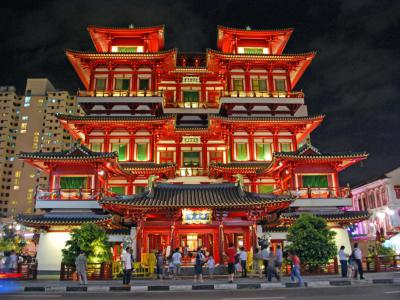
What you see today is a lively blend of past and present. The Buddha Tooth Relic Temple & Museum draws crowds with its sacred relic and ornate architecture. Smith Street—better known as Chinatown Food Street—lays out a menu of classic dishes and street snacks that could tempt even the most disciplined eater. Museums such as the Chinatown Heritage Centre and the Fuk Tak Chi Museum offer glimpses into the struggles and aspirations of early migrants. And just steps away, the Sri Mariamman Temple and Jamae Mosque highlight the area’s long history of cultural coexistence.
In essence, Chinatown is a vivid reminder of how Singapore’s Chinese community helped shape the city—and how their legacy still animates its streets today...
The story began in 1819, when Stamford Raffles set up Singapore as a trading post and drew up a town plan that neatly sorted ethnic groups into different quarters. The area that evolved into Chinatown soon filled with newcomers from the Fujian and Guangdong provinces of China—men and women chasing opportunity in trade, shipping, and hard labour. They built their own dialect-based enclaves, complete with temples, clan houses, and support networks that helped strangers become neighbours.
By the mid-19th century, Chinatown had grown into a bustling maze of narrow lanes and shophouses, where commerce thrived, and living conditions didn’t always keep up. Prosperous merchants and cramped “coolie houses” existed side by side, and the district gained a reputation for gambling dens and opium stalls that stayed busy long after sunset. Yet this was also a place where traditions were kept alive. Temples such as Thian Hock Keng, completed in 1842, anchored the community, while clan halls, schools, and charitable societies made sure cultural ties stayed strong.
The early 20th century brought more waves of migration and a busier commercial scene, followed by darker years during the Japanese occupation, when air raids and shortages left deep scars. After Singapore’s independence in 1965, sweeping urban renewal reshaped the neighbourhood. Many residents moved to new housing estates, and by the 1980s and '90s, conservation efforts stepped in to protect Chinatown’s historic shophouses and religious landmarks.
What you see today is a lively blend of past and present. The Buddha Tooth Relic Temple & Museum draws crowds with its sacred relic and ornate architecture. Smith Street—better known as Chinatown Food Street—lays out a menu of classic dishes and street snacks that could tempt even the most disciplined eater. Museums such as the Chinatown Heritage Centre and the Fuk Tak Chi Museum offer glimpses into the struggles and aspirations of early migrants. And just steps away, the Sri Mariamman Temple and Jamae Mosque highlight the area’s long history of cultural coexistence.
In essence, Chinatown is a vivid reminder of how Singapore’s Chinese community helped shape the city—and how their legacy still animates its streets today...
How it works: Download the app "GPSmyCity: Walks in 1K+ Cities" from Apple App Store or Google Play Store to your mobile phone or tablet. The app turns your mobile device into a personal tour guide and its built-in GPS navigation functions guide you from one tour stop to next. The app works offline, so no data plan is needed when traveling abroad.
Chinatown Walking Tour Map
Guide Name: Chinatown Walking Tour
Guide Location: Singapore » Singapore (See other walking tours in Singapore)
Guide Type: Self-guided Walking Tour (Sightseeing)
# of Attractions: 7
Tour Duration: 1 Hour(s)
Travel Distance: 1.4 Km or 0.9 Miles
Author: vickyc
Sight(s) Featured in This Guide:
Guide Location: Singapore » Singapore (See other walking tours in Singapore)
Guide Type: Self-guided Walking Tour (Sightseeing)
# of Attractions: 7
Tour Duration: 1 Hour(s)
Travel Distance: 1.4 Km or 0.9 Miles
Author: vickyc
Sight(s) Featured in This Guide:
- Buddha Tooth Relic Temple & Museum
- Smith Street (Chinatown Food Street)
- Chinatown Heritage Center
- Sri Mariamman Temple
- Jamae Mosque
- Fuk Tak Chi Museum
- Thian Hock Keng Temple
1) Buddha Tooth Relic Temple & Museum (must see)
Situated right in the heart of Singapore’s Chinatown, this temple isn't shy to announce its presence. The local Chinese community treasures it, and once you see the lavish façade, you’ll understand why. Step inside and the drama continues, with an interior that matches the exterior’s grandeur note for note.
You’ll notice the lights glowing even at midnight because the temple never closes. What does close, however, is the dress code loophole. Shoulders must be covered for women, conservative dress or slacks advised for the lower part, and for men—sorry, no shorts or tank tops allowed. Strangely, shoes are completely fine, and you can take non-flash photos in selected areas, just not in the relic chamber and other sacred spots.
As you walk through, don’t be surprised if you hear a monk chanting into a microphone. It’s all part of the rhythm of daily worship. At the back, you’ll spot rows of Buddha statues linked to the astrological signs. Front and centre in the main hall is Maitreya—the future Buddha—represented by a wooden statue said to be nearly a thousand years old.
One whole floor is packed with statues, including Guan Yin, the Bodhisattva of Compassion, Mercy, and Kindness. Head upstairs and you’ll find life-sized wax figures of temple leaders, both past and present. The level of detail is impressive—down to the wrinkles—and could give some wax museums a confidence crisis. From here, a balcony lets you peek through drapes into the enormous prayer hall below.
But the real treasure sits on the 4th floor: the Buddha Tooth Relic Stupa. This golden chamber reportedly houses a tooth of Gautama Buddha, found in Myanmar in 1980. You can’t get right up to it, but for a closer look, a helpful scale model stands nearby.
Before you step back outside, take a detour to the rooftop orchid garden. Hidden from most visitors, it’s calm, colourful, and home to a giant prayer wheel surrounded by 10,000 small Buddha images. It’s the perfect quiet moment before diving back into the vibrant streets of Chinatown.
You’ll notice the lights glowing even at midnight because the temple never closes. What does close, however, is the dress code loophole. Shoulders must be covered for women, conservative dress or slacks advised for the lower part, and for men—sorry, no shorts or tank tops allowed. Strangely, shoes are completely fine, and you can take non-flash photos in selected areas, just not in the relic chamber and other sacred spots.
As you walk through, don’t be surprised if you hear a monk chanting into a microphone. It’s all part of the rhythm of daily worship. At the back, you’ll spot rows of Buddha statues linked to the astrological signs. Front and centre in the main hall is Maitreya—the future Buddha—represented by a wooden statue said to be nearly a thousand years old.
One whole floor is packed with statues, including Guan Yin, the Bodhisattva of Compassion, Mercy, and Kindness. Head upstairs and you’ll find life-sized wax figures of temple leaders, both past and present. The level of detail is impressive—down to the wrinkles—and could give some wax museums a confidence crisis. From here, a balcony lets you peek through drapes into the enormous prayer hall below.
But the real treasure sits on the 4th floor: the Buddha Tooth Relic Stupa. This golden chamber reportedly houses a tooth of Gautama Buddha, found in Myanmar in 1980. You can’t get right up to it, but for a closer look, a helpful scale model stands nearby.
Before you step back outside, take a detour to the rooftop orchid garden. Hidden from most visitors, it’s calm, colourful, and home to a giant prayer wheel surrounded by 10,000 small Buddha images. It’s the perfect quiet moment before diving back into the vibrant streets of Chinatown.
2) Smith Street (Chinatown Food Street) (must see)
Smith Street in Singapore’s Chinatown may look like a simple food haven today, but its story starts back in the 1840s, when the British were busy drawing straight lines on maps and calling it urban planning. Into this neat little grid came waves of Chinese migrants—people who built trades, set up shops, and basically turned the place into a buzzing, elbow-to-elbow micro-city. The street was eventually named after Sir Cecil Clementi Smith, a colonial governor remembered for calming down secret societies and trying to keep Chinatown from turning into a late-night action movie.
By the late 19th and early 20th centuries, Smith Street was at full volume. Traditional shophouses packed the road, filled with clan associations, herbal pharmacies, workshops, and eateries so small you could order your food without standing up. Outside, hawkers stirred noodles, grilled satay, and ladled desserts from carts that rattled from dawn to midnight. It was lively, it was messy, and it was absolutely essential to Singapore’s early food scene. The air was thick with steam, spices, and the constant soundtrack of people trying to fit daily life into very narrow spaces.
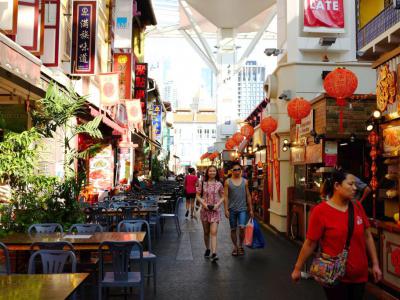
After World War II, the government stepped in with new hygiene rules, and many hawkers were moved into proper centres. Modernisation in the 1970s smoothed some of Chinatown’s edges, and Smith Street went from chaotic hotspot to quiet side street. But the early 2000s flipped the script again. As part of a heritage revival, the street was reborn as “Chinatown Food Street,” a pedestrian-friendly space covered with a sleek glass canopy and lined with stalls serving classics like char kway teow, satay, and chicken rice—basically, a greatest-hits album of Singaporean comfort food.
Today, Smith Street blends the old and the new with charming ease. Historic shophouses frame a mix of restaurants, tea shops, and snack stands offering everything from local sweets to adventurous bites like durian. It’s also the only English-named street in Chinatown, a fun reminder of its colonial roots.
Anyone coming here for souvenirs, supper, or just a slow wander under the canopy lights, will find Smith Street serving up a lively slice of Singapore’s evolving culinary heritage—one steaming plate at a time...
By the late 19th and early 20th centuries, Smith Street was at full volume. Traditional shophouses packed the road, filled with clan associations, herbal pharmacies, workshops, and eateries so small you could order your food without standing up. Outside, hawkers stirred noodles, grilled satay, and ladled desserts from carts that rattled from dawn to midnight. It was lively, it was messy, and it was absolutely essential to Singapore’s early food scene. The air was thick with steam, spices, and the constant soundtrack of people trying to fit daily life into very narrow spaces.
After World War II, the government stepped in with new hygiene rules, and many hawkers were moved into proper centres. Modernisation in the 1970s smoothed some of Chinatown’s edges, and Smith Street went from chaotic hotspot to quiet side street. But the early 2000s flipped the script again. As part of a heritage revival, the street was reborn as “Chinatown Food Street,” a pedestrian-friendly space covered with a sleek glass canopy and lined with stalls serving classics like char kway teow, satay, and chicken rice—basically, a greatest-hits album of Singaporean comfort food.
Today, Smith Street blends the old and the new with charming ease. Historic shophouses frame a mix of restaurants, tea shops, and snack stands offering everything from local sweets to adventurous bites like durian. It’s also the only English-named street in Chinatown, a fun reminder of its colonial roots.
Anyone coming here for souvenirs, supper, or just a slow wander under the canopy lights, will find Smith Street serving up a lively slice of Singapore’s evolving culinary heritage—one steaming plate at a time...
3) Chinatown Heritage Center
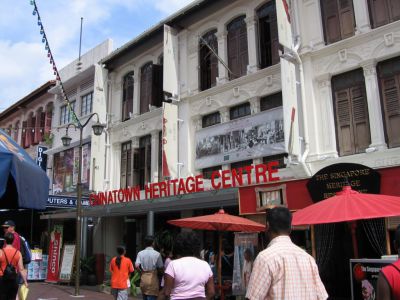
Set inside three lovingly restored shophouses along Pagoda Street, the Chinatown Heritage Centre feels a bit like stepping through a time portal—just with better lighting and air-conditioning. This is where Singapore’s past comes out from behind the museum glass and sits you down for a proper conversation.
The centre dives straight into the world of the Straits Chinese (the descendants of early Chinese immigrants to the British Straits Settlements of Penang, Malacca, and Singapore) who once lived and worked in these very buildings. Imagine running a business, raising a family, and squeezing half your life into a single room—then add a tailor, a shoemaker, a dressmaker, and the resident doctor all plying their trade just a few steps away. The meticulous recreations of bustling workshops and shared kitchens make it clear that life in the 1950s was many things, but spacious definitely wasn’t one of them.
With the audio guide as your narrator, you’ll meet the people who once filled these rooms: the tailor and his apprentices stitching late into the night, families sleeping behind the shopfront, and the tireless coolies (manual labourers) and Samsui (female construction workers) living on the upper floors. Each voice reveals a slice of daily life that’s equal parts demanding, resourceful, and strangely inspiring.
Beyond its exhibits, the Heritage Centre keeps stories alive through hands-on workshops and storytelling sessions that explore how this neighbourhood grew, changed, and kept its spirit intact. And if you’d like to bring a piece of that history home—minus the cramped living conditions, of course—the gift area offers books, postcards, and prints created by local artists.
The centre dives straight into the world of the Straits Chinese (the descendants of early Chinese immigrants to the British Straits Settlements of Penang, Malacca, and Singapore) who once lived and worked in these very buildings. Imagine running a business, raising a family, and squeezing half your life into a single room—then add a tailor, a shoemaker, a dressmaker, and the resident doctor all plying their trade just a few steps away. The meticulous recreations of bustling workshops and shared kitchens make it clear that life in the 1950s was many things, but spacious definitely wasn’t one of them.
With the audio guide as your narrator, you’ll meet the people who once filled these rooms: the tailor and his apprentices stitching late into the night, families sleeping behind the shopfront, and the tireless coolies (manual labourers) and Samsui (female construction workers) living on the upper floors. Each voice reveals a slice of daily life that’s equal parts demanding, resourceful, and strangely inspiring.
Beyond its exhibits, the Heritage Centre keeps stories alive through hands-on workshops and storytelling sessions that explore how this neighbourhood grew, changed, and kept its spirit intact. And if you’d like to bring a piece of that history home—minus the cramped living conditions, of course—the gift area offers books, postcards, and prints created by local artists.
4) Sri Mariamman Temple
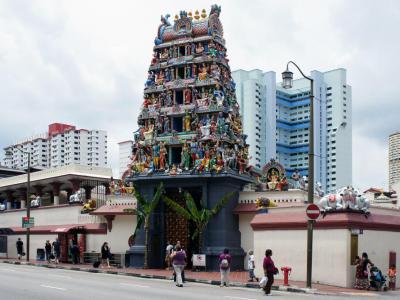
Singapore’s oldest Hindu shrine, the Sri Mariamman Temple, doesn’t exactly try to blend in. Its soaring entrance tower—called a “gopura”—is packed so tightly with brightly painted gods and mythical figures that it feels like they’re all leaning over to greet you at once. Set right in the heart of Chinatown, this temple has long been the spiritual home of Singapore’s Tamil Hindu community.
Step inside and tilt your head up to be rewarded with a parade of colourful friezes. Here you’ll spot the big three manifestations of the supreme being: Brahma, the creator, showing off three of his four heads; Vishnu, the preserver; and Shiva, the destroyer, casually holding one of his sons. The main sanctum straight ahead is dedicated to Mariamman, a goddess known for her healing powers.
Around the walkway, smaller sanctums honour other deities, including Periachi Amman. Her statue is quite dramatic, to say the least: she’s shown holding a queen on her lap after removing the queen’s evil child—a striking image, considering Periachi Amman is the protector of children and the one-month-old babies brought to her for blessings. For something gentler, Sri Aravan—with his dramatic moustache and oversized ears—waits quietly in a sanctum at the back.
On the left of the main sanctum, you’ll notice a simple patch of sand. Once a year, during the Thimithi festival, this humble square turns into a runway of burning coals. Male devotees sprint across it to demonstrate the power of their faith, protected—so they say—by prayer. Crowds line South Bridge Road to watch the ritual, which is as intense as it sounds.
Visit at the right moment, and you’ll catch daily rituals, chants, and offerings that bring the temple to life. It’s a deeply cultural experience, but one that asks a bit in return—and that is respect. Follow the locals, keep your voice down, cover your shoulders, and take off your shoes. A quick tip—bring socks. The temple floor heats up fast under the afternoon sun, and your feet will thank you.
And yes, entry is free, though there’s a small “camera fee” for tourists who want to take photos. Honestly? It’s worth every cent...
Step inside and tilt your head up to be rewarded with a parade of colourful friezes. Here you’ll spot the big three manifestations of the supreme being: Brahma, the creator, showing off three of his four heads; Vishnu, the preserver; and Shiva, the destroyer, casually holding one of his sons. The main sanctum straight ahead is dedicated to Mariamman, a goddess known for her healing powers.
Around the walkway, smaller sanctums honour other deities, including Periachi Amman. Her statue is quite dramatic, to say the least: she’s shown holding a queen on her lap after removing the queen’s evil child—a striking image, considering Periachi Amman is the protector of children and the one-month-old babies brought to her for blessings. For something gentler, Sri Aravan—with his dramatic moustache and oversized ears—waits quietly in a sanctum at the back.
On the left of the main sanctum, you’ll notice a simple patch of sand. Once a year, during the Thimithi festival, this humble square turns into a runway of burning coals. Male devotees sprint across it to demonstrate the power of their faith, protected—so they say—by prayer. Crowds line South Bridge Road to watch the ritual, which is as intense as it sounds.
Visit at the right moment, and you’ll catch daily rituals, chants, and offerings that bring the temple to life. It’s a deeply cultural experience, but one that asks a bit in return—and that is respect. Follow the locals, keep your voice down, cover your shoulders, and take off your shoes. A quick tip—bring socks. The temple floor heats up fast under the afternoon sun, and your feet will thank you.
And yes, entry is free, though there’s a small “camera fee” for tourists who want to take photos. Honestly? It’s worth every cent...
5) Jamae Mosque
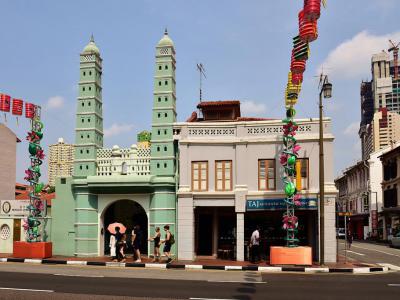
Quietly holding its ground right in the heart of Chinatown, along South Bridge Road, is one of Singapore’s oldest surviving mosques, the Jamae Mosque. It began with the Chulias—Tamil Muslim traders from South India’s Coromandel Coast—who set up shop in early Singapore as money changers and merchants. Around 1826, they built their first mosque on this very spot. A few years later, between 1830 and 1835, it was replaced with the building seen today, which, quite impressively, has barely changed ever since.
Over the years, plans floated around to rebuild it entirely, but none took hold. Apart from a round of repairs in 1996, the mosque has stood almost untouched, a quiet constant amid the district’s constant reinventions. It faces Mecca, as all mosques do, though its overall compound politely follows the angles of the surrounding street grid—an architectural compromise that somehow adds to its charm.
What makes Jamae Mosque especially memorable is its wonderfully eclectic mix of styles. The entrance gate channels unmistakable South Indian character, while the prayer halls and the shrine seem to have taken design cues from the Neo-Classical vocabulary popular in 1830s Singapore. The look will feel familiar to anyone who knows George Drumgoole Coleman, the city’s first trained architect, whose influence seems to linger here. This mix of cultural signatures has made the mosque a favourite subject for photographers for well over a century—its image appears on postcards from the 1800s right up to today.
In recognition of its deep historical roots and architectural importance, the Jamae Mosque was officially declared a National Monument on November 19, 1974. Apart from being a place of worship, it serves as a living reminder of Singapore’s multicultural beginnings, standing calmly at one of the city’s busiest crossroads.
Over the years, plans floated around to rebuild it entirely, but none took hold. Apart from a round of repairs in 1996, the mosque has stood almost untouched, a quiet constant amid the district’s constant reinventions. It faces Mecca, as all mosques do, though its overall compound politely follows the angles of the surrounding street grid—an architectural compromise that somehow adds to its charm.
What makes Jamae Mosque especially memorable is its wonderfully eclectic mix of styles. The entrance gate channels unmistakable South Indian character, while the prayer halls and the shrine seem to have taken design cues from the Neo-Classical vocabulary popular in 1830s Singapore. The look will feel familiar to anyone who knows George Drumgoole Coleman, the city’s first trained architect, whose influence seems to linger here. This mix of cultural signatures has made the mosque a favourite subject for photographers for well over a century—its image appears on postcards from the 1800s right up to today.
In recognition of its deep historical roots and architectural importance, the Jamae Mosque was officially declared a National Monument on November 19, 1974. Apart from being a place of worship, it serves as a living reminder of Singapore’s multicultural beginnings, standing calmly at one of the city’s busiest crossroads.
6) Fuk Tak Chi Museum
If you ever wanted to know what a 19th-century community hub looked like before people started calling everything a “hub,” the Fuk Tak Chi Temple has the answer. Also known as Fook Tet Soo Khek Temple, it’s one of Singapore’s oldest former temples—presently reborn as a museum packed with more than 200 historical artifacts that tell stories far louder than its tranquil façade suggests.
The temple’s story begins in 1820, when Cantonese and Hakka immigrants pooled their resources, their craftsmanship, and probably quite a bit of sweat, too, to build a place of worship dedicated to Tua Pek Kong (a Taoist deity in Southeast Asian folk religion, revered as the "God of Prosperity" and a protector of communities). By 1825, they decided the structure deserved an upgrade, this time using bricks instead of the simpler materials of the first version. Then, in 1854, two more Hakka clans—Fong Yun Thai and Ying Fo Fui Kun—joined the effort, expanding and strengthening the temple. For the Chinese community, it became more than just a spiritual stop but doubled as an association that supported newcomers adjusting to life in Singapore’s growing port town.
Fast-forward to 1995, when the Urban Redevelopment Authority stepped in with a plan to preserve and repurpose the site. The temple, along with the nearby Chui Eng Free School and surrounding shophouses, was entrusted to the Far East Organisation.
By August 1998, restoration teams had carefully revived the building, converting it into a museum that showcases the lives, struggles, and early achievements of Singapore’s Chinese migrants. Two years later, the temple-turned-museum found a new role at the heart of the Far East Square development, where it continues to blend history with modern city life.
Today, visitors get a charming mix of heritage storytelling, thoughtful restoration, and just enough old-world atmosphere to make you forget you’re standing in the middle of a business district.
The temple’s story begins in 1820, when Cantonese and Hakka immigrants pooled their resources, their craftsmanship, and probably quite a bit of sweat, too, to build a place of worship dedicated to Tua Pek Kong (a Taoist deity in Southeast Asian folk religion, revered as the "God of Prosperity" and a protector of communities). By 1825, they decided the structure deserved an upgrade, this time using bricks instead of the simpler materials of the first version. Then, in 1854, two more Hakka clans—Fong Yun Thai and Ying Fo Fui Kun—joined the effort, expanding and strengthening the temple. For the Chinese community, it became more than just a spiritual stop but doubled as an association that supported newcomers adjusting to life in Singapore’s growing port town.
Fast-forward to 1995, when the Urban Redevelopment Authority stepped in with a plan to preserve and repurpose the site. The temple, along with the nearby Chui Eng Free School and surrounding shophouses, was entrusted to the Far East Organisation.
By August 1998, restoration teams had carefully revived the building, converting it into a museum that showcases the lives, struggles, and early achievements of Singapore’s Chinese migrants. Two years later, the temple-turned-museum found a new role at the heart of the Far East Square development, where it continues to blend history with modern city life.
Today, visitors get a charming mix of heritage storytelling, thoughtful restoration, and just enough old-world atmosphere to make you forget you’re standing in the middle of a business district.
7) Thian Hock Keng Temple
If you’re in the mood for a cultural curveball, check out Thian Hock Keng, Singapore’s oldest Hokkien temple and a place whose name promises nothing less than “Heavenly Happiness.” The building itself is a feat of 19th-century craftsmanship: Southern Chinese architecture built without a single nail (!), every tile and beam shipped over from China like a very elaborate care package. The temple rose on the spot where early immigrants once offered prayers to Ma Cho Po—known in Mandarin as Mazu—their fiercely protective Queen of Heaven. Her statue, also brought from China for the temple’s grand opening in 1842, still occupies the centre of the main hall, flanked by the God of War on one side and the Protector of Life on the other, just in case anyone needed extra reassurance.
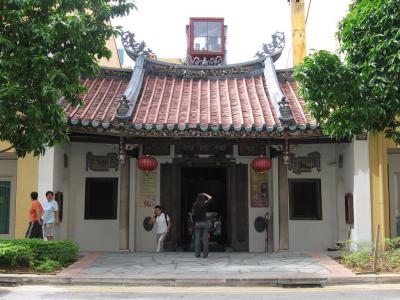
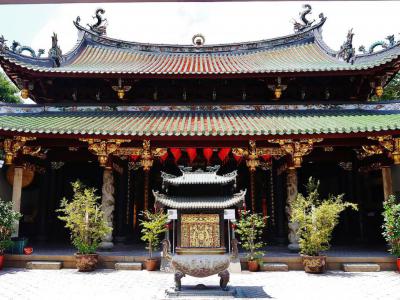
From the street, the temple doesn’t simply catch your eye—it practically waves at you. Dragons roam across its sweeping roofs, and the entrance brims with ceramic flowers, foliage, and lively figures. The side gates take things further with vivid tiles of peacocks, roses, and the Buddhist swastika motif, symbolising good fortune and longevity. Two stone lions guard the threshold, while the painted door gods stand ready to keep unwanted spirits at bay.
Walk through the main entrance, and you’ll find two courtyards leading to the heart of the temple, where Ma Cho Po’s shrine takes pride of place. To the left, a pagoda honours Confucius; to the right, another shelters ancestral tablets belonging to the immigrants who founded this sanctuary. Signboards help decode the many symbolic details scattered throughout, and the large burning ovens—often glowing steadily—signal where offerings to gods and ancestors are sent on their way.
Before you leave, head to the back wall along Amoy Street. A striking mural stretches its entire length, illustrating the journey of early 20th-century Chinese migrants who crossed the sea chasing new beginnings in Singapore.
Even if not worshiping, you may still want to come here for a serene atmosphere, richly layered heritage, and enough intricate decoration to keep your inner photographer blissfully occupied.
A quick tip: Be mindful of worshipers and keep your photography to the front area. And just a few steps away, you’ll spot an unexpected neighbour—Nagore Dargah, an Indian Muslim mosque—because in this part of town, history shares walls quite cheerfully...
From the street, the temple doesn’t simply catch your eye—it practically waves at you. Dragons roam across its sweeping roofs, and the entrance brims with ceramic flowers, foliage, and lively figures. The side gates take things further with vivid tiles of peacocks, roses, and the Buddhist swastika motif, symbolising good fortune and longevity. Two stone lions guard the threshold, while the painted door gods stand ready to keep unwanted spirits at bay.
Walk through the main entrance, and you’ll find two courtyards leading to the heart of the temple, where Ma Cho Po’s shrine takes pride of place. To the left, a pagoda honours Confucius; to the right, another shelters ancestral tablets belonging to the immigrants who founded this sanctuary. Signboards help decode the many symbolic details scattered throughout, and the large burning ovens—often glowing steadily—signal where offerings to gods and ancestors are sent on their way.
Before you leave, head to the back wall along Amoy Street. A striking mural stretches its entire length, illustrating the journey of early 20th-century Chinese migrants who crossed the sea chasing new beginnings in Singapore.
Even if not worshiping, you may still want to come here for a serene atmosphere, richly layered heritage, and enough intricate decoration to keep your inner photographer blissfully occupied.
A quick tip: Be mindful of worshipers and keep your photography to the front area. And just a few steps away, you’ll spot an unexpected neighbour—Nagore Dargah, an Indian Muslim mosque—because in this part of town, history shares walls quite cheerfully...
Walking Tours in Singapore, Singapore

Create Your Own Walk in Singapore
Creating your own self-guided walk in Singapore is easy and fun. Choose the city attractions that you want to see and a walk route map will be created just for you. You can even set your hotel as the start point of the walk.
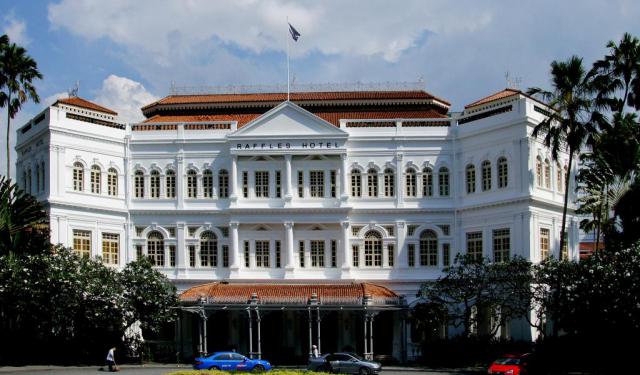
Colonial District Walking Tour
Singapore’s Colonial District, also known as the Civic District, is the birthplace of modern Singapore. From a quiet island to a thriving global city, its transformation began right here.
The story kicked off in 1819, when Sir Stamford Raffles of the British East India Company established a trading post on the strategically positioned island. Recognizing the importance of the Singapore River... view more
Tour Duration: 1 Hour(s)
Travel Distance: 1.7 Km or 1.1 Miles
The story kicked off in 1819, when Sir Stamford Raffles of the British East India Company established a trading post on the strategically positioned island. Recognizing the importance of the Singapore River... view more
Tour Duration: 1 Hour(s)
Travel Distance: 1.7 Km or 1.1 Miles
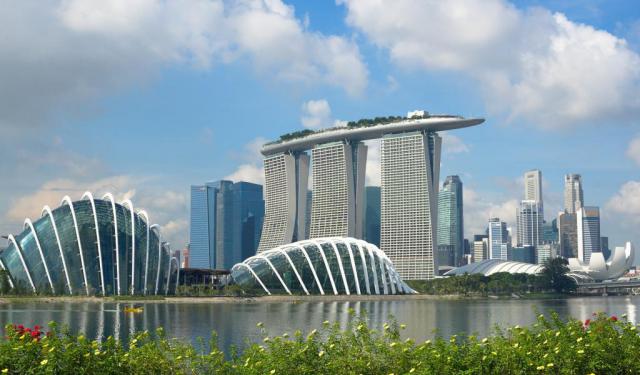
Singapore Introduction Walking Tour
Singapore may well be a tiny nation, sitting on a patch of land in Southeast Asia, but it has mastered the art of making a grand impression. Here, centuries-old temples share the skyline with futuristic glass towers, and you can walk from a quiet shrine to a neon-lit mall in the time it takes to finish an iced coffee. The city’s multicultural spirit—shaped by Chinese, Malay, and Indian... view more
Tour Duration: 2 Hour(s)
Travel Distance: 3.6 Km or 2.2 Miles
Tour Duration: 2 Hour(s)
Travel Distance: 3.6 Km or 2.2 Miles
Useful Travel Guides for Planning Your Trip
12 Singapore Foods You Should Not Miss
Food is a national passion for Singaporeans. Locals think and talk about food incessantly, often thinking nothing of travelling for miles across the island and queuing for hours just to taste one of their favourite dishes.
Singaporeans abroad will bemoan being parted from their favourite foods,...
Traveler's Guide to Singapore: 15 Souvenirs to Bring Home
Known as one of the Four Asian Tigers (or Dragons), Singapore is a thriving metropolis and one of the most fascinating tourist destinations in Asia. Home to multi-ethnic community, the city carefully preserves and proudly exhibits its colorful identity, manifested - among other forms - in the...
The Most Popular Cities
/ view all