

Rotterdam Introduction Walking Tour, Rotterdam

Rotterdam Introduction Walking Tour (Self Guided), Rotterdam

Dutch poet Rien Vroegindeweij once captured the city’s essence with a simple line: “If everybody comes from somewhere else, nobody is a stranger.”

The name Rotterdam comes from a straightforward origin: the river Rotte and a dam built across it. The river name “Rotte” is thought to mean “muddy water” or perhaps “hurrying stream”, while the suffix “-dam” refers to the barrier that held back its flow. Together they form “Rotterdam”, literally “dam on the Rotte”. Around the year 950, small communities began to form near the river’s mouth, drawn by fertile wetlands and access to waterways. By the mid-13th century, settlers constructed a dam, reclaiming land and laying the foundation for the city’s future.

In 1340, the Count of Holland granted Rotterdam its city rights, turning a modest settlement into a recognized urban centre. Its location on the Rhine-Meuse delta soon became its greatest advantage. A canal linking the Rotte to the Schie waterways in the mid-14th century gave Rotterdam vital access to inland trade routes. By the 17th century, the city had emerged as an important maritime hub, its port bustling with ships trading goods across the North Sea and beyond.

The 19th century brought transformation once more. The completion of the New Waterway in 1872 opened the port to the largest sea-going vessels, firmly establishing Rotterdam as the gateway to Europe. Industry, innovation, and a growing population reshaped the city’s skyline and character. But it was tragedy that most profoundly redefined it: the devastating bombing of May 1940 reduced much of the historic centre to rubble. Rather than rebuild what was lost, Rotterdam chose to reinvent itself—embracing modern architecture, open spaces, and bold urban design.

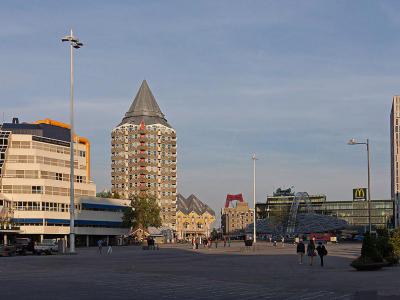
Today, the city stands as a living symbol of resilience and reinvention. Visitors walking through the centre will find the Cube Houses, the Market Hall with its beautiful mural, and the restored Saint Lawrence Church—the sole medieval survivor of the wartime destruction. Streets such as Lijnbaan and Witte de Withstraat pulse with creativity, street art, and cosmopolitan energy.

In Rotterdam, the past and present meet not in opposition but in harmony—each wave of change welcoming the next. Just as Vroegindeweij suggested, this is a city where everyone belongs, and where nobody, no matter where they come from, is ever truly a stranger.
How it works: Download the app "GPSmyCity: Walks in 1K+ Cities" from Apple App Store or Google Play Store to your mobile phone or tablet. The app turns your mobile device into a personal tour guide and its built-in GPS navigation functions guide you from one tour stop to next. The app works offline, so no data plan is needed when traveling abroad.

Download The GPSmyCity App

Rotterdam Introduction Walking Tour Map

Guide Name: Rotterdam Introduction Walking Tour
Guide Location: Netherlands » Rotterdam (See other walking tours in Rotterdam)
Guide Type: Self-guided Walking Tour (Sightseeing)
# of Attractions: 9
Tour Duration: 2 Hour(s)
Travel Distance: 3.2 Km or 2 Miles
Author: DanaOffice
Sight(s) Featured in This Guide:
  • Binnenrotte Square
  • St. Laurenskerk (St. Lawrence Church)
  • Markthal (Market Hall)
  • Kubuswoningen (Cube Houses)
  • Oude Haven (Old Harbor)
  • Maritime Museum of Rotterdam
  • Witte de Withstraat Street
  • Lijnbaan Street
  • Beurstraverse Street
1
Binnenrotte Square

1) Binnenrotte Square

The square known as Binnenrotte began as part of the water-course of the Rotte River, before changes in the late 19th century transformed it into solid ground. With the arrival of the rail line between Rotterdam and Dordrecht city in 1871, a viaduct was built over this zone, effectively draining and repurposing the space for urban use. Over time this open area became host to a modest market in a corner of the square, surrounded by unassuming buildings.

Extensive bombing of the city centre in the Second World War caused severe damage here. In the decades that followed city-planners embraced the space as an opportunity to reshape the centre. In 1993 the railway viaduct was replaced by a tunnel and the square took its modern form, becoming a large new public plaza.

On Tuesdays and Saturdays, the Binnenrotte hosts the renowned Binnenrotte Market, with roughly 450 stalls and around 70,000 visitors each week. Shoppers can browse everything from fresh produce and fish to household wares, second-hand books, clothing and vintage finds. Visitors are encouraged to arrive early on market days to benefit from the full range of stalls, and later in the afternoon to catch closing-time bargains.
2
St. Laurenskerk (St. Lawrence Church)

2) St. Laurenskerk (St. Lawrence Church)

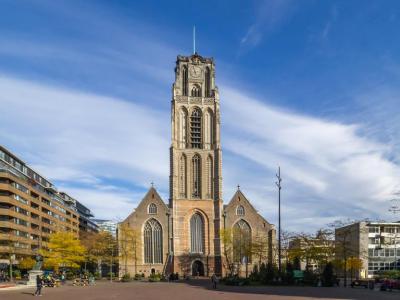
Saint Lawrence Church is Rotterdam’s only remaining medieval building. Construction began in 1449 and was completed in 1525. It was also the city’s first all-stone structure. The tower, originally added in 1621, has been rebuilt several times over the centuries.

When the Reformation reached Rotterdam in 1572, the church was converted from Catholic to Protestant worship. During the Second World War, the building suffered severe damage in the Rotterdam Blitz—only the tower and outer walls remained standing. For years, citizens debated whether to restore or demolish it, but restoration began in 1952 and was completed in 1968. The present church blends preserved medieval masonry with postwar reconstruction.

Among its notable features is the copper choir fence dating from 1713. Inside, visitors can see memorials to Dutch naval heroes such as admirals Kortenaar, Witte de With, and officer Van Brakel. The bronze doors, designed by Italian sculptor Giacomo Manzù, depict themes of war and peace and mark one of the church’s most admired details. In front of the church stands a statue of Desiderius Erasmus, the famous Rotterdam-born humanist and theologian, who remains one of the city’s most celebrated historical figures. The statue, installed in 1622, miraculously survived the World War II bombing that destroyed the surrounding area.

Religious services resumed in 1971 with the founding of the Laurenspastoraat community. Today, Saint Lawrence Church continues to serve as a place of worship for both the Laurenspastoraat and the Open Grenzen congregations. The church also houses a permanent exhibition dedicated to Rotterdam’s history. Spread across 20 side chapels, the displays combine artifacts, photographs, and audiovisual installations that trace the city’s medieval beginnings, the devastation of World War II, and its subsequent rebirth.
3
Markthal (Market Hall)

3) Markthal (Market Hall) (must see)

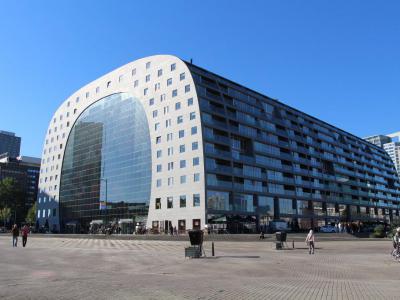
The Market Hall is a multi-use complex that combines apartments, offices, retail spaces, and one of Rotterdam’s most popular markets, all under a single monumental arch. Opened in 2014, the building is celebrated for its dramatic horseshoe-shaped arch and its massive glass facades composed of smaller window panels. A 34-metre high steel cable structure supports these glass walls, making it Europe’s largest cable-supported glass façade. Beneath it lies an extensive underground parking garage that adds to its functional design.

Inside, visitors are greeted by a space of vivid artwork covering the interior arch. Created by Dutch artists Arno Coenen and Iris Roskam, Horn of Plenty depicts giant fruits, vegetables, fish, flowers, and insects in dazzling colour. The digital artwork was so enormous that the artists had to borrow computing power from Pixar Studios. This spectacular mural has earned the Market Hall nicknames such as “The Largest Artwork in the World” and “The Sistine Chapel of Rotterdam”.

During the building’s construction, archaeologists unearthed the remains of a 10th-century farmstead, including a house with two stoves and several fireplaces. A small exhibition beside the central staircases displays these finds, offering visitors a glimpse of Rotterdam’s early settlement history.

Today, the Market Hall stands as the largest indoor market in the Netherlands. It hosts more than 100 produce stalls, 15 food shops, and eight restaurants. Shoppers can browse local cheeses, fresh fish, fruit and vegetables, poultry, flowers, and plants. For those eager to sample their purchases, plenty of indoor seating areas are available—making the Market Hall both a culinary destination and a modern architectural icon.
4
Kubuswoningen (Cube Houses)

4) Kubuswoningen (Cube Houses)

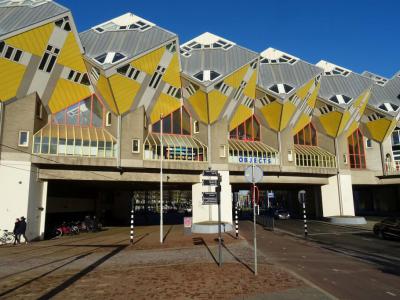
Few buildings capture Rotterdam’s spirit of creativity quite like the Cube Houses, the city’s most playful architectural experiment. Designed by Dutch architect Piet Blom, these yellow cubes seem to balance on their tips, tilted 45 degrees as if defying gravity. Blom’s goal was to create an “urban forest”, where each cube represents a tree and together they form a sculptural canopy above the streets below.

Built in the 1980s as part of a larger urban renewal project, the Cube Houses were conceived in collaboration with city planners who wanted to bring life and imagination back to Rotterdam. Each Cube House rises three stories high. The lower level contains a kitchen and living room, the middle floor holds two bedrooms and a bathroom, and the top level often serves as a small garden, workspace, or viewing area.

The complex also functions as a pedestrian bridge across a busy intersection, maintaining a car-free environment. Around the cubes, visitors will find a lively community of cafés, restaurants, small offices, studios, and even a playground.

Those curious about what life is like inside one of these tilted wonders can visit the Show Cube Museum, which offers a peek into their design and history. And for the truly adventurous, a few of the cubes have been converted into overnight accommodations—perfect for anyone eager to experience Rotterdam from a slightly different angle.
5
Oude Haven (Old Harbor)

5) Oude Haven (Old Harbor)

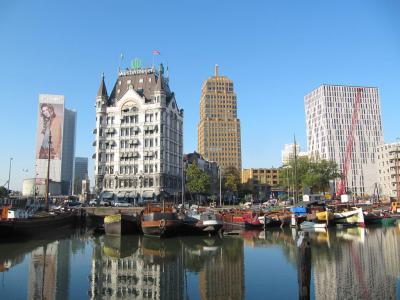
The Old Harbor is one of Rotterdam's oldest port areas, with its origins dating back to the early 14th century. The first jetty was constructed around 1350, marking the beginning of the city’s development as a major maritime hub. Over the centuries, the harbor played a vital role in Rotterdam’s growth, facilitating trade and commerce. However, the devastation of World War II heavily damaged much of the area, leaving only a few historical structures standing.

The Old Harbor is one of Rotterdam's oldest areas, now the city's entertainment hub. With its cafés and restaurants lining the water, the area offers a perfect mix of historic charm and modern appeal. Many of the establishments feature outdoor terraces, allowing visitors to relax and watch the boats. As night falls, Old Harbor comes alive with a nightlife scene popular for the ones looking to enjoy a drink or dance along the water.

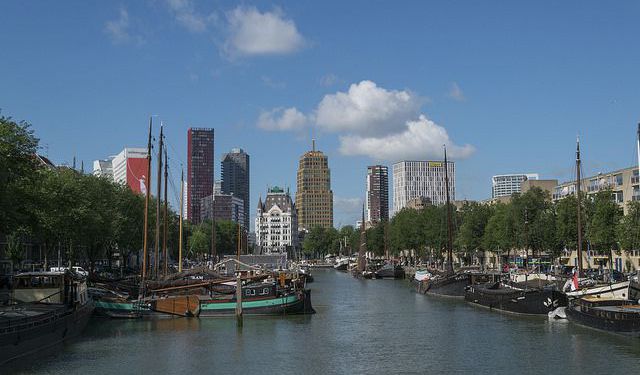
The harbor’s rich history is still visible today through the traditional sailing boats moored along the docks. One of the most prominent landmarks in Old Harbor is the White House—standing at 43 meters tall, it was once Europe’s tallest skyscraper when it was completed in 1898. The White House, one of the few buildings to survive the bombings of World War II, can be admired for its distinctive Art Nouveau architecture.
6
Maritime Museum of Rotterdam

6) Maritime Museum of Rotterdam (must see)

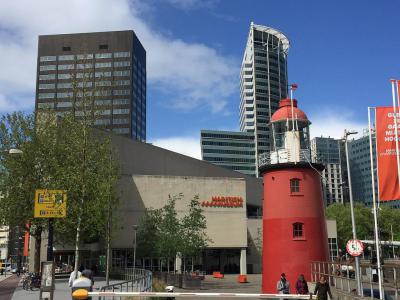
The Maritime Museum Rotterdam focuses on the city’s maritime and shipping history, offering visitors both modern exhibits and access to an extensive collection of artifacts. Founded in 1874 by Prince Henry of the Netherlands, it consists of two linked components: the indoor museum and the adjacent Museum Harbour.

Inside the museum, exhibitions designed for all ages include stories of ships, offshore platforms and maritime innovation. Among the standout pieces are the Mataró ship model, over six centuries old and Europe’s oldest ship model; The Itinerario by the Dutch explorer Jan Huygen van Linschoten, one of the world’s most important travel journals; pen‑and‑ink drawings by Willem van de Velde the Younger, a renowned Dutch maritime artist; and a set of sea charts by Joan Blaeu, a leading 17th‑century cartographer. The museum’s collection spans over one million objects, covering six centuries of Dutch maritime history.

The Museum Harbour offers an outdoor experience in the oldest and largest museum harbour in the Netherlands, located where the port of Rotterdam first took shape. Visitors can explore historic vessels such as steam tugs, a grain elevator, and the red cast‑iron lighthouse known as the Low Light of the Hook of Holland, which once guided ships up the New Waterway. In addition to its permanent collection, the museum hosts rotating exhibitions, educational programs, and special events aimed at exploring Rotterdam's pivotal role in global shipping and trade.

Tip: Some of the ships in the outer harbour section can be boarded and explored free of charge. A café and museum shop are available on site, and the museum’s library houses the Netherlands’ most comprehensive maritime‑related book collection, open by appointment for rare materials.
7
Witte de Withstraat Street

7) Witte de Withstraat Street (must see)

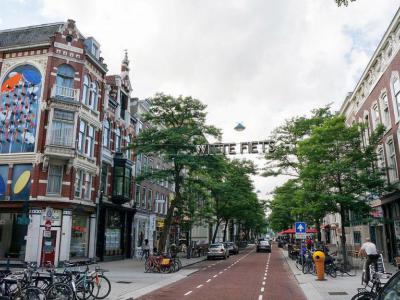
Witte de Withstraat Street, spanning approximately 320 meters, was named after Witte Cornelisz de With, a 17th-century Dutch naval officer. During the 1990s, its transformation into an "Art Axis" — a designated cultural and artistic district linking the Park Museum and the Maritime Museum — helped reshape its identity as one of the city’s cultural and nightlife centres.

Here, you'll find Rotterdam Bazar, a lively restaurant offering international dishes; Vivu, which serves delicious Vietnamese cuisine; and Oliva, known for its Italian fare. For a casual bite, Bagel Bakery is the perfect stop for a bagel and a quick coffee. The highly regarded burger spot Ter Marsch & Co serves some of the Netherlands’ best hamburgers. For a different vibe, the Nieuw Rotterdams Café, housed in a grand former newspaper building, offers a stylish setting for cocktails or dinner.

The shopping scene is as diverse as the food offerings. You'll discover independent boutiques like Betsy Palmer, a well-known shoe shop, and RSI The Attraction, which specializes in adventure gear such as skateboards, snowboards, and kites.

Artists and gallery-goers will feel right at home here, too. Kunstinstituut Melly hosts international exhibitions and educational programs. Other galleries in the area include Ecce Gallery and van Eijk Gallery, which features modern art, ceramics, and sculpture. Around the side streets, you’ll also encounter murals and street-art installations.

In earlier decades, the street had a rougher reputation, once home to less savory cafés and illegal gambling houses in the 1970s. However, its revival has helped shape Witte de Withstraat Street into a hub for art, design, and nightlife energy.
8
Lijnbaan Street

8) Lijnbaan Street

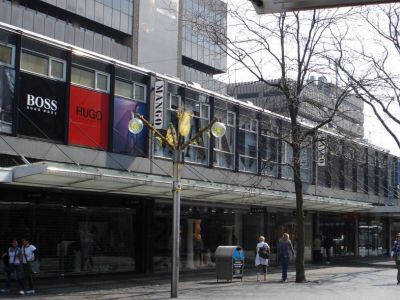
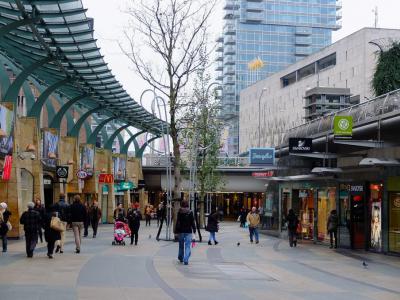
Lijnbaan is Rotterdam's main shopping street, first opened in 1953 after German bombs destroyed the old shopping district during World War II. Lijnbaan was Europe’s first purpose-built pedestrian street and was part of the city's broader modernization plan.

The street is beautifully landscaped, featuring flower beds, statues, trees, benches, and wooden shelters. When it first opened, shopkeepers were concerned that a pedestrian-only area might not attract shoppers, but Lijnbaan has since proven to be highly successful. Visitors and residents enjoy the car-free zone, coming to stroll and window-shop.

In the 1980s, the street experienced a decline as some of the original shopkeepers retired. However, in 2010, Lijnbaan was awarded national heritage status to recognize its innovative postwar architecture. Some of the original wooden canopies and shop fronts have since been restored.

Today, Lijnbaan offers a mix of modern fashion chain stores and boutique shops. The street features a range of high-end stores as well as more affordable options. In addition to retail, visitors can enjoy fast food and a variety of restaurants.
9
Beurstraverse Street

9) Beurstraverse Street

Beurstraverse opened in 1996 and is a unique retail passage built to connect the two major shopping streets—the Hoogstraat Street and the Lijnbaan Street—while allowing pedestrians to avoid traffic above. The design and concept of this underground shopping zone were part of a broader effort to revitalise the city centre and streamline pedestrian flow through the retail heart.

Visitors will find over 40 shops here, including fashion and shoe stores, jewelers, perfume counters, gift‑shops, and souvenir outlets. Popular chains such as Crocs, Forever 21, Hema, H&M, Lacoste, Pandora, Swatch, Zara, Lush, and The Body Shop line the passage, with cafés, bars and dining spots interspersed throughout.

Because the Beurstraverse is tucked beneath ground level, shielded from the street traffic above, it offers a peaceful shopping environment removed from the usual bustle. Large stairs, escalators and lifts lead down into the space, which is well‑lit and airy despite being underground.

Tip: For the best experience, come mid‑morning or early afternoon to beat the heavier crowds, explore the variety of shops at your own pace, and enjoy a relaxed coffee break in one of the bars or cafés while soaking in the distinctive setting.

Walking Tours in Rotterdam, Netherlands

Create Your Own Walk in Rotterdam
Create Your Own Walk in Rotterdam

Creating your own self-guided walk in Rotterdam is easy and fun. Choose the city attractions that you want to see and a walk route map will be created just for you. You can even set your hotel as the start point of the walk.
Cheese Shops in Rotterdam

Cheese Shops in Rotterdam

Although many countries claim cheese to be their unique product, Dutch cheeses are indeed an iconic, standalone thing. Amid a cornucopia of different cheeses made in The Netherlands, there are quite a few internationally-famed ones originated in Rotterdam.

It is therefore only natural to find a plethora of specialty shops in the city fit to warm the heart of any cheese lover, be it a finder, a...  view more

Tour Duration: 1 Hour(s)
Travel Distance: 1.6 Km or 1 Miles
Delfshaven District Walking Tour

Delfshaven District Walking Tour

Part of the old city of Rotterdam, the borough of Delfshaven – situated on the right bank of the river Nieuwe Maas, is rich in history. Prior to 1886 it had been a separate municipality which grew around the port of the city of Delft.

Delft itself was not located on a major river, so in 1389 a Voorhaven (outer harbor) to the south, along with the Aelbrechtskolk waterpass, had to be created to...  view more

Tour Duration: 1 Hour(s)
Travel Distance: 1.3 Km or 0.8 Miles
Useful Travel Guides for Planning Your Trip
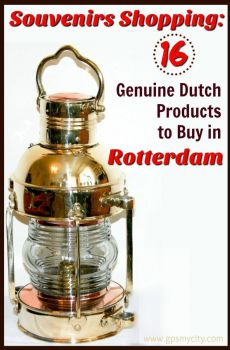

Souvenirs Shopping: 16 Genuine Dutch Things to Buy in Rotterdam

Souvenirs Shopping: 16 Genuine Dutch Things to Buy in Rotterdam

Just as any other major Dutch destination, Rotterdam is associated with sea, excellent cheeses, marvelous beer, good food and, generally speaking, good taste. A set of gifts from Rotterdam will duly reflect any, if not all, of these qualities. Listed here are some of the items that might prove well...