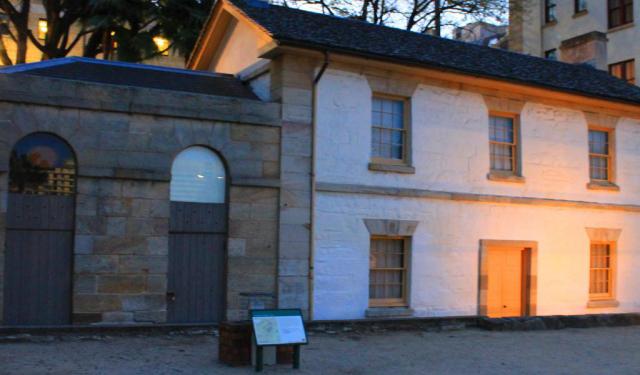


The Rocks Walking Tour (Self Guided), Sydney
The Rocks is a historic area and the oldest neighborhood in downtown Sydney. It was the site where on 26 January 1788 a Union flag was raised to announce the establishment of the first British penal colony in New South Wales. Many of the old stone buildings are made of quarry stones hand-chipped by early convicts, which gave the area its name.
Today's Rocks is a thriving locality packed with narrow streets, numerous museums, historical buildings, cafes, pubs, restaurants, markets, and a host of other sights that make this one of the areas to visit when in Sydney. And the place offers some great views of the harbor and surrounds!
A highlight here is the city’s oldest pub, the Fortune of War (since 1828) – a must, particularly if you like fish and chips! Follow that with a visit to the Rocks Discovery Museum to see what it was like a couple of centuries ago, as well as the Cadman Cottage and the Susannah Place to see examples of the early settler dwellings.
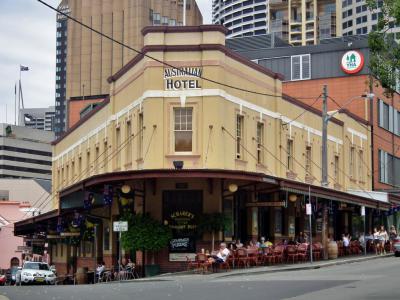
For a genuine 'Ye Old' world, don’t miss the Argyle Stores housing retail, fashion and eateries around a cobbled courtyard. And, finally, go sample some boutique beers brewed at the historic Australian Hotel, which also serves good Aussie-style pizzas like “peppered kangaroo”.
Follow this self-guided walking tour to savor Australia’s earliest European settlement at your own pace!
Today's Rocks is a thriving locality packed with narrow streets, numerous museums, historical buildings, cafes, pubs, restaurants, markets, and a host of other sights that make this one of the areas to visit when in Sydney. And the place offers some great views of the harbor and surrounds!
A highlight here is the city’s oldest pub, the Fortune of War (since 1828) – a must, particularly if you like fish and chips! Follow that with a visit to the Rocks Discovery Museum to see what it was like a couple of centuries ago, as well as the Cadman Cottage and the Susannah Place to see examples of the early settler dwellings.
For a genuine 'Ye Old' world, don’t miss the Argyle Stores housing retail, fashion and eateries around a cobbled courtyard. And, finally, go sample some boutique beers brewed at the historic Australian Hotel, which also serves good Aussie-style pizzas like “peppered kangaroo”.
Follow this self-guided walking tour to savor Australia’s earliest European settlement at your own pace!
How it works: Download the app "GPSmyCity: Walks in 1K+ Cities" from Apple App Store or Google Play Store to your mobile phone or tablet. The app turns your mobile device into a personal tour guide and its built-in GPS navigation functions guide you from one tour stop to next. The app works offline, so no data plan is needed when traveling abroad.
The Rocks Walking Tour Map
Guide Name: The Rocks Walking Tour
Guide Location: Australia » Sydney (See other walking tours in Sydney)
Guide Type: Self-guided Walking Tour (Sightseeing)
# of Attractions: 10
Tour Duration: 1 Hour(s)
Travel Distance: 1.3 Km or 0.8 Miles
Author: australia
Sight(s) Featured in This Guide:
Guide Location: Australia » Sydney (See other walking tours in Sydney)
Guide Type: Self-guided Walking Tour (Sightseeing)
# of Attractions: 10
Tour Duration: 1 Hour(s)
Travel Distance: 1.3 Km or 0.8 Miles
Author: australia
Sight(s) Featured in This Guide:
- Circular Quay
- Fortune of War Hotel
- Gannon House
- The Rocks Discovery Museum
- Cadmans Cottage
- ASN Co Building
- Playfair Street Terraces
- Argyle Stores
- Australian Hotel
- Susannah Place Museum
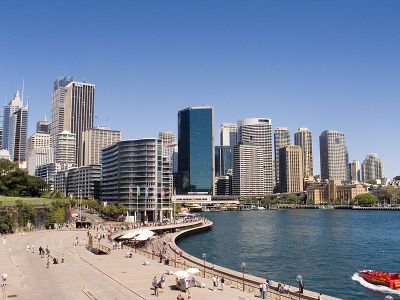
1) Circular Quay
Circular Quay is Sydney’s main harbour gateway, positioned between the Sydney Opera House and The Rocks, where ferries, trains, and buses converge beside the water. Built on the site of the colony’s original shoreline, it evolved from a working port into a vibrant public space lined with promenades, restaurants, and ferry wharves. From early morning commuters to evening crowds, the quay remains one of the city’s most active and recognisable meeting points, offering uninterrupted views across Sydney Harbour and the Harbour Bridge.
The area’s semicircular shape was formed in the 19th century through land reclamation and wharf construction, transforming what was once Sydney Cove, the landing site of the First Fleet in 1788. Today, the same shoreline serves as a transport hub and cultural corridor. The restored Customs House, dating from 1845, stands at the eastern end, while historic warehouses and contemporary buildings frame the western side. Street performers, open-air cafés, and ferry passengers fill the promenade throughout the day, creating a lively rhythm unique to the harbour.
Circular Quay also connects some of Sydney’s most significant landmarks. A short walk east leads to the Royal Botanic Garden and Opera House forecourt, while to the west lie The Rocks’ sandstone lanes and heritage pubs. Ferries departing from the quay provide access to destinations across the harbour, including Manly, Taronga Zoo, and Watsons Bay, making it a central transport point.
The area’s semicircular shape was formed in the 19th century through land reclamation and wharf construction, transforming what was once Sydney Cove, the landing site of the First Fleet in 1788. Today, the same shoreline serves as a transport hub and cultural corridor. The restored Customs House, dating from 1845, stands at the eastern end, while historic warehouses and contemporary buildings frame the western side. Street performers, open-air cafés, and ferry passengers fill the promenade throughout the day, creating a lively rhythm unique to the harbour.
Circular Quay also connects some of Sydney’s most significant landmarks. A short walk east leads to the Royal Botanic Garden and Opera House forecourt, while to the west lie The Rocks’ sandstone lanes and heritage pubs. Ferries departing from the quay provide access to destinations across the harbour, including Manly, Taronga Zoo, and Watsons Bay, making it a central transport point.
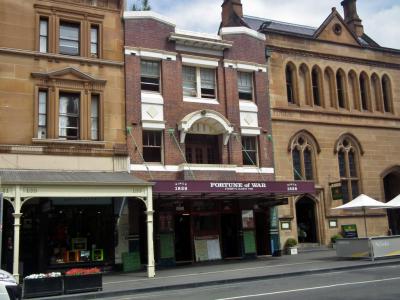
2) Fortune of War Hotel
The Fortune of War Hotel is one of the city's oldest continuously licensed pubs, located in The Rocks, a district known for its sandstone lanes and maritime history. The current building dates to 1922, designed in the Federation Free Style with brick façades, arched windows, and decorative tiling, though the site’s first licence was granted in 1828. Its name reflects the rugged atmosphere of early colonial Sydney, when sailors, dockworkers, and soldiers filled the harbourfront taverns that served the bustling port.
Inside, the pub retains much of its early 20th-century character, with timber panelling, brass fittings, and historic photographs documenting life in The Rocks. The main bar serves as a gathering place for locals and visitors alike, continuing the building’s long tradition as a social hub near the harbour. Its atmosphere combines the casual familiarity of a working pub with the nostalgia of a heritage venue, preserving a sense of continuity amid the surrounding redevelopment of The Rocks precinct.
The Fortune of War is also associated with Australian military history, having been a favourite meeting spot for servicemen during both World Wars. Memorabilia and honour boards inside commemorate those connections, linking the venue’s long service to its community. Regular live music, classic pub meals, and its location along George Street make it a natural stop for those exploring Sydney’s oldest neighbourhood.
Inside, the pub retains much of its early 20th-century character, with timber panelling, brass fittings, and historic photographs documenting life in The Rocks. The main bar serves as a gathering place for locals and visitors alike, continuing the building’s long tradition as a social hub near the harbour. Its atmosphere combines the casual familiarity of a working pub with the nostalgia of a heritage venue, preserving a sense of continuity amid the surrounding redevelopment of The Rocks precinct.
The Fortune of War is also associated with Australian military history, having been a favourite meeting spot for servicemen during both World Wars. Memorabilia and honour boards inside commemorate those connections, linking the venue’s long service to its community. Regular live music, classic pub meals, and its location along George Street make it a natural stop for those exploring Sydney’s oldest neighbourhood.
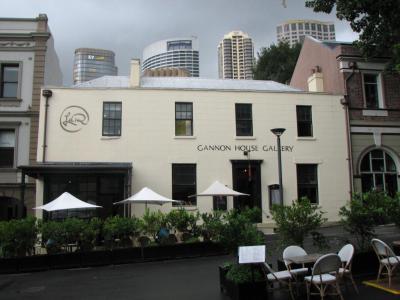
3) Gannon House
Gannon House is a historic sandstone building in The Rocks, one of Sydney’s oldest precincts, now home to a respected contemporary Australian art gallery. The structure dates to the 1840s, originally built by Michael Gannon, a local builder and publican, as a combination of residence and commercial premises. Its robust Georgian design, with thick stone walls, small-paned windows, and simple proportions, reflects the practical craftsmanship of the early colonial period. Positioned near the harbour, the building once formed part of a bustling network of warehouses, taverns, and merchants serving Sydney’s waterfront trade.
Today, Gannon House has been carefully restored, its interiors adapted to display fine art while retaining original architectural details such as exposed beams, sandstone walls, and narrow staircases. The gallery exhibits a wide range of Australian Indigenous and contemporary art, featuring paintings, sculpture, and glassworks by established and emerging artists. The contrast between the building’s 19th-century fabric and the modern works within creates a layered visual experience, linking Australia’s colonial heritage with its living artistic culture.
Set beside the Argyle Cut and within walking distance of the Overseas Passenger Terminal, Gannon House stands amid The Rocks’ cluster of preserved 19th-century buildings. Its courtyard and adjoining café invite visitors to pause before exploring the surrounding laneways, markets, and galleries. The site remains an example of how Sydney’s earliest architecture continues to serve creative and cultural purposes in the present day.
Today, Gannon House has been carefully restored, its interiors adapted to display fine art while retaining original architectural details such as exposed beams, sandstone walls, and narrow staircases. The gallery exhibits a wide range of Australian Indigenous and contemporary art, featuring paintings, sculpture, and glassworks by established and emerging artists. The contrast between the building’s 19th-century fabric and the modern works within creates a layered visual experience, linking Australia’s colonial heritage with its living artistic culture.
Set beside the Argyle Cut and within walking distance of the Overseas Passenger Terminal, Gannon House stands amid The Rocks’ cluster of preserved 19th-century buildings. Its courtyard and adjoining café invite visitors to pause before exploring the surrounding laneways, markets, and galleries. The site remains an example of how Sydney’s earliest architecture continues to serve creative and cultural purposes in the present day.
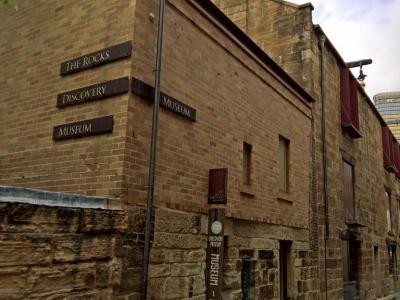
4) The Rocks Discovery Museum
The Rocks Discovery Museum is housed within a restored 1850s sandstone warehouse in the heart of The Rocks, one of Sydney’s oldest neighbourhoods. The building, once part of the early port district’s mercantile network, has been carefully preserved to showcase both its historic architecture and the layered history of the area. Opened as a museum in 2005, it offers an engaging introduction to the cultural and archaeological heritage of the site, tracing its transformation from Aboriginal settlement to convict precinct and, later, to a bustling colonial port community.
The museum’s exhibitions are organised across four main themes—Before Contact, Colony and Convicts, Port and Progress, and Transformation—each exploring a distinct period in The Rocks’ history. Interactive displays, digital touchscreens, and artefacts uncovered from archaeological digs provide insight into daily life from pre-European times through the 19th and early 20th centuries. Objects such as ceramics, tools, and personal belongings reveal how generations of residents lived and worked along Sydney Cove.
Entry to the museum is free, and its hands-on exhibits make it especially appealing to families and school groups. The building itself, with its sandstone walls and timber beams, forms part of the exhibition, illustrating how history is embedded in the very fabric of The Rocks. Managed by Placemaking NSW, the museum combines heritage conservation with public education, offering a clear, accessible view of Sydney’s earliest urban landscape.
The museum’s exhibitions are organised across four main themes—Before Contact, Colony and Convicts, Port and Progress, and Transformation—each exploring a distinct period in The Rocks’ history. Interactive displays, digital touchscreens, and artefacts uncovered from archaeological digs provide insight into daily life from pre-European times through the 19th and early 20th centuries. Objects such as ceramics, tools, and personal belongings reveal how generations of residents lived and worked along Sydney Cove.
Entry to the museum is free, and its hands-on exhibits make it especially appealing to families and school groups. The building itself, with its sandstone walls and timber beams, forms part of the exhibition, illustrating how history is embedded in the very fabric of The Rocks. Managed by Placemaking NSW, the museum combines heritage conservation with public education, offering a clear, accessible view of Sydney’s earliest urban landscape.
5) Cadmans Cottage
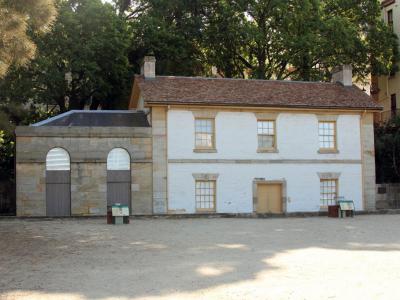
Cadmans Cottage is one of Sydney’s oldest surviving buildings and a rare example of early colonial architecture. Built in 1816 from locally quarried sandstone, it originally stood on the shoreline of Sydney Cove before later land reclamation shifted the waterfront further north. Designed in the Georgian style, the cottage’s simple, symmetrical form reflects its functional origins as the residence and office for the Coxswain of Government Boats, who managed the colony’s small fleet operating in the harbour.
Through the 19th century, the building’s role evolved with Sydney’s growth. It became the headquarters of the Water Police in the 1840s, then later served as accommodation for the Sydney Sailors’ Home, which provided shelter for seafarers arriving in port. Each of these uses left traces on the structure, visible in later additions and changes to the interior layout. Careful restoration has since revealed these layers of history, allowing visitors to appreciate how the building adapted to the changing needs of the harbour community.
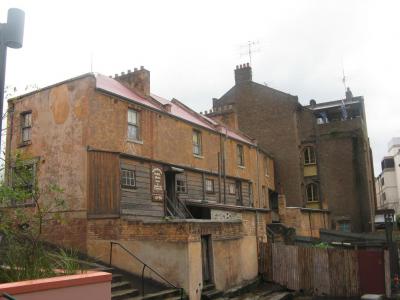
Located in The Rocks, the cottage now sits among cobblestone lanes, historic pubs, and restored warehouses that mark Sydney’s oldest district. Its weathered sandstone walls and small, shuttered windows contrast with the modern skyline nearby. Interpretive displays on site recount its varied past and the daily life of those who lived and worked there. Standing quietly amid the bustle of the modern city, Cadmans Cottage offers a rare glimpse of early colonial Sydney and its enduring relationship with the harbour.
Through the 19th century, the building’s role evolved with Sydney’s growth. It became the headquarters of the Water Police in the 1840s, then later served as accommodation for the Sydney Sailors’ Home, which provided shelter for seafarers arriving in port. Each of these uses left traces on the structure, visible in later additions and changes to the interior layout. Careful restoration has since revealed these layers of history, allowing visitors to appreciate how the building adapted to the changing needs of the harbour community.
Located in The Rocks, the cottage now sits among cobblestone lanes, historic pubs, and restored warehouses that mark Sydney’s oldest district. Its weathered sandstone walls and small, shuttered windows contrast with the modern skyline nearby. Interpretive displays on site recount its varied past and the daily life of those who lived and worked there. Standing quietly amid the bustle of the modern city, Cadmans Cottage offers a rare glimpse of early colonial Sydney and its enduring relationship with the harbour.
6) ASN Co Building
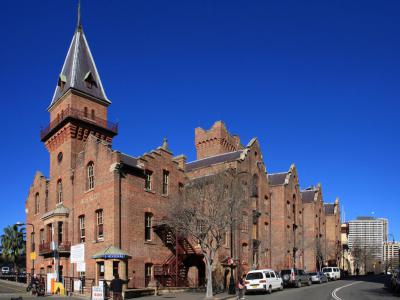
The ASN Co Building is an example of late 19th-century architecture and a fascinating stop for visitors seeking the city’s past. Designed by William Wilkinson Wardell in partnership with Walter Liberty Vernon, the building was completed in 1885 as offices and warehouse for the Australasian Steam Navigation Company.
Its architectural style is classed as Pre-Federation Anglo-Dutch: you’ll notice decorative parapets, polychrome brickwork, towers, and picturesque gables — unusual for warehouse buildings of the time. The building’s heritage listing also notes some remarkable attributes — for example, it retains fragments of one of Australia’s earliest fire sprinkler systems, cast iron pipework and heads.
Though ASN Co vacated the building shortly after its merger, its life continued in various public roles. The government acquired it, and over the decades it served as an ordnance store, government offices, and more. In the early 1990s the building underwent restoration to return many features to their original Victorian-era appearance.
Since the 1990s, the lower levels of the ASN Co Building have housed the Ken Done Gallery & store. The gallery showcases original artworks by Ken Done, one of Australia’s best-known contemporary artists. His style is bold and colourful, often inspired by Sydney Harbour, beaches, the Great Barrier Reef, and everyday Australian landscapes.
Its architectural style is classed as Pre-Federation Anglo-Dutch: you’ll notice decorative parapets, polychrome brickwork, towers, and picturesque gables — unusual for warehouse buildings of the time. The building’s heritage listing also notes some remarkable attributes — for example, it retains fragments of one of Australia’s earliest fire sprinkler systems, cast iron pipework and heads.
Though ASN Co vacated the building shortly after its merger, its life continued in various public roles. The government acquired it, and over the decades it served as an ordnance store, government offices, and more. In the early 1990s the building underwent restoration to return many features to their original Victorian-era appearance.
Since the 1990s, the lower levels of the ASN Co Building have housed the Ken Done Gallery & store. The gallery showcases original artworks by Ken Done, one of Australia’s best-known contemporary artists. His style is bold and colourful, often inspired by Sydney Harbour, beaches, the Great Barrier Reef, and everyday Australian landscapes.
7) Playfair Street Terraces
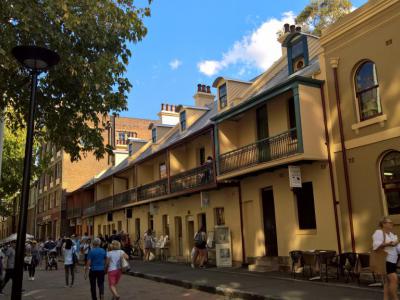
The Playfair Street Terraces are a row of historic sandstone and brick buildings located in The Rocks, one of Sydney’s oldest neighbourhoods. Constructed in the late 19th century, the terraces were originally built as workers’ housing for families connected to the nearby wharves and warehouses that lined the harbour. Their narrow façades, shuttered windows, and steep iron roofs reflect the vernacular architecture of the period, combining practicality with the textured charm of hand-hewn sandstone sourced locally from the area’s early quarries.
Over time, the terraces have been carefully restored and adapted for commercial use, housing small shops, cafés, and galleries that open directly onto the cobblestone laneway. The adaptive reuse preserves original architectural details—such as decorative cast-iron balconies, timber joinery, and recessed doorways—while integrating them into the lively pedestrian precinct of The Rocks. The intimate scale of the buildings contrasts with the surrounding modern cityscape, offering a glimpse into Sydney’s late Victorian streetscapes.
Playfair Street itself was once part of a bustling port community, and its terraces now form part of The Rocks Conservation Area, managed to protect the precinct’s heritage character. The street’s blend of restored terraces, market stalls, and stone courtyards attracts visitors exploring the district’s layered history. The sound of buskers, the aroma of food from nearby cafés, and the preserved 19th-century façades together evoke the texture of the old harbour town that gave rise to modern Sydney.
Over time, the terraces have been carefully restored and adapted for commercial use, housing small shops, cafés, and galleries that open directly onto the cobblestone laneway. The adaptive reuse preserves original architectural details—such as decorative cast-iron balconies, timber joinery, and recessed doorways—while integrating them into the lively pedestrian precinct of The Rocks. The intimate scale of the buildings contrasts with the surrounding modern cityscape, offering a glimpse into Sydney’s late Victorian streetscapes.
Playfair Street itself was once part of a bustling port community, and its terraces now form part of The Rocks Conservation Area, managed to protect the precinct’s heritage character. The street’s blend of restored terraces, market stalls, and stone courtyards attracts visitors exploring the district’s layered history. The sound of buskers, the aroma of food from nearby cafés, and the preserved 19th-century façades together evoke the texture of the old harbour town that gave rise to modern Sydney.
8) Argyle Stores
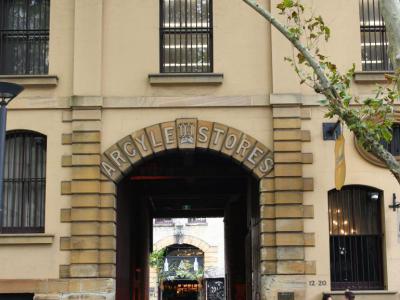
The Argyle Stores is one of the most significant historic commercial complexes in The Rocks, built in stages between the 1820s and 1870s. Made from local sandstone and brick, the interconnected buildings originally functioned as bonded warehouses for merchants trading goods such as wine, spirits, and textiles. The site reflects Sydney’s early growth as a port city and remains a rare example of its maritime and mercantile past.
Architecturally, the complex shows how warehouse design evolved over several decades. Early sections feature Georgian characteristics, including thick sandstone walls, arched openings, and timber framing. Later additions display Victorian brickwork and iron detailing. These layers reveal the changing needs of Sydney’s commercial district in the 19th century. Restoration work has retained much of the original structure, preserving its industrial character and materials.
In the 20th century, the Argyle Stores were adapted for new purposes and now house galleries, restaurants, and event spaces. The interiors still convey their warehouse origins, with stone floors, exposed beams, and open-plan rooms that recall their use for storage and trade.
For visitors to The Rocks, the Argyle Stores offer a direct link to Sydney’s early commercial history. Walking through the complex provides a clear sense of how the area once operated as a busy centre of harbour-side business.
Architecturally, the complex shows how warehouse design evolved over several decades. Early sections feature Georgian characteristics, including thick sandstone walls, arched openings, and timber framing. Later additions display Victorian brickwork and iron detailing. These layers reveal the changing needs of Sydney’s commercial district in the 19th century. Restoration work has retained much of the original structure, preserving its industrial character and materials.
In the 20th century, the Argyle Stores were adapted for new purposes and now house galleries, restaurants, and event spaces. The interiors still convey their warehouse origins, with stone floors, exposed beams, and open-plan rooms that recall their use for storage and trade.
For visitors to The Rocks, the Argyle Stores offer a direct link to Sydney’s early commercial history. Walking through the complex provides a clear sense of how the area once operated as a busy centre of harbour-side business.
9) Australian Hotel
The Australian Hotel is one of Sydney’s oldest pubs, located in The Rocks. First established in 1824 and rebuilt in 1914, it is a well-preserved example of the Federation Free Style. Its wedge-shaped form follows the curve of Gloucester and Cumberland Streets, giving it a distinctive presence. Built from brick with sandstone details, the façade includes arched windows, tiling, and timber features that reflect early 20th-century pub architecture.
Inside, the hotel retains much of its original character. Timber bars, pressed metal ceilings, and period furnishings create the feel of a traditional public house. Historic photographs and memorabilia line the walls, illustrating life in The Rocks and its links to Sydney’s maritime workforce. The atmosphere is casual and busy, combining heritage features with the activity of a popular local venue.
The Australian Hotel is also recognised for its focus on Australian craft beer and pub food. The bar serves a wide range of local brews, and the menu includes classic dishes as well as items such as kangaroo or crocodile pizza. Regular events, including tastings and live music, connect the hotel to the wider Sydney social scene.
From its architecture to its cultural role, the Australian Hotel embodies the layered history of The Rocks. Visitors who stop in can experience not only the taste of local flavours but also a glimpse of how Sydney’s past and present meet within one of its most enduring landmarks.
Inside, the hotel retains much of its original character. Timber bars, pressed metal ceilings, and period furnishings create the feel of a traditional public house. Historic photographs and memorabilia line the walls, illustrating life in The Rocks and its links to Sydney’s maritime workforce. The atmosphere is casual and busy, combining heritage features with the activity of a popular local venue.
The Australian Hotel is also recognised for its focus on Australian craft beer and pub food. The bar serves a wide range of local brews, and the menu includes classic dishes as well as items such as kangaroo or crocodile pizza. Regular events, including tastings and live music, connect the hotel to the wider Sydney social scene.
From its architecture to its cultural role, the Australian Hotel embodies the layered history of The Rocks. Visitors who stop in can experience not only the taste of local flavours but also a glimpse of how Sydney’s past and present meet within one of its most enduring landmarks.
10) Susannah Place Museum
Susannah Place Museum is a preserved row of four working-class terrace houses located in The Rocks, one of Sydney’s earliest neighbourhoods. Built in 1844 by Irish immigrants Edward and Mary Riley, the terraces were constructed from hand-pressed local sandstone and brick. The Rileys lived in one of the houses and rented out the others, a common practice among working families seeking stability in the growing colony. The buildings are a rare surviving example of modest 19th-century domestic architecture and have been carefully conserved to tell the story of ordinary urban life over more than a century.
Each terrace is presented to reflect a different period in its long occupancy, with interiors furnished using original and reconstructed household items that capture the evolving character of Sydney’s working-class homes. Visitors can explore the narrow staircases, sculleries, and tiny courtyards that reveal how families adapted to limited space and changing social conditions from the 1840s through to the 1970s. The museum also highlights the effects of urban renewal and redevelopment that reshaped The Rocks during the 20th century.
A restored corner shop, once central to the community, recreates the atmosphere of everyday commerce before the rise of supermarkets and large retailers. Guided tours offer personal stories of former tenants, blending social history with architectural preservation. Operated by Sydney Living Museums, Susannah Place Museum provides an intimate and tangible link to Sydney’s early domestic and immigrant heritage, preserved within the historic fabric of The Rocks.
Each terrace is presented to reflect a different period in its long occupancy, with interiors furnished using original and reconstructed household items that capture the evolving character of Sydney’s working-class homes. Visitors can explore the narrow staircases, sculleries, and tiny courtyards that reveal how families adapted to limited space and changing social conditions from the 1840s through to the 1970s. The museum also highlights the effects of urban renewal and redevelopment that reshaped The Rocks during the 20th century.
A restored corner shop, once central to the community, recreates the atmosphere of everyday commerce before the rise of supermarkets and large retailers. Guided tours offer personal stories of former tenants, blending social history with architectural preservation. Operated by Sydney Living Museums, Susannah Place Museum provides an intimate and tangible link to Sydney’s early domestic and immigrant heritage, preserved within the historic fabric of The Rocks.
Walking Tours in Sydney, Australia

Create Your Own Walk in Sydney
Creating your own self-guided walk in Sydney is easy and fun. Choose the city attractions that you want to see and a walk route map will be created just for you. You can even set your hotel as the start point of the walk.

Sydney's Historical Churches
Over the years, Sydney's historical churches have aroused a sense of admiration in many beholders. Some of these buildings have even become iconic symbols of Sydney, well worth going a good way to see as vivid examples of both historical and architectural value.
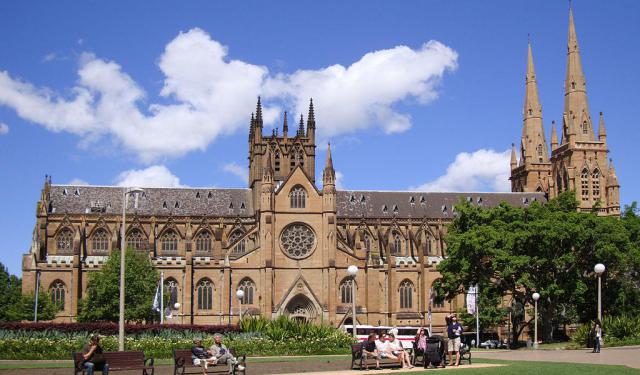
The impressive Early English-style of architecture seen in Saint Mary's Cathedral is said to have inspired the American... view more
Tour Duration: 1 Hour(s)
Travel Distance: 3.2 Km or 2 Miles
The impressive Early English-style of architecture seen in Saint Mary's Cathedral is said to have inspired the American... view more
Tour Duration: 1 Hour(s)
Travel Distance: 3.2 Km or 2 Miles
Newtown Street Murals Walking Tour
Whenever you think of street art in Sydney, one suburb immediately springs to mind and that is Newtown. Largely regarded as Sydney’s coolest neighborhood, this is a ground zero of the city's mural art scene.
Ever since the early 1990s, with the appearance of the famous “I Have a Dream” Mural on King Street, a powerful depiction of Martin Luther King Junior's iconic speech, this... view more
Tour Duration: 1 Hour(s)
Travel Distance: 1.3 Km or 0.8 Miles
Ever since the early 1990s, with the appearance of the famous “I Have a Dream” Mural on King Street, a powerful depiction of Martin Luther King Junior's iconic speech, this... view more
Tour Duration: 1 Hour(s)
Travel Distance: 1.3 Km or 0.8 Miles
Historic Buildings Walking Tour
One of the Australia’s largest cities, Sydney is also the country's oldest metropolis. It has no shortage of impressive historical buildings, some dating back as far as the early 19th century. Many of the local landmarks, such as Sydney Town Hall, Queen Victoria Building (QVB), Hyde Park Barracks and others, are wonders in their own right and fit to delight any history buff.
One can... view more
Tour Duration: 2 Hour(s)
Travel Distance: 3.1 Km or 1.9 Miles
One can... view more
Tour Duration: 2 Hour(s)
Travel Distance: 3.1 Km or 1.9 Miles
Food Tour in Sydney
Sydney is a melting pot, and the local food culture is a sure testament to that. The inflow of immigrants from Europe and Asia over the years has turned the city into a much coveted foodie destination. This tour offers an introduction to the multifaceted and diverse food & brewery experience to be had here.
Start with Gateway Sydney, an upscale food court with WiFi and just about any kind... view more
Tour Duration: 1 Hour(s)
Travel Distance: 2.2 Km or 1.4 Miles
Start with Gateway Sydney, an upscale food court with WiFi and just about any kind... view more
Tour Duration: 1 Hour(s)
Travel Distance: 2.2 Km or 1.4 Miles
Sydney Introduction Walking Tour
Sydney was found in 1788 when a fleet of eleven British ships arrived at where Sydney Cove is today. Onboard those pioneer vessels were 759 convicts plus sailors and marines to guard them. The city was named after Lord Sydney, the British Secretary of State who recommended the British government to establish a penal colony in Australia.
Human activity in the area that would later become Sydney... view more
Tour Duration: 2 Hour(s)
Travel Distance: 3.5 Km or 2.2 Miles
Human activity in the area that would later become Sydney... view more
Tour Duration: 2 Hour(s)
Travel Distance: 3.5 Km or 2.2 Miles
Useful Travel Guides for Planning Your Trip

Top 15 Aussie Souvenirs to Bring Home from Sydney
"You haven't been anywhere if you haven't been to Australia," they say, and you'd definitely want something tangible in hand to remind you of the g'days spent Down Under. In Sydney, you will find tonnes of distinctly Oz products that would serve this purpose...
The Most Popular Cities
/ view all