

Sydney Introduction Walking Tour (Self Guided), Sydney
Sydney was found in 1788 when a fleet of eleven British ships arrived at where Sydney Cove is today. Onboard those pioneer vessels were 759 convicts plus sailors and marines to guard them. The city was named after Lord Sydney, the British Secretary of State who recommended the British government to establish a penal colony in Australia.
Human activity in the area that would later become Sydney goes back at least 30,000 years. The Aboriginal people, known as Eora, first encountered the British explorers around 1770. Between 1788 and 1792, the colony grew through the use of convict labor.
During the late 1700s and early 1800s, the British established farms, and the discovery of gold in 1851 drew more settlers into the region. After World War II, Sydney developed a diverse economy. Information technology, tourism, finance, and education are a few of the industries that have contributed to the city's modern prosperity.
The list of fascinating historical sights to see in Sydney is enormous. These include the Old Government House, the Macquarie Street buildings, the Sydney Mint, St. Mary's Cathedral, and the Sydney Town Hall. Among the cultural icons worth your time there are Sydney Opera House, Royal Botanic Gardens, and Hyde Park. Visitors will also enjoy views from Sydney Tower.
The Queen Victoria Building offers the types of upscale shopping that the most discerning consumers have come to expect. Stopping by the Darling Harbor area is an excellent way to enjoy more shopping, as well as dining and nightlife opportunities.
This self-guided walking tour takes you to explore some of Sydney's main attractions at your own pace and in your good time.
Human activity in the area that would later become Sydney goes back at least 30,000 years. The Aboriginal people, known as Eora, first encountered the British explorers around 1770. Between 1788 and 1792, the colony grew through the use of convict labor.
During the late 1700s and early 1800s, the British established farms, and the discovery of gold in 1851 drew more settlers into the region. After World War II, Sydney developed a diverse economy. Information technology, tourism, finance, and education are a few of the industries that have contributed to the city's modern prosperity.
The list of fascinating historical sights to see in Sydney is enormous. These include the Old Government House, the Macquarie Street buildings, the Sydney Mint, St. Mary's Cathedral, and the Sydney Town Hall. Among the cultural icons worth your time there are Sydney Opera House, Royal Botanic Gardens, and Hyde Park. Visitors will also enjoy views from Sydney Tower.
The Queen Victoria Building offers the types of upscale shopping that the most discerning consumers have come to expect. Stopping by the Darling Harbor area is an excellent way to enjoy more shopping, as well as dining and nightlife opportunities.
This self-guided walking tour takes you to explore some of Sydney's main attractions at your own pace and in your good time.
How it works: Download the app "GPSmyCity: Walks in 1K+ Cities" from Apple App Store or Google Play Store to your mobile phone or tablet. The app turns your mobile device into a personal tour guide and its built-in GPS navigation functions guide you from one tour stop to next. The app works offline, so no data plan is needed when traveling abroad.
Sydney Introduction Walking Tour Map
Guide Name: Sydney Introduction Walking Tour
Guide Location: Australia » Sydney (See other walking tours in Sydney)
Guide Type: Self-guided Walking Tour (Sightseeing)
# of Attractions: 13
Tour Duration: 2 Hour(s)
Travel Distance: 3.5 Km or 2.2 Miles
Author: DanaOffice
Sight(s) Featured in This Guide:
Guide Location: Australia » Sydney (See other walking tours in Sydney)
Guide Type: Self-guided Walking Tour (Sightseeing)
# of Attractions: 13
Tour Duration: 2 Hour(s)
Travel Distance: 3.5 Km or 2.2 Miles
Author: DanaOffice
Sight(s) Featured in This Guide:
- Darling Harbour
- Sydney Town Hall
- Queen Victoria Building (QVB)
- Sydney Tower
- Hyde Park
- Saint Mary's Cathedral
- Hyde Park Barracks
- Sydney Mint
- Parliament House
- Macquarie Street
- Royal Botanic Gardens
- Old Government House
- Sydney Opera House
1) Darling Harbour (must see)
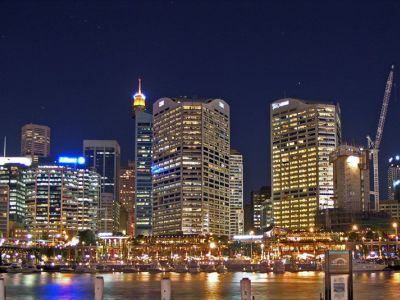
Darling Harbour is one of Sydney’s most active waterfront precincts, where traces of the city’s maritime past coexist with modern public spaces. Once part of the working port known as Cockle Bay, the area functioned for decades as an industrial zone filled with wharves and warehouses. Large-scale redevelopment in the late 1980s, undertaken for Australia’s Bicentenary, reshaped the district into a pedestrian-friendly precinct. The project opened the waterfront to visitors, added landscaped areas, and replaced industrial infrastructure with cultural and recreational facilities while keeping the harbour as the focal point.
Today, Darling Harbour features several of Sydney’s major attractions. The Australian National Maritime Museum showcases the nation’s maritime history with historic vessels and rotating exhibitions. Nearby, SEA LIFE Sydney Aquarium presents marine species from Australian waters through large-scale tanks and underwater tunnels. The Chinese Garden of Friendship, created in cooperation with Sydney’s sister city Guangzhou, offers a quieter space within the precinct. At the southern end, ICC Sydney hosts conferences, concerts, exhibitions, and community events throughout the year. Between these sites, wide promenades, open plazas, playgrounds, and shaded seating areas make the precinct suitable for visitors of all ages.
The built environment combines contemporary architecture with remaining maritime elements, such as old wharf timber, steel trusses, and preserved dock features. Restaurants and cafés line the water’s edge, providing views of ferries, water taxis, and leisure craft moving through the harbour. Footbridges connect the precinct to Barangaroo, Pyrmont, and the central business district, making it easy to incorporate Darling Harbour into broader city walks.
Public programming plays a major role in defining the precinct. Street performers, outdoor screenings, seasonal festivals, and weekend markets contribute to a steady stream of activity. Fireworks displays are common during holidays and large events, drawing both locals and visitors.
Today, Darling Harbour features several of Sydney’s major attractions. The Australian National Maritime Museum showcases the nation’s maritime history with historic vessels and rotating exhibitions. Nearby, SEA LIFE Sydney Aquarium presents marine species from Australian waters through large-scale tanks and underwater tunnels. The Chinese Garden of Friendship, created in cooperation with Sydney’s sister city Guangzhou, offers a quieter space within the precinct. At the southern end, ICC Sydney hosts conferences, concerts, exhibitions, and community events throughout the year. Between these sites, wide promenades, open plazas, playgrounds, and shaded seating areas make the precinct suitable for visitors of all ages.
The built environment combines contemporary architecture with remaining maritime elements, such as old wharf timber, steel trusses, and preserved dock features. Restaurants and cafés line the water’s edge, providing views of ferries, water taxis, and leisure craft moving through the harbour. Footbridges connect the precinct to Barangaroo, Pyrmont, and the central business district, making it easy to incorporate Darling Harbour into broader city walks.
Public programming plays a major role in defining the precinct. Street performers, outdoor screenings, seasonal festivals, and weekend markets contribute to a steady stream of activity. Fireworks displays are common during holidays and large events, drawing both locals and visitors.
2) Sydney Town Hall
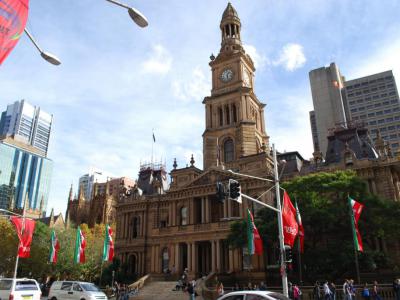
Sydney Town Hall stands on George Street in the heart of the city, serving as both a working civic building and one of Sydney’s finest examples of High Victorian architecture. Constructed between 1869 and 1889, it was designed by architects J.H. Willson and later Thomas Sapsford, replacing an earlier meeting hall that had become too small for the growing colony. Built from local sandstone, its elaborate façade features Corinthian columns, arched windows, domes, and intricate carvings that reflect the city’s confidence and prosperity in the late 19th century.
The building was erected on the site of Sydney’s first official cemetery, and archaeological traces of the early settlement remain beneath its foundations. Inside, the Centennial Hall, completed in 1889, is the building’s grandest space, renowned for its ornate plasterwork, stained-glass windows, and massive pipe organ, which was the largest in the world at the time of installation. The hall continues to host concerts, civic receptions, and ceremonial events, its acoustics and grandeur making it one of the most impressive interiors in Australia.
Sydney Town Hall also houses the chambers of the Lord Mayor and City Council, with public tours available to explore its historic rooms, including the richly decorated vestibule and staircases. The clock tower, rising 55 metres above George Street, remains a prominent feature of the city’s skyline.
The building was erected on the site of Sydney’s first official cemetery, and archaeological traces of the early settlement remain beneath its foundations. Inside, the Centennial Hall, completed in 1889, is the building’s grandest space, renowned for its ornate plasterwork, stained-glass windows, and massive pipe organ, which was the largest in the world at the time of installation. The hall continues to host concerts, civic receptions, and ceremonial events, its acoustics and grandeur making it one of the most impressive interiors in Australia.
Sydney Town Hall also houses the chambers of the Lord Mayor and City Council, with public tours available to explore its historic rooms, including the richly decorated vestibule and staircases. The clock tower, rising 55 metres above George Street, remains a prominent feature of the city’s skyline.
3) Queen Victoria Building (QVB) (must see)
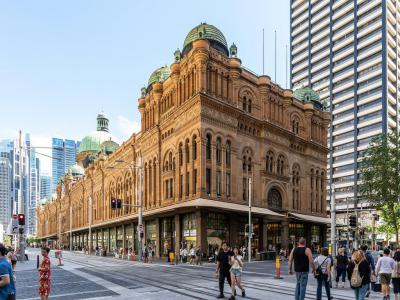
The Queen Victoria Building (QVB) occupies an entire block bounded by George, Market, York, and Druitt Streets and stands as one of Sydney’s most substantial late 19th-century public buildings. Completed in 1898 and designed by George McRae, it was built during an economic depression to provide employment for skilled workers. The building was named in honour of Queen Victoria’s Diamond Jubilee and was intended to serve as a major commercial space for markets and small businesses.
Designed in the Romanesque Revival style, the QVB features sandstone façades, rounded arches, arcades, and detailed stone carving. Its most prominent feature is the large copper-clad central dome, supported by four smaller domes at the corners. The scale and architectural style show the city’s interest in adopting substantial European design influences for its civic buildings.
Inside, the QVB is arranged across five internal levels, including a basement level linked to public transport and lower-priced retailers. The central atrium extends upward through the building, bringing natural light from the dome into the interior. Restored mosaic floors, stained-glass windows, cast-iron balustrades, and decorative arches reflect the original craftsmanship. The levels are connected by staircases and escalators that maintain clear views across the galleries and the length of the atrium.
Throughout the 20th century, the building housed offices and municipal services, and its condition declined until a major restoration in the 1980s returned it to commercial use. The project introduced modern amenities while preserving the building’s structural and decorative features.
Today, the QVB contains boutiques, cafés, and specialty shops and remains a central part of Sydney’s retail environment. Two large mechanical clocks—the Royal Clock and the Great Australian Clock—hang above the atrium and display rotating historical scenes. Outside the Druitt Street entrance stands a statue of Queen Victoria, sculpted by John Hughes in 1908 for Dublin and relocated to Sydney in 1982.
Designed in the Romanesque Revival style, the QVB features sandstone façades, rounded arches, arcades, and detailed stone carving. Its most prominent feature is the large copper-clad central dome, supported by four smaller domes at the corners. The scale and architectural style show the city’s interest in adopting substantial European design influences for its civic buildings.
Inside, the QVB is arranged across five internal levels, including a basement level linked to public transport and lower-priced retailers. The central atrium extends upward through the building, bringing natural light from the dome into the interior. Restored mosaic floors, stained-glass windows, cast-iron balustrades, and decorative arches reflect the original craftsmanship. The levels are connected by staircases and escalators that maintain clear views across the galleries and the length of the atrium.
Throughout the 20th century, the building housed offices and municipal services, and its condition declined until a major restoration in the 1980s returned it to commercial use. The project introduced modern amenities while preserving the building’s structural and decorative features.
Today, the QVB contains boutiques, cafés, and specialty shops and remains a central part of Sydney’s retail environment. Two large mechanical clocks—the Royal Clock and the Great Australian Clock—hang above the atrium and display rotating historical scenes. Outside the Druitt Street entrance stands a statue of Queen Victoria, sculpted by John Hughes in 1908 for Dublin and relocated to Sydney in 1982.
4) Sydney Tower (must see)
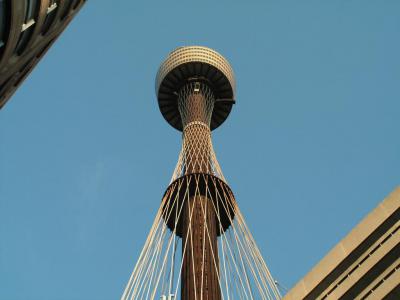
Sydney Tower, also known as the Sydney Tower Eye, is the tallest structure in Sydney and one of the city’s most distinctive modern landmarks. Rising 309 metres above street level from the Centrepoint complex on Market Street, it dominates the skyline of the central business district.
Designed by Australian architect Donald Crone, construction began in 1975 and was completed in 1981, reflecting the city’s growth and architectural ambition during the late 20th century. The tower’s slender central shaft supports a golden turret that houses the observation decks, restaurants, and communication facilities, creating both a functional and symbolic focal point for the city.
The tower’s reinforced concrete core is anchored deep into Sydney’s sandstone bedrock, enabling it to withstand winds of up to 172 kilometres per hour and minor seismic activity. During an earthquake, the tower has been recorded to sway by as much as 30 centimetres, well within its design limits.
The enclosed Sydney Tower Eye observation deck sits 250 metres above ground, offering panoramic 360-degree views across Sydney Harbour, the Blue Mountains, and the Pacific coastline. Above it, the SKYWALK, at 268 metres, provides an open-air experience where visitors step out onto glass platforms while securely harnessed to admire the city from one of its highest points.
Within the turret, the tower features two revolving dining venues—a fine-dining restaurant and a buffet restaurant—that complete a full rotation roughly every 70 to 90 minutes. High-speed lifts transport visitors to the top in under a minute, while the tower’s illumination at night has become an integral feature of Sydney’s skyline, often changing colour to mark cultural events and celebrations. Combining architectural innovation, precise engineering, and sweeping views, Sydney Tower remains a defining symbol of the city’s vertical growth and contemporary identity.
Designed by Australian architect Donald Crone, construction began in 1975 and was completed in 1981, reflecting the city’s growth and architectural ambition during the late 20th century. The tower’s slender central shaft supports a golden turret that houses the observation decks, restaurants, and communication facilities, creating both a functional and symbolic focal point for the city.
The tower’s reinforced concrete core is anchored deep into Sydney’s sandstone bedrock, enabling it to withstand winds of up to 172 kilometres per hour and minor seismic activity. During an earthquake, the tower has been recorded to sway by as much as 30 centimetres, well within its design limits.
The enclosed Sydney Tower Eye observation deck sits 250 metres above ground, offering panoramic 360-degree views across Sydney Harbour, the Blue Mountains, and the Pacific coastline. Above it, the SKYWALK, at 268 metres, provides an open-air experience where visitors step out onto glass platforms while securely harnessed to admire the city from one of its highest points.
Within the turret, the tower features two revolving dining venues—a fine-dining restaurant and a buffet restaurant—that complete a full rotation roughly every 70 to 90 minutes. High-speed lifts transport visitors to the top in under a minute, while the tower’s illumination at night has become an integral feature of Sydney’s skyline, often changing colour to mark cultural events and celebrations. Combining architectural innovation, precise engineering, and sweeping views, Sydney Tower remains a defining symbol of the city’s vertical growth and contemporary identity.
5) Hyde Park
Hyde Park is the city's oldest public park, a green expanse stretching from St James Station to Liverpool Street in the city centre. Established in 1810 on land once used for colonial grazing and military drills, it was named after London’s Hyde Park and formally landscaped in the 1920s with tree-lined avenues, lawns, and fountains. The park’s symmetrical layout, dominated by rows of towering fig trees, provides a calm, shaded space surrounded by some of Sydney’s grandest civic buildings, including St Mary’s Cathedral, the Supreme Court, and the Australian Museum.
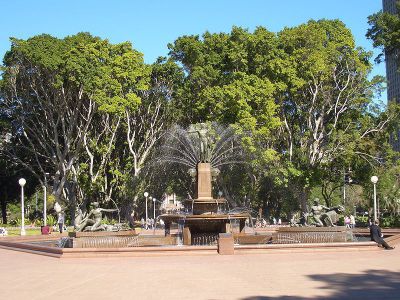
At the northern end stands the Archibald Fountain, unveiled in 1932, an Art Deco masterpiece by French sculptor François-Léon Sicard. The bronze figures, inspired by Greek mythology, are set against a spray of water and reflect the park’s blend of European design with Australian landscape. Nearby statues commemorate historical figures such as Captain Cook and James Martin, connecting the park to the city’s colonial past.
The southern section of Hyde Park is home to the ANZAC War Memorial and the Pool of Reflection, creating a solemn counterpoint to the more social spaces to the north. Paths radiate outward from these landmarks toward lawns where office workers, tourists, and locals gather throughout the day. Events, festivals, and public ceremonies frequently occupy the park, while the steady rhythm of pedestrians beneath the trees maintains its role as both a thoroughfare and a sanctuary within Sydney’s urban core.
At the northern end stands the Archibald Fountain, unveiled in 1932, an Art Deco masterpiece by French sculptor François-Léon Sicard. The bronze figures, inspired by Greek mythology, are set against a spray of water and reflect the park’s blend of European design with Australian landscape. Nearby statues commemorate historical figures such as Captain Cook and James Martin, connecting the park to the city’s colonial past.
The southern section of Hyde Park is home to the ANZAC War Memorial and the Pool of Reflection, creating a solemn counterpoint to the more social spaces to the north. Paths radiate outward from these landmarks toward lawns where office workers, tourists, and locals gather throughout the day. Events, festivals, and public ceremonies frequently occupy the park, while the steady rhythm of pedestrians beneath the trees maintains its role as both a thoroughfare and a sanctuary within Sydney’s urban core.
6) Saint Mary's Cathedral (must see)
Saint Mary’s Cathedral is one of Sydney’s most distinguished architectural and cultural landmarks, situated on College Street beside Hyde Park. It serves as the principal church of the Catholic Archdiocese of Sydney and occupies the site of the first Catholic chapel established in the colony in 1821. The present cathedral was designed by English-born architect William Wardell, who began work on it in 1868.
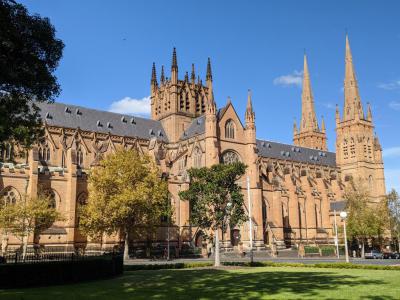
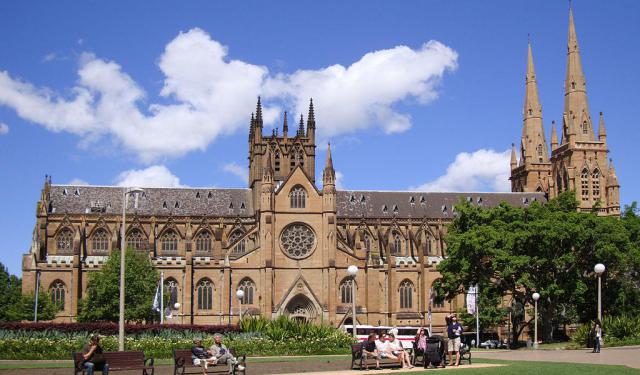
Constructed from warm Pyrmont sandstone, the building is an outstanding example of the Gothic Revival style, drawing inspiration from the great cathedrals of Europe while adapting to the Australian climate and light. Its pointed arches, ribbed vaults, and flying buttresses give the structure both grace and strength, while the twin spires, completed in 2000, now stand as defining features of Sydney’s skyline.
The interior of Saint Mary’s is richly detailed, filled with colour and craftsmanship that reveal its long history. High stone columns rise toward a vaulted ceiling illuminated by shafts of filtered light from the stained-glass windows, many of which were created by renowned English and Australian artists.
The rose window above the western entrance casts intricate patterns across the nave, while the carved reredos, choir stalls, and marble altar demonstrate the precision and artistry of 19th-century ecclesiastical design. The cathedral’s proportions and acoustics give it an impressive sense of stillness, especially during organ recitals and choir performances that continue its long tradition of sacred music.
Below the main floor lies the crypt, a quiet chamber adorned with mosaic floors depicting Australian flora and fauna. It houses the tombs of Sydney’s early bishops and archbishops, including Cardinal Norman Gilroy, the first Australian-born cardinal.
The cathedral precinct extends into landscaped gardens and the open Cathedral Square, which connects the building visually to Hyde Park and provides a gathering space for services and civic events. Set beside open parkland and backed by the city’s towers, Saint Mary’s Cathedral remains a clear example of major 19th- and 20th-century church architecture and an important part of Sydney’s historical landscape.
Constructed from warm Pyrmont sandstone, the building is an outstanding example of the Gothic Revival style, drawing inspiration from the great cathedrals of Europe while adapting to the Australian climate and light. Its pointed arches, ribbed vaults, and flying buttresses give the structure both grace and strength, while the twin spires, completed in 2000, now stand as defining features of Sydney’s skyline.
The interior of Saint Mary’s is richly detailed, filled with colour and craftsmanship that reveal its long history. High stone columns rise toward a vaulted ceiling illuminated by shafts of filtered light from the stained-glass windows, many of which were created by renowned English and Australian artists.
The rose window above the western entrance casts intricate patterns across the nave, while the carved reredos, choir stalls, and marble altar demonstrate the precision and artistry of 19th-century ecclesiastical design. The cathedral’s proportions and acoustics give it an impressive sense of stillness, especially during organ recitals and choir performances that continue its long tradition of sacred music.
Below the main floor lies the crypt, a quiet chamber adorned with mosaic floors depicting Australian flora and fauna. It houses the tombs of Sydney’s early bishops and archbishops, including Cardinal Norman Gilroy, the first Australian-born cardinal.
The cathedral precinct extends into landscaped gardens and the open Cathedral Square, which connects the building visually to Hyde Park and provides a gathering space for services and civic events. Set beside open parkland and backed by the city’s towers, Saint Mary’s Cathedral remains a clear example of major 19th- and 20th-century church architecture and an important part of Sydney’s historical landscape.
7) Hyde Park Barracks
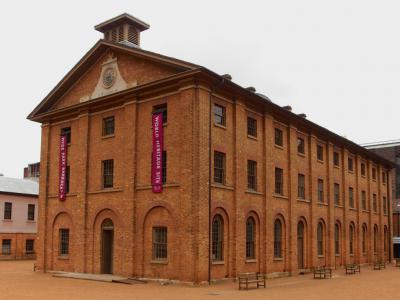
Hyde Park Barracks is one of the city's most significant colonial-era buildings, located on Macquarie Street opposite Hyde Park. Designed by Francis Greenway, the colony’s first government architect, it was completed in 1819 under Governor Lachlan Macquarie to house male convicts working on public projects. Built from local brick in the Georgian style, the structure features a symmetrical façade, arched windows, and a central clock tower—an expression of order and control in the early penal colony.
The barracks played a central role in Sydney’s transformation from a penal settlement to a developing city. After convict transportation ended, the building served various purposes, including as an immigration depot for women, an asylum, and later government offices. Each phase left physical traces—graffiti, personal belongings, and architectural modifications—that reveal the layered history of the site. Careful restoration has preserved these elements, allowing visitors to experience the building as a living record of Australia’s social and political evolution.
Today, the Hyde Park Barracks operates as a museum managed by Sydney Living Museums and listed as a UNESCO World Heritage Site for its outstanding value to the history of convict transportation. Interactive displays, archaeological finds, and reconstructed sleeping quarters provide insight into the daily life of its inhabitants. Visitors can walk through the dormitories, explore original cells, and listen to stories drawn from archival records that bring the experiences of convicts and migrants into sharp focus within the walls of this early 19th-century landmark.
The barracks played a central role in Sydney’s transformation from a penal settlement to a developing city. After convict transportation ended, the building served various purposes, including as an immigration depot for women, an asylum, and later government offices. Each phase left physical traces—graffiti, personal belongings, and architectural modifications—that reveal the layered history of the site. Careful restoration has preserved these elements, allowing visitors to experience the building as a living record of Australia’s social and political evolution.
Today, the Hyde Park Barracks operates as a museum managed by Sydney Living Museums and listed as a UNESCO World Heritage Site for its outstanding value to the history of convict transportation. Interactive displays, archaeological finds, and reconstructed sleeping quarters provide insight into the daily life of its inhabitants. Visitors can walk through the dormitories, explore original cells, and listen to stories drawn from archival records that bring the experiences of convicts and migrants into sharp focus within the walls of this early 19th-century landmark.
8) Sydney Mint
The Sydney Mint is one of the city’s most significant colonial buildings, located on Macquarie Street within Sydney’s historic civic precinct. Originally constructed between 1811 and 1816 as part of Governor Lachlan Macquarie’s “Rum Hospital,” it is the oldest surviving public building in central Sydney.
The structure was converted into a branch of the Royal Mint in 1855, the first outside Britain, to produce gold sovereigns from metal mined during the New South Wales gold rush. This adaptation introduced Australia’s earliest examples of prefabricated cast-iron and copper components, imported from England and assembled on-site.
The complex combines Georgian architecture from the hospital era with mid-19th-century industrial design elements added during its conversion. The Coining Factory, workshops, and offices once housed hundreds of workers, including skilled engravers and engineers. Although the mint ceased coin production in 1926, much of its machinery and architectural detailing have been preserved, illustrating Sydney’s transition from a penal colony to an industrial and economic centre.
Today, the Sydney Mint is managed by Sydney Living Museums and houses offices, exhibition spaces, and a café overlooking the courtyard. Interpretive displays trace the building’s layered history—from convict construction to gold production—alongside artefacts such as early minting tools and architectural plans.
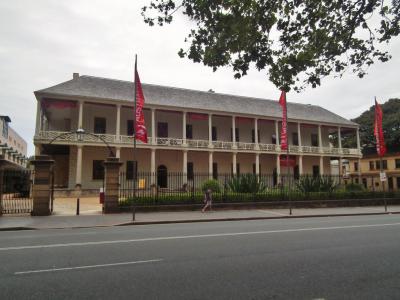
The sandstone façade and colonnaded verandas remain key features of Macquarie Street’s heritage streetscape, standing beside the Hyde Park Barracks and Parliament House as part of a rare group of surviving early colonial institutions that shaped Sydney’s development.
The structure was converted into a branch of the Royal Mint in 1855, the first outside Britain, to produce gold sovereigns from metal mined during the New South Wales gold rush. This adaptation introduced Australia’s earliest examples of prefabricated cast-iron and copper components, imported from England and assembled on-site.
The complex combines Georgian architecture from the hospital era with mid-19th-century industrial design elements added during its conversion. The Coining Factory, workshops, and offices once housed hundreds of workers, including skilled engravers and engineers. Although the mint ceased coin production in 1926, much of its machinery and architectural detailing have been preserved, illustrating Sydney’s transition from a penal colony to an industrial and economic centre.
Today, the Sydney Mint is managed by Sydney Living Museums and houses offices, exhibition spaces, and a café overlooking the courtyard. Interpretive displays trace the building’s layered history—from convict construction to gold production—alongside artefacts such as early minting tools and architectural plans.
The sandstone façade and colonnaded verandas remain key features of Macquarie Street’s heritage streetscape, standing beside the Hyde Park Barracks and Parliament House as part of a rare group of surviving early colonial institutions that shaped Sydney’s development.
9) Parliament House
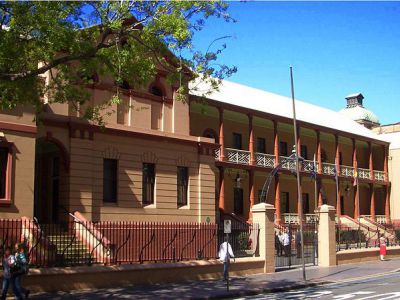
Parliament House stands along Macquarie Street, forming part of the city’s most historic civic precinct. It is the seat of the Parliament of New South Wales, the oldest continuous parliament in Australia, and occupies buildings that date back to the early 19th century. The oldest section was originally part of the Rum Hospital, constructed under Governor Lachlan Macquarie between 1811 and 1816, before being adapted for legislative use in the 1820s. Its Georgian façade of sandstone and simple symmetry reflects the restrained architectural style of the colonial era.
Over time, the complex expanded to accommodate the growing functions of government. Behind the original Georgian frontage stand modern extensions completed in the 1970s and 1980s, designed to provide chambers, offices, and public galleries. These additions maintain the building’s civic presence while contrasting with the simplicity of the early structure. Visitors can explore both old and new spaces, tracing how the architecture mirrors the evolution of parliamentary democracy in New South Wales.
Public tours and exhibitions inside Parliament House offer insight into the workings of the Legislative Assembly and Legislative Council, as well as the history of lawmaking in the colony and state. The site’s location next to the State Library of New South Wales and opposite Hyde Park Barracks places it within a cluster of significant institutions established during Sydney’s formative years.
Over time, the complex expanded to accommodate the growing functions of government. Behind the original Georgian frontage stand modern extensions completed in the 1970s and 1980s, designed to provide chambers, offices, and public galleries. These additions maintain the building’s civic presence while contrasting with the simplicity of the early structure. Visitors can explore both old and new spaces, tracing how the architecture mirrors the evolution of parliamentary democracy in New South Wales.
Public tours and exhibitions inside Parliament House offer insight into the workings of the Legislative Assembly and Legislative Council, as well as the history of lawmaking in the colony and state. The site’s location next to the State Library of New South Wales and opposite Hyde Park Barracks places it within a cluster of significant institutions established during Sydney’s formative years.
10) Macquarie Street
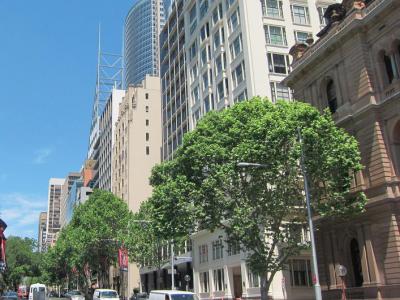
Macquarie Street is one of the grandest and most historically significant avenues in the city, running from Hyde Park at its southern end to the Sydney Opera House at its northern terminus. Established in the early 19th century under Governor Lachlan Macquarie, the street was conceived as a civic showcase for the colony—an avenue lined with the institutions that would embody its progress and stability. Stretching along the eastern edge of the city centre, it remains Sydney’s principal heritage boulevard, linking government, culture, and architecture in a single linear composition.
Many of the city’s earliest and most important public buildings stand along Macquarie Street. The State Library of New South Wales, Sydney Hospital, and The Mint occupy part of the original “Rum Hospital” site, built under Macquarie’s direction in the 1810s. Nearby, the Hyde Park Barracks, designed by Francis Greenway, and the Parliament of New South Wales, which incorporates the remaining wings of the Rum Hospital, continue the line of Georgian sandstone buildings that define the street’s character. These structures, restrained and symmetrical, were crafted from local stone and remain enduring examples of colonial civic design.
Farther north, Macquarie Street opens toward the Domain, the Supreme Court, and the landscaped approaches to the Opera House. The juxtaposition of heritage façades and modern government buildings illustrates the evolution of Sydney’s civic identity across two centuries.
Many of the city’s earliest and most important public buildings stand along Macquarie Street. The State Library of New South Wales, Sydney Hospital, and The Mint occupy part of the original “Rum Hospital” site, built under Macquarie’s direction in the 1810s. Nearby, the Hyde Park Barracks, designed by Francis Greenway, and the Parliament of New South Wales, which incorporates the remaining wings of the Rum Hospital, continue the line of Georgian sandstone buildings that define the street’s character. These structures, restrained and symmetrical, were crafted from local stone and remain enduring examples of colonial civic design.
Farther north, Macquarie Street opens toward the Domain, the Supreme Court, and the landscaped approaches to the Opera House. The juxtaposition of heritage façades and modern government buildings illustrates the evolution of Sydney’s civic identity across two centuries.
11) Royal Botanic Gardens (must see)
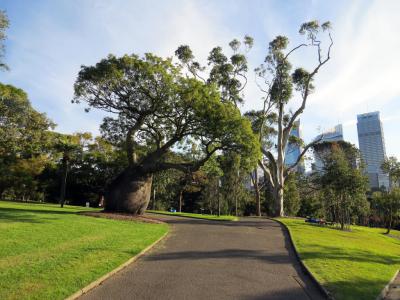
The Royal Botanic Gardens Sydney occupy a large stretch of open space along the eastern edge of Sydney Harbour, a short walk from the Sydney Opera House. Established in 1816, the gardens are Australia’s oldest scientific institution and continue to support research, conservation work, and public education.
Long before colonisation, the area was used by the Gadigal people of the Eora Nation, who harvested food and resources along the shoreline. After 1788, the site became the colony’s first farm before gradually developing into a formal botanic garden. Sandstone walls, mature trees, and waterfront paths frame the grounds and provide uninterrupted views of the harbour and city.
Covering more than 30 hectares, the gardens include a range of themed plant collections. The Palm Grove features species gathered since the 19th century, while the Succulent Garden presents arid-adapted plants from Australia and overseas. The Australian Rainforest Garden highlights the variety of rainforest habitats found across the country. Pathways connect these areas with open lawns, ponds, and shaded groves, creating a layout that supports both scientific displays and everyday recreation. Wildlife is common throughout the gardens, with flying foxes, cockatoos, and waterbirds using the grounds as feeding and roosting sites.
Historical features such as gates, fountains, and memorials mark earlier phases of garden development and illustrate the changing priorities of plant collection and landscape design over two centuries. Seasonal plantings, orchid displays, and rare species collections draw visitors with an interest in botany, horticulture, and photography.
A key facility within the gardens is The Calyx, a contemporary glasshouse and exhibition space used for rotating horticultural shows and public programs focused on biodiversity and environmental themes. The gardens also house the Herbarium of New South Wales, which holds extensive preserved plant specimens used for scientific research.
Along the waterfront, Mrs Macquarie’s Chair provides views across the harbour to the Sydney Harbour Bridge and Opera House. The Farm Cove Walk links the gardens to surrounding foreshore paths, making the area a central point in Sydney’s network of harbour-side walking routes.
Long before colonisation, the area was used by the Gadigal people of the Eora Nation, who harvested food and resources along the shoreline. After 1788, the site became the colony’s first farm before gradually developing into a formal botanic garden. Sandstone walls, mature trees, and waterfront paths frame the grounds and provide uninterrupted views of the harbour and city.
Covering more than 30 hectares, the gardens include a range of themed plant collections. The Palm Grove features species gathered since the 19th century, while the Succulent Garden presents arid-adapted plants from Australia and overseas. The Australian Rainforest Garden highlights the variety of rainforest habitats found across the country. Pathways connect these areas with open lawns, ponds, and shaded groves, creating a layout that supports both scientific displays and everyday recreation. Wildlife is common throughout the gardens, with flying foxes, cockatoos, and waterbirds using the grounds as feeding and roosting sites.
Historical features such as gates, fountains, and memorials mark earlier phases of garden development and illustrate the changing priorities of plant collection and landscape design over two centuries. Seasonal plantings, orchid displays, and rare species collections draw visitors with an interest in botany, horticulture, and photography.
A key facility within the gardens is The Calyx, a contemporary glasshouse and exhibition space used for rotating horticultural shows and public programs focused on biodiversity and environmental themes. The gardens also house the Herbarium of New South Wales, which holds extensive preserved plant specimens used for scientific research.
Along the waterfront, Mrs Macquarie’s Chair provides views across the harbour to the Sydney Harbour Bridge and Opera House. The Farm Cove Walk links the gardens to surrounding foreshore paths, making the area a central point in Sydney’s network of harbour-side walking routes.
12) Old Government House
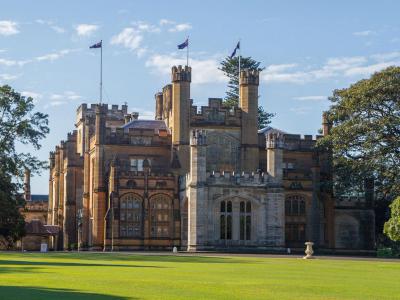
Old Government House stands within Parramatta Park, about 25 kilometres west of central Sydney, and is Australia’s oldest surviving public building. Constructed between 1799 and 1816, it served as the country residence of the first ten governors of New South Wales. The house was designed by John Watts, a former officer of the Royal Marines who served as aide-de-camp to Governor Lachlan Macquarie, and built by convict labour from locally quarried sandstone. Its Georgian style and commanding position on a ridge above the Parramatta River reflected the authority and aspirations of the early colonial administration.
The architecture combines British neoclassical symmetry with subtle adaptations to the Australian climate, including wide verandas and high-ceilinged rooms that allow for natural ventilation. Inside, the restored drawing rooms, studies, and bedrooms are furnished with period pieces that illustrate the domestic and official life of the governors and their families. The layout also includes service areas and offices that reveal the integration of working and living spaces in early colonial households.
The surrounding estate once encompassed extensive farmland and bushland, forming part of the original Governor’s Domain, where crops were cultivated and experiments in agriculture took place. Now managed by the National Trust of Australia (NSW), Old Government House is part of the UNESCO World Heritage–listed Australian Convict Sites. Walking paths, gardens, and interpretive exhibits connect the property to Parramatta’s early landscape, offering insight into the foundations of governance, labour, and settlement in colonial New South Wales.
The property occupies Darug land that was home to the Burramatta Tribe. Some of the trees surrounding the house still bear scars of the bark stripped to make canoes by the Aborigines. The Historic Houses Trust of New South Wales managing the Old Government House operates tours including a “haunted house” tour of the property.
The architecture combines British neoclassical symmetry with subtle adaptations to the Australian climate, including wide verandas and high-ceilinged rooms that allow for natural ventilation. Inside, the restored drawing rooms, studies, and bedrooms are furnished with period pieces that illustrate the domestic and official life of the governors and their families. The layout also includes service areas and offices that reveal the integration of working and living spaces in early colonial households.
The surrounding estate once encompassed extensive farmland and bushland, forming part of the original Governor’s Domain, where crops were cultivated and experiments in agriculture took place. Now managed by the National Trust of Australia (NSW), Old Government House is part of the UNESCO World Heritage–listed Australian Convict Sites. Walking paths, gardens, and interpretive exhibits connect the property to Parramatta’s early landscape, offering insight into the foundations of governance, labour, and settlement in colonial New South Wales.
The property occupies Darug land that was home to the Burramatta Tribe. Some of the trees surrounding the house still bear scars of the bark stripped to make canoes by the Aborigines. The Historic Houses Trust of New South Wales managing the Old Government House operates tours including a “haunted house” tour of the property.
13) Sydney Opera House (must see)
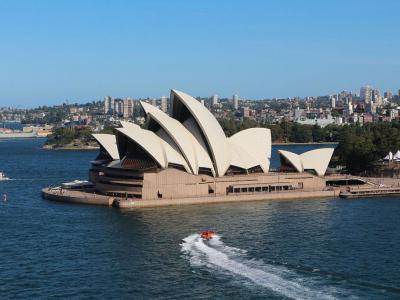
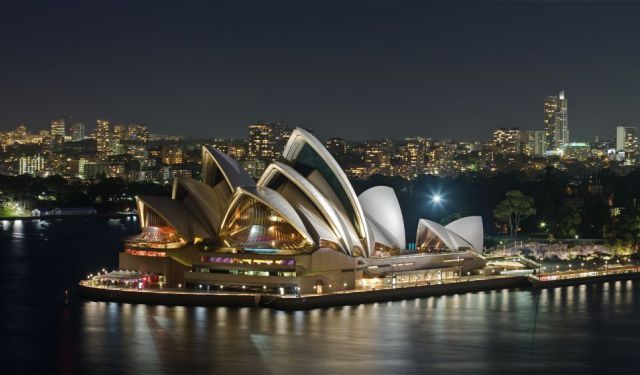
The Sydney Opera House is one of the most celebrated architectural works of the 20th century, situated on Bennelong Point at the edge of Sydney Harbour. Designed by Danish architect Jørn Utzon, it was selected from an international competition held in 1957 and officially opened in 1973 after sixteen years of design and construction.
The building’s distinctive series of white, sail-like shells rising above the harbour have made it an enduring symbol of Australia. Its setting, framed by the Sydney Harbour Bridge and surrounded by water on three sides, amplifies its sculptural form and connection to the natural environment.
The design combines engineering innovation with artistic vision. The roof shells—composed of precast concrete segments arranged in spherical geometry—were an unprecedented structural achievement for their time.
Beneath them, the complex houses multiple performance venues, including the Concert Hall, Joan Sutherland Theatre, Drama Theatre, Playhouse, and Studio. Each space was designed for a specific type of performance, from orchestral and opera productions to contemporary dance and theatre. The Concert Hall, with its soaring timber ceilings and exceptional acoustics, remains the largest and most recognisable of the interior spaces.
The Opera House was designated a UNESCO World Heritage Site in 2007, recognised for its groundbreaking design and influence on modern architecture. Since its opening, it has hosted millions of visitors annually and serves as the home of the Sydney Symphony Orchestra, Opera Australia, and The Australian Ballet, among others.
Beyond its stages, the building’s terraces and promenades offer sweeping views of the harbour, making it both a cultural and civic gathering place. Guided tours reveal the story of its conception, Utzon’s departure before completion, and the later restoration of his design principles in the building’s ongoing renewal.
The building’s distinctive series of white, sail-like shells rising above the harbour have made it an enduring symbol of Australia. Its setting, framed by the Sydney Harbour Bridge and surrounded by water on three sides, amplifies its sculptural form and connection to the natural environment.
The design combines engineering innovation with artistic vision. The roof shells—composed of precast concrete segments arranged in spherical geometry—were an unprecedented structural achievement for their time.
Beneath them, the complex houses multiple performance venues, including the Concert Hall, Joan Sutherland Theatre, Drama Theatre, Playhouse, and Studio. Each space was designed for a specific type of performance, from orchestral and opera productions to contemporary dance and theatre. The Concert Hall, with its soaring timber ceilings and exceptional acoustics, remains the largest and most recognisable of the interior spaces.
The Opera House was designated a UNESCO World Heritage Site in 2007, recognised for its groundbreaking design and influence on modern architecture. Since its opening, it has hosted millions of visitors annually and serves as the home of the Sydney Symphony Orchestra, Opera Australia, and The Australian Ballet, among others.
Beyond its stages, the building’s terraces and promenades offer sweeping views of the harbour, making it both a cultural and civic gathering place. Guided tours reveal the story of its conception, Utzon’s departure before completion, and the later restoration of his design principles in the building’s ongoing renewal.
Walking Tours in Sydney, Australia

Create Your Own Walk in Sydney
Creating your own self-guided walk in Sydney is easy and fun. Choose the city attractions that you want to see and a walk route map will be created just for you. You can even set your hotel as the start point of the walk.
Sydney's Historical Churches
Over the years, Sydney's historical churches have aroused a sense of admiration in many beholders. Some of these buildings have even become iconic symbols of Sydney, well worth going a good way to see as vivid examples of both historical and architectural value.
The impressive Early English-style of architecture seen in Saint Mary's Cathedral is said to have inspired the American... view more
Tour Duration: 1 Hour(s)
Travel Distance: 3.2 Km or 2 Miles
The impressive Early English-style of architecture seen in Saint Mary's Cathedral is said to have inspired the American... view more
Tour Duration: 1 Hour(s)
Travel Distance: 3.2 Km or 2 Miles
Newtown Street Murals Walking Tour
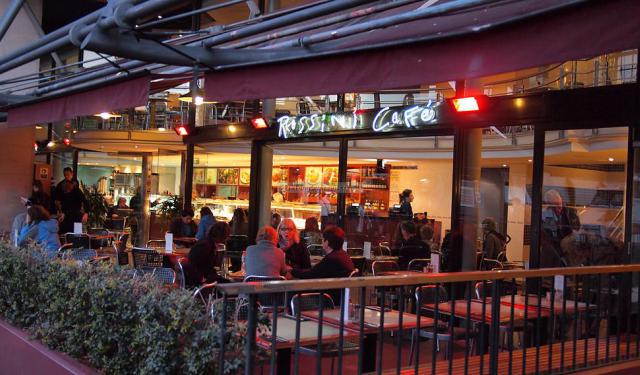
Whenever you think of street art in Sydney, one suburb immediately springs to mind and that is Newtown. Largely regarded as Sydney’s coolest neighborhood, this is a ground zero of the city's mural art scene.
Ever since the early 1990s, with the appearance of the famous “I Have a Dream” Mural on King Street, a powerful depiction of Martin Luther King Junior's iconic speech, this... view more
Tour Duration: 1 Hour(s)
Travel Distance: 1.3 Km or 0.8 Miles
Ever since the early 1990s, with the appearance of the famous “I Have a Dream” Mural on King Street, a powerful depiction of Martin Luther King Junior's iconic speech, this... view more
Tour Duration: 1 Hour(s)
Travel Distance: 1.3 Km or 0.8 Miles
Historic Buildings Walking Tour
One of the Australia’s largest cities, Sydney is also the country's oldest metropolis. It has no shortage of impressive historical buildings, some dating back as far as the early 19th century. Many of the local landmarks, such as Sydney Town Hall, Queen Victoria Building (QVB), Hyde Park Barracks and others, are wonders in their own right and fit to delight any history buff.
One can... view more
Tour Duration: 2 Hour(s)
Travel Distance: 3.1 Km or 1.9 Miles
One can... view more
Tour Duration: 2 Hour(s)
Travel Distance: 3.1 Km or 1.9 Miles
The Rocks Walking Tour
The Rocks is a historic area and the oldest neighborhood in downtown Sydney. It was the site where on 26 January 1788 a Union flag was raised to announce the establishment of the first British penal colony in New South Wales. Many of the old stone buildings are made of quarry stones hand-chipped by early convicts, which gave the area its name.
Today's Rocks is a thriving locality packed... view more
Tour Duration: 1 Hour(s)
Travel Distance: 1.3 Km or 0.8 Miles
Today's Rocks is a thriving locality packed... view more
Tour Duration: 1 Hour(s)
Travel Distance: 1.3 Km or 0.8 Miles
Food Tour in Sydney
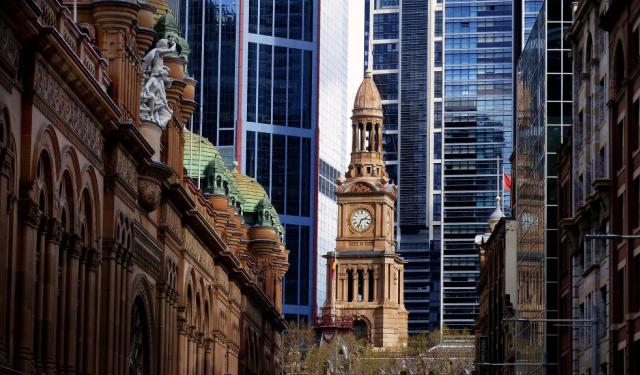
Sydney is a melting pot, and the local food culture is a sure testament to that. The inflow of immigrants from Europe and Asia over the years has turned the city into a much coveted foodie destination. This tour offers an introduction to the multifaceted and diverse food & brewery experience to be had here.
Start with Gateway Sydney, an upscale food court with WiFi and just about any kind... view more
Tour Duration: 1 Hour(s)
Travel Distance: 2.2 Km or 1.4 Miles
Start with Gateway Sydney, an upscale food court with WiFi and just about any kind... view more
Tour Duration: 1 Hour(s)
Travel Distance: 2.2 Km or 1.4 Miles
Useful Travel Guides for Planning Your Trip
Top 15 Aussie Souvenirs to Bring Home from Sydney
"You haven't been anywhere if you haven't been to Australia," they say, and you'd definitely want something tangible in hand to remind you of the g'days spent Down Under. In Sydney, you will find tonnes of distinctly Oz products that would serve this purpose...
The Most Popular Cities
/ view all