

Historic Buildings Walking Tour (Self Guided), Sydney
One of the Australia’s largest cities, Sydney is also the country's oldest metropolis. It has no shortage of impressive historical buildings, some dating back as far as the early 19th century. Many of the local landmarks, such as Sydney Town Hall, Queen Victoria Building (QVB), Hyde Park Barracks and others, are wonders in their own right and fit to delight any history buff.
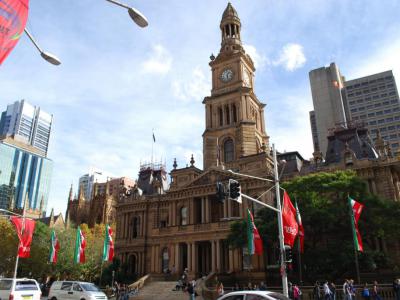
One can spend a good 30 minutes to an hour taking in the Town Hall’s peaceful and grand aura. Built towards the latter part of the 19th century, it is protected under the National Heritage List. With the Queen Victoria Building Shopping Centre nearby, there is no excuse for missing it!
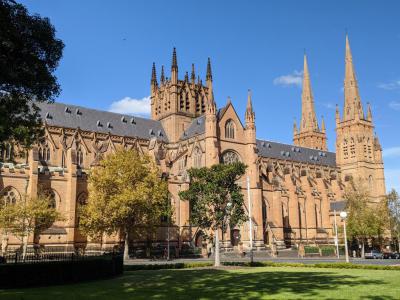
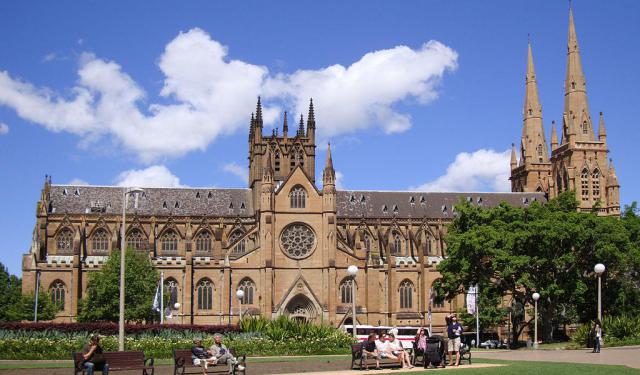
Shrouded in grandeur and an air of solemn history, St. Mary’s is foreboding in size and feel. Following in the tradition of Europe’s great cathedrals, it dominates its surroundings, sitting next to the Hyde Park Barracks and within a short walking distance of other sights like the historic Sydney Mint and the Parliament House.
Further along, there’s lots to like about the Customs House, including the newspapers, history murals, and library inside – but best of all is the miniature Sydney under the glass. Absolutely fascinating, and really gives you a nice perspective of the scale of the city’s buildings and harbors.
If you wish to visit these and other heritage sights in Sydney and to learn the city's story, embark on our self-guided walking tour.
One can spend a good 30 minutes to an hour taking in the Town Hall’s peaceful and grand aura. Built towards the latter part of the 19th century, it is protected under the National Heritage List. With the Queen Victoria Building Shopping Centre nearby, there is no excuse for missing it!
Shrouded in grandeur and an air of solemn history, St. Mary’s is foreboding in size and feel. Following in the tradition of Europe’s great cathedrals, it dominates its surroundings, sitting next to the Hyde Park Barracks and within a short walking distance of other sights like the historic Sydney Mint and the Parliament House.
Further along, there’s lots to like about the Customs House, including the newspapers, history murals, and library inside – but best of all is the miniature Sydney under the glass. Absolutely fascinating, and really gives you a nice perspective of the scale of the city’s buildings and harbors.
If you wish to visit these and other heritage sights in Sydney and to learn the city's story, embark on our self-guided walking tour.
How it works: Download the app "GPSmyCity: Walks in 1K+ Cities" from Apple App Store or Google Play Store to your mobile phone or tablet. The app turns your mobile device into a personal tour guide and its built-in GPS navigation functions guide you from one tour stop to next. The app works offline, so no data plan is needed when traveling abroad.
Historic Buildings Walking Tour Map
Guide Name: Historic Buildings Walking Tour
Guide Location: Australia » Sydney (See other walking tours in Sydney)
Guide Type: Self-guided Walking Tour (Sightseeing)
# of Attractions: 10
Tour Duration: 2 Hour(s)
Travel Distance: 3.1 Km or 1.9 Miles
Author: DanaOffice
Sight(s) Featured in This Guide:
Guide Location: Australia » Sydney (See other walking tours in Sydney)
Guide Type: Self-guided Walking Tour (Sightseeing)
# of Attractions: 10
Tour Duration: 2 Hour(s)
Travel Distance: 3.1 Km or 1.9 Miles
Author: DanaOffice
Sight(s) Featured in This Guide:
- Sydney Town Hall
- Queen Victoria Building (QVB)
- Saint Mary's Cathedral
- Hyde Park Barracks
- Sydney Mint
- Parliament House
- The Justice and Police Museum
- Customs House
- Susannah Place Museum
- Cadmans Cottage
1) Sydney Town Hall
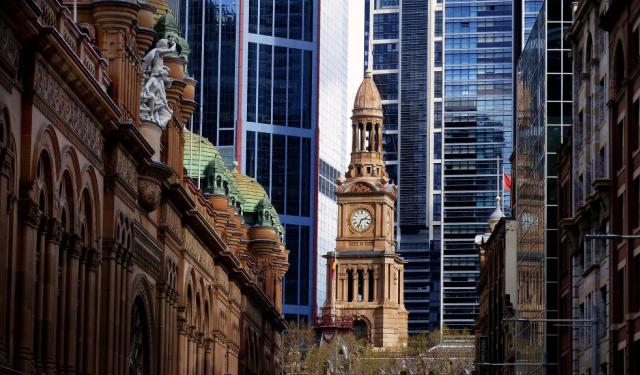
Sydney Town Hall stands on George Street in the heart of the city, serving as both a working civic building and one of Sydney’s finest examples of High Victorian architecture. Constructed between 1869 and 1889, it was designed by architects J.H. Willson and later Thomas Sapsford, replacing an earlier meeting hall that had become too small for the growing colony. Built from local sandstone, its elaborate façade features Corinthian columns, arched windows, domes, and intricate carvings that reflect the city’s confidence and prosperity in the late 19th century.
The building was erected on the site of Sydney’s first official cemetery, and archaeological traces of the early settlement remain beneath its foundations. Inside, the Centennial Hall, completed in 1889, is the building’s grandest space, renowned for its ornate plasterwork, stained-glass windows, and massive pipe organ, which was the largest in the world at the time of installation. The hall continues to host concerts, civic receptions, and ceremonial events, its acoustics and grandeur making it one of the most impressive interiors in Australia.
Sydney Town Hall also houses the chambers of the Lord Mayor and City Council, with public tours available to explore its historic rooms, including the richly decorated vestibule and staircases. The clock tower, rising 55 metres above George Street, remains a prominent feature of the city’s skyline.
The building was erected on the site of Sydney’s first official cemetery, and archaeological traces of the early settlement remain beneath its foundations. Inside, the Centennial Hall, completed in 1889, is the building’s grandest space, renowned for its ornate plasterwork, stained-glass windows, and massive pipe organ, which was the largest in the world at the time of installation. The hall continues to host concerts, civic receptions, and ceremonial events, its acoustics and grandeur making it one of the most impressive interiors in Australia.
Sydney Town Hall also houses the chambers of the Lord Mayor and City Council, with public tours available to explore its historic rooms, including the richly decorated vestibule and staircases. The clock tower, rising 55 metres above George Street, remains a prominent feature of the city’s skyline.
2) Queen Victoria Building (QVB) (must see)
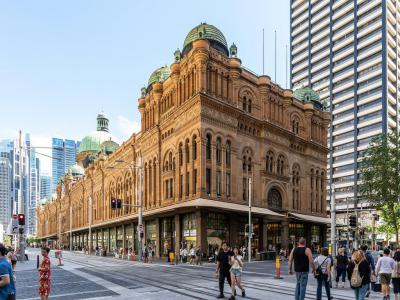
The Queen Victoria Building (QVB) occupies an entire block bounded by George, Market, York, and Druitt Streets and stands as one of Sydney’s most substantial late 19th-century public buildings. Completed in 1898 and designed by George McRae, it was built during an economic depression to provide employment for skilled workers. The building was named in honour of Queen Victoria’s Diamond Jubilee and was intended to serve as a major commercial space for markets and small businesses.
Designed in the Romanesque Revival style, the QVB features sandstone façades, rounded arches, arcades, and detailed stone carving. Its most prominent feature is the large copper-clad central dome, supported by four smaller domes at the corners. The scale and architectural style show the city’s interest in adopting substantial European design influences for its civic buildings.
Inside, the QVB is arranged across five internal levels, including a basement level linked to public transport and lower-priced retailers. The central atrium extends upward through the building, bringing natural light from the dome into the interior. Restored mosaic floors, stained-glass windows, cast-iron balustrades, and decorative arches reflect the original craftsmanship. The levels are connected by staircases and escalators that maintain clear views across the galleries and the length of the atrium.
Throughout the 20th century, the building housed offices and municipal services, and its condition declined until a major restoration in the 1980s returned it to commercial use. The project introduced modern amenities while preserving the building’s structural and decorative features.
Today, the QVB contains boutiques, cafés, and specialty shops and remains a central part of Sydney’s retail environment. Two large mechanical clocks—the Royal Clock and the Great Australian Clock—hang above the atrium and display rotating historical scenes. Outside the Druitt Street entrance stands a statue of Queen Victoria, sculpted by John Hughes in 1908 for Dublin and relocated to Sydney in 1982.
Designed in the Romanesque Revival style, the QVB features sandstone façades, rounded arches, arcades, and detailed stone carving. Its most prominent feature is the large copper-clad central dome, supported by four smaller domes at the corners. The scale and architectural style show the city’s interest in adopting substantial European design influences for its civic buildings.
Inside, the QVB is arranged across five internal levels, including a basement level linked to public transport and lower-priced retailers. The central atrium extends upward through the building, bringing natural light from the dome into the interior. Restored mosaic floors, stained-glass windows, cast-iron balustrades, and decorative arches reflect the original craftsmanship. The levels are connected by staircases and escalators that maintain clear views across the galleries and the length of the atrium.
Throughout the 20th century, the building housed offices and municipal services, and its condition declined until a major restoration in the 1980s returned it to commercial use. The project introduced modern amenities while preserving the building’s structural and decorative features.
Today, the QVB contains boutiques, cafés, and specialty shops and remains a central part of Sydney’s retail environment. Two large mechanical clocks—the Royal Clock and the Great Australian Clock—hang above the atrium and display rotating historical scenes. Outside the Druitt Street entrance stands a statue of Queen Victoria, sculpted by John Hughes in 1908 for Dublin and relocated to Sydney in 1982.
3) Saint Mary's Cathedral (must see)
Saint Mary’s Cathedral is one of Sydney’s most distinguished architectural and cultural landmarks, situated on College Street beside Hyde Park. It serves as the principal church of the Catholic Archdiocese of Sydney and occupies the site of the first Catholic chapel established in the colony in 1821. The present cathedral was designed by English-born architect William Wardell, who began work on it in 1868.
Constructed from warm Pyrmont sandstone, the building is an outstanding example of the Gothic Revival style, drawing inspiration from the great cathedrals of Europe while adapting to the Australian climate and light. Its pointed arches, ribbed vaults, and flying buttresses give the structure both grace and strength, while the twin spires, completed in 2000, now stand as defining features of Sydney’s skyline.
The interior of Saint Mary’s is richly detailed, filled with colour and craftsmanship that reveal its long history. High stone columns rise toward a vaulted ceiling illuminated by shafts of filtered light from the stained-glass windows, many of which were created by renowned English and Australian artists.
The rose window above the western entrance casts intricate patterns across the nave, while the carved reredos, choir stalls, and marble altar demonstrate the precision and artistry of 19th-century ecclesiastical design. The cathedral’s proportions and acoustics give it an impressive sense of stillness, especially during organ recitals and choir performances that continue its long tradition of sacred music.
Below the main floor lies the crypt, a quiet chamber adorned with mosaic floors depicting Australian flora and fauna. It houses the tombs of Sydney’s early bishops and archbishops, including Cardinal Norman Gilroy, the first Australian-born cardinal.
The cathedral precinct extends into landscaped gardens and the open Cathedral Square, which connects the building visually to Hyde Park and provides a gathering space for services and civic events. Set beside open parkland and backed by the city’s towers, Saint Mary’s Cathedral remains a clear example of major 19th- and 20th-century church architecture and an important part of Sydney’s historical landscape.
Constructed from warm Pyrmont sandstone, the building is an outstanding example of the Gothic Revival style, drawing inspiration from the great cathedrals of Europe while adapting to the Australian climate and light. Its pointed arches, ribbed vaults, and flying buttresses give the structure both grace and strength, while the twin spires, completed in 2000, now stand as defining features of Sydney’s skyline.
The interior of Saint Mary’s is richly detailed, filled with colour and craftsmanship that reveal its long history. High stone columns rise toward a vaulted ceiling illuminated by shafts of filtered light from the stained-glass windows, many of which were created by renowned English and Australian artists.
The rose window above the western entrance casts intricate patterns across the nave, while the carved reredos, choir stalls, and marble altar demonstrate the precision and artistry of 19th-century ecclesiastical design. The cathedral’s proportions and acoustics give it an impressive sense of stillness, especially during organ recitals and choir performances that continue its long tradition of sacred music.
Below the main floor lies the crypt, a quiet chamber adorned with mosaic floors depicting Australian flora and fauna. It houses the tombs of Sydney’s early bishops and archbishops, including Cardinal Norman Gilroy, the first Australian-born cardinal.
The cathedral precinct extends into landscaped gardens and the open Cathedral Square, which connects the building visually to Hyde Park and provides a gathering space for services and civic events. Set beside open parkland and backed by the city’s towers, Saint Mary’s Cathedral remains a clear example of major 19th- and 20th-century church architecture and an important part of Sydney’s historical landscape.
4) Hyde Park Barracks
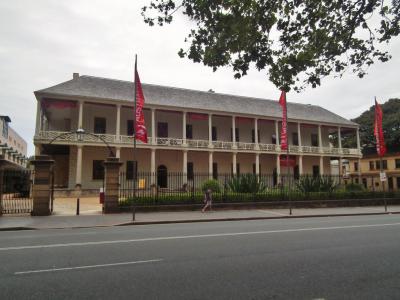
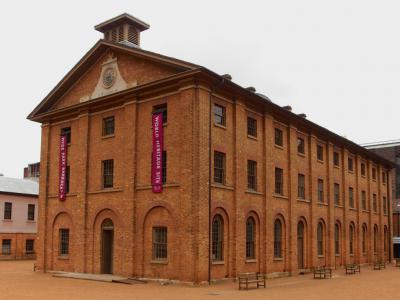
Hyde Park Barracks is one of the city's most significant colonial-era buildings, located on Macquarie Street opposite Hyde Park. Designed by Francis Greenway, the colony’s first government architect, it was completed in 1819 under Governor Lachlan Macquarie to house male convicts working on public projects. Built from local brick in the Georgian style, the structure features a symmetrical façade, arched windows, and a central clock tower—an expression of order and control in the early penal colony.
The barracks played a central role in Sydney’s transformation from a penal settlement to a developing city. After convict transportation ended, the building served various purposes, including as an immigration depot for women, an asylum, and later government offices. Each phase left physical traces—graffiti, personal belongings, and architectural modifications—that reveal the layered history of the site. Careful restoration has preserved these elements, allowing visitors to experience the building as a living record of Australia’s social and political evolution.
Today, the Hyde Park Barracks operates as a museum managed by Sydney Living Museums and listed as a UNESCO World Heritage Site for its outstanding value to the history of convict transportation. Interactive displays, archaeological finds, and reconstructed sleeping quarters provide insight into the daily life of its inhabitants. Visitors can walk through the dormitories, explore original cells, and listen to stories drawn from archival records that bring the experiences of convicts and migrants into sharp focus within the walls of this early 19th-century landmark.
The barracks played a central role in Sydney’s transformation from a penal settlement to a developing city. After convict transportation ended, the building served various purposes, including as an immigration depot for women, an asylum, and later government offices. Each phase left physical traces—graffiti, personal belongings, and architectural modifications—that reveal the layered history of the site. Careful restoration has preserved these elements, allowing visitors to experience the building as a living record of Australia’s social and political evolution.
Today, the Hyde Park Barracks operates as a museum managed by Sydney Living Museums and listed as a UNESCO World Heritage Site for its outstanding value to the history of convict transportation. Interactive displays, archaeological finds, and reconstructed sleeping quarters provide insight into the daily life of its inhabitants. Visitors can walk through the dormitories, explore original cells, and listen to stories drawn from archival records that bring the experiences of convicts and migrants into sharp focus within the walls of this early 19th-century landmark.
5) Sydney Mint
The Sydney Mint is one of the city’s most significant colonial buildings, located on Macquarie Street within Sydney’s historic civic precinct. Originally constructed between 1811 and 1816 as part of Governor Lachlan Macquarie’s “Rum Hospital,” it is the oldest surviving public building in central Sydney.
The structure was converted into a branch of the Royal Mint in 1855, the first outside Britain, to produce gold sovereigns from metal mined during the New South Wales gold rush. This adaptation introduced Australia’s earliest examples of prefabricated cast-iron and copper components, imported from England and assembled on-site.
The complex combines Georgian architecture from the hospital era with mid-19th-century industrial design elements added during its conversion. The Coining Factory, workshops, and offices once housed hundreds of workers, including skilled engravers and engineers. Although the mint ceased coin production in 1926, much of its machinery and architectural detailing have been preserved, illustrating Sydney’s transition from a penal colony to an industrial and economic centre.
Today, the Sydney Mint is managed by Sydney Living Museums and houses offices, exhibition spaces, and a café overlooking the courtyard. Interpretive displays trace the building’s layered history—from convict construction to gold production—alongside artefacts such as early minting tools and architectural plans.
The sandstone façade and colonnaded verandas remain key features of Macquarie Street’s heritage streetscape, standing beside the Hyde Park Barracks and Parliament House as part of a rare group of surviving early colonial institutions that shaped Sydney’s development.
The structure was converted into a branch of the Royal Mint in 1855, the first outside Britain, to produce gold sovereigns from metal mined during the New South Wales gold rush. This adaptation introduced Australia’s earliest examples of prefabricated cast-iron and copper components, imported from England and assembled on-site.
The complex combines Georgian architecture from the hospital era with mid-19th-century industrial design elements added during its conversion. The Coining Factory, workshops, and offices once housed hundreds of workers, including skilled engravers and engineers. Although the mint ceased coin production in 1926, much of its machinery and architectural detailing have been preserved, illustrating Sydney’s transition from a penal colony to an industrial and economic centre.
Today, the Sydney Mint is managed by Sydney Living Museums and houses offices, exhibition spaces, and a café overlooking the courtyard. Interpretive displays trace the building’s layered history—from convict construction to gold production—alongside artefacts such as early minting tools and architectural plans.
The sandstone façade and colonnaded verandas remain key features of Macquarie Street’s heritage streetscape, standing beside the Hyde Park Barracks and Parliament House as part of a rare group of surviving early colonial institutions that shaped Sydney’s development.
6) Parliament House
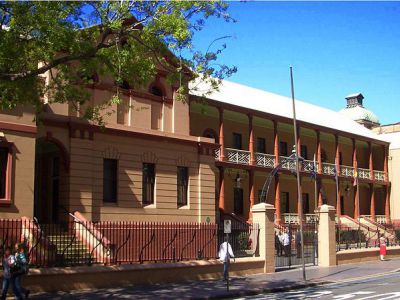
Parliament House stands along Macquarie Street, forming part of the city’s most historic civic precinct. It is the seat of the Parliament of New South Wales, the oldest continuous parliament in Australia, and occupies buildings that date back to the early 19th century. The oldest section was originally part of the Rum Hospital, constructed under Governor Lachlan Macquarie between 1811 and 1816, before being adapted for legislative use in the 1820s. Its Georgian façade of sandstone and simple symmetry reflects the restrained architectural style of the colonial era.
Over time, the complex expanded to accommodate the growing functions of government. Behind the original Georgian frontage stand modern extensions completed in the 1970s and 1980s, designed to provide chambers, offices, and public galleries. These additions maintain the building’s civic presence while contrasting with the simplicity of the early structure. Visitors can explore both old and new spaces, tracing how the architecture mirrors the evolution of parliamentary democracy in New South Wales.
Public tours and exhibitions inside Parliament House offer insight into the workings of the Legislative Assembly and Legislative Council, as well as the history of lawmaking in the colony and state. The site’s location next to the State Library of New South Wales and opposite Hyde Park Barracks places it within a cluster of significant institutions established during Sydney’s formative years.
Over time, the complex expanded to accommodate the growing functions of government. Behind the original Georgian frontage stand modern extensions completed in the 1970s and 1980s, designed to provide chambers, offices, and public galleries. These additions maintain the building’s civic presence while contrasting with the simplicity of the early structure. Visitors can explore both old and new spaces, tracing how the architecture mirrors the evolution of parliamentary democracy in New South Wales.
Public tours and exhibitions inside Parliament House offer insight into the workings of the Legislative Assembly and Legislative Council, as well as the history of lawmaking in the colony and state. The site’s location next to the State Library of New South Wales and opposite Hyde Park Barracks places it within a cluster of significant institutions established during Sydney’s formative years.
7) The Justice and Police Museum
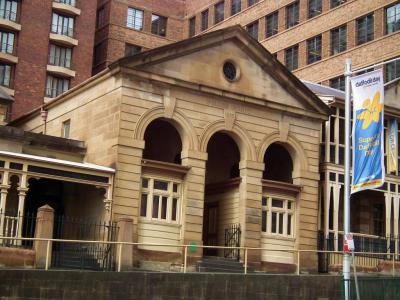
The Justice and Police Museum occupies a group of historic sandstone buildings at the corner of Albert and Phillip Streets, near Circular Quay. Constructed between 1856 and 1886, the site originally served as the Water Police Court and Police Station, housing both magistrates’ offices and holding cells. The architecture reflects Victorian Classical design, with arched windows, rusticated stonework, and iron-barred doorways that preserve the atmosphere of Sydney’s early legal institutions.
Inside, the museum presents exhibitions exploring crime, law enforcement, and justice in New South Wales from the colonial era to the present day. Restored interiors include the original Police Courtroom, Charge Room, and Cells, where visitors can step inside the narrow lockups once used to detain offenders. Displays feature historical photographs, crime scene evidence, mugshots, and artefacts from notable cases, tracing the evolution of policing and criminal investigation in Sydney.
Interactive exhibits and multimedia presentations provide insight into real-life stories of bushrangers, detectives, and courtroom drama, alongside more recent studies of forensic science and social change. Managed by Sydney Living Museums, the site retains much of its original character, offering a rare glimpse into the working conditions of 19th-century police and judiciary.
Inside, the museum presents exhibitions exploring crime, law enforcement, and justice in New South Wales from the colonial era to the present day. Restored interiors include the original Police Courtroom, Charge Room, and Cells, where visitors can step inside the narrow lockups once used to detain offenders. Displays feature historical photographs, crime scene evidence, mugshots, and artefacts from notable cases, tracing the evolution of policing and criminal investigation in Sydney.
Interactive exhibits and multimedia presentations provide insight into real-life stories of bushrangers, detectives, and courtroom drama, alongside more recent studies of forensic science and social change. Managed by Sydney Living Museums, the site retains much of its original character, offering a rare glimpse into the working conditions of 19th-century police and judiciary.
8) Customs House
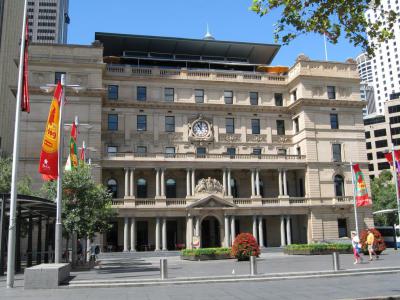
Customs House is one of Sydney’s most prominent heritage buildings, standing at Circular Quay where the city first developed around Sydney Cove. Completed in 1845, it originally served as the administrative centre for customs operations, overseeing trade entering the colony through the busy harbour. Built from local sandstone in a restrained Georgian style, the structure later gained Victorian and Federation-era extensions as commerce expanded. Its symmetrical façade, columned portico, and carved coat of arms express the authority and order of a growing colonial port.
Inside, the building’s open atrium reveals a striking contrast between historic architecture and contemporary design. During extensive restorations in the 1990s and early 2000s, interior spaces were reimagined to house a public library, exhibition areas, and event venues while preserving original staircases and decorative detailing. Suspended beneath a glass floor on the ground level is a detailed scale model of Sydney, viewed from above like an aerial map—an installation that draws visitors to the centre of the atrium.
The upper levels feature reading rooms and galleries that host cultural programs and public talks, continuing the site’s civic tradition in a modern form. Outdoor seating beneath the colonnade faces Circular Quay’s promenade, offering views of ferries and the harbour’s constant movement.
Inside, the building’s open atrium reveals a striking contrast between historic architecture and contemporary design. During extensive restorations in the 1990s and early 2000s, interior spaces were reimagined to house a public library, exhibition areas, and event venues while preserving original staircases and decorative detailing. Suspended beneath a glass floor on the ground level is a detailed scale model of Sydney, viewed from above like an aerial map—an installation that draws visitors to the centre of the atrium.
The upper levels feature reading rooms and galleries that host cultural programs and public talks, continuing the site’s civic tradition in a modern form. Outdoor seating beneath the colonnade faces Circular Quay’s promenade, offering views of ferries and the harbour’s constant movement.
9) Susannah Place Museum
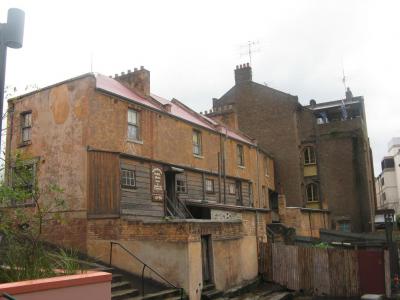
Susannah Place Museum is a preserved row of four working-class terrace houses located in The Rocks, one of Sydney’s earliest neighbourhoods. Built in 1844 by Irish immigrants Edward and Mary Riley, the terraces were constructed from hand-pressed local sandstone and brick. The Rileys lived in one of the houses and rented out the others, a common practice among working families seeking stability in the growing colony. The buildings are a rare surviving example of modest 19th-century domestic architecture and have been carefully conserved to tell the story of ordinary urban life over more than a century.
Each terrace is presented to reflect a different period in its long occupancy, with interiors furnished using original and reconstructed household items that capture the evolving character of Sydney’s working-class homes. Visitors can explore the narrow staircases, sculleries, and tiny courtyards that reveal how families adapted to limited space and changing social conditions from the 1840s through to the 1970s. The museum also highlights the effects of urban renewal and redevelopment that reshaped The Rocks during the 20th century.
A restored corner shop, once central to the community, recreates the atmosphere of everyday commerce before the rise of supermarkets and large retailers. Guided tours offer personal stories of former tenants, blending social history with architectural preservation. Operated by Sydney Living Museums, Susannah Place Museum provides an intimate and tangible link to Sydney’s early domestic and immigrant heritage, preserved within the historic fabric of The Rocks.
Each terrace is presented to reflect a different period in its long occupancy, with interiors furnished using original and reconstructed household items that capture the evolving character of Sydney’s working-class homes. Visitors can explore the narrow staircases, sculleries, and tiny courtyards that reveal how families adapted to limited space and changing social conditions from the 1840s through to the 1970s. The museum also highlights the effects of urban renewal and redevelopment that reshaped The Rocks during the 20th century.
A restored corner shop, once central to the community, recreates the atmosphere of everyday commerce before the rise of supermarkets and large retailers. Guided tours offer personal stories of former tenants, blending social history with architectural preservation. Operated by Sydney Living Museums, Susannah Place Museum provides an intimate and tangible link to Sydney’s early domestic and immigrant heritage, preserved within the historic fabric of The Rocks.
10) Cadmans Cottage
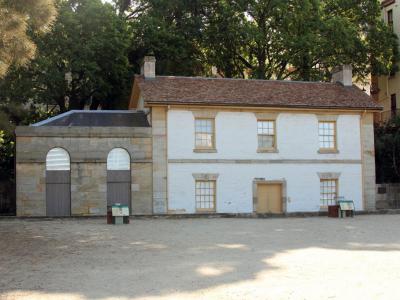
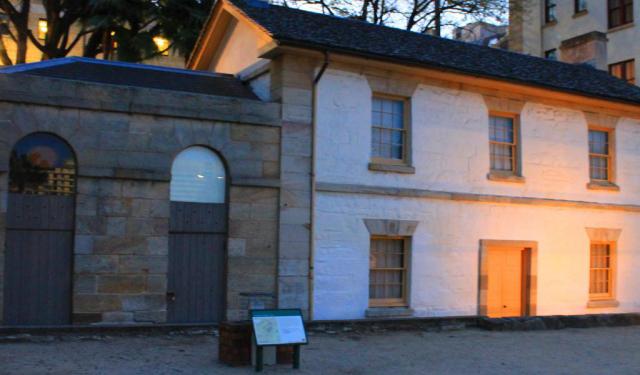
Cadmans Cottage is one of Sydney’s oldest surviving buildings and a rare example of early colonial architecture. Built in 1816 from locally quarried sandstone, it originally stood on the shoreline of Sydney Cove before later land reclamation shifted the waterfront further north. Designed in the Georgian style, the cottage’s simple, symmetrical form reflects its functional origins as the residence and office for the Coxswain of Government Boats, who managed the colony’s small fleet operating in the harbour.
Through the 19th century, the building’s role evolved with Sydney’s growth. It became the headquarters of the Water Police in the 1840s, then later served as accommodation for the Sydney Sailors’ Home, which provided shelter for seafarers arriving in port. Each of these uses left traces on the structure, visible in later additions and changes to the interior layout. Careful restoration has since revealed these layers of history, allowing visitors to appreciate how the building adapted to the changing needs of the harbour community.
Located in The Rocks, the cottage now sits among cobblestone lanes, historic pubs, and restored warehouses that mark Sydney’s oldest district. Its weathered sandstone walls and small, shuttered windows contrast with the modern skyline nearby. Interpretive displays on site recount its varied past and the daily life of those who lived and worked there. Standing quietly amid the bustle of the modern city, Cadmans Cottage offers a rare glimpse of early colonial Sydney and its enduring relationship with the harbour.
Through the 19th century, the building’s role evolved with Sydney’s growth. It became the headquarters of the Water Police in the 1840s, then later served as accommodation for the Sydney Sailors’ Home, which provided shelter for seafarers arriving in port. Each of these uses left traces on the structure, visible in later additions and changes to the interior layout. Careful restoration has since revealed these layers of history, allowing visitors to appreciate how the building adapted to the changing needs of the harbour community.
Located in The Rocks, the cottage now sits among cobblestone lanes, historic pubs, and restored warehouses that mark Sydney’s oldest district. Its weathered sandstone walls and small, shuttered windows contrast with the modern skyline nearby. Interpretive displays on site recount its varied past and the daily life of those who lived and worked there. Standing quietly amid the bustle of the modern city, Cadmans Cottage offers a rare glimpse of early colonial Sydney and its enduring relationship with the harbour.
Walking Tours in Sydney, Australia

Create Your Own Walk in Sydney
Creating your own self-guided walk in Sydney is easy and fun. Choose the city attractions that you want to see and a walk route map will be created just for you. You can even set your hotel as the start point of the walk.

Newtown Street Murals Walking Tour
Whenever you think of street art in Sydney, one suburb immediately springs to mind and that is Newtown. Largely regarded as Sydney’s coolest neighborhood, this is a ground zero of the city's mural art scene.
Ever since the early 1990s, with the appearance of the famous “I Have a Dream” Mural on King Street, a powerful depiction of Martin Luther King Junior's iconic speech, this... view more
Tour Duration: 1 Hour(s)
Travel Distance: 1.3 Km or 0.8 Miles
Ever since the early 1990s, with the appearance of the famous “I Have a Dream” Mural on King Street, a powerful depiction of Martin Luther King Junior's iconic speech, this... view more
Tour Duration: 1 Hour(s)
Travel Distance: 1.3 Km or 0.8 Miles
Food Tour in Sydney
Sydney is a melting pot, and the local food culture is a sure testament to that. The inflow of immigrants from Europe and Asia over the years has turned the city into a much coveted foodie destination. This tour offers an introduction to the multifaceted and diverse food & brewery experience to be had here.
Start with Gateway Sydney, an upscale food court with WiFi and just about any kind... view more
Tour Duration: 1 Hour(s)
Travel Distance: 2.2 Km or 1.4 Miles
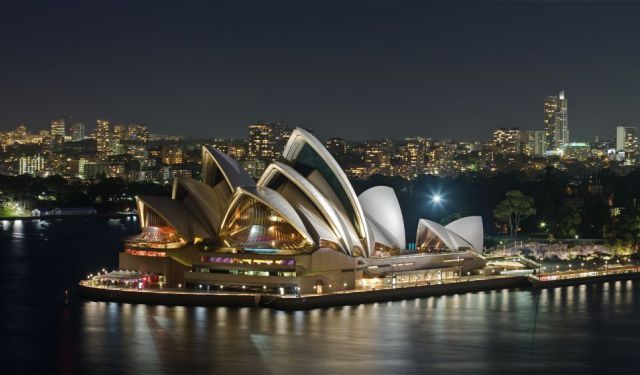
Start with Gateway Sydney, an upscale food court with WiFi and just about any kind... view more
Tour Duration: 1 Hour(s)
Travel Distance: 2.2 Km or 1.4 Miles
Sydney Introduction Walking Tour
Sydney was found in 1788 when a fleet of eleven British ships arrived at where Sydney Cove is today. Onboard those pioneer vessels were 759 convicts plus sailors and marines to guard them. The city was named after Lord Sydney, the British Secretary of State who recommended the British government to establish a penal colony in Australia.
Human activity in the area that would later become Sydney... view more
Tour Duration: 2 Hour(s)
Travel Distance: 3.5 Km or 2.2 Miles
Human activity in the area that would later become Sydney... view more
Tour Duration: 2 Hour(s)
Travel Distance: 3.5 Km or 2.2 Miles
Sydney's Historical Churches
Over the years, Sydney's historical churches have aroused a sense of admiration in many beholders. Some of these buildings have even become iconic symbols of Sydney, well worth going a good way to see as vivid examples of both historical and architectural value.
The impressive Early English-style of architecture seen in Saint Mary's Cathedral is said to have inspired the American... view more
Tour Duration: 1 Hour(s)
Travel Distance: 3.2 Km or 2 Miles
The impressive Early English-style of architecture seen in Saint Mary's Cathedral is said to have inspired the American... view more
Tour Duration: 1 Hour(s)
Travel Distance: 3.2 Km or 2 Miles
The Rocks Walking Tour
The Rocks is a historic area and the oldest neighborhood in downtown Sydney. It was the site where on 26 January 1788 a Union flag was raised to announce the establishment of the first British penal colony in New South Wales. Many of the old stone buildings are made of quarry stones hand-chipped by early convicts, which gave the area its name.
Today's Rocks is a thriving locality packed... view more
Tour Duration: 1 Hour(s)
Travel Distance: 1.3 Km or 0.8 Miles
Today's Rocks is a thriving locality packed... view more
Tour Duration: 1 Hour(s)
Travel Distance: 1.3 Km or 0.8 Miles
Useful Travel Guides for Planning Your Trip

Top 15 Aussie Souvenirs to Bring Home from Sydney
"You haven't been anywhere if you haven't been to Australia," they say, and you'd definitely want something tangible in hand to remind you of the g'days spent Down Under. In Sydney, you will find tonnes of distinctly Oz products that would serve this purpose...
The Most Popular Cities
/ view all