Custom Walk in New York, New York by gail118023984 created on 2026-05-12
Guide Location: USA » New York
Guide Type: Custom Walk
# of Sights: 15
Tour Duration: 8 Hour(s)
Travel Distance: 19.3 Km or 12 Miles
Share Key: N9YXE
Guide Type: Custom Walk
# of Sights: 15
Tour Duration: 8 Hour(s)
Travel Distance: 19.3 Km or 12 Miles
Share Key: N9YXE
How It Works
Please retrieve this walk in the GPSmyCity app. Once done, the app will guide you from one tour stop to the next as if you had a personal tour guide. If you created the walk on this website or come to the page via a link, please follow the instructions below to retrieve the walk in the app.
Retrieve This Walk in App
Step 1. Download the app "GPSmyCity: Walks in 1K+ Cities" on Apple App Store or Google Play Store.



Step 2. In the GPSmyCity app, download(or launch) the guide "New York Map and Walking Tours".
Step 3. Tap the menu button located at upper right corner of the "Walks" screen and select "Retrieve custom walk". Enter the share key: N9YXE
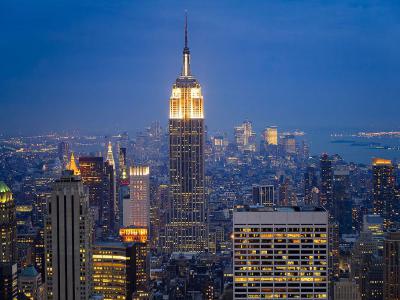
1) Rockefeller Center (must see)
Back in 1801, a New York physician named David Hosack bought 22 acres of empty land from the city with an aim to establish America’s first botanical garden. And for the next ten years, the Elgin Botanic Garden really did bloom-until funding wilted, the plants went wild, and Columbia University had to step in to take over the property in 1823.
Fast-forward a century to 1926, when the Metropolitan Opera went searching for a grand new home. Columbia leased the land to its generous patron, John D. Rockefeller, Jr., setting the stage for a glittering cultural palace. Then the stock market crashed in 1929, the opera backed out, and Rockefeller found himself with prime New York real estate and no tenant. So, he pivoted-and decided to build a mass-media powerhouse instead.
In 1930, after months of negotiations involving Radio Corporation of America, National Broadcasting Company, and Radio-Keith-Orpheum, the plan was set: an entertainment complex of unprecedented scale. To make room, 228 buildings were cleared and 4,000 tenants relocated. Early name ideas included “Radio City,” “Rockefeller City,” and the dramatic “Metropolitan Square,” before the now-famous title finally stuck.
Today, Rockefeller Center stretches across all of Doctor Hosack’s original 22 acres-though the botanicals have long been replaced with 14 Art Deco buildings, a standalone tower along 51st Street, and four more rising on the west side of Sixth Avenue. There are rooftop gardens, but you’ll have to crane your neck to see anything green.
On the west side sits Radio City Music Hall, still flashing its neon glamour. And at the heart of it all lies the sunken Lower Plaza, praised by Chinese-American architect Ieoh Ming Pei as “the most successful open space in the United States, perhaps in the world.” Most visitors simply know it as “the place with the ice rink,” which has been delighting skaters since 1936.
Then there’s the view. “Top of the Rock” offers three levels of indoor and outdoor decks with clear, cinematic vistas of the New York skyline. Back on the ground, the shops spread out in every direction-big names, small designers, and everything in between. It’s the kind of place where you realize: shopping isn’t just about what you buy; it’s about where you buy it...
Fast-forward a century to 1926, when the Metropolitan Opera went searching for a grand new home. Columbia leased the land to its generous patron, John D. Rockefeller, Jr., setting the stage for a glittering cultural palace. Then the stock market crashed in 1929, the opera backed out, and Rockefeller found himself with prime New York real estate and no tenant. So, he pivoted-and decided to build a mass-media powerhouse instead.
In 1930, after months of negotiations involving Radio Corporation of America, National Broadcasting Company, and Radio-Keith-Orpheum, the plan was set: an entertainment complex of unprecedented scale. To make room, 228 buildings were cleared and 4,000 tenants relocated. Early name ideas included “Radio City,” “Rockefeller City,” and the dramatic “Metropolitan Square,” before the now-famous title finally stuck.
Today, Rockefeller Center stretches across all of Doctor Hosack’s original 22 acres-though the botanicals have long been replaced with 14 Art Deco buildings, a standalone tower along 51st Street, and four more rising on the west side of Sixth Avenue. There are rooftop gardens, but you’ll have to crane your neck to see anything green.
On the west side sits Radio City Music Hall, still flashing its neon glamour. And at the heart of it all lies the sunken Lower Plaza, praised by Chinese-American architect Ieoh Ming Pei as “the most successful open space in the United States, perhaps in the world.” Most visitors simply know it as “the place with the ice rink,” which has been delighting skaters since 1936.
Then there’s the view. “Top of the Rock” offers three levels of indoor and outdoor decks with clear, cinematic vistas of the New York skyline. Back on the ground, the shops spread out in every direction-big names, small designers, and everything in between. It’s the kind of place where you realize: shopping isn’t just about what you buy; it’s about where you buy it...
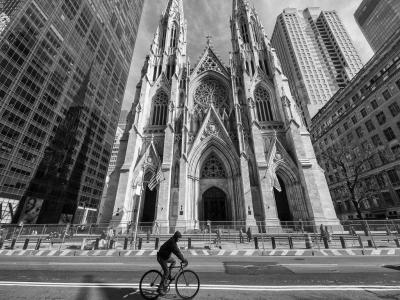
2) St. Patrick's Cathedral (must see)
In case you wonder why New York has two Saint Patrick’s Cathedrals, it’s not because the city has twice as many saints-it’s because the first one simply couldn’t keep up. The Old Cathedral from 1815 did its best, but by the mid-1800s, the Archdiocese had outgrown it. So, in 1858, construction began on a new spiritual heavyweight: the towering Gothic Revival cathedral that now occupies the block between 50th and 51st Streets on Madison Avenue. Designed by James Renwick Jr. and formally opened in 1879, it rises directly across from Rockefeller Center, as if keeping an eye on the skating rink...
From the outside, the building is a full Gothic drama. Marble everywhere, pointed arches stacked like architectural exclamation marks, and stained-glass windows glowing in neat vertical ranks. The whole structure stretches 332 feet in length, with transepts spanning 174 feet. But the true attention-grabbers are the twin spires-330 feet of pure, sky-seeking ambition-framing the bronze entrance doors.
Step inside, and the scale refuses to let up. A broad central aisle is flanked by two narrower ones, separated by 32 marble columns that seem determined to out-pose each other. Look up, and you’ll see ribbed Gothic vaults meeting in elegant bosses overhead. Along the sides, twelve chapels create quieter pockets of devotion, while seating for 2,400 fills the nave with long lines of wooden pews.
Even the high altar has a story. The original version was shipped off to Fordham University Church in the Bronx, making room for the current altar carved from grey-white Italian marble and crowned by a bronze baldachin. It rises beneath a statue of Christ the King, complete with angels and decorative pinnacles.
Today, the “new” Saint Patrick’s Cathedral is firmly established as one of Manhattan’s defining landmarks, recognized both as a New York City designated landmark and listed on the National Register of Historic Places-a cathedral built to impress, and one that still succeeds brilliantly!
From the outside, the building is a full Gothic drama. Marble everywhere, pointed arches stacked like architectural exclamation marks, and stained-glass windows glowing in neat vertical ranks. The whole structure stretches 332 feet in length, with transepts spanning 174 feet. But the true attention-grabbers are the twin spires-330 feet of pure, sky-seeking ambition-framing the bronze entrance doors.
Step inside, and the scale refuses to let up. A broad central aisle is flanked by two narrower ones, separated by 32 marble columns that seem determined to out-pose each other. Look up, and you’ll see ribbed Gothic vaults meeting in elegant bosses overhead. Along the sides, twelve chapels create quieter pockets of devotion, while seating for 2,400 fills the nave with long lines of wooden pews.
Even the high altar has a story. The original version was shipped off to Fordham University Church in the Bronx, making room for the current altar carved from grey-white Italian marble and crowned by a bronze baldachin. It rises beneath a statue of Christ the King, complete with angels and decorative pinnacles.
Today, the “new” Saint Patrick’s Cathedral is firmly established as one of Manhattan’s defining landmarks, recognized both as a New York City designated landmark and listed on the National Register of Historic Places-a cathedral built to impress, and one that still succeeds brilliantly!
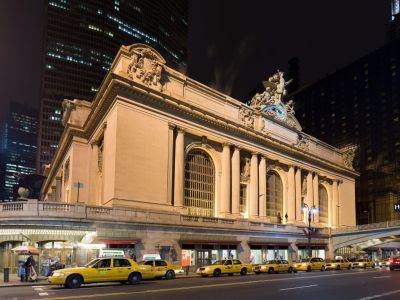
3) Grand Central Terminal (must see)
It may be puzzling as to why New Yorkers use the terms “Grand Central Terminal” and “Grand Central Station” as if they’re the same thing... Here’s the secret: one is the rail terminal, the other is the post office attached to it, and the whole complex is busy enough that no one pauses to sort out the terminology.
The place's story began with Cornelius Vanderbilt, the 19th-century business titan, who collected railroads the way others collect postcards. After buying the Hudson River and New York Central lines in 1867, he fused them together and launched the construction of Grand Central Depot two years later.
The original depot, designed by architect John B. Snook, arrived in full Second Empire style-mansard roofs, ornate flourishes, and the confidence of a building that knew it had somewhere important to be. By 1874, it was ready for service. Trains glided into the Park Avenue Tunnel at 96th Street, slipping underground for the final approach. This solved the small problem of locomotives barreling down Manhattan streets, which city residents understandably found less than charming.
Then came 1902. A steam locomotive, blinded by smoke in the Park Avenue Tunnel, missed its signals and collided with another train. The crash sealed the depot’s fate. Within a few years, it was demolished, making way for the Grand Central Terminal we know today. The firms Reed & Stern and Warren & Wetmore teamed up to create the Beaux-Arts landmark-one focused on the functional layout, the other on the dramatic exterior.
Inside, the terminal doubled as an art gallery long before that was fashionable. The Main Concourse ceiling famously charts a glowing, backwards zodiac. The façade features the Glory of Commerce sculpture, a bronze statue of Vanderbilt stands guard out front, and cast-iron eagles keep watch over the whole scene.
Vanderbilt Hall regularly hosts exhibitions and seasonal events, while the Dining Concourse adds its own glow with rows of illuminated lightboxes. And every so often, the terminal surprises commuters with performance art-from choreographed flash mobs to unexpected installations-turning an everyday commute into something slightly cinematic.
The place's story began with Cornelius Vanderbilt, the 19th-century business titan, who collected railroads the way others collect postcards. After buying the Hudson River and New York Central lines in 1867, he fused them together and launched the construction of Grand Central Depot two years later.
The original depot, designed by architect John B. Snook, arrived in full Second Empire style-mansard roofs, ornate flourishes, and the confidence of a building that knew it had somewhere important to be. By 1874, it was ready for service. Trains glided into the Park Avenue Tunnel at 96th Street, slipping underground for the final approach. This solved the small problem of locomotives barreling down Manhattan streets, which city residents understandably found less than charming.
Then came 1902. A steam locomotive, blinded by smoke in the Park Avenue Tunnel, missed its signals and collided with another train. The crash sealed the depot’s fate. Within a few years, it was demolished, making way for the Grand Central Terminal we know today. The firms Reed & Stern and Warren & Wetmore teamed up to create the Beaux-Arts landmark-one focused on the functional layout, the other on the dramatic exterior.
Inside, the terminal doubled as an art gallery long before that was fashionable. The Main Concourse ceiling famously charts a glowing, backwards zodiac. The façade features the Glory of Commerce sculpture, a bronze statue of Vanderbilt stands guard out front, and cast-iron eagles keep watch over the whole scene.
Vanderbilt Hall regularly hosts exhibitions and seasonal events, while the Dining Concourse adds its own glow with rows of illuminated lightboxes. And every so often, the terminal surprises commuters with performance art-from choreographed flash mobs to unexpected installations-turning an everyday commute into something slightly cinematic.
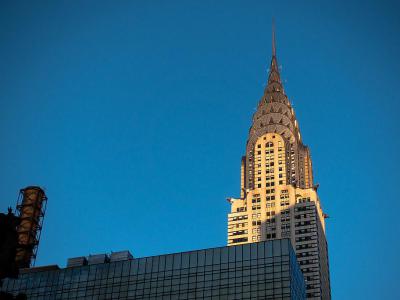
4) Chrysler Building
For almost a year (11 months) prior to the completion of the Empire State Building, the Chrysler Building enjoyed the status of the world's tallest skyscraper. It was erected at an enormous rate of four floors a week, but despite the haste, no incident or accident occurred during the construction.
Commissioned by the automobile magnate Walter P. Chrysler, the skyscraper was designed by architect William Van Alen in 1928, and was meant to house the headquarters of the Chrysler company – hence the ornamentation in the lower floors, featuring steel automobile parts. Regarded by many well-known contemporary architects as the most beautiful structure in New York City, the building features art deco style with gradually decreasing steel arches studded with triangular windows. At 319 meters high and with 77 floors topped by a 38-meter spire, this is the highest steel-supported brick structure in the world. Initially, there was a viewing gallery on the 71st floor which was then closed in 1945. The marble-clad lobby has a mural in the ceiling, showing an automobile assembly line.
The Chrysler Building remains New York's best-loved skyscraper and was ranked 9th in the survey of the Favorite Architectural Memories in the US, ahead of many well-known landmarks, like the now destroyed World Trade Center. In 1976, the Chrysler Building was declared a National Historic Landmark.
Why You Should Visit:
Art-deco icon that looks good from any vantage point, but well worth a detour to take a closer look.
Tip:
If time is in shortage, just walk into the lobby to see the beautiful walls and floor. The ceiling is a unique work of art.
Commissioned by the automobile magnate Walter P. Chrysler, the skyscraper was designed by architect William Van Alen in 1928, and was meant to house the headquarters of the Chrysler company – hence the ornamentation in the lower floors, featuring steel automobile parts. Regarded by many well-known contemporary architects as the most beautiful structure in New York City, the building features art deco style with gradually decreasing steel arches studded with triangular windows. At 319 meters high and with 77 floors topped by a 38-meter spire, this is the highest steel-supported brick structure in the world. Initially, there was a viewing gallery on the 71st floor which was then closed in 1945. The marble-clad lobby has a mural in the ceiling, showing an automobile assembly line.
The Chrysler Building remains New York's best-loved skyscraper and was ranked 9th in the survey of the Favorite Architectural Memories in the US, ahead of many well-known landmarks, like the now destroyed World Trade Center. In 1976, the Chrysler Building was declared a National Historic Landmark.
Why You Should Visit:
Art-deco icon that looks good from any vantage point, but well worth a detour to take a closer look.
Tip:
If time is in shortage, just walk into the lobby to see the beautiful walls and floor. The ceiling is a unique work of art.
Sight description based on Wikipedia.
5) New York Public Library (must see)
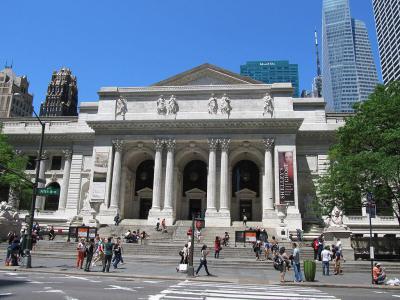
Officially known as the Stephen A. Schwarzman Building, but more commonly as the 42nd Street main branch, this is the New York Public Library in its most dramatic form. The building occupies a prime spot on Fifth Avenue between 40th and 42nd Streets, sharing the block with Bryant Park and wearing its Beaux-Arts architecture like a tailored suit that never went out of style.
The story dates back to 1895, when the Astor and Lenox Libraries merged and suddenly needed a home worthy of their combined ambitions. The chosen location sat beneath the old Croton Distributing Reservoir, a granite fortress that had outlived its usefulness. The firm Carrère & Hastings was brought in to replace it with something grander, brighter, and considerably more inviting than a municipal water tank.
When the library finally opened on May 24, 1911, New Yorkers poured in. The first borrowed book-an earnest study comparing Nietzsche and Tolstoy-set the tone for the building’s intellectual aspirations. Within its first week, a quarter of a million visitors wandered its halls, proving that the city was more than ready for a cultural showpiece.
The exterior lives up to its reputation. Vermont marble and brick form the façade, while bronze windows and fixtures add a warm contrast. Above the central entrance, pediments display allegorical sculptures of Life, Painting, and Sculpture-just in case you needed a reminder that this building takes the arts seriously... A graceful balcony stretches along the Fifth Avenue side, tying the whole ensemble together.
Approach the main entrance, and you’ll ascend a grand staircase toward a deep portico with six Corinthian columns and three archways. And waiting to greet you-calm, composed, and eternally photogenic-are the two famous Tennessee marble lions flanking the steps. They’ve stood watch for more than a century, making sure everyone entering this library does so with a sense of occasion...
The story dates back to 1895, when the Astor and Lenox Libraries merged and suddenly needed a home worthy of their combined ambitions. The chosen location sat beneath the old Croton Distributing Reservoir, a granite fortress that had outlived its usefulness. The firm Carrère & Hastings was brought in to replace it with something grander, brighter, and considerably more inviting than a municipal water tank.
When the library finally opened on May 24, 1911, New Yorkers poured in. The first borrowed book-an earnest study comparing Nietzsche and Tolstoy-set the tone for the building’s intellectual aspirations. Within its first week, a quarter of a million visitors wandered its halls, proving that the city was more than ready for a cultural showpiece.
The exterior lives up to its reputation. Vermont marble and brick form the façade, while bronze windows and fixtures add a warm contrast. Above the central entrance, pediments display allegorical sculptures of Life, Painting, and Sculpture-just in case you needed a reminder that this building takes the arts seriously... A graceful balcony stretches along the Fifth Avenue side, tying the whole ensemble together.
Approach the main entrance, and you’ll ascend a grand staircase toward a deep portico with six Corinthian columns and three archways. And waiting to greet you-calm, composed, and eternally photogenic-are the two famous Tennessee marble lions flanking the steps. They’ve stood watch for more than a century, making sure everyone entering this library does so with a sense of occasion...
6) Empire State Building (must see)
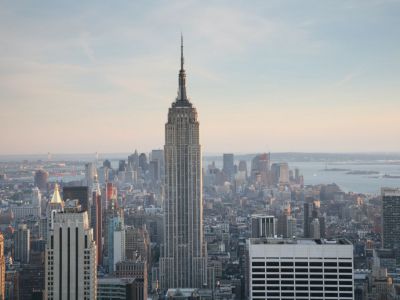
Meet the undisputed champion of New York’s Art Deco era: the Empire State Building, a 102-story giant that rises over 1,450 feet above Midtown’s daily hustle. It once ruled as the tallest building on Earth; today it’s still impressive enough to hold a lineup of titles-seventh-tallest in New York, ninth in the United States, and still one of the tallest freestanding structures anywhere in the Americas.
Its name comes straight from New York’s proud nickname, the “Empire State,” and its streamlined design was the work of the Shreve, Lamb & Harmon architectural firm. Construction began in 1930, wrapped up just a year later, and replaced the former Waldorf-Astoria Hotel that once stood on the same block. From the start, the goal was simple: to build the biggest, boldest skyscraper the world had ever seen.
You’ll find this landmark in Midtown South, planted along Fifth Avenue between 34th and 35th Streets. Three observatories-on the 80th, 86th, and 102nd floors-offer wraparound views that make the city look like an architectural toy box. And thanks to its starring role in more than 250 films and TV shows, beginning with King Kong in 1933, the building’s Hollywood résumé is nearly as tall as the tower itself.
The exterior keeps things classic: Indiana limestone, granite, and clean geometric ornamentation that embodies Art Deco style without telling a story in symbols. The main entrance features metal doors framed by sleek vertical piers topped with sculpted eagles, along with a gold-lettered transom that proudly spells out the building’s name.
In recognition of its cultural and architectural significance, the Empire State Building was declared a New York City Landmark in 1980 and added to the National Register of Historic Places in 1986. Today, it remains one of Manhattan’s most enduring icons-an unmistakable marker on the skyline and an essential stop for anyone wanting to feel the full vertical spirit of New York.
Its name comes straight from New York’s proud nickname, the “Empire State,” and its streamlined design was the work of the Shreve, Lamb & Harmon architectural firm. Construction began in 1930, wrapped up just a year later, and replaced the former Waldorf-Astoria Hotel that once stood on the same block. From the start, the goal was simple: to build the biggest, boldest skyscraper the world had ever seen.
You’ll find this landmark in Midtown South, planted along Fifth Avenue between 34th and 35th Streets. Three observatories-on the 80th, 86th, and 102nd floors-offer wraparound views that make the city look like an architectural toy box. And thanks to its starring role in more than 250 films and TV shows, beginning with King Kong in 1933, the building’s Hollywood résumé is nearly as tall as the tower itself.
The exterior keeps things classic: Indiana limestone, granite, and clean geometric ornamentation that embodies Art Deco style without telling a story in symbols. The main entrance features metal doors framed by sleek vertical piers topped with sculpted eagles, along with a gold-lettered transom that proudly spells out the building’s name.
In recognition of its cultural and architectural significance, the Empire State Building was declared a New York City Landmark in 1980 and added to the National Register of Historic Places in 1986. Today, it remains one of Manhattan’s most enduring icons-an unmistakable marker on the skyline and an essential stop for anyone wanting to feel the full vertical spirit of New York.
7) Macy's in Herald Square
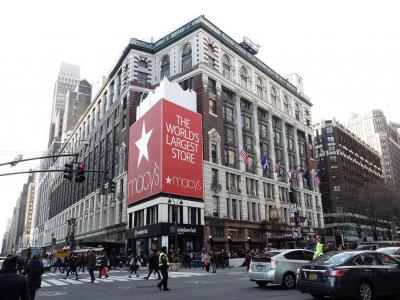
Step into Herald Square, and you’ll find a retail heavyweight that has been dazzling New Yorkers since 1902. Macy’s flagship store isn’t just big-it’s the kind of big that makes you wonder if someone accidentally ordered the “extra-large city block” option. From the moment it opened, the place was already ahead of its time, proudly installing one of the very first modern escalators and setting the tone for every shopper who ever wanted to be whisked upward in style. With more than 1.2 million square feet packed under one roof, it still ranks among the largest department stores in the United States and earned the National Historic Landmark status back in 1978.
Inside, the scale only gets more impressive. Eleven levels of fashion, accessories, cosmetics, and designer labels unfold like a vertical universe of retail possibilities. You can wander from trendy streetwear to luxury couture in a single elevator ride, pausing along the way for anything from a caffeine boost to a sit-down meal. Macy’s hosts events throughout the year as well, so you may stumble upon a mini-concert, a product launch, or a holiday-themed spectacle when you least expect it.
Speaking of holidays, the store is practically a Broadway production in its own right every December. Its animated window displays along the Broadway side attract crowds who gather to admire whatever whimsical theme Macy’s dreams up for that season. Each year brings a fresh set of scenes, crafted with enough charm and detail to stop even the most hurried New Yorkers in their tracks.
And of course, part of Macy’s fame comes from its sales-serious discounts that often outshine those at other major department stores in the city. Whenever your shopping spirit needs a break, the food options scattered throughout the building make refueling easy, from quick bites to full meals. In short, this is one place where you can shop, snack, explore, and repeat without ever stepping outside.
Inside, the scale only gets more impressive. Eleven levels of fashion, accessories, cosmetics, and designer labels unfold like a vertical universe of retail possibilities. You can wander from trendy streetwear to luxury couture in a single elevator ride, pausing along the way for anything from a caffeine boost to a sit-down meal. Macy’s hosts events throughout the year as well, so you may stumble upon a mini-concert, a product launch, or a holiday-themed spectacle when you least expect it.
Speaking of holidays, the store is practically a Broadway production in its own right every December. Its animated window displays along the Broadway side attract crowds who gather to admire whatever whimsical theme Macy’s dreams up for that season. Each year brings a fresh set of scenes, crafted with enough charm and detail to stop even the most hurried New Yorkers in their tracks.
And of course, part of Macy’s fame comes from its sales-serious discounts that often outshine those at other major department stores in the city. Whenever your shopping spirit needs a break, the food options scattered throughout the building make refueling easy, from quick bites to full meals. In short, this is one place where you can shop, snack, explore, and repeat without ever stepping outside.
8) Flatiron Building
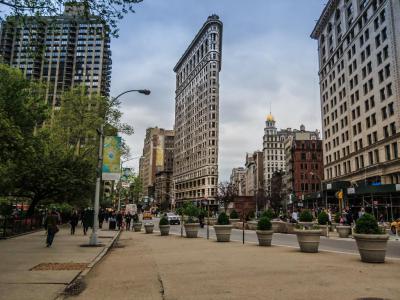
Perhaps the most photographed edifice in New York City, the Flatiron Building owes its popularity and name to the unique design. The isosceles triangle-shaped building may not be as high as the nearby high risers of today, but when it opened its doors for the first time in 1901, it surely was one of the tallest in New York – 307 feet, 21 floors – rising like a Greek column, contrary to the other New York skyscrapers rising from a lower base block.
The Flatiron building was designed by Chicago architect, Daniel Burnham, as an office building for the Fuller Construction Company. Styled renaissance palazzo with beaux art detailing, it has the exterior of steel clad with terra cotta. Upon inauguration, the building was dubbed Burnham’s Folly by skeptics who doubted it would stand against strong winds. The design, however, has defied their misgivings and remained structurally sound till the present. Nowadays, it houses the headquarters of the McMillan Publishing Company.
The Flatiron building symbolizes New York City in picture postcards, television commercials and documentaries. It became a New York City landmark in 1966 and was added to the National Register of Historic Places in 1976.
Why You Should Visit:
The exterior of the structure is certainly unique and well worth a photo!
Tip:
At the crossroads between 5th Avenue and Broadway, this should be not the only attraction in the area. The district is trendy, and you can sit outside at one of the many local cafes or in Madison Square Park and just watch people go about their lives all day long. Alternatively, if you're more creatively inclined, the area has plenty of stores catering to those loving artistic design, as well as hip cafes and restaurants.
The Flatiron building was designed by Chicago architect, Daniel Burnham, as an office building for the Fuller Construction Company. Styled renaissance palazzo with beaux art detailing, it has the exterior of steel clad with terra cotta. Upon inauguration, the building was dubbed Burnham’s Folly by skeptics who doubted it would stand against strong winds. The design, however, has defied their misgivings and remained structurally sound till the present. Nowadays, it houses the headquarters of the McMillan Publishing Company.
The Flatiron building symbolizes New York City in picture postcards, television commercials and documentaries. It became a New York City landmark in 1966 and was added to the National Register of Historic Places in 1976.
Why You Should Visit:
The exterior of the structure is certainly unique and well worth a photo!
Tip:
At the crossroads between 5th Avenue and Broadway, this should be not the only attraction in the area. The district is trendy, and you can sit outside at one of the many local cafes or in Madison Square Park and just watch people go about their lives all day long. Alternatively, if you're more creatively inclined, the area has plenty of stores catering to those loving artistic design, as well as hip cafes and restaurants.
9) Castle Clinton & Battery Park
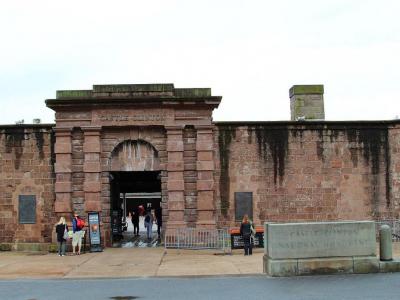
Fort Amsterdam was the first fort in Manhattan. It was built in 1626 when New York City was known by the Dutch name New Amsterdam. Fort Amsterdam was demolished in 1790, and a new fort called "West Battery" was installed at the tip of Manhattan Island in 1811.
Designed by architect John McComb Jr. with Army Colonel Jonathan Williams as a consulting engineer, West Battery was roughly circular with a radius of approximately 92 feet. It had a battery of 28 "thirty-two pounder" cannons, complementing triple-tiered Castle Williams on nearby Governors Island. A wood bridge connected the fort to the tip of lower Manhattan.
In 1815, West Battery was named Fort Clinton in honor of New York City Mayor DeWitt Clinton. The fort was garrisoned in 1812 but never used for combat. It became a popular promenade and beer garden. Later, it was an immigration center. Between 1896 and 1941, it was converted into an aquarium. Now it's a tourist center and terminal for the Statue of Liberty ferry.
The recently renovated 25-acre Battery Park has more than a few monuments and memorials, mostly located on "Monument Walk." Hope Garden is a memorial dedicated to AIDS victims. The Sphere, the world's largest bronze sculpture by German artist Fritz Koenig, was exhibited there. The Netherland Monument recalls the purchase of Manhattan Island.
Other memorials are The Memorial of the Battle of the Atlantic; The American Merchant Marine Memorial; The Immigrants; The Korean War; John Ericsson and the USS Monitor; and the Explorer Giovanni da Verrazzano statue. Battery Park is part of the Manhattan Waterfront Greenway that surrounds the entire island of Manhattan.
Designed by architect John McComb Jr. with Army Colonel Jonathan Williams as a consulting engineer, West Battery was roughly circular with a radius of approximately 92 feet. It had a battery of 28 "thirty-two pounder" cannons, complementing triple-tiered Castle Williams on nearby Governors Island. A wood bridge connected the fort to the tip of lower Manhattan.
In 1815, West Battery was named Fort Clinton in honor of New York City Mayor DeWitt Clinton. The fort was garrisoned in 1812 but never used for combat. It became a popular promenade and beer garden. Later, it was an immigration center. Between 1896 and 1941, it was converted into an aquarium. Now it's a tourist center and terminal for the Statue of Liberty ferry.
The recently renovated 25-acre Battery Park has more than a few monuments and memorials, mostly located on "Monument Walk." Hope Garden is a memorial dedicated to AIDS victims. The Sphere, the world's largest bronze sculpture by German artist Fritz Koenig, was exhibited there. The Netherland Monument recalls the purchase of Manhattan Island.
Other memorials are The Memorial of the Battle of the Atlantic; The American Merchant Marine Memorial; The Immigrants; The Korean War; John Ericsson and the USS Monitor; and the Explorer Giovanni da Verrazzano statue. Battery Park is part of the Manhattan Waterfront Greenway that surrounds the entire island of Manhattan.
10) City Hall Park
Part of New York’s revolutionary heritage is closely associated with City Hall Park. Back in the Revolutionary era, this very ground buzzed with unrest, rallies, and speeches that made the British Empire nervous.
Sure, the Declaration of Independence was enacted in Philadelphia—but the first soldiers rising bravely to the defense of American liberty were right here in New York. On July 9, 1776, the word of the newly signed Declaration reached George Washington, who promptly gathered his troops on what was then the New York Common, now known as City Hall Park. Here, the Declaration was read out loud, urging the men to prove worthy of the brand-new independent nation whose uniform they wore.
And if you’re wondering where the first blood for the cause was shed, it was here, too. On August 11, 1766, the Sons of Liberty—a secret revolutionary organization advancing the rights of European colonists in American Colonies—raised the very first Liberty Pole, boldly planted near British barracks and stamped with one defiant word: “Liberty.”
The British chopped it down. The rebels put it back up. The British chopped it down again. This went on five times. Stubbornness, it turns out, was a founding virtue. Today, a replica from 1921 stands near its original spot, between City Hall and Broadway, quietly commemorating what was once a very loud disagreement.
On November 9, 1783, after the American troops recaptured the Civic Center, George Washington returned to the park—not for a speech this time, but to raise the American flag over the reclaimed city. A simple act, but one that must have felt like the loudest victory imaginable...
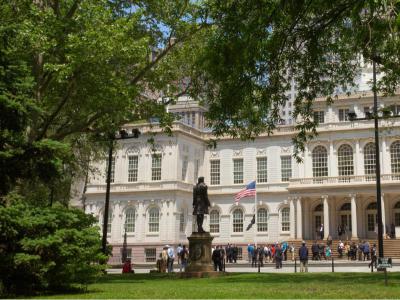
The park also honors one of the Revolutionary-era martyrs, Nathan Hale. Just 21 years old, he was the American spy who was captured and executed by the British. A graceful, 13-foot bronze statue set upon a granite base, directly outside the City Hall, illustrates the last moments of the hero shackled and bound. It immortalizes his final words uttered before he was hanged, equal parts tragic and defiant: “I only regret that I have but one life to lose for my country.”
So much for a quiet little park...
Sure, the Declaration of Independence was enacted in Philadelphia—but the first soldiers rising bravely to the defense of American liberty were right here in New York. On July 9, 1776, the word of the newly signed Declaration reached George Washington, who promptly gathered his troops on what was then the New York Common, now known as City Hall Park. Here, the Declaration was read out loud, urging the men to prove worthy of the brand-new independent nation whose uniform they wore.
And if you’re wondering where the first blood for the cause was shed, it was here, too. On August 11, 1766, the Sons of Liberty—a secret revolutionary organization advancing the rights of European colonists in American Colonies—raised the very first Liberty Pole, boldly planted near British barracks and stamped with one defiant word: “Liberty.”
The British chopped it down. The rebels put it back up. The British chopped it down again. This went on five times. Stubbornness, it turns out, was a founding virtue. Today, a replica from 1921 stands near its original spot, between City Hall and Broadway, quietly commemorating what was once a very loud disagreement.
On November 9, 1783, after the American troops recaptured the Civic Center, George Washington returned to the park—not for a speech this time, but to raise the American flag over the reclaimed city. A simple act, but one that must have felt like the loudest victory imaginable...
The park also honors one of the Revolutionary-era martyrs, Nathan Hale. Just 21 years old, he was the American spy who was captured and executed by the British. A graceful, 13-foot bronze statue set upon a granite base, directly outside the City Hall, illustrates the last moments of the hero shackled and bound. It immortalizes his final words uttered before he was hanged, equal parts tragic and defiant: “I only regret that I have but one life to lose for my country.”
So much for a quiet little park...
11) Federal Hall
Over the years, Federal Hall at 28 Wall Street has had more reinventions than a Broadway actor. From the start, the building multitasked impressively, functioning as a city hall, library, firehouse, and even a debtor’s prison.
Its first version was built in 1703, replacing the old Dutch Stadt Huys, New York’s original city hall. In the mid-18th century, it also became a stage for pivotal political events, hosting both the Stamp Act Congress and the Continental Congress, although its most defining moment came on April 30, 1789, when George Washington was inaugurated as the first President of the United States.
That inauguration carried both ceremony and symbolism. Washington stepped onto the balcony before a gathered crowd, placing his hand on a Bible borrowed from a nearby Masonic lodge. After taking the oath, he reportedly added “So help me God” and kissed the Bible, prompting cheers from the crowd and church bells ringing across the city. In that moment, the fragile new republic took on a sense of reality and permanence.
Federal Hall soon became the first seat of the U.S. government, extending Washington’s connection to the site beyond the inauguration. During the early months of his presidency, Washington worked within its walls as the First Congress convened there, drafting the Bill of Rights and shaping the structure of the new government. The building stood at the center of Lower Manhattan, then the nation’s political hub, with Washington frequently moving through the area and attending services at nearby St. Paul’s Chapel.
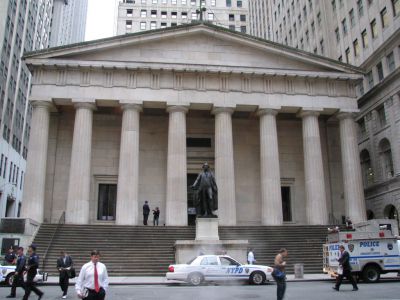
The original structure didn't last long, though, and was demolished in 1812, replaced by the current Greek Revival building, completed in 1842 to a design by Ithiel Town and Alexander Jackson Davis. This neoclassical edifice served first as the U.S. Customs House and later as the Sub-Treasury before becoming the Federal Hall National Memorial. Built from Tuckahoe marble, it features a prominent colonnade, a triangular pediment, and a grand set of granite steps leading to the entrance.
At the front stands a bronze statue of George Washington, facing down Wall Street, sculpted by John Quincy Adams Ward and unveiled in 1883. Inside the building, there's a rotunda spanning 60 feet in diameter, topped by a skylit dome. A central stone therein marks the exact spot where Washington stood while taking the oath.
Today, Federal Hall operates as a national memorial, offering exhibits, visitor information, and a connection to the origins of American government.
Its first version was built in 1703, replacing the old Dutch Stadt Huys, New York’s original city hall. In the mid-18th century, it also became a stage for pivotal political events, hosting both the Stamp Act Congress and the Continental Congress, although its most defining moment came on April 30, 1789, when George Washington was inaugurated as the first President of the United States.
That inauguration carried both ceremony and symbolism. Washington stepped onto the balcony before a gathered crowd, placing his hand on a Bible borrowed from a nearby Masonic lodge. After taking the oath, he reportedly added “So help me God” and kissed the Bible, prompting cheers from the crowd and church bells ringing across the city. In that moment, the fragile new republic took on a sense of reality and permanence.
Federal Hall soon became the first seat of the U.S. government, extending Washington’s connection to the site beyond the inauguration. During the early months of his presidency, Washington worked within its walls as the First Congress convened there, drafting the Bill of Rights and shaping the structure of the new government. The building stood at the center of Lower Manhattan, then the nation’s political hub, with Washington frequently moving through the area and attending services at nearby St. Paul’s Chapel.
The original structure didn't last long, though, and was demolished in 1812, replaced by the current Greek Revival building, completed in 1842 to a design by Ithiel Town and Alexander Jackson Davis. This neoclassical edifice served first as the U.S. Customs House and later as the Sub-Treasury before becoming the Federal Hall National Memorial. Built from Tuckahoe marble, it features a prominent colonnade, a triangular pediment, and a grand set of granite steps leading to the entrance.
At the front stands a bronze statue of George Washington, facing down Wall Street, sculpted by John Quincy Adams Ward and unveiled in 1883. Inside the building, there's a rotunda spanning 60 feet in diameter, topped by a skylit dome. A central stone therein marks the exact spot where Washington stood while taking the oath.
Today, Federal Hall operates as a national memorial, offering exhibits, visitor information, and a connection to the origins of American government.
12) National September 11 Memorial & Museum (must see)
September 11, 2001, Tuesday morning, 7 am. Flights were bound from New York to points west. By 8:45 am an American Airlines Boeing 767 slammed into the north tower of the World Trade Center. Less than 20 minutes later, another 767 hit the south tower. The Twin Towers collapsed in flames and 2,977 people died. This day would never be forgotten.
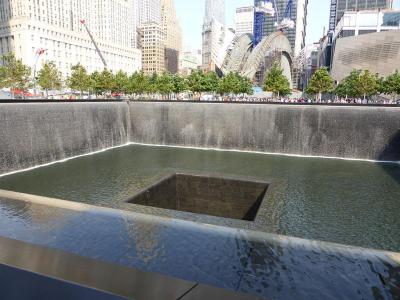
The National September 11 Memorial & Museum is a memorial and museum in New York City commemorating the September 11, 2001, and the 1993 World Trade Center bombing attacks. By November 2003, the memorial design project had been awarded to architect Michael Arad and landscape architect Peter Walker. Their memorial is called "Reflecting Absence." It is a forest of white oak trees surrounding two recessed pools formed by the footprints of the Twin Towers.
The park is level with the street. The names of victims who died from the attacks, including the 1993 bombing, are inscribed on parapets around the waterfalls. The waterfalls are intended to mute outside noises and create a meditative atmosphere at the site.
A callery pear tree that survived, called the "Survivor Tree," was replanted at the World Trade Center. It is thriving. Six other "survivor" pear trees and linden trees have been planted at other sites.
The "Memorial Glade" is a path that follows a temporary ramp used by first responders. It has six enormous stones that jut up through the ground as if violently pushed. The stones simply "strength and resistance."
The September 11 Museum at the site opened in May 2014. It has a collection of over 40,000 images, 14,000 artifacts, and about 3,500 recordings, including 500 hours of videos. There are steel items from the towers, such as the "Last Column." The museum is designed by the architectural firm Davis Brody Bond. It is 70 feet underground, accessible through a pavilion.
The pavilion follows a deconstructivist design, resembling collapsed buildings. Two "tridents" from the towers are inside. One of the museum walls is the old "slurry" wall holding back the Hudson River. The bodies of 1,115 victims were moved to a bedrock crypt space as part of the museum.
The National September 11 Memorial & Museum is a memorial and museum in New York City commemorating the September 11, 2001, and the 1993 World Trade Center bombing attacks. By November 2003, the memorial design project had been awarded to architect Michael Arad and landscape architect Peter Walker. Their memorial is called "Reflecting Absence." It is a forest of white oak trees surrounding two recessed pools formed by the footprints of the Twin Towers.
The park is level with the street. The names of victims who died from the attacks, including the 1993 bombing, are inscribed on parapets around the waterfalls. The waterfalls are intended to mute outside noises and create a meditative atmosphere at the site.
A callery pear tree that survived, called the "Survivor Tree," was replanted at the World Trade Center. It is thriving. Six other "survivor" pear trees and linden trees have been planted at other sites.
The "Memorial Glade" is a path that follows a temporary ramp used by first responders. It has six enormous stones that jut up through the ground as if violently pushed. The stones simply "strength and resistance."
The September 11 Museum at the site opened in May 2014. It has a collection of over 40,000 images, 14,000 artifacts, and about 3,500 recordings, including 500 hours of videos. There are steel items from the towers, such as the "Last Column." The museum is designed by the architectural firm Davis Brody Bond. It is 70 feet underground, accessible through a pavilion.
The pavilion follows a deconstructivist design, resembling collapsed buildings. Two "tridents" from the towers are inside. One of the museum walls is the old "slurry" wall holding back the Hudson River. The bodies of 1,115 victims were moved to a bedrock crypt space as part of the museum.
13) One World Observatory (must see)
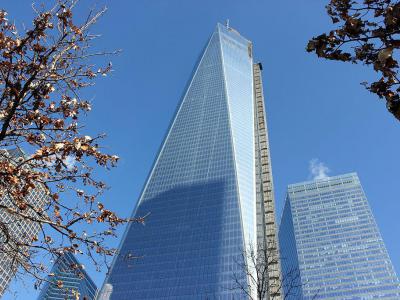
One World Trade Center in lower Manhattan is a highly reflective, elegant steel and glass wedge tapering skyward for 1,776 feet which is a reminder of the year of U.S. Independence. Designed by architect David Childs, One World Trade Center replaces the Towers lost in the attack of September 9, 2001. It is presently the tallest tower in North America.
The Observatory is located on the 100th, 101st, and 102nd floors of One World Trade Center. It is a three-story observation deck perched 1,268 feet above street level, offering views of New York City's iconic sights, surrounding waters, and skyline. Visitors and tenants each have their entrances to the building. The viewing deck of the center is on the 100th floor. The 101st floor houses a food court. The 102nd floor is an events venue.
Visitors can explore the various levels of the observatory, filled with interactive and inspirational displays. City Pulse, an interactive tool provided by Tour Ambassadors, gives visitors information about New York, its facts, and its legends. There is an admission charge with discounts for children and seniors. Admission is free for 9/11 responders and victims' families.
One World Observatory features a restaurant, a cafe, and a bar with sprawling views of the New York City skyline. The cafe is called "One Cafe," the bar and "small plates" grill are called "One Mix," and for more ambitious diners is a restaurant "One Dining." One is the name for all three places. To enter the restaurant, purchase a full Observatory ticket is required.
The Observatory is located on the 100th, 101st, and 102nd floors of One World Trade Center. It is a three-story observation deck perched 1,268 feet above street level, offering views of New York City's iconic sights, surrounding waters, and skyline. Visitors and tenants each have their entrances to the building. The viewing deck of the center is on the 100th floor. The 101st floor houses a food court. The 102nd floor is an events venue.
Visitors can explore the various levels of the observatory, filled with interactive and inspirational displays. City Pulse, an interactive tool provided by Tour Ambassadors, gives visitors information about New York, its facts, and its legends. There is an admission charge with discounts for children and seniors. Admission is free for 9/11 responders and victims' families.
One World Observatory features a restaurant, a cafe, and a bar with sprawling views of the New York City skyline. The cafe is called "One Cafe," the bar and "small plates" grill are called "One Mix," and for more ambitious diners is a restaurant "One Dining." One is the name for all three places. To enter the restaurant, purchase a full Observatory ticket is required.
14) Trinity Church
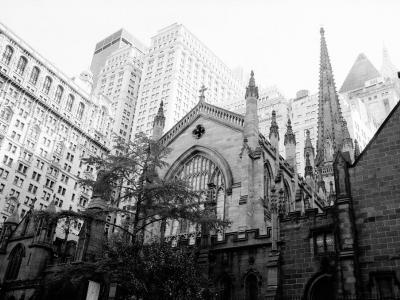
The long history of Trinity Church in Lower Manhattan runs parallel to the earliest chapters of the United States. Founded in 1698 and rebuilt several times, the current Gothic Revival structure dates back to 1846. Over the centuries, this prominent parish has remained closely tied to the city’s civic and political life.
That connection becomes especially clear in the late 18th century. After the George Washington inauguration at nearby Federal Hall in 1789, Trinity Church effectively became the spiritual home of the new federal government in New York, then the nation’s capital. Washington and members of his administration regularly attended services here, sometimes arriving on foot from the nearby government buildings.
In the days following Washington's inauguration, a formal service of thanksgiving was held at Trinity, reinforcing the link between the new presidency and the church. Figures such as Alexander Hamilton and John Jay were also among its congregation, placing the church at the center of the young republic’s political and social life.
Before that, the church had already witnessed some upheaval. During the American Revolution, it was used as a British headquarters and was later destroyed in the Great Fire of 1776. A replacement building was completed in 1790, just as New York briefly served as the nation’s capital, allowing Trinity to play a visible role in the early years of American independence.
Outside, the burial grounds read like a roll call of early American history. One of the Nation's Founding Fathers and Washington’s closest collaborators, the first Secretary of the Treasury, Alexander Hamilton, is buried here alongside his wife, Eliza, and their son. Other notable figures include printer William Bradford, inventor Robert Fulton, Revolutionary War general William Alexander, Declaration of Independence signer Francis Lewis, American Revolutionary War spy Hercules Mulligan, and former New York City mayor Ed Koch (who served in office during the 1980s).
Today, Trinity Church remains both an active place of worship and a historic landmark. Its proximity to Federal Hall and its association with Washington’s earliest days in office give it a quiet but enduring role in the story of how the United States began—not just politically, but ceremonially and symbolically as well.
That connection becomes especially clear in the late 18th century. After the George Washington inauguration at nearby Federal Hall in 1789, Trinity Church effectively became the spiritual home of the new federal government in New York, then the nation’s capital. Washington and members of his administration regularly attended services here, sometimes arriving on foot from the nearby government buildings.
In the days following Washington's inauguration, a formal service of thanksgiving was held at Trinity, reinforcing the link between the new presidency and the church. Figures such as Alexander Hamilton and John Jay were also among its congregation, placing the church at the center of the young republic’s political and social life.
Before that, the church had already witnessed some upheaval. During the American Revolution, it was used as a British headquarters and was later destroyed in the Great Fire of 1776. A replacement building was completed in 1790, just as New York briefly served as the nation’s capital, allowing Trinity to play a visible role in the early years of American independence.
Outside, the burial grounds read like a roll call of early American history. One of the Nation's Founding Fathers and Washington’s closest collaborators, the first Secretary of the Treasury, Alexander Hamilton, is buried here alongside his wife, Eliza, and their son. Other notable figures include printer William Bradford, inventor Robert Fulton, Revolutionary War general William Alexander, Declaration of Independence signer Francis Lewis, American Revolutionary War spy Hercules Mulligan, and former New York City mayor Ed Koch (who served in office during the 1980s).
Today, Trinity Church remains both an active place of worship and a historic landmark. Its proximity to Federal Hall and its association with Washington’s earliest days in office give it a quiet but enduring role in the story of how the United States began—not just politically, but ceremonially and symbolically as well.
15) Wall Street
In the days of New Amsterdam, Wall Street was known in Dutch as "de Waalstraat." The origin of the name varies. It might refer to the Walloon people from the Netherlands who settled around there. Or, the name connects with Peter Minuit, the Governor of the colony, who was a Walloon. Another theory holds that there was a wall or rampart of wood on the northern end of New Amsterdam. It was removed in 1699.
Wall Street covers an eight-block stretch of lower Manhattan. Broadway crosses at the west end and South Street at the East River end. Whether the name was for a wall or a Walloon, Wall Street today stands for the financial markets of the United States. In these short eight blocks is a major financial center of the world.
In the late 1700s, there was a buttonwood tree growing on Wall Street where traders would meet regularly under the buttonwood tree to trade shares. In 1792 they created the Buttonwood Agreement, forming the association that became known as the New York Stock Exchange.
The Brutalist and Bauhaus Post-Modern Craze architectural styles largely bypassed the Wall Street area. The buildings here are more venerable, products of the Gilded Age architecture. Facades, even on the tallest buildings, are more elaborate.
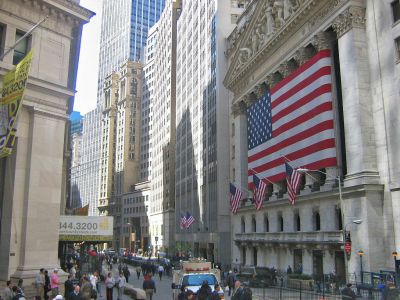
Wall Street landmarks include The Federal Hall National Memorial; 55 Wall Street, the former National City Bank Building; the former Customs House; 14 Wall Street, a 32-story Skyscraper with a stepped pyramid; the New York Stock Exchange Building on Broad Street; the Irving Trust Company Building, a 50-story Skyscraper; and the famous "House of Morgan" on 60 Wall Street.
Beginning in the vaunted Gilded Age, Wall Street has become an icon of a country developed by a system of capitalism, trade, and innovative ventures in business.
Wall Street covers an eight-block stretch of lower Manhattan. Broadway crosses at the west end and South Street at the East River end. Whether the name was for a wall or a Walloon, Wall Street today stands for the financial markets of the United States. In these short eight blocks is a major financial center of the world.
In the late 1700s, there was a buttonwood tree growing on Wall Street where traders would meet regularly under the buttonwood tree to trade shares. In 1792 they created the Buttonwood Agreement, forming the association that became known as the New York Stock Exchange.
The Brutalist and Bauhaus Post-Modern Craze architectural styles largely bypassed the Wall Street area. The buildings here are more venerable, products of the Gilded Age architecture. Facades, even on the tallest buildings, are more elaborate.
Wall Street landmarks include The Federal Hall National Memorial; 55 Wall Street, the former National City Bank Building; the former Customs House; 14 Wall Street, a 32-story Skyscraper with a stepped pyramid; the New York Stock Exchange Building on Broad Street; the Irving Trust Company Building, a 50-story Skyscraper; and the famous "House of Morgan" on 60 Wall Street.
Beginning in the vaunted Gilded Age, Wall Street has become an icon of a country developed by a system of capitalism, trade, and innovative ventures in business.
