

Central Suzhou, Suzhou

Central Suzhou (Self Guided), Suzhou

Downtown Suzhou is a mix of modern business hub and historic area where time seems to have frozen. Among the attractions worth visiting here are The Suzhou Police Museum, Dinghui Temple, Twin Pagodas, Xuanmiao Temple, and lively Guan Qian Street, all located within a walking distance from each other in the heart of the city.
How it works: Download the app "GPSmyCity: Walks in 1K+ Cities" from Apple App Store or Google Play Store to your mobile phone or tablet. The app turns your mobile device into a personal tour guide and its built-in GPS navigation functions guide you from one tour stop to next. The app works offline, so no data plan is needed when traveling abroad.

Download The GPSmyCity App

Central Suzhou Map

Guide Name: Central Suzhou
Guide Location: China » Suzhou (See other walking tours in Suzhou)
Guide Type: Self-guided Walking Tour (Sightseeing)
# of Attractions: 8
Tour Duration: 3 Hour(s)
Travel Distance: 6.0 Km or 3.7 Miles
Author: leticia
Sight(s) Featured in This Guide:
  • Memorial to Wu Zixu
  • Suzhou Police Museum
  • Great Wave Pavilion (Canglang Pavilion)
  • Yiyuan Garden
  • Guan Qian Street
  • Xuanmiao Temple (Temple of Mystery)
  • Twin Pagodas
  • Dinghui Temple
1
Memorial to Wu Zixu

1) Memorial to Wu Zixu

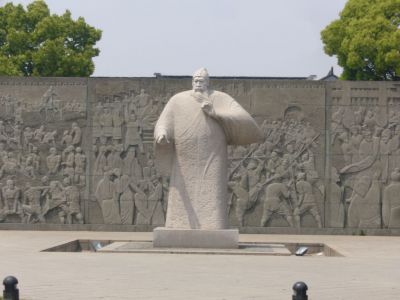
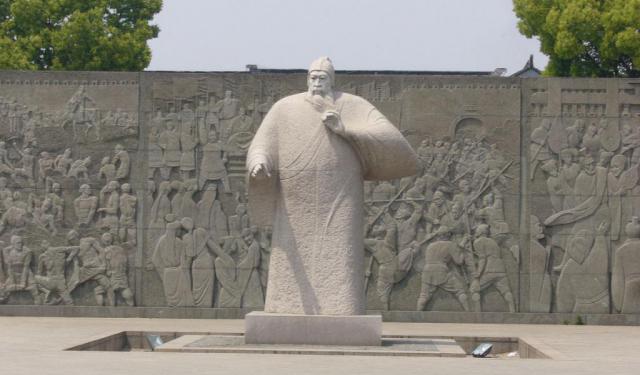
The Memorial to Wu Zixu in Suzhou honours one of the most influential statesmen of China’s Spring and Autumn period, a figure whose legacy is deeply tied to the early development of the city itself. Wu Zixu served the State of Wu in the 6th century BC and played a key role in shaping Suzhou’s urban foundations, including advising the construction of its ancient city walls and canals. His story, marked by loyalty, exile, and perseverance, has long resonated in Chinese history and literature, making the memorial an important place to understand Suzhou’s early origins and cultural identity.

Set within a calm, landscaped complex, the memorial combines traditional architectural elements with curated displays that trace Wu Zixu’s life and historical impact. Visitors move through halls featuring tablets, inscriptions, and artefacts that highlight his political achievements and the enduring respect he earned from later generations. The setting blends shaded courtyards, pavilions, and water features, echoing Suzhou’s classical garden aesthetic while maintaining a solemn atmosphere appropriate to the site’s commemorative purpose.

A statue of Wu Zixu provides a focal point, offering a moment for reflection on his contributions to Suzhou’s layout and governance. Interpretive panels help place his story within the wider context of early Chinese statecraft, giving travellers a clearer sense of how the city’s ancient design principles emerged. For those interested in history, architecture, or the origins of Suzhou’s distinctive water-town character, this memorial offers a meaningful and accessible introduction to one of the city’s foundational figures.
2
Suzhou Police Museum

2) Suzhou Police Museum

The Suzhou Police Museum offers visitors an engaging look at the city’s long history of law enforcement, tracing the evolution of public security from imperial times to modern community policing. Located within Suzhou’s historic urban core, the museum highlights how local authorities have worked to maintain order in a city known for its canals, commerce, and cultural heritage. Through its well-curated displays, the museum presents a narrative that blends historical context with contemporary developments, showing how policing adapted as Suzhou transformed from a traditional walled city into a major economic and cultural hub.

Inside, visitors encounter a wide range of exhibits that document the tools, methods, and daily realities of police work across different eras. Early sections explore the role of constables in pre-modern Suzhou, including archival materials, uniforms, and period equipment that illustrate how local governance functioned before the introduction of modern policing systems. Subsequent galleries shift toward the 20th century, showcasing the modernisation of the force, advances in communication and transportation, and the formation of specialised units.

Contemporary displays highlight community policing initiatives, forensic technology, and public-safety campaigns that reflect Suzhou’s current priorities. Interactive installations and multimedia presentations help make the subject matter accessible and engaging, offering insight into both routine police duties and the broader challenges faced by a rapidly developing urban environment.

For visitors, the Suzhou Police Museum provides a clear, structured perspective on the city’s commitment to security and civic order. It serves not only as a historical archive but also as a window into Suzhou’s ongoing efforts to balance tradition, innovation, and public well-being.
3
Great Wave Pavilion (Canglang Pavilion)

3) Great Wave Pavilion (Canglang Pavilion)

The Great Wave Pavilion, also known as Canglang Pavilion, is one of Suzhou’s oldest surviving classical gardens and a thoughtful place to explore the city’s long tradition of landscape design. Its origins date to the early 11th century, when the poet and statesman Su Shunqin built a retreat here after his political exile. He chose the site for its natural charm, giving it a name inspired by a line from the Songs of the South that praises the clarity of water even when waves rise around it. This blend of literary heritage and garden artistry has remained central to the pavilion’s identity, making it a landmark for those interested in the cultural depth of Jiangnan’s historic gardens.

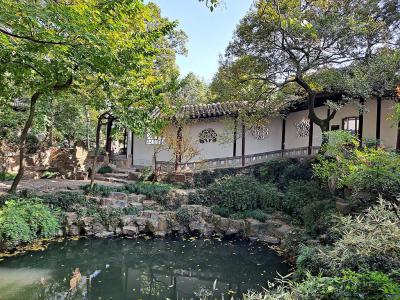
The layout focuses on harmony with the surrounding moat, creating a fluid relationship between architecture and water. Corridors frame views of bamboo groves, rockeries, and pavilions, offering shifting scenes as visitors move through the space. Compared with Suzhou’s more ornate gardens, the Great Wave Pavilion has a quieter, more contemplative character, shaped by its naturalistic design and centuries of renewal. Stone pathways lead toward the central hall and the well-known lattice windows, each carved with distinctive patterns that filter light and frame carefully composed vistas.

A visit here offers insight into early Song-dynasty aesthetics, where simplicity and balance were favored over grandeur. The garden’s enduring appeal lies in its ability to evoke calm, encourage reflection, and connect modern visitors with the poetic sensibilities that shaped Suzhou’s classical landscape tradition.
4
Yiyuan Garden

4) Yiyuan Garden

Yiyuan Garden, often translated as the Garden of Pleasance, offers visitors a calm and intimate look into Suzhou’s tradition of classical garden design. Built during the late Qing Dynasty, specifically in the reign of Emperor Guangxu between 1875 and 1908, it represents a later chapter in the city’s long history of refined landscape artistry. Although more modest in scale than Suzhou’s most renowned gardens, Yiyuan stands out for its quiet atmosphere and the careful balance of its spaces, which reveal new perspectives with each turn.

The layout brings together elegant pavilions, winding covered corridors, ponds, and sculpted rockeries, all arranged with the precision that has made Suzhou’s gardens part of UNESCO’s cultural heritage. Designers of Yiyuan relied on contrast and shifting viewpoints to give the compact site a sense of depth, allowing visitors to move swiftly from enclosed courtyards to open-water scenes. Decorative lattice windows, detailed woodwork, and traditional rooflines reinforce the garden’s focus on grace rather than grandeur.

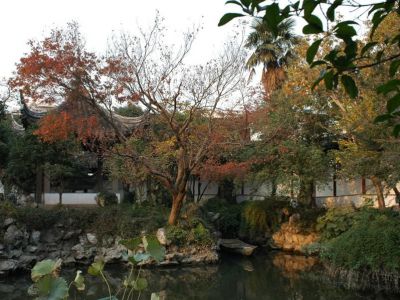
At the centre lies a serene pond that reflects nearby structures and rock formations, creating one of the garden’s most memorable scenes. Seasonal changes add subtle layers of beauty, from blooming flowers in spring to lotus blossoms in summer and warm-toned foliage in autumn. Because Yiyuan attracts fewer crowds than the larger gardens, it offers a more contemplative experience, well-suited for travellers who enjoy stillness and understated design.

For those exploring Suzhou’s cultural landscape, Yiyuan Garden serves as a thoughtful stop, where history, craftsmanship, and natural harmony come together with enduring elegance.
5
Guan Qian Street

5) Guan Qian Street (must see)

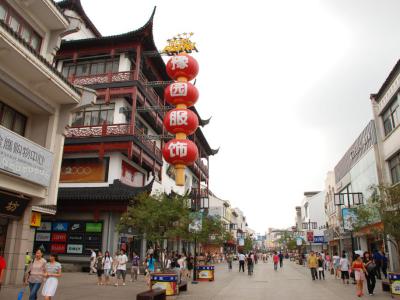
Guan Qian Street is one of Suzhou’s most vibrant historic quarters, blending centuries of local tradition with the energy of a modern commercial district. Located in the heart of the old city, the street developed around the ancient Xuanmiao Temple, whose presence shaped the surrounding neighbourhood as a lively marketplace. Over time, shops, teahouses, and craft stalls clustered along the temple’s front, giving the area its name — “Guanqian,” meaning “before the gate.” Today, the street remains a defining landmark of Suzhou’s urban fabric, known for its atmosphere, heritage architecture, and deep cultural roots.

Visitors will find a dynamic mix of old and new, where traditional façades line pedestrian-friendly lanes filled with local vendors and long-established Suzhou brands. Time-honoured pastry shops, silk stores, and specialty tea merchants sit alongside contemporary boutiques and popular eateries, creating an accessible introduction to the city’s craftsmanship and culinary traditions. The district is especially famous for its classic Suzhou snacks, from sweet rice cakes to savoury noodles, which have drawn loyal patrons for generations.

Guan Qian Street is also an engaging place to observe daily life. Lanterns, wooden storefronts, and the steady movement of locals and travellers give the area a distinctive rhythm throughout the day, while the nearby temple adds a sense of continuity with Suzhou’s past. As you explore, the street offers a chance to experience the cultural layers that shape the city — a place where heritage, commerce, and community come together in a lively and enduring setting.
6
Xuanmiao Temple (Temple of Mystery)

6) Xuanmiao Temple (Temple of Mystery)

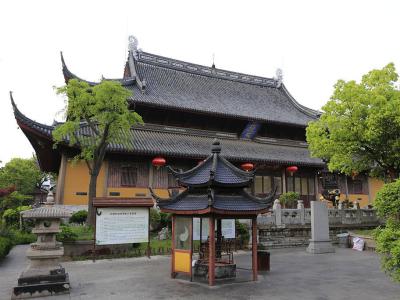
Temple of Mystery (Xuanmiao Temple) is one of Suzhou’s oldest and most atmospheric Taoist sites. Its origins trace back to the Western Jin dynasty, with the first temple established in the 3rd century. Over time, it endured fires, reconstructions, and name changes, yet it remained an enduring spiritual landmark at the heart of the old city. Today, the temple stands just off bustling Guanqian Street, offering a contemplative pause amid the energy of modern Suzhou. Its traditional layout reflects classical Taoist architecture, with courtyards unfolding in sequence and halls aligned along a central axis, guiding visitors from the secular world into a quieter, more introspective space.

The temple’s central structure, the Hall of the Mysterious Primeval, is one of the largest surviving Taoist halls in the region. Its sweeping roof, carved beams, and stately wooden pillars offer a glimpse into the craftsmanship of earlier dynasties. Incense drifting through the courtyards adds to the atmosphere, blending daily worship with the rhythms of local life. Nearby halls house deities associated with protection, longevity, and good fortune, making it a meaningful stop for those curious about Taoist belief and tradition.

Visitors will find the site especially engaging for the contrast it creates: a serene sanctuary framed by a lively commercial district. Whether you are drawn by its spiritual heritage, its woodworking details, or simply the calm of its courtyards, the Temple of Mystery offers an approachable window into Suzhou’s cultural and religious history.
7
Twin Pagodas

7) Twin Pagodas

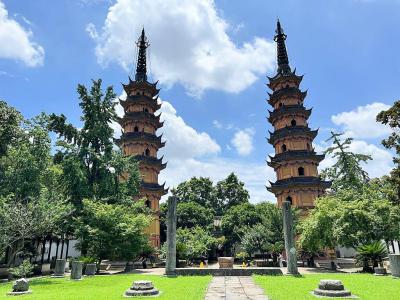
The Twin Pagodas of Suzhou stand as the most prominent survivors of the former Dinghui Temple, once an influential Buddhist complex with a history stretching back more than a thousand years. Constructed in 982 AD during the Northern Song period, the pagodas were funded by Wang Wenhan and his brother and originally formed part of a temple known by several names over the centuries, including Banruo, Luohan, the West Temple, and finally Dinghui. Although the temple was repeatedly rebuilt after fires—most notably in the late Yuan dynasty and again after its destruction during the Second Opium War in 1860—it never regained its former scale. Today, scattered columns, plinths, and decapitated statues from the Tang era offer a quiet reminder of the site’s long and layered past.

What makes the Twin Pagodas exceptional is their rarity in Chinese temple architecture, where a single pagoda was the norm. Built of brick and rising to about 30 metres, the Reliquary Pagoda and the Beneficial Virtue Reliquary Pagoda share nearly identical forms: octagonal, seven-storey structures with square rooms rotated 45 degrees at each level, except for the octagonal second floor. Their unusually long iron steeples add a distinctive silhouette seldom seen in ancient Chinese pagodas.

The site also carries a literary connection. Su Shi, one of the Song dynasty’s most celebrated writers, maintained a close friendship with Dinghui Temple’s abbot, Shou Qin. Their exchanged poems were once engraved on the temple walls, and a playful local saying likened the Twin Pagodas to a pair of scholars’ brushes beside a nearby “inkstone” tower—an enduring nod to Suzhou’s cultural imagination.
8
Dinghui Temple

8) Dinghui Temple

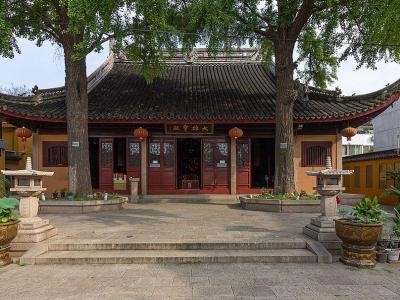
Dinghui Temple offers visitors a thoughtful glimpse into Suzhou’s Buddhist heritage and the quieter spiritual traditions that have shaped the city for centuries. Established during the Song Dynasty and rebuilt multiple times over its long history, the temple reflects the layered evolution of local religious life rather than the grandeur associated with Suzhou’s more famous landmarks. Its architecture follows a balanced, symmetrical layout typical of classical Chinese temples, where courtyards, halls, and walkways unfold in a calm, orderly sequence. This sense of measured progression sets the tone for the visit, inviting travellers to slow down and observe the details that have endured through successive reconstructions.

At the heart of the complex stands the Mahavira Hall, where statues of the Buddha and attendant deities create a serene focal point. The surrounding spaces, including smaller halls, incense courts, and shaded corners, help preserve the intimate atmosphere that defines Dinghui Temple. Traditional rooflines, carved beams, and muted colours contribute to an aesthetic rooted in quiet devotion rather than spectacle. While the temple is an active place of worship, it remains accessible to visitors who wish to appreciate its architectural character and spiritual setting.

For travellers exploring Suzhou’s historic quarters, Dinghui Temple provides a contrasting experience to the city’s classical gardens. Here, the emphasis rests on introspection and continuity, offering a moment of stillness within a rapidly modernizing landscape. Its modest proportions and enduring presence make it a valuable stop for anyone interested in the cultural threads that connect Suzhou’s past and present.

Walking Tours in Suzhou, China

Create Your Own Walk in Suzhou

Create Your Own Walk in Suzhou

Creating your own self-guided walk in Suzhou is easy and fun. Choose the city attractions that you want to see and a walk route map will be created just for you. You can even set your hotel as the start point of the walk.
Suzhou Introduction Walking Tour

Suzhou Introduction Walking Tour

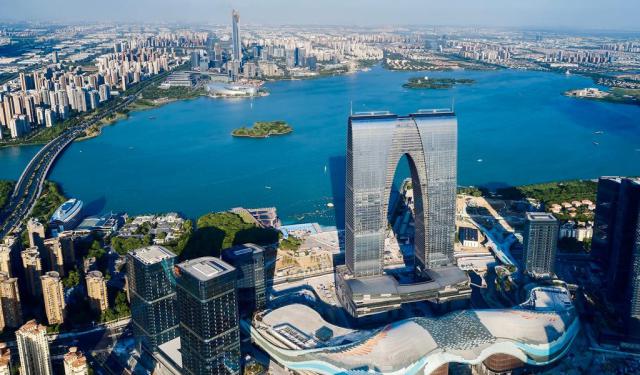
"Above there is heaven; below there is Suzhou (and Hangzhou)." Often spoken of in conjunction with Hangzhou, another picturesque city in China, Suzhou is located in the eastern part of the country and is colloquially referred to as the "Water Town of the East," renowned for its waterways and classical gardens, together creating an idyllic setting.

As the cradle of Wu...  view more

Tour Duration: 2 Hour(s)
Travel Distance: 4.6 Km or 2.9 Miles