

Audio Guide: Charlotte Introduction Walking Tour (Self Guided), Charlotte
Charlotte, the largest city in North Carolina, traces its origins to the mid-18th century, during a period of westward colonial expansion. European settlers, primarily Scots-Irish and German immigrants, established small communities in the region, which was then part of the British colony of North Carolina. The settlement grew along trading paths and near the Catawba and other local Native American trails, gradually developing into a town known for trade, agriculture, and later industry.
The city was officially founded in 1768 and named in honor of Queen Charlotte of Mecklenburg-Strelitz, the wife of King George III of England. The name “Charlotte” reflects both the queen’s given name and her title, with Mecklenburg in the state of North Carolina directly referencing her German heritage. This connection earned Charlotte its nickname "The Queen City."
Charlotte became the county seat of Mecklenburg County, and its central location helped establish it as a regional hub for commerce and governance. In 1775, local leaders allegedly signed the Mecklenburg Declaration of Independence, declaring freedom from British rule more than a year before the national Declaration of Independence. While historians debate the document’s authenticity, the story has become a key part of Charlotte’s identity.
Throughout the 19th century, Charlotte grew as a center for trade, particularly in cotton, and later developed a textile industry that fueled regional economic growth. The arrival of railroads in the mid-1800s further connected Charlotte to major markets and encouraged population growth. Following the Civil War, the city rebuilt and gradually expanded its infrastructure, including schools, churches, and civic buildings.
In the 20th century, Charlotte transformed into a major banking and financial center, attracting national and international businesses. Today, the city blends historical heritage with modern urban development.
Walking in Charlotte’s city center will encounter a lively mix of history, culture, and urban life. You’ll pass Independence Square with its iconic Four Corner Sculptures and explore early Charlotte history at Old Settlers’ Cemetery. Architectural gems like St. Peter’s Episcopal Church and St. Peter’s Catholic Church stand near the leafy pocket park The Green, while the Levine Museum of the New South and historic Latta Arcade add depth and character to the city.
Step into the streets of Charlotte, and let the city’s layers of history, culture, and modern energy guide your journey—each corner tells a story, waiting for you to discover.
The city was officially founded in 1768 and named in honor of Queen Charlotte of Mecklenburg-Strelitz, the wife of King George III of England. The name “Charlotte” reflects both the queen’s given name and her title, with Mecklenburg in the state of North Carolina directly referencing her German heritage. This connection earned Charlotte its nickname "The Queen City."
Charlotte became the county seat of Mecklenburg County, and its central location helped establish it as a regional hub for commerce and governance. In 1775, local leaders allegedly signed the Mecklenburg Declaration of Independence, declaring freedom from British rule more than a year before the national Declaration of Independence. While historians debate the document’s authenticity, the story has become a key part of Charlotte’s identity.
Throughout the 19th century, Charlotte grew as a center for trade, particularly in cotton, and later developed a textile industry that fueled regional economic growth. The arrival of railroads in the mid-1800s further connected Charlotte to major markets and encouraged population growth. Following the Civil War, the city rebuilt and gradually expanded its infrastructure, including schools, churches, and civic buildings.
In the 20th century, Charlotte transformed into a major banking and financial center, attracting national and international businesses. Today, the city blends historical heritage with modern urban development.
Walking in Charlotte’s city center will encounter a lively mix of history, culture, and urban life. You’ll pass Independence Square with its iconic Four Corner Sculptures and explore early Charlotte history at Old Settlers’ Cemetery. Architectural gems like St. Peter’s Episcopal Church and St. Peter’s Catholic Church stand near the leafy pocket park The Green, while the Levine Museum of the New South and historic Latta Arcade add depth and character to the city.
Step into the streets of Charlotte, and let the city’s layers of history, culture, and modern energy guide your journey—each corner tells a story, waiting for you to discover.
How it works: Download the app "GPSmyCity: Walks in 1K+ Cities" from Apple App Store or Google Play Store to your mobile phone or tablet. The app turns your mobile device into a personal tour guide and its built-in GPS navigation functions guide you from one tour stop to next. The app works offline, so no data plan is needed when traveling abroad.
Charlotte Introduction Walking Tour Map
Guide Name: Charlotte Introduction Walking Tour
Guide Location: USA » Charlotte (See other walking tours in Charlotte)
Guide Type: Self-guided Walking Tour (Sightseeing)
# of Attractions: 8
Tour Duration: 1 Hour(s)
Travel Distance: 2.2 Km or 1.4 Miles
Author: DanaOffice
Sight(s) Featured in This Guide:
Guide Location: USA » Charlotte (See other walking tours in Charlotte)
Guide Type: Self-guided Walking Tour (Sightseeing)
# of Attractions: 8
Tour Duration: 1 Hour(s)
Travel Distance: 2.2 Km or 1.4 Miles
Author: DanaOffice
Sight(s) Featured in This Guide:
- Independence Square and Four Corner Sculptures
- Old Settler's Cemetery
- Discovery Place
- St. Peters Episcopal Church
- Levine Museum of the New South
- The Green
- St. Peter's Catholic Church
- Latta Arcade
1) Independence Square and Four Corner Sculptures
Independence Square marks the historic heart of Charlotte, located at the intersection of Trade Street and Tryon Street in the city’s Uptown district. The crossroads traces its origins to the mid-1700s, when two Native American trading paths intersected here, forming the center of Charlotte’s earliest settlement. Over time the intersection became the focal point of the city’s commercial and civic life. The square takes its name from the Mecklenburg Declaration of Independence, reportedly signed nearby on May 20, 1775, when local leaders declared independence from Britain more than a year before the national Declaration of Independence.
One of the most notable features of the square today is the set of Four Corner Sculptures, installed in 1995 and designed by sculptor Raymond Kaskey. Each of the four large bronze statues stands atop a granite column at one corner of the intersection and represents a key force that shaped Charlotte’s development. The statues symbolize Commerce, Industry, Transportation, and the Future, reflecting the economic and social foundations of the city’s growth.
The sculptures contain symbolic details connected with Charlotte’s history. The Commerce figure depicts a gold prospector, referencing the nearby discovery of gold and the establishment of a U.S. Mint in the 19th century. Industry is represented by a textile mill worker and child, recalling the region’s once-dominant textile industry. Transportation honors the workers who built the railroads that helped Charlotte expand into a major regional hub. The final sculpture, representing the Future, shows a mother lifting her child, symbolizing hope and the city’s continuing growth.
Together, Independence Square and its monumental sculptures serve as a symbolic crossroads of Charlotte’s past, present, and future.
One of the most notable features of the square today is the set of Four Corner Sculptures, installed in 1995 and designed by sculptor Raymond Kaskey. Each of the four large bronze statues stands atop a granite column at one corner of the intersection and represents a key force that shaped Charlotte’s development. The statues symbolize Commerce, Industry, Transportation, and the Future, reflecting the economic and social foundations of the city’s growth.
The sculptures contain symbolic details connected with Charlotte’s history. The Commerce figure depicts a gold prospector, referencing the nearby discovery of gold and the establishment of a U.S. Mint in the 19th century. Industry is represented by a textile mill worker and child, recalling the region’s once-dominant textile industry. Transportation honors the workers who built the railroads that helped Charlotte expand into a major regional hub. The final sculpture, representing the Future, shows a mother lifting her child, symbolizing hope and the city’s continuing growth.
Together, Independence Square and its monumental sculptures serve as a symbolic crossroads of Charlotte’s past, present, and future.
2) Old Settler's Cemetery
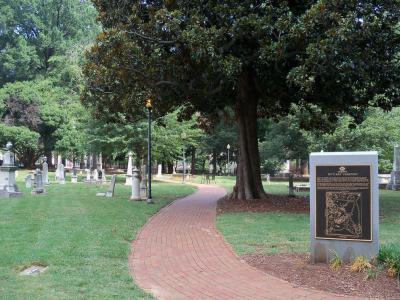
The Old Settlers’ Cemetery is the oldest historic burial ground in Charlotte, North Carolina, offering a glimpse into the city’s early history and the lives of its first residents. Located near the center of Uptown Charlotte, the cemetery dates back to 1776, when the growing frontier settlement needed a formal place for burials. Originally known simply as the “City Cemetery,” it served the community for nearly a century before larger cemeteries were established elsewhere.
Covering several acres, the cemetery contains the graves of many of Charlotte’s early citizens. Among those famed North Carolina buried at Old Settlers' Cemetery is Thomas Polk, founding father of Charlotte and Continental Army Officer during the American Revolutionary War. Some of the oldest markers date from the late 18th century and reflect the simple stonework typical of early American frontier communities. As the city grew, the cemetery gradually became surrounded by urban development, turning it into a quiet historic enclave amid the modern skyline.
The cemetery is also notable for the variety of gravestone styles found throughout the grounds. Visitors can see early slate and sandstone markers, ornate Victorian monuments, and family plots that illustrate changing memorial traditions over the 19th century. Many inscriptions provide insight into the hardships of the era, including epidemics and high infant mortality rates.
Today, Old Settlers’ Cemetery is preserved as an important historic landmark and memorial landscape. Maintained by local preservation groups and the city, it serves as a peaceful place of remembrance while offering visitors a tangible connection to Charlotte’s earliest generations.
Covering several acres, the cemetery contains the graves of many of Charlotte’s early citizens. Among those famed North Carolina buried at Old Settlers' Cemetery is Thomas Polk, founding father of Charlotte and Continental Army Officer during the American Revolutionary War. Some of the oldest markers date from the late 18th century and reflect the simple stonework typical of early American frontier communities. As the city grew, the cemetery gradually became surrounded by urban development, turning it into a quiet historic enclave amid the modern skyline.
The cemetery is also notable for the variety of gravestone styles found throughout the grounds. Visitors can see early slate and sandstone markers, ornate Victorian monuments, and family plots that illustrate changing memorial traditions over the 19th century. Many inscriptions provide insight into the hardships of the era, including epidemics and high infant mortality rates.
Today, Old Settlers’ Cemetery is preserved as an important historic landmark and memorial landscape. Maintained by local preservation groups and the city, it serves as a peaceful place of remembrance while offering visitors a tangible connection to Charlotte’s earliest generations.
3) Discovery Place (must see)
Discovery Place Science is one of Charlotte’s leading cultural and educational attractions, located in the heart of Uptown along North Tryon Street. Opened in 1981, the museum was designed as an interactive center where visitors of all ages could explore science, technology, and the natural world through hands-on exhibits and live demonstrations. Over the decades it has grown into a major hub for STEM education in the Carolinas, welcoming hundreds of thousands of visitors each year.
The museum’s roots trace back to 1947, when local teacher Laura Owens created a small nature museum so her students could learn directly from live animals, specimens, and artifacts. That early effort evolved into a broader educational institution, eventually leading to the establishment of the modern Discovery Place museum in Uptown Charlotte.
Inside the museum, visitors encounter a wide range of interactive exhibits exploring subjects such as physics, biology, engineering, and environmental science. Features include aquariums, an indoor rainforest environment, innovation labs, and demonstration spaces where scientists present live experiments and educational programs.
One of the museum’s most popular attractions is the IMAX Dome Theatre, the largest giant-screen dome theater in the Carolinas, which presents science documentaries, planetarium shows, and blockbuster films on a massive curved screen.
Today, Discovery Place remains a cornerstone of Charlotte’s cultural landscape, combining entertainment and education while encouraging curiosity, creativity, and scientific exploration for visitors of all ages.
The museum’s roots trace back to 1947, when local teacher Laura Owens created a small nature museum so her students could learn directly from live animals, specimens, and artifacts. That early effort evolved into a broader educational institution, eventually leading to the establishment of the modern Discovery Place museum in Uptown Charlotte.
Inside the museum, visitors encounter a wide range of interactive exhibits exploring subjects such as physics, biology, engineering, and environmental science. Features include aquariums, an indoor rainforest environment, innovation labs, and demonstration spaces where scientists present live experiments and educational programs.
One of the museum’s most popular attractions is the IMAX Dome Theatre, the largest giant-screen dome theater in the Carolinas, which presents science documentaries, planetarium shows, and blockbuster films on a massive curved screen.
Today, Discovery Place remains a cornerstone of Charlotte’s cultural landscape, combining entertainment and education while encouraging curiosity, creativity, and scientific exploration for visitors of all ages.
4) St. Peters Episcopal Church
St. Peter’s Episcopal Church is a historic and active parish located in Uptown Charlotte, North Carolina, serving as both a place of worship and a landmark in the city’s spiritual and architectural history. Established in 1851, it is one of Charlotte’s oldest Episcopal congregations and has played a significant role in the religious and civic life of the city for over a century and a half.
The church’s Gothic Revival architecture reflects 19th-century ecclesiastical design, with pointed arch windows, intricate woodwork, and a traditional steeple that has become a recognizable feature of Charlotte’s skyline. Inside, the sanctuary offers a serene and contemplative space, featuring stained-glass windows, historic pews, and a finely crafted altar, all contributing to the church’s rich aesthetic and spiritual atmosphere.
Throughout its history, St. Peter’s has been closely connected to the Charlotte community. The parish has provided social services, educational programs, and outreach initiatives, reflecting its commitment to both faith and civic engagement. During periods of city growth and change, the church has preserved its historic character while continuing to adapt to the needs of its congregation.
Visitors today can attend regular services, explore the historic architecture, and learn about the church’s legacy through guided tours and special events.
The church’s Gothic Revival architecture reflects 19th-century ecclesiastical design, with pointed arch windows, intricate woodwork, and a traditional steeple that has become a recognizable feature of Charlotte’s skyline. Inside, the sanctuary offers a serene and contemplative space, featuring stained-glass windows, historic pews, and a finely crafted altar, all contributing to the church’s rich aesthetic and spiritual atmosphere.
Throughout its history, St. Peter’s has been closely connected to the Charlotte community. The parish has provided social services, educational programs, and outreach initiatives, reflecting its commitment to both faith and civic engagement. During periods of city growth and change, the church has preserved its historic character while continuing to adapt to the needs of its congregation.
Visitors today can attend regular services, explore the historic architecture, and learn about the church’s legacy through guided tours and special events.
5) Levine Museum of the New South (must see)
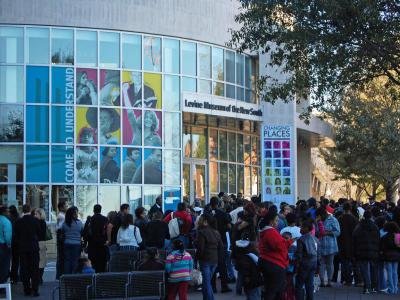
Post-Civil War life in Charlotte, North Carolina is on full display at the Levine Museum of the New South. Visitors will find permanent and revolving exhibits that detail the changes in the region from the US Civil War through present day. The museum was founded in 1991 and has been an important attraction since that time.
Exhibits at the Levine Museum are interactive in order to immerse visitors into life of the locals from days gone by. The permanent exhibit is called "Cotton Fields to Skyscrapers." This exhibit includes stories from Reconstruction, industrialization and the Civil Rights Era. This 8,000 square foot exhibit space includes music, video, oral histories and artifacts from throughout the years. It includes a rebuilt, one-room tenant farmer's house, Good Samaritans Hospital Chapel and reconstructions of main street Charlotte and lunch counters where sit-ins were staged.
Temporary exhibits often focus on specific areas in Charlotte. One of these is Brooklyn, the take of a historic black community in the city. This exhibit shows visitors the opportunity gaps created by urban renewal while also celebrating the rich culture of the neighborhood.
The Equal Justice Initiative has worked with the Levine Museum of the New South on an exhibit titles "It Happened Here: Lynching and Remembrance." The exhibit reminds museum patrons of lynchings throughout the country, with a strong focus on two that took place in Mecklenburg County.
Exhibits at the Levine Museum are interactive in order to immerse visitors into life of the locals from days gone by. The permanent exhibit is called "Cotton Fields to Skyscrapers." This exhibit includes stories from Reconstruction, industrialization and the Civil Rights Era. This 8,000 square foot exhibit space includes music, video, oral histories and artifacts from throughout the years. It includes a rebuilt, one-room tenant farmer's house, Good Samaritans Hospital Chapel and reconstructions of main street Charlotte and lunch counters where sit-ins were staged.
Temporary exhibits often focus on specific areas in Charlotte. One of these is Brooklyn, the take of a historic black community in the city. This exhibit shows visitors the opportunity gaps created by urban renewal while also celebrating the rich culture of the neighborhood.
The Equal Justice Initiative has worked with the Levine Museum of the New South on an exhibit titles "It Happened Here: Lynching and Remembrance." The exhibit reminds museum patrons of lynchings throughout the country, with a strong focus on two that took place in Mecklenburg County.
6) The Green
The Green is a prominent urban park and gathering space located in Uptown Charlotte, along South Tryon Street. Established in 1776 on the site of the city’s original public square, the park occupies what was once part of Charlotte’s early settlement layout, making it one of the oldest civic spaces in the city. Its name reflects the traditional concept of a communal “green” where residents could meet, celebrate, and relax.
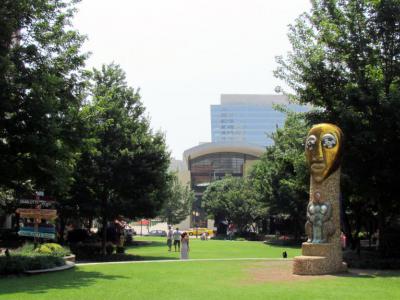
The Green is notable for its focus on art. Temporary, public art is often on display, particularly in the summer. A number of permanent pieces can be seen throughout the year. With a focus on world literature, The Green offers bronze statues that feature great novels like Roots, Don Quixote and Wuthering Heights.
There are many other public works of art in and near the Green. The Brick Kids - Life is an Open Book features children, made from brick, climbing a brick wall. The Firebird is an 18 foot structure featuring a bird adorned in shards of glass. It is adoringly called "Disco Chicken" by locals. The park also features three fountains shaped like fish that spit water from their mouths during the summer months.
Those visiting Charlotte in the summer may find themselves enjoying performances at the Green during the Charlotte Shakespeare Festival. Other public events, including movie screenings and free outdoor plays, often take place in this park.
The Green is notable for its focus on art. Temporary, public art is often on display, particularly in the summer. A number of permanent pieces can be seen throughout the year. With a focus on world literature, The Green offers bronze statues that feature great novels like Roots, Don Quixote and Wuthering Heights.
There are many other public works of art in and near the Green. The Brick Kids - Life is an Open Book features children, made from brick, climbing a brick wall. The Firebird is an 18 foot structure featuring a bird adorned in shards of glass. It is adoringly called "Disco Chicken" by locals. The park also features three fountains shaped like fish that spit water from their mouths during the summer months.
Those visiting Charlotte in the summer may find themselves enjoying performances at the Green during the Charlotte Shakespeare Festival. Other public events, including movie screenings and free outdoor plays, often take place in this park.
7) St. Peter's Catholic Church
Saint Peter's Catholic Church in Charlotte is a symbol of the region's deep Catholic heritage. Established in 1851, it holds the distinction of being the oldest Catholic church in Charlotte, playing a central role in the city's religious life until 1940 when it was the only Catholic church available.
Originally situated at what was then considered the southern outskirts of Charlotte, Saint Peter's has witnessed the city's growth, now finding itself in the bustling heart of uptown Charlotte, surrounded by major art museums and adjacent to The Green, making it one of the oldest surviving buildings on Tryon Street.
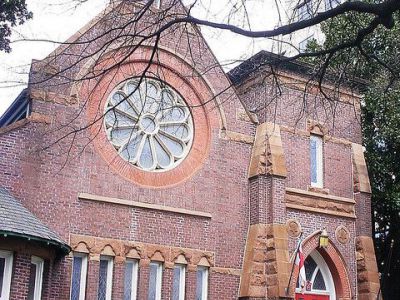
Despite facing challenges such as damage during the Civil War, the current building, constructed in 1893, stands as a fine example of simplified Victorian Gothic architecture, notable for its dark brick design.
Inside, Saint Peter's once housed a notable triptych by American painter Ben Long, depicting key moments in Christian history. Sadly, this fresco suffered severe damage in February 2002 and could not be fully restored, leading to a renovation of the church interior in 2007. This renovation not only addressed the damage but also revitalized the interior, ensuring that Saint Peter's remains a place of worship and spiritual comfort for the community.
Throughout its history, Saint Peter's Catholic Church has been more than a place of worship; it's a significant historical and architectural landmark in Charlotte. Its journey from a solitary church on the outskirts to a prominent landmark in uptown reflects both its resilience and its enduring importance to the community it serves.
Originally situated at what was then considered the southern outskirts of Charlotte, Saint Peter's has witnessed the city's growth, now finding itself in the bustling heart of uptown Charlotte, surrounded by major art museums and adjacent to The Green, making it one of the oldest surviving buildings on Tryon Street.
Despite facing challenges such as damage during the Civil War, the current building, constructed in 1893, stands as a fine example of simplified Victorian Gothic architecture, notable for its dark brick design.
Inside, Saint Peter's once housed a notable triptych by American painter Ben Long, depicting key moments in Christian history. Sadly, this fresco suffered severe damage in February 2002 and could not be fully restored, leading to a renovation of the church interior in 2007. This renovation not only addressed the damage but also revitalized the interior, ensuring that Saint Peter's remains a place of worship and spiritual comfort for the community.
Throughout its history, Saint Peter's Catholic Church has been more than a place of worship; it's a significant historical and architectural landmark in Charlotte. Its journey from a solitary church on the outskirts to a prominent landmark in uptown reflects both its resilience and its enduring importance to the community it serves.
8) Latta Arcade
The Latta Arcade is one of the most distinctive historic buildings in Uptown Charlotte and an early example of the city’s commercial development in the early 20th century. Built in 1914 and designed by architect William H. Peeps, the structure was commissioned by prominent developer Edward Dilworth Latta, whose projects helped transform Charlotte into a growing business center.
The building takes the form of an indoor shopping arcade, a popular architectural concept of the late 19th and early 20th centuries. Its design features a two-story atrium lined with small storefronts and offices, illuminated by a large glass skylight overhead. Originally, the skylight allowed natural light into the building for cotton brokers who graded cotton inside the arcade.
When it opened in 1915, Latta Arcade included six retail shops facing South Tryon Street and sixteen smaller specialty stores inside the arcade, creating a lively commercial corridor that stretched through the city block. The development proved so successful that nearby Brevard Court was later built in a similar style, extending the pedestrian passageway toward Church Street.
Today, Latta Arcade remains a rare survivor of Charlotte’s early commercial architecture and is listed on the National Register of Historic Places. The historic structure now houses restaurants, cafés, and small businesses, making it a popular lunch spot for Uptown workers and visitors. With its skylit interior and preserved historic character, the arcade offers a glimpse into the city’s past while continuing to serve as a vibrant gathering place in modern Charlotte.
The building takes the form of an indoor shopping arcade, a popular architectural concept of the late 19th and early 20th centuries. Its design features a two-story atrium lined with small storefronts and offices, illuminated by a large glass skylight overhead. Originally, the skylight allowed natural light into the building for cotton brokers who graded cotton inside the arcade.
When it opened in 1915, Latta Arcade included six retail shops facing South Tryon Street and sixteen smaller specialty stores inside the arcade, creating a lively commercial corridor that stretched through the city block. The development proved so successful that nearby Brevard Court was later built in a similar style, extending the pedestrian passageway toward Church Street.
Today, Latta Arcade remains a rare survivor of Charlotte’s early commercial architecture and is listed on the National Register of Historic Places. The historic structure now houses restaurants, cafés, and small businesses, making it a popular lunch spot for Uptown workers and visitors. With its skylit interior and preserved historic character, the arcade offers a glimpse into the city’s past while continuing to serve as a vibrant gathering place in modern Charlotte.
Walking Tours in Charlotte, North Carolina

Create Your Own Walk in Charlotte
Creating your own self-guided walk in Charlotte is easy and fun. Choose the city attractions that you want to see and a walk route map will be created just for you. You can even set your hotel as the start point of the walk.
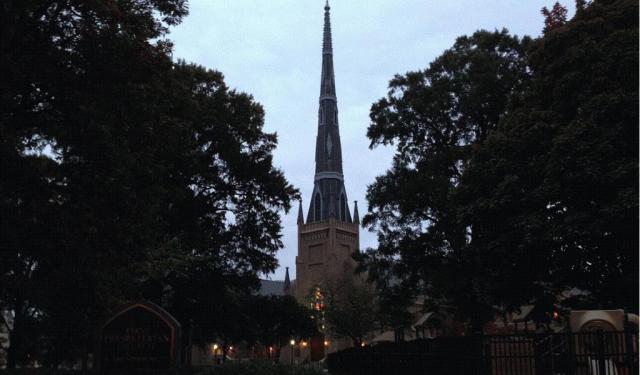
Historical Churches
Charlotte, North Carolina, is home to a variety of religious sites, representing a range of religious denominations. The city's historical churches date mostly to the first half of the 19th century and stand as both spiritual sanctuaries and architectural landmarks.
One of the notable places of worship in Charlotte is Saint Peter's Catholic Church. Founded in 1851, it boasts a... view more
Tour Duration: 1 Hour(s)
Travel Distance: 1.9 Km or 1.2 Miles
One of the notable places of worship in Charlotte is Saint Peter's Catholic Church. Founded in 1851, it boasts a... view more
Tour Duration: 1 Hour(s)
Travel Distance: 1.9 Km or 1.2 Miles
Charlotte's Historical Buildings Tour
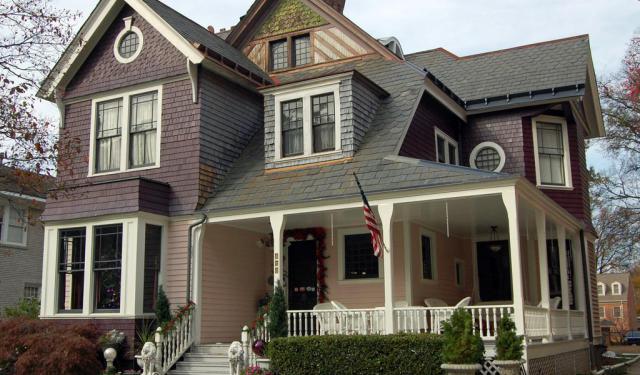
Downtown Charlotte or Uptown (as it is colloquially called by locals) is home to a number of historic structures that remind people what the city once looked like. Fourth Ward, Charlotte's oldest surviving downtown residential district filled with flowering plants, shrubs, evergreens, and tall deciduous trees, is long known for its well-preserved Victorian-era heritage.
Among its... view more
Tour Duration: 1 Hour(s)
Travel Distance: 1.2 Km or 0.7 Miles
Among its... view more
Tour Duration: 1 Hour(s)
Travel Distance: 1.2 Km or 0.7 Miles
The Most Popular Cities
/ view all