

Addis Ababa Introduction Walking Tour (Self Guided), Addis Ababa
Addis Ababa, the capital of Ethiopia, is the country’s commercial and cultural hub, hosting a number of historic landmarks: monuments, squares, palaces and more. Among them the ones dedicated to the local Emperor Menelek and those commemorating the country's last, 20th-century emperor Haile Selassie. Follow this orientation walk to explore some of the top attractions of Addis Ababa.
How it works: Download the app "GPSmyCity: Walks in 1K+ Cities" from Apple App Store or Google Play Store to your mobile phone or tablet. The app turns your mobile device into a personal tour guide and its built-in GPS navigation functions guide you from one tour stop to next. The app works offline, so no data plan is needed when traveling abroad.
Download The GPSmyCity App



Addis Ababa Introduction Walking Tour Map
Guide Name: Addis Ababa Introduction Walking Tour
Guide Location: Ethiopia » Addis Ababa (See other walking tours in Addis Ababa)
Guide Type: Self-guided Walking Tour (Sightseeing)
# of Attractions: 10
Tour Duration: 3 Hour(s)
Travel Distance: 5.4 Km or 3.4 Miles
Author: vickyc
Sight(s) Featured in This Guide:
Guide Location: Ethiopia » Addis Ababa (See other walking tours in Addis Ababa)
Guide Type: Self-guided Walking Tour (Sightseeing)
# of Attractions: 10
Tour Duration: 3 Hour(s)
Travel Distance: 5.4 Km or 3.4 Miles
Author: vickyc
Sight(s) Featured in This Guide:
- St. George's Cathedral
- Menelik II Statue
- Churchill Avenue
- Tewodros Square
- Derg Monument
- San Salvador Church
- Lion of Judah
- Meskel Square
- Africa Hall
- National Palace
1) St. George's Cathedral (must see)
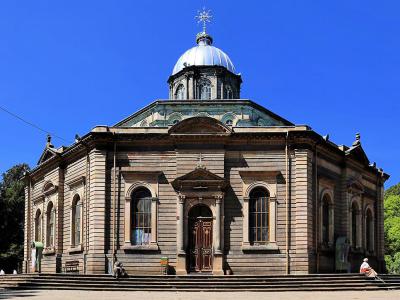
St. George's Cathedral is an important Ethiopian Orthodox church with strong ties to the country’s modern history. It was built in the early 1900s to honor Ethiopia’s victory over Italian forces at the Battle of Adwa in 1896. The church is dedicated to Saint George, who is widely respected in Ethiopia and often seen as a protector in times of struggle. From the start, the cathedral was meant to represent both religious faith and national independence.
The building has an octagonal shape, setting it apart from the more common round churches. Thick stone walls and arched windows give it a strong, balanced form, while a central dome rises above the roof. The design blends traditional Ethiopian church forms with European influences from the imperial period, and the many windows allow daylight to enter from several sides.
Inside, the cathedral is arranged mainly for worship. The inner sanctuary is separated and used only by priests, while worshippers stay in the outer areas. The walls are decorated with painted scenes from the Bible and images of saints, made in the Ethiopian Orthodox style with clear figures and bold colors. Some artworks also reflect the church’s connection to important historical events and leaders.
The cathedral has played a role in major national moments, including the coronation of Emperor Haile Selassie in 1930. It is still an active church today, with regular services and religious celebrations. Visitors are usually welcome outside service times if they dress modestly and remain respectful. A short visit helps explain the close link between religion, history, and public life.
The building has an octagonal shape, setting it apart from the more common round churches. Thick stone walls and arched windows give it a strong, balanced form, while a central dome rises above the roof. The design blends traditional Ethiopian church forms with European influences from the imperial period, and the many windows allow daylight to enter from several sides.
Inside, the cathedral is arranged mainly for worship. The inner sanctuary is separated and used only by priests, while worshippers stay in the outer areas. The walls are decorated with painted scenes from the Bible and images of saints, made in the Ethiopian Orthodox style with clear figures and bold colors. Some artworks also reflect the church’s connection to important historical events and leaders.
The cathedral has played a role in major national moments, including the coronation of Emperor Haile Selassie in 1930. It is still an active church today, with regular services and religious celebrations. Visitors are usually welcome outside service times if they dress modestly and remain respectful. A short visit helps explain the close link between religion, history, and public life.
2) Menelik II Statue
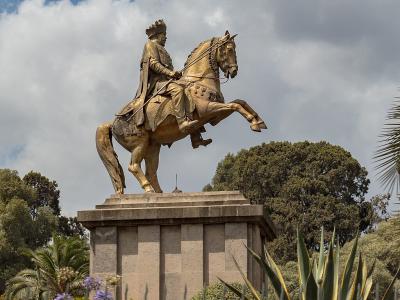
The Menelik II Statue stands at Menelik II Square and honors Emperor Menelik II, who ruled from 1889 to 1913. He is strongly linked to the Battle of Adwa (1896), when Ethiopian forces defeated an invading Italian army and kept the country independent during the period of European colonial expansion.
It is an equestrian monument made of bronze, but it is not a quiet pose: the horse is shown rearing on its hind legs, which gives the sculpture a bold, heroic look. Menelik is usually shown holding the Ethiopian flag and a sword (some descriptions mention spears instead). The statue is also set facing north, a symbolic choice tied to the direction of Adwa, the battlefield connected to his most famous victory.
The statue was commissioned by Empress Zewditu, Menelik II’s daughter, and unveiled in 1930, during the period of Ras Tafari’s coronation as Haile Selassie. During the Italian occupation (1936–1941), it was removed and hidden, then restored after liberation. The high pedestal is also known as Ethiopia’s reference point for measuring highway distances, giving the monument a practical role beyond its historical meaning.
It is an equestrian monument made of bronze, but it is not a quiet pose: the horse is shown rearing on its hind legs, which gives the sculpture a bold, heroic look. Menelik is usually shown holding the Ethiopian flag and a sword (some descriptions mention spears instead). The statue is also set facing north, a symbolic choice tied to the direction of Adwa, the battlefield connected to his most famous victory.
The statue was commissioned by Empress Zewditu, Menelik II’s daughter, and unveiled in 1930, during the period of Ras Tafari’s coronation as Haile Selassie. During the Italian occupation (1936–1941), it was removed and hidden, then restored after liberation. The high pedestal is also known as Ethiopia’s reference point for measuring highway distances, giving the monument a practical role beyond its historical meaning.
3) Churchill Avenue
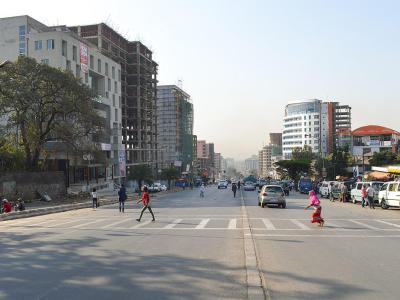
Churchill Avenue is a major road in the city center linked to government offices, banks, and daily business. It developed in the early 20th century, when modern planning and foreign influence began shaping the capital. Because many public institutions were built here, the avenue became an important administrative area and has also hosted public events and political activity over time.
Older buildings from the imperial period stand beside newer office and commercial blocks. Some show European design influences, while others are simpler and more practical. This mix reflects how the city developed over time and gives the avenue a formal, work-focused character.
The avenue is busiest on weekdays, with office workers, students, and government employees moving through from morning to late afternoon. Traffic is often heavy, but sidewalks make walking possible. Nearby cafés, shops, and service offices offer short stops, and the area shows how public life and administration work on a typical day.
Older buildings from the imperial period stand beside newer office and commercial blocks. Some show European design influences, while others are simpler and more practical. This mix reflects how the city developed over time and gives the avenue a formal, work-focused character.
The avenue is busiest on weekdays, with office workers, students, and government employees moving through from morning to late afternoon. Traffic is often heavy, but sidewalks make walking possible. Nearby cafés, shops, and service offices offer short stops, and the area shows how public life and administration work on a typical day.
4) Tewodros Square
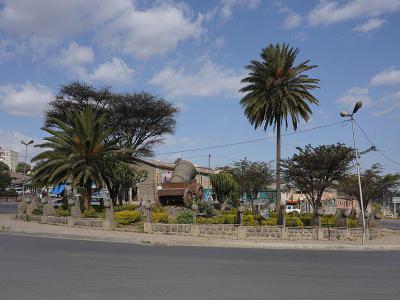
Tewodros Square is a busy traffic junction shaped by constant movement. Several main roads meet here, so the area is active throughout the day. Taxis, buses, private cars, and pedestrians all compete for space, creating a fast and noisy atmosphere. The square is not designed for sitting or leisure. Its main role is practical, helping people move between different parts of the city.
At the center of the square is a large bronze replica of the Sebastopol cannon, the main landmark of the area. It was commissioned by Emperor Tewodros II in the 19th century to reflect his interest in modern weapons and stronger defense. The cannon is the most recognized feature of the square and is often used as a common meeting or reference point.
Buildings around the square include small shops, cafés, and older commercial structures alongside newer ones. Street vendors are common, especially during busy hours. Recent road upgrades and new lighting have improved traffic flow, though the area remains fast-paced. Most visitors pass through briefly, and care is needed when crossing the roads due to heavy traffic.
At the center of the square is a large bronze replica of the Sebastopol cannon, the main landmark of the area. It was commissioned by Emperor Tewodros II in the 19th century to reflect his interest in modern weapons and stronger defense. The cannon is the most recognized feature of the square and is often used as a common meeting or reference point.
Buildings around the square include small shops, cafés, and older commercial structures alongside newer ones. Street vendors are common, especially during busy hours. Recent road upgrades and new lighting have improved traffic flow, though the area remains fast-paced. Most visitors pass through briefly, and care is needed when crossing the roads due to heavy traffic.
5) Derg Monument (must see)
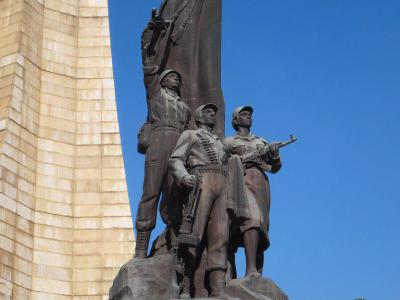
The Derg (Tiglachin) Monument was built in 1984 during the time of military rule known as the Derg. It was created to mark the government’s claimed victory in the Ogaden War (1977–1978). The name Tiglachin means “Our Struggle,” a phrase that matches the political language used by the government at that time. The monument also points to the role of Cuban military support, which was important during the war. It was not meant to remember victims, but to show power, unity, and loyalty to the state.
The monument is easy to recognize because of its size. A concrete pillar about 50 meters high stands at the center of the site, with a red star on top, a symbol often used by socialist governments. Around the base, large statues and carved walls show soldiers, workers, and scenes of cooperation and resistance. The figures are strong and simple, with clear poses and expressions. This style, known as socialist realism, was designed to be easy for the public to understand. The open space around the monument was planned for large gatherings and official events.
Today, the monument is mainly an outdoor historical site with no indoor museum. Visits are usually self-guided, and most people spend 20 to 40 minutes walking around and looking at the sculptures. For visitors, it offers a clear look at how governments used monuments to share political messages in the late 20th century and helps explain the background of later memorials created for different reasons.
The monument is easy to recognize because of its size. A concrete pillar about 50 meters high stands at the center of the site, with a red star on top, a symbol often used by socialist governments. Around the base, large statues and carved walls show soldiers, workers, and scenes of cooperation and resistance. The figures are strong and simple, with clear poses and expressions. This style, known as socialist realism, was designed to be easy for the public to understand. The open space around the monument was planned for large gatherings and official events.
Today, the monument is mainly an outdoor historical site with no indoor museum. Visits are usually self-guided, and most people spend 20 to 40 minutes walking around and looking at the sculptures. For visitors, it offers a clear look at how governments used monuments to share political messages in the late 20th century and helps explain the background of later memorials created for different reasons.
6) San Salvador Church
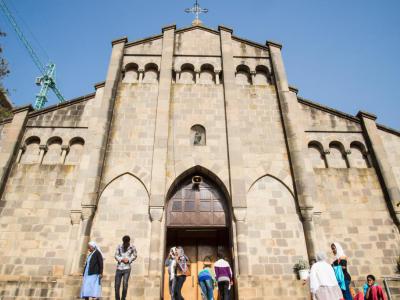
San Salvador Church was built during the Italian occupation of Ethiopia between 1936 and 1941. It first served the Italian Catholic community and later became the main Catholic church for the city. Its name means “Holy Savior,” reflecting its European origins, and it has remained active with a mixed local and international congregation.
Architecturally, the church differs from Ethiopian Orthodox buildings. It is often described as a large round structure with a tall Catholic-style tower. The red-brick exterior is simple, with little decoration, and the design reflects European church styles of the early 20th century rather than local traditions.
Inside, the church is simple and quiet, with an open space, plain seating, and a clear view of the altar. Unlike Orthodox churches, it has no large wall paintings or colorful frescoes. Soft natural light creates a calm setting for prayer. Services are held regularly, often in more than one language. Visitors may enter outside service times or observe quietly, and a visit usually takes about 20 to 30 minutes.
Architecturally, the church differs from Ethiopian Orthodox buildings. It is often described as a large round structure with a tall Catholic-style tower. The red-brick exterior is simple, with little decoration, and the design reflects European church styles of the early 20th century rather than local traditions.
Inside, the church is simple and quiet, with an open space, plain seating, and a clear view of the altar. Unlike Orthodox churches, it has no large wall paintings or colorful frescoes. Soft natural light creates a calm setting for prayer. Services are held regularly, often in more than one language. Visitors may enter outside service times or observe quietly, and a visit usually takes about 20 to 30 minutes.
7) Lion of Judah (must see)
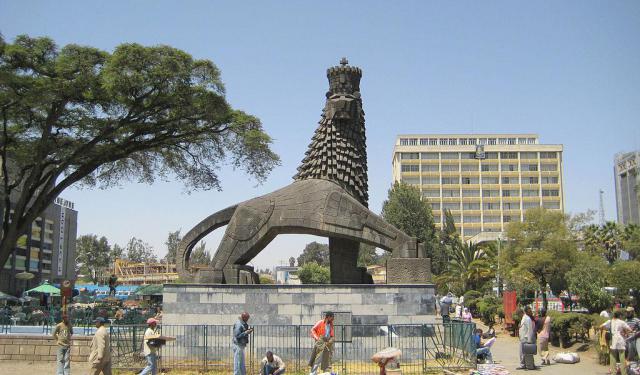
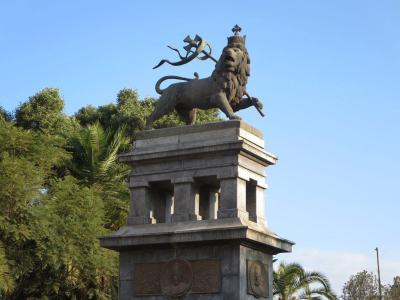
The Lion of Judah is best known through its golden statue created for Emperor Haile Selassie I’s coronation in 1930. The sculpture was made by French artist Georges Gardet and represents the emperor’s full title, Conquering Lion of the Tribe of Judah. For centuries, Ethiopian emperors used this title to claim a biblical link to the Solomonic dynasty, connecting royal authority with religion and history. Because of this, the lion became a strong symbol of imperial power and national identity.
The statue is made of gilded bronze, giving it a golden surface that reflects light clearly. The lion faces forward in a calm, controlled stance, rather than an aggressive one. It stands on a black granite base with relief portraits of Emperor Menelik II, Emperor Haile Selassie I, Empress Zewditu, and Ras Makonnen, linking the monument to the imperial family and early 20th-century leadership.
The statue has a difficult history. It was taken to Rome during the Italian occupation in 1935–1936 and displayed there for almost 30 years. It was returned in the 1960s, though sources differ on the exact year. After the 1974 revolution, the Derg planned to remove it, but Arbegnoch (war veterans) protected the statue, saying it also symbolized resistance to fascist rule.
Today, visitors usually stop for a short time to view the statue and take photographs. Although the visit is brief, the monument helps explain how one image carried religious, political, and historical meaning across changing periods.
The statue is made of gilded bronze, giving it a golden surface that reflects light clearly. The lion faces forward in a calm, controlled stance, rather than an aggressive one. It stands on a black granite base with relief portraits of Emperor Menelik II, Emperor Haile Selassie I, Empress Zewditu, and Ras Makonnen, linking the monument to the imperial family and early 20th-century leadership.
The statue has a difficult history. It was taken to Rome during the Italian occupation in 1935–1936 and displayed there for almost 30 years. It was returned in the 1960s, though sources differ on the exact year. After the 1974 revolution, the Derg planned to remove it, but Arbegnoch (war veterans) protected the statue, saying it also symbolized resistance to fascist rule.
Today, visitors usually stop for a short time to view the statue and take photographs. Although the visit is brief, the monument helps explain how one image carried religious, political, and historical meaning across changing periods.
8) Meskel Square (must see)
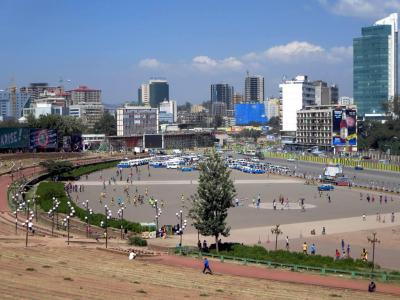
Meskel Square is a large open public space used for gatherings, ceremonies, and everyday movement. It developed in the mid-20th century and has changed names over time as politics changed. It was first called Stephen Square, then renamed Meskel Square in the early 1950s. During the socialist period from 1974 to 1991, it was known as Revolution Square. For many years, the square was mostly a wide paved area with little decoration, designed to hold very large crowds.
The square is best known for the Meskel festival, an Ethiopian Orthodox celebration held each September to mark the discovery of the True Cross. During the event, a large wooden demera is built and burned in a public ceremony. Priests, church choirs, and large crowds gather around the fire, following a tradition linked to Queen Helena and the guiding smoke.
The square has also played an important role in public and political life. It has been used for political rallies, state ceremonies, concerts, and sports-related events. During the socialist period, it hosted military parades and official speeches. Near the square stands a tall concrete monument linked to the Red Terror Martyrs’ Memorial, which commemorates victims of the Derg regime and reflects the square’s connection to recent history.
In 2021, a major renovation added underground parking for about 1,400 vehicles, stepped seating, cafés, shops, and large screens. On normal days, people walk across the square, sit along the edges, or pause briefly. A visit of about 20 to 30 minutes shows how daily life and public events share the space.
The square is best known for the Meskel festival, an Ethiopian Orthodox celebration held each September to mark the discovery of the True Cross. During the event, a large wooden demera is built and burned in a public ceremony. Priests, church choirs, and large crowds gather around the fire, following a tradition linked to Queen Helena and the guiding smoke.
The square has also played an important role in public and political life. It has been used for political rallies, state ceremonies, concerts, and sports-related events. During the socialist period, it hosted military parades and official speeches. Near the square stands a tall concrete monument linked to the Red Terror Martyrs’ Memorial, which commemorates victims of the Derg regime and reflects the square’s connection to recent history.
In 2021, a major renovation added underground parking for about 1,400 vehicles, stepped seating, cafés, shops, and large screens. On normal days, people walk across the square, sit along the edges, or pause briefly. A visit of about 20 to 30 minutes shows how daily life and public events share the space.
9) Africa Hall
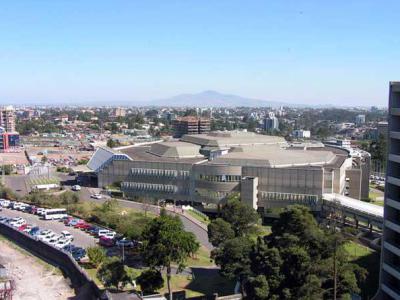
Africa Hall is a conference building closely linked to modern African history. It was completed in 1961 to serve as the headquarters of the United Nations Economic Commission for Africa. Built at a time when many African countries were becoming independent, it was intended as a place for discussions on development, cooperation, and shared challenges, bringing together African and international representatives from the start.
A key moment came in 1963, when leaders from Organization of African Unity met here to form a group that later became the African Union. This meeting gave the hall strong political importance. Since then, it has continued to host conferences and official meetings on economic planning and regional cooperation, and it is still used today as a working venue.
Inside, the hall has large artworks and a simple modern design from the early 1960s. A main feature is the mural by Ethiopian artist Afewerk Tekle, which shows ideas of freedom, unity, and Africa’s future. Stained glass windows and open spaces shape the interior, while access depends on events and security.
A key moment came in 1963, when leaders from Organization of African Unity met here to form a group that later became the African Union. This meeting gave the hall strong political importance. Since then, it has continued to host conferences and official meetings on economic planning and regional cooperation, and it is still used today as a working venue.
Inside, the hall has large artworks and a simple modern design from the early 1960s. A main feature is the mural by Ethiopian artist Afewerk Tekle, which shows ideas of freedom, unity, and Africa’s future. Stained glass windows and open spaces shape the interior, while access depends on events and security.
10) National Palace
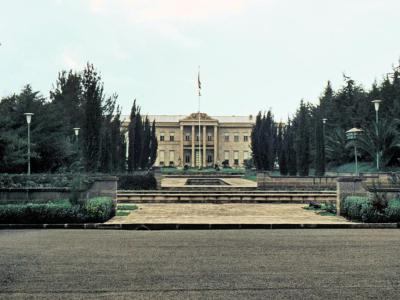
The National Palace was built in 1955 during the reign of Emperor Haile Selassie to celebrate his Silver Jubilee. It later became his main residence after the 1960 coup attempt at Guenete Leul Palace, which raised security concerns. In September 1974, Haile Selassie was removed from power, and the building was renamed the National Palace.
Architecturally, the National Palace is different from the older imperial compound. It is known for a neoclassical look with Art Deco details, and parts of the exterior include Ethiopian-themed decoration in relief. The buildings and halls were designed for both private life and official events, so the compound includes formal rooms used for ceremonies, meetings, and receptions, not just living spaces.
For many years, visitors could only see the palace from outside, but this has started to change. After recent restoration, part of the palace is open as the Palace Museum, showing selected rooms and the late emperor’s car collection. Access and opening hours can change, so it is best to check in advance.
Architecturally, the National Palace is different from the older imperial compound. It is known for a neoclassical look with Art Deco details, and parts of the exterior include Ethiopian-themed decoration in relief. The buildings and halls were designed for both private life and official events, so the compound includes formal rooms used for ceremonies, meetings, and receptions, not just living spaces.
For many years, visitors could only see the palace from outside, but this has started to change. After recent restoration, part of the palace is open as the Palace Museum, showing selected rooms and the late emperor’s car collection. Access and opening hours can change, so it is best to check in advance.
Walking Tours in Addis Ababa, Ethiopia

Create Your Own Walk in Addis Ababa
Creating your own self-guided walk in Addis Ababa is easy and fun. Choose the city attractions that you want to see and a walk route map will be created just for you. You can even set your hotel as the start point of the walk.
North of Addis Ababa Walking Tour
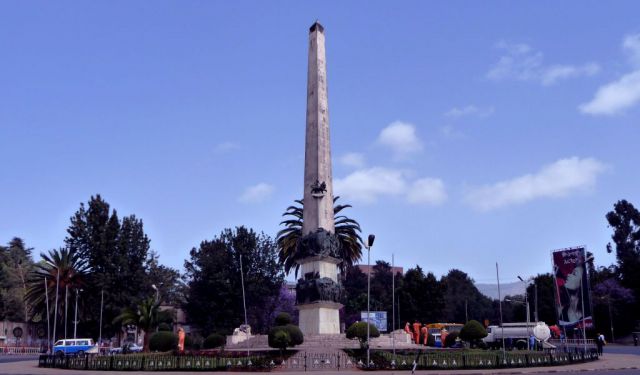
Some remarkable landmarks of Addis Ababa can be found in the north part of the city. There are monuments, beautiful buildings and the zoo where you can see lions walking. This self-guided tour will lead you through these attractions in the north of Addis Ababa.
Tour Duration: 2 Hour(s)
Travel Distance: 4.3 Km or 2.7 Miles
Tour Duration: 2 Hour(s)
Travel Distance: 4.3 Km or 2.7 Miles
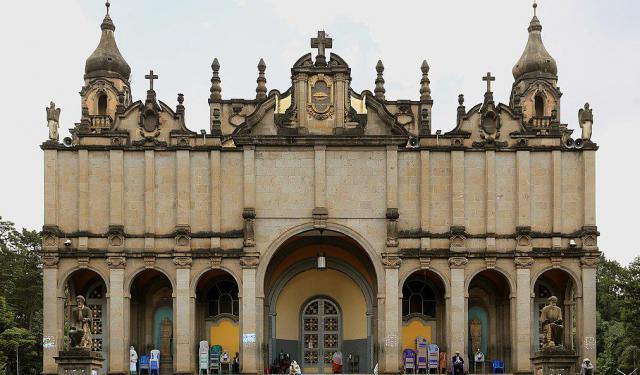
Religious Buildings
Ethiopia is mainly a Christian country. However, there are many other religions of the world there as the country has many ethnic groups. Addis Ababa boasts very beautiful and old, Christian cathedrals and churches. There are also Catholic churches and mosques in the city. This self-guided tour will lead you to the great religious sights of Addis Ababa.
Tour Duration: 4 Hour(s)
Travel Distance: 9.5 Km or 5.9 Miles
Tour Duration: 4 Hour(s)
Travel Distance: 9.5 Km or 5.9 Miles
The Most Popular Cities
/ view all