

Audio Guide: City Center Walking Tour (Self Guided), Amsterdam
The inner-most borough and historic heart of Amsterdam, known locally as Centrum, is a tightly woven network of canals and overlapping micro-neighborhoods, each with its own distinct rhythm and layered past. Once a largely working-class district, the area developed a reputation for its strong community spirit and a healthy dose of stubborn independence manifested in outspoken politics and enduring brown bar culture—those cozy, timeworn cafés that still anchor local life today.
Everything here sits within easy walking distance, which is convenient, because you’ll want to wander. The rhythm shifts constantly—from quiet residential corners to lively commercial stretches—so there’s always the sense that something is about to happen just around the next bend. Canal-side terraces buzz with conversation, narrow lanes pull you past vintage shops and curious storefronts, and every few steps seem to deliver another museum sitting comfortably beside centuries-old houses, and leafy cobbled lanes opening into wider squares that balance everyday life with architectural grandeur.
Beginning at Central Station, Amsterdam’s main transport hub and a landmark in its own right, you step straight into the city’s historic core without much ceremony. From here, the surroundings become varied.
Close by, the Sexmuseum and the Temple of Venus present an unconventional side of the city’s cultural landscape, reflecting Amsterdam’s long-standing openness and curiosity, while the former Stock Exchange, which is practically next door, quietly recalls Amsterdam’s rise as a global trading power, long before shopping streets took over that role.
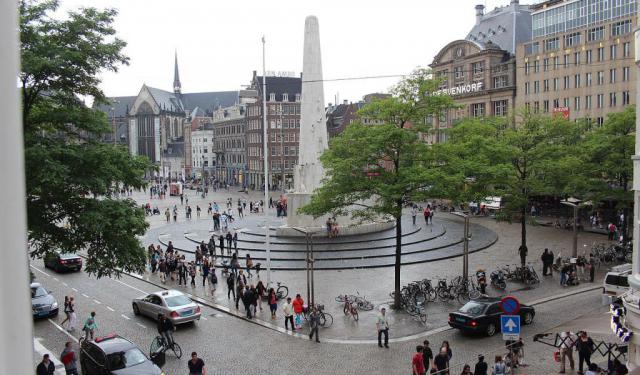
Within minutes, Dam Square comes into view, framed by the neoclassical Royal Palace and the much older Gothic New Church, which has been here since the 14th century. The nearby National Monument stands as a focal point of remembrance, while other attractions—like Madame Tussauds—keep things a little less solemn.
Just off the square, Kalverstraat stretches out as one of the busiest shopping streets, lined with international brands, crowds, and the unmistakable energy of a place that rarely slows down. Not far away, Magna Plaza—once a post office—now houses a multi-level shopping space within a richly decorated neo-Gothic interior.
Yet beyond these well-known stops, quieter spaces remain. Begijnhof, hidden behind unassuming entrances, offers a rare sense of calm with its enclosed courtyard and historic houses, standing in contrast to the surrounding bustle.
So, as you explore Centrum, expect contrast at every turn—history alongside modern life, grand landmarks beside tucked-away nooks. This self-guided walk invites you to move through these layers at your own pace, allowing each street and square to gradually unfold its story.
Everything here sits within easy walking distance, which is convenient, because you’ll want to wander. The rhythm shifts constantly—from quiet residential corners to lively commercial stretches—so there’s always the sense that something is about to happen just around the next bend. Canal-side terraces buzz with conversation, narrow lanes pull you past vintage shops and curious storefronts, and every few steps seem to deliver another museum sitting comfortably beside centuries-old houses, and leafy cobbled lanes opening into wider squares that balance everyday life with architectural grandeur.
Beginning at Central Station, Amsterdam’s main transport hub and a landmark in its own right, you step straight into the city’s historic core without much ceremony. From here, the surroundings become varied.
Close by, the Sexmuseum and the Temple of Venus present an unconventional side of the city’s cultural landscape, reflecting Amsterdam’s long-standing openness and curiosity, while the former Stock Exchange, which is practically next door, quietly recalls Amsterdam’s rise as a global trading power, long before shopping streets took over that role.
Within minutes, Dam Square comes into view, framed by the neoclassical Royal Palace and the much older Gothic New Church, which has been here since the 14th century. The nearby National Monument stands as a focal point of remembrance, while other attractions—like Madame Tussauds—keep things a little less solemn.
Just off the square, Kalverstraat stretches out as one of the busiest shopping streets, lined with international brands, crowds, and the unmistakable energy of a place that rarely slows down. Not far away, Magna Plaza—once a post office—now houses a multi-level shopping space within a richly decorated neo-Gothic interior.
Yet beyond these well-known stops, quieter spaces remain. Begijnhof, hidden behind unassuming entrances, offers a rare sense of calm with its enclosed courtyard and historic houses, standing in contrast to the surrounding bustle.
So, as you explore Centrum, expect contrast at every turn—history alongside modern life, grand landmarks beside tucked-away nooks. This self-guided walk invites you to move through these layers at your own pace, allowing each street and square to gradually unfold its story.
How it works: Download the app "GPSmyCity: Walks in 1K+ Cities" from Apple App Store or Google Play Store to your mobile phone or tablet. The app turns your mobile device into a personal tour guide and its built-in GPS navigation functions guide you from one tour stop to next. The app works offline, so no data plan is needed when traveling abroad.
Download The GPSmyCity App



City Center Walking Tour Map
Guide Name: City Center Walking Tour
Guide Location: Netherlands » Amsterdam (See other walking tours in Amsterdam)
Guide Type: Self-guided Walking Tour (Sightseeing)
# of Attractions: 11
Tour Duration: 2 Hour(s)
Travel Distance: 2.3 Km or 1.4 Miles
Author: DanaOffice
Sight(s) Featured in This Guide:
Guide Location: Netherlands » Amsterdam (See other walking tours in Amsterdam)
Guide Type: Self-guided Walking Tour (Sightseeing)
# of Attractions: 11
Tour Duration: 2 Hour(s)
Travel Distance: 2.3 Km or 1.4 Miles
Author: DanaOffice
Sight(s) Featured in This Guide:
- Centraal Station
- Sexmuseum / Temple of Venus
- Beurs van Berlage (Old Stock Exchange)
- Dam Square
- National Monument on Dam Square
- Madame Tussauds
- Koninklijk Paleis (Royal Palace of Amsterdam)
- Nieuwe Kerk (New Church)
- Magna Plaza
- Begijnhof – Beguine Courtyard
- Kalverstraat (Calf Street)
1) Centraal Station (must see)
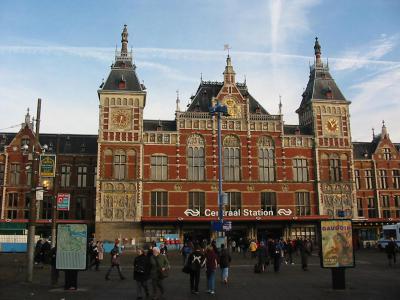
When in Amsterdam, a visit to the Central Station is practically inevitable. Nearly every traveler to the city encounters it at least once.
Amsterdam Centraal is the largest railway station in the city and has the second longest railway platform in the country, with a length of 695 meters, and a cast-iron platform roof spanning approximately 40 meters. A major international railway hub, it is used daily by almost 200,000 passengers, making it the Netherlands' most visited national heritage object.
Amsterdam Centraal was designed by Dutch architect Pierre Cuypers, featuring a blend of Gothic and Renaissance Revival elements.
The station was constructed on three artificial islands, between 1882 and 1889. Controversially located at the city's waterfront, it took a precise total of 8,687 wooden piles to anchor such a monumental structure on the marshy ground. The station spurred significant urban redevelopment and shifted Amsterdam’s focus from a waterfront to an inland city, influencing both transportation and city planning.
Its design celebrates Dutch economic and colonial prowess through various decorative elements. Initially, the entire project seemed like a huge blunder and was swiftly criticized by numerous experts. However, the architects persevered and ultimately vindicated themselves, defying skeptics.
Through the decades, Amsterdam Centraal has undergone multiple renovations and expansions to meet modern demands. Significant developments included the creation of a pedestrian tunnel in the 1950s, expansion of metro facilities in the late 1970s, and a major overhaul in the 1980s and 1990s that introduced new signaling systems, expanded tracks, and additional roofing. Recent upgrades focus on enhancing capacity and accessibility, including extended platforms for international trains, a new bus station, and upgraded retail spaces, marking it as a central hub in Amsterdam’s urban landscape.
Tip:
Take advantage of the several free ferry trips navigating the canals, departing every 5 to 15 minutes from this location; they offer a rewarding experience. You can even cruise back to the station via boat if you wish, rounding out your visit with a picturesque waterborne journey.
Amsterdam Centraal is the largest railway station in the city and has the second longest railway platform in the country, with a length of 695 meters, and a cast-iron platform roof spanning approximately 40 meters. A major international railway hub, it is used daily by almost 200,000 passengers, making it the Netherlands' most visited national heritage object.
Amsterdam Centraal was designed by Dutch architect Pierre Cuypers, featuring a blend of Gothic and Renaissance Revival elements.
The station was constructed on three artificial islands, between 1882 and 1889. Controversially located at the city's waterfront, it took a precise total of 8,687 wooden piles to anchor such a monumental structure on the marshy ground. The station spurred significant urban redevelopment and shifted Amsterdam’s focus from a waterfront to an inland city, influencing both transportation and city planning.
Its design celebrates Dutch economic and colonial prowess through various decorative elements. Initially, the entire project seemed like a huge blunder and was swiftly criticized by numerous experts. However, the architects persevered and ultimately vindicated themselves, defying skeptics.
Through the decades, Amsterdam Centraal has undergone multiple renovations and expansions to meet modern demands. Significant developments included the creation of a pedestrian tunnel in the 1950s, expansion of metro facilities in the late 1970s, and a major overhaul in the 1980s and 1990s that introduced new signaling systems, expanded tracks, and additional roofing. Recent upgrades focus on enhancing capacity and accessibility, including extended platforms for international trains, a new bus station, and upgraded retail spaces, marking it as a central hub in Amsterdam’s urban landscape.
Tip:
Take advantage of the several free ferry trips navigating the canals, departing every 5 to 15 minutes from this location; they offer a rewarding experience. You can even cruise back to the station via boat if you wish, rounding out your visit with a picturesque waterborne journey.
2) Sexmuseum / Temple of Venus
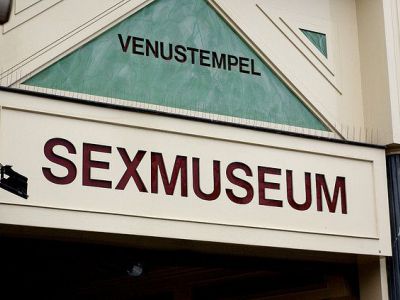
What started with skepticism has grown into one of Amsterdam’s most famous attractions. The city’s rich history and stunning art blend seamlessly with its exuberant erotic industry, and thus appeared the world’s very first Sexmuseum. Established in 1985, this unique institution draws over 500,000 yearly visitors, offering a fascinating look into the historical evolution of human sexuality. It’s a place where history meets curiosity, delving into the ways that desire and sensuality have shaped cultures through time.
Now, let’s be clear-this museum is strictly for adults; it’s not designed for children or families. The galleries feature an impressive variety of artworks, including paintings, sculptures, vintage photographs, and cartoons, all exploring the theme of erotica and sensuality. Additionally, you'll find personal artifacts, possessions, and documented histories of influential figures in the realm of sexuality. You can learn about the lives of figures like Madame de Pompadour, the famed mistress who seduced King Louis XV of France; the infamous Marquis de Sade, whose shocking exploits gave rise to the term “sadism”; and the legendary Mata Hari, a glamorous dancer whose name still conjures whispers of intrigue and espionage. Each of their stories weaves into a larger narrative, reshaping our understanding of sensuality, identity, and the complexity of human expression.
One particularly intriguing section dives into the practices of ancient civilizations, especially the Greeks and Romans. Here, you’ll find displays that explore their attitudes toward sexual norms, rituals, and deviations, in a way that’s both educational and entertaining.
In short, Amsterdam’s Sexmuseum is much more than a risqué novelty. It’s an engaging and informative experience that invites visitors to look beyond taboos and appreciate the complex, multifaceted history of human intimacy.
Now, let’s be clear-this museum is strictly for adults; it’s not designed for children or families. The galleries feature an impressive variety of artworks, including paintings, sculptures, vintage photographs, and cartoons, all exploring the theme of erotica and sensuality. Additionally, you'll find personal artifacts, possessions, and documented histories of influential figures in the realm of sexuality. You can learn about the lives of figures like Madame de Pompadour, the famed mistress who seduced King Louis XV of France; the infamous Marquis de Sade, whose shocking exploits gave rise to the term “sadism”; and the legendary Mata Hari, a glamorous dancer whose name still conjures whispers of intrigue and espionage. Each of their stories weaves into a larger narrative, reshaping our understanding of sensuality, identity, and the complexity of human expression.
One particularly intriguing section dives into the practices of ancient civilizations, especially the Greeks and Romans. Here, you’ll find displays that explore their attitudes toward sexual norms, rituals, and deviations, in a way that’s both educational and entertaining.
In short, Amsterdam’s Sexmuseum is much more than a risqué novelty. It’s an engaging and informative experience that invites visitors to look beyond taboos and appreciate the complex, multifaceted history of human intimacy.
3) Beurs van Berlage (Old Stock Exchange)
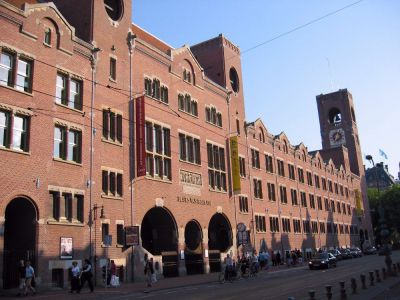
If Amsterdam ever decided to dress up and attend its own architectural gala, the city's former Stock Exchange would show up early and steal the spotlight. Designed by Hendrik Petrus Berlage at the turn of the 20th century, this building quietly broke up with the fussy, ornament-heavy style of the 1800s. Instead, it went for something bolder—clean lines, solid forms, and just enough Romanesque and Renaissance influence to suggest that it respects tradition, but without being tied down by it. The result was an edifice that looked so forward-thinking it practically predicted the Expressionist wave before it even arrived.
Step closer, and you’ll notice the details that make architects nod approvingly—those shallow-arched arcades, the carefully patterned brickwork, the sense that every line has a purpose. It doesn’t shout for attention, but it doesn’t need to. It’s confident enough. Very confident...
These days, the bourse has traded stockbrokers for a more creative crowd. Instead of financial deals, you’ll find concerts, exhibitions, and conferences filling the space. Still, the building itself remains the main event—everything else just happens inside it.
And if you’re not in the mood for a full architectural deep dive, no problem. You can casually admire Berlage’s work from the comfort of Bistro Berlage at the southern end—coffee in hand, architectural appreciation optional. Or take a short detour to the nearby Tony’s Chocolonely Super Store, where the design is modern, the chocolate is excellent, and suddenly, you’re conducting very serious research into dark cocoa.
Step closer, and you’ll notice the details that make architects nod approvingly—those shallow-arched arcades, the carefully patterned brickwork, the sense that every line has a purpose. It doesn’t shout for attention, but it doesn’t need to. It’s confident enough. Very confident...
These days, the bourse has traded stockbrokers for a more creative crowd. Instead of financial deals, you’ll find concerts, exhibitions, and conferences filling the space. Still, the building itself remains the main event—everything else just happens inside it.
And if you’re not in the mood for a full architectural deep dive, no problem. You can casually admire Berlage’s work from the comfort of Bistro Berlage at the southern end—coffee in hand, architectural appreciation optional. Or take a short detour to the nearby Tony’s Chocolonely Super Store, where the design is modern, the chocolate is excellent, and suddenly, you’re conducting very serious research into dark cocoa.
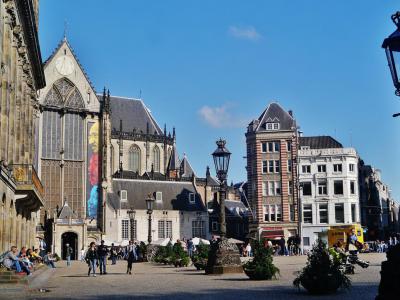
4) Dam Square (must see)
Dam Square, or the Dam, is a central town square in Amsterdam, known for its significant buildings and frequent events. Positioned in the historical heart of Amsterdam, it sits on the site of the original dam on the Amstel River. The square extends some 200 meters from west to east and 100 meters from north to south, connecting Damrak and Rokin streets that trace the Amstel's original course.
The square is also the termination point for other notable streets like New Dike, Calf Street, and Dam Street, with the main red-light district, De Wallen, just beyond its northeast corner. Prominent features on Dam Square include the neoclassical Royal Palace, the 15th-century Gothic New Church, the Madame Tussauds Wax Museum, and the National Monument which honors World War II victims, all of which collectively turn the Dam into a major tourist hub.
The name "Amsterdam" originates from a dam built on the Amstel River around 1270. This dam, integral to the city's development, included a discharge sluice and later locks to facilitate navigation and control water levels. By 1275, the settlement was significant enough to be recorded in connection with a road toll granted by the count of Holland, Floris V. Over time, the dam expanded to accommodate a town square, now known as Dam Square. Eventually, the area became a hub for commercial and governmental activities, featuring a large fish market and a town hall.
Significant changes occurred over the centuries, including the demolition of a weigh house in 1808 to clear the view for Louis Bonaparte’s Royal Palace and the infilling of Damrak Avenue in the 19th century. The square also hosted the Beurs van Zocher stock exchange until 1903. Today, the De Bijenkorf department store has been in its place since 1914. Dam Square has also been a site for national events – such as the National Memorial Day commemorations at the National Monument unveiled in 1956, and public demonstrations, – maintaining its status as a national and cultural gathering spot for the Dutch.
Tip:
For those in need of a restroom, free and well-maintained toilets are available at the De Bijenkorf shop on the 5th floor.
The square is also the termination point for other notable streets like New Dike, Calf Street, and Dam Street, with the main red-light district, De Wallen, just beyond its northeast corner. Prominent features on Dam Square include the neoclassical Royal Palace, the 15th-century Gothic New Church, the Madame Tussauds Wax Museum, and the National Monument which honors World War II victims, all of which collectively turn the Dam into a major tourist hub.
The name "Amsterdam" originates from a dam built on the Amstel River around 1270. This dam, integral to the city's development, included a discharge sluice and later locks to facilitate navigation and control water levels. By 1275, the settlement was significant enough to be recorded in connection with a road toll granted by the count of Holland, Floris V. Over time, the dam expanded to accommodate a town square, now known as Dam Square. Eventually, the area became a hub for commercial and governmental activities, featuring a large fish market and a town hall.
Significant changes occurred over the centuries, including the demolition of a weigh house in 1808 to clear the view for Louis Bonaparte’s Royal Palace and the infilling of Damrak Avenue in the 19th century. The square also hosted the Beurs van Zocher stock exchange until 1903. Today, the De Bijenkorf department store has been in its place since 1914. Dam Square has also been a site for national events – such as the National Memorial Day commemorations at the National Monument unveiled in 1956, and public demonstrations, – maintaining its status as a national and cultural gathering spot for the Dutch.
Tip:
For those in need of a restroom, free and well-maintained toilets are available at the De Bijenkorf shop on the 5th floor.
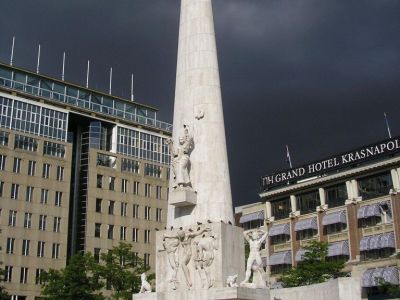
5) National Monument on Dam Square
This tall, pale obelisk, standing right in the middle of Dam Square, tends to quietly outlast the noise around it. Designed by Dutch architect Jacobus Oud, the 22-meter monument serves as the Netherlands’ main memorial to World War II. Behind it, urns hold soil gathered from cemeteries and execution sites across the country—so what looks minimal at first glance carries a weight that’s anything but. Each year, on May 4th, the square falls into silence for the Remembrance of the Dead, when the entire nation pauses here.
Now, most people snap a photo and move on. But if you linger for a moment, the monument starts to read like a story carved in stone. The surface is arranged in layered circles, filled with figures that aren’t just decorative.
At the front, two men stand for the Dutch Resistance. On either side, you’ll spot representations of intellectuals and workers—because, as it turns out, history wasn’t shaped by just one group.
There are also dogs, frozen mid-howl, symbolizing loyalty and suffering. A woman with a child suggests peace and new beginnings, while doves lifting upward bring in the idea of freedom. To some, it may appear not too subtle—but then again, it’s not meant to be.
So, yes, it’s a monument. But it’s also a pause button. A place where the city briefly lowers its voice—if you let it...
Now, most people snap a photo and move on. But if you linger for a moment, the monument starts to read like a story carved in stone. The surface is arranged in layered circles, filled with figures that aren’t just decorative.
At the front, two men stand for the Dutch Resistance. On either side, you’ll spot representations of intellectuals and workers—because, as it turns out, history wasn’t shaped by just one group.
There are also dogs, frozen mid-howl, symbolizing loyalty and suffering. A woman with a child suggests peace and new beginnings, while doves lifting upward bring in the idea of freedom. To some, it may appear not too subtle—but then again, it’s not meant to be.
So, yes, it’s a monument. But it’s also a pause button. A place where the city briefly lowers its voice—if you let it...
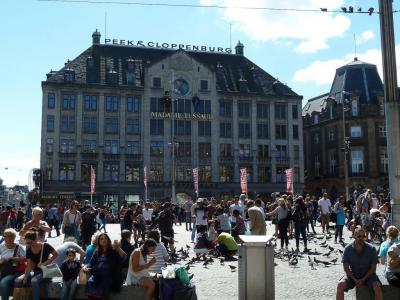
6) Madame Tussauds
Madame Tussauds Amsterdam—the city’s go-to address for brushing shoulders with people you’ll never actually meet—holds the distinction of being the first international branch of the famous London institution. It opened in 1970 under the direction of Josephine Tussaud, a descendant of the original Madame Tussaud, clearly keeping the family tradition of turning celebrities into eerily convincing wax figures very much alive. The museum started out on Kalverstraat before relocating in 1991 to its current home above Dam Square, inside the Peek & Cloppenburg building—a national monument dating back to the years between 1914 and 1917.
Inside, the lineup reads like a guest list that would be impossible anywhere else. Figures from the Dutch Golden Age stand alongside global pop icons, athletes, and film stars, all frozen mid-career, mid-pose, and mercifully free of scheduling conflicts. You’ll find familiar faces like Michael Jackson and George W. Bush, along with animated displays that blur the line between painting, sculpture, and something that might blink if you stare long enough.
The whole place is built for interaction. Since a major update in 2012, exhibits invite you to step into the scene—whether that means posing for a photo, testing your stage presence, or taking a slightly surreal walk through a dark passage inspired by a moon landing, complete with dramatic flair and a warning for the faint-hearted.
And before you leave, head upstairs. The top floor offers a clear, open view over Dam Square—real people, real movement, and a welcome reminder that, outside, everything is still very much alive...
Inside, the lineup reads like a guest list that would be impossible anywhere else. Figures from the Dutch Golden Age stand alongside global pop icons, athletes, and film stars, all frozen mid-career, mid-pose, and mercifully free of scheduling conflicts. You’ll find familiar faces like Michael Jackson and George W. Bush, along with animated displays that blur the line between painting, sculpture, and something that might blink if you stare long enough.
The whole place is built for interaction. Since a major update in 2012, exhibits invite you to step into the scene—whether that means posing for a photo, testing your stage presence, or taking a slightly surreal walk through a dark passage inspired by a moon landing, complete with dramatic flair and a warning for the faint-hearted.
And before you leave, head upstairs. The top floor offers a clear, open view over Dam Square—real people, real movement, and a welcome reminder that, outside, everything is still very much alive...
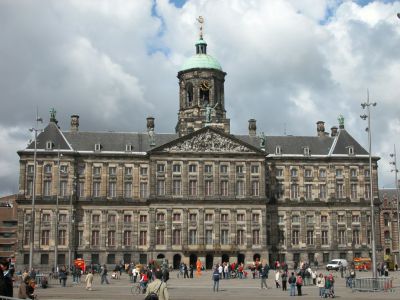
7) Koninklijk Paleis (Royal Palace of Amsterdam) (must see)
The Royal Palace of Amsterdam is a historic monument on Dam Square and is one of the four palaces in the Netherlands still left at the disposal of the Dutch Royal Family.
Its inception dates back to 1655. Back then, the city had recently thwarted William of Orange's attempts to subdue it and the city council sought a residence that would symbolize Amsterdam's municipal authority and pride. This led to a remarkably forward-thinking design-the Dutch interpretation of the classical principles revived during the Italian Renaissance. The architectural project led by Jacob van Campen implied over 13,500 wooden piles to support the building.
Initially designed as the town hall overlooking the bustling Damrak wharves, it was converted into a royal palace by King Louis I of Holland, brother of Napoleon Bonaparte, in 1806.
In 1936, the building was designated a property of the Kingdom of the Netherlands. Today, it serves a ceremonial role for the monarchy, hosting state visits, official functions, and award ceremonies. The palace also played a pivotal role during the investiture of Queen Beatrix in 1980.
The building's distinctive sandstone façade has darkened over time. Astride the rear of it is a 6-meter statue of Atlas carrying the globe.
The interior is equally opulent, notably in the Citizens' Hall, featuring an arcaded marble chamber where the enthroned figure of Amsterdam presides over the earthly and celestial realms. Three circular, inlaid marble maps, depicting the eastern and western hemispheres, as well as the northern sky, lie at her feet. Other allegorical figures include Wisdom and Strength, flanking "Amsterdam" on her left and right, while the reliefs on either side of the central group portray the principles of good governance. On the left, the god Amphion plays his lyre, persuading stones to form a wall; and on the right, Mercury seeks to lull Argos to sleep, thus emphasizing the importance of vigilance.
Tip:
Before your visit, be sure to check online for opening hours, as the palace may occasionally be closed due to royal events.
Free entry for those under 18 and discounts for seniors and students are available.
Its inception dates back to 1655. Back then, the city had recently thwarted William of Orange's attempts to subdue it and the city council sought a residence that would symbolize Amsterdam's municipal authority and pride. This led to a remarkably forward-thinking design-the Dutch interpretation of the classical principles revived during the Italian Renaissance. The architectural project led by Jacob van Campen implied over 13,500 wooden piles to support the building.
Initially designed as the town hall overlooking the bustling Damrak wharves, it was converted into a royal palace by King Louis I of Holland, brother of Napoleon Bonaparte, in 1806.
In 1936, the building was designated a property of the Kingdom of the Netherlands. Today, it serves a ceremonial role for the monarchy, hosting state visits, official functions, and award ceremonies. The palace also played a pivotal role during the investiture of Queen Beatrix in 1980.
The building's distinctive sandstone façade has darkened over time. Astride the rear of it is a 6-meter statue of Atlas carrying the globe.
The interior is equally opulent, notably in the Citizens' Hall, featuring an arcaded marble chamber where the enthroned figure of Amsterdam presides over the earthly and celestial realms. Three circular, inlaid marble maps, depicting the eastern and western hemispheres, as well as the northern sky, lie at her feet. Other allegorical figures include Wisdom and Strength, flanking "Amsterdam" on her left and right, while the reliefs on either side of the central group portray the principles of good governance. On the left, the god Amphion plays his lyre, persuading stones to form a wall; and on the right, Mercury seeks to lull Argos to sleep, thus emphasizing the importance of vigilance.
Tip:
Before your visit, be sure to check online for opening hours, as the palace may occasionally be closed due to royal events.
Free entry for those under 18 and discounts for seniors and students are available.
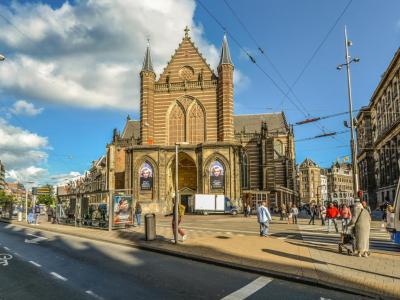
8) Nieuwe Kerk (New Church)
The New Church, a historical gem on Amsterdam's Dam Square, dates back to the 15th century. Originally serving as a Dutch Reformed Church parish, it is now part of the Protestant Church of the Netherlands.
The construction of this church in the late 14th century was prompted by a need for more religious space amid a growing population. It was completed in 1408 and consecrated a year later. Throughout the 15th century, the building suffered significant damage from fires and was nearly destroyed in 1645, which ultimately led to its Gothic-style reconstruction. Major renovations in the late 19th and mid-20th centuries introduced neo-Gothic and early-Renaissance elements.
The intricately adorned stained glass windows portray historical events associated with this church, such as Queen Wilhelmina's coronation in 1890. Notable features within the interior encompass an opulent, meticulously crafted mahogany pulpit (the result of fifteen years of painstaking effort), alongside a cunningly wrought copper chancel screen and a flamboyant Baroque organ case.
Historically significant, the New Church has hosted Dutch royal investiture ceremonies, including the most recent one of King Willem-Alexander, in 2013. It also has been the venue for royal weddings, such as Willem-Alexander's marriage to Máxima in 2002. Additionally, it serves as the final resting place for notable Dutch personalities like the naval hero Admiral Michiel de Ruyter and Joost van den Vondel, a Roman Catholic poet and playwright.
Although the church is still used for recitals, it no longer holds religious services but functions primarily as an exhibition space. The exhibitions held here cover diverse themes, including some rather unconventional ones. Attached to the church is a café accessible during opening hours and a museum store that offers a variety of related souvenirs like postcards, books, and gifts.
Tip:
Feel free to step inside the lobby to marvel at the beautiful giant stained glass panes.
Exhibitions can be a little overpriced but are good value with the I Amsterdam card.
The construction of this church in the late 14th century was prompted by a need for more religious space amid a growing population. It was completed in 1408 and consecrated a year later. Throughout the 15th century, the building suffered significant damage from fires and was nearly destroyed in 1645, which ultimately led to its Gothic-style reconstruction. Major renovations in the late 19th and mid-20th centuries introduced neo-Gothic and early-Renaissance elements.
The intricately adorned stained glass windows portray historical events associated with this church, such as Queen Wilhelmina's coronation in 1890. Notable features within the interior encompass an opulent, meticulously crafted mahogany pulpit (the result of fifteen years of painstaking effort), alongside a cunningly wrought copper chancel screen and a flamboyant Baroque organ case.
Historically significant, the New Church has hosted Dutch royal investiture ceremonies, including the most recent one of King Willem-Alexander, in 2013. It also has been the venue for royal weddings, such as Willem-Alexander's marriage to Máxima in 2002. Additionally, it serves as the final resting place for notable Dutch personalities like the naval hero Admiral Michiel de Ruyter and Joost van den Vondel, a Roman Catholic poet and playwright.
Although the church is still used for recitals, it no longer holds religious services but functions primarily as an exhibition space. The exhibitions held here cover diverse themes, including some rather unconventional ones. Attached to the church is a café accessible during opening hours and a museum store that offers a variety of related souvenirs like postcards, books, and gifts.
Tip:
Feel free to step inside the lobby to marvel at the beautiful giant stained glass panes.
Exhibitions can be a little overpriced but are good value with the I Amsterdam card.
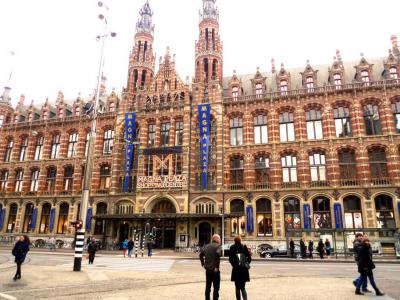
9) Magna Plaza
Magna Plaza is a grand 19th-century edifice located behind the Royal Palace on Dam Square. Constructed between 1895 and 1899, it showcases a blend of Neo-Gothic and Neo-Renaissance architectural styles. The building was designed by Cornelis Hendrik Peters and has been listed as a national heritage site of the Netherlands since 1974.
The structure is notable for its elaborate brick exterior adorned with polychromatic brickwork and dressed stone around windows and doors. The roof is distinguished by several dormers, each topped with crow-stepped gables, contributing to its nickname "Perenburg" (or “pear-castle”) due to the pear-shaped crowns atop its towers.
Originally serving as Amsterdam's central post office, the building symbolized the city’s economic resurgence in the late 19th century, a period marked by significant developments like the opening of the North Sea Canal and the hosting of a World's Fair in 1883.
In 1987, plans to transform this historic post office into a luxurious shopping mall were announced by Larmag, a Swedish real estate developer. The renovations, which began in 1991, involved meticulous exterior restorations and a complete rebuild of the interior while preserving the structural and decorative elements. Named after Larmag's CEO, Lars-Erik Magnusson, Magna Plaza opened on August 17, 1992, as a shopping center.
Today, Magna Plaza offers a shopping experience across four floors, complemented by several cafes and a variety of stores. Despite its commercial function, the building remains an architectural gem worth visiting for its aesthetic and historical significance alone.
The structure is notable for its elaborate brick exterior adorned with polychromatic brickwork and dressed stone around windows and doors. The roof is distinguished by several dormers, each topped with crow-stepped gables, contributing to its nickname "Perenburg" (or “pear-castle”) due to the pear-shaped crowns atop its towers.
Originally serving as Amsterdam's central post office, the building symbolized the city’s economic resurgence in the late 19th century, a period marked by significant developments like the opening of the North Sea Canal and the hosting of a World's Fair in 1883.
In 1987, plans to transform this historic post office into a luxurious shopping mall were announced by Larmag, a Swedish real estate developer. The renovations, which began in 1991, involved meticulous exterior restorations and a complete rebuild of the interior while preserving the structural and decorative elements. Named after Larmag's CEO, Lars-Erik Magnusson, Magna Plaza opened on August 17, 1992, as a shopping center.
Today, Magna Plaza offers a shopping experience across four floors, complemented by several cafes and a variety of stores. Despite its commercial function, the building remains an architectural gem worth visiting for its aesthetic and historical significance alone.
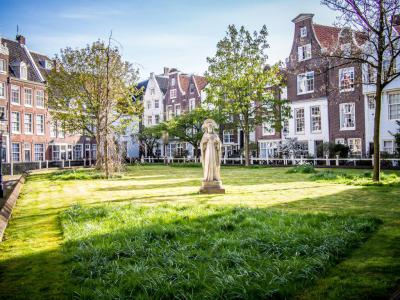
10) Begijnhof – Beguine Courtyard
Slip through an unassuming doorway, and you suddenly find yourself in the Begijnhof, a courtyard that feels like it misplaced a few centuries and never bothered to catch up. This is one of Amsterdam’s oldest hidden enclaves, the only inner court in the city dating back to the Middle Ages and tucked within the Singel—the innermost ring of canals.
The neatly kept gardens and hushed atmosphere give it a calm, almost suspended quality. Even the ground beneath your feet plays along: the courtyard sits about a meter lower than the surrounding streets, preserving its original medieval level. As for the name, it comes from the Beguines, a community of laywomen who lived here in a semi-monastic rhythm of prayer, charity, and quietly getting on with things.
Take a moment to look around, and the setting begins to reveal its layers. The courtyard is framed by a cluster of tall, narrow townhouses—47 in total—most of them private residences. Their façades largely reflect the 17th and 18th centuries, but many of the structures themselves are older than they let on, with several still holding onto their original Gothic wooden frames. Unlike the tightly packed rows seen elsewhere in the city, the buildings here feel more individually placed, reinforcing the sense that this is a world slightly apart.
In earlier centuries, the Begijnhof was fully enclosed by canals, with just a single entrance reached by a bridge—security with a touch of exclusivity. Today, traces of that entrance survive in the form of the Begijnesloot, restored in the early 20th century. The stone gateway features Saint Ursula, the holy patron of the Beguines, watching over anyone who steps inside. A second entrance on Spuistraat came later and was reshaped in the 19th century, making access easier—but thankfully not enough to break the illusion that you’ve just wandered into a quieter, older version of Amsterdam.
The neatly kept gardens and hushed atmosphere give it a calm, almost suspended quality. Even the ground beneath your feet plays along: the courtyard sits about a meter lower than the surrounding streets, preserving its original medieval level. As for the name, it comes from the Beguines, a community of laywomen who lived here in a semi-monastic rhythm of prayer, charity, and quietly getting on with things.
Take a moment to look around, and the setting begins to reveal its layers. The courtyard is framed by a cluster of tall, narrow townhouses—47 in total—most of them private residences. Their façades largely reflect the 17th and 18th centuries, but many of the structures themselves are older than they let on, with several still holding onto their original Gothic wooden frames. Unlike the tightly packed rows seen elsewhere in the city, the buildings here feel more individually placed, reinforcing the sense that this is a world slightly apart.
In earlier centuries, the Begijnhof was fully enclosed by canals, with just a single entrance reached by a bridge—security with a touch of exclusivity. Today, traces of that entrance survive in the form of the Begijnesloot, restored in the early 20th century. The stone gateway features Saint Ursula, the holy patron of the Beguines, watching over anyone who steps inside. A second entrance on Spuistraat came later and was reshaped in the 19th century, making access easier—but thankfully not enough to break the illusion that you’ve just wandered into a quieter, older version of Amsterdam.
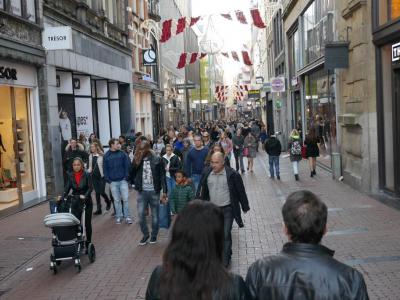
11) Kalverstraat (Calf Street)
Calf Street is a pedestrian zone and a major shopping street, running for about 750 meters from Dam Square to Muntplein Square. Alongside are a number of notable locations such as the former Orphanage building (now housing the Amsterdam Museum), the Saints Peter and Paul church, and the Orphanage Gate.
The street traces its roots back to the 14th century when it was known as The Lane and served as the western dike of the Amstel River. Later, it came to be known as Calf Street after the cattle market that existed there from 1486 until 1629.
On 16 March 1345, a Eucharistic miracle (known as the Miracle of Amsterdam or the Miracle of the Host) occurred in the area. Upon receiving the Holy Sacrament and last rites, a dying man vomited The Host (or the Sacramental bread used in the Christian ritual of the Eucharist). According to liturgical regulations, The Host was then put into fire but miraculously “survived” and was retrieved from the ashes intact the following day. This miracle was quickly acknowledged and, eventually, a large pilgrim chapel, called the "Holy Site", was built on the spot where it occurred. Presently, this miracle is commemorated annually with a Silent Procession through Calf Street.
By the late 19th century, Calf Street was the first street in Amsterdam to be paved, fitted with electricity, and hosted the first public film screening by the Lumière brothers (in 1896). The V&D branch on Calf Street, opened in 1912, was the Netherlands' first real department store and the first to feature elevators and escalators.
Today, Calf Street is the most expensive shopping street in the Netherlands, with rent prices reaching up to 3,000 euros per square meter. It has approximately 150 shops including several department stores, such as Bijenkorf (Amsterdam's premier option), Peek & Cloppenburg, and Maison de Bonneterie. The five-story Kalvertoren shopping center adds about 40+ stores to the area. At Number 212, you'll encounter the ever-present and budget-friendly HEMA, established in 1926, offering affordable designer goods, practical clothing, stationery, kitchenware, and food items.
Calf Street also features a branch of the Waterstone's bookshop chain, at Number 152. On Rokin, is one of the standout shops – the PGC Hajenius tobacconist, at Number 96. If you have a penchant for Havanas from a well-maintained humidor or seek a traditional clay pipe as a souvenir, this establishment is sure to delight you.
Introduced in 1995, the Shopping Sunday regulation, allowing local shops to work on Sundays, has been drawing additional crowds to the area ever since.
The street traces its roots back to the 14th century when it was known as The Lane and served as the western dike of the Amstel River. Later, it came to be known as Calf Street after the cattle market that existed there from 1486 until 1629.
On 16 March 1345, a Eucharistic miracle (known as the Miracle of Amsterdam or the Miracle of the Host) occurred in the area. Upon receiving the Holy Sacrament and last rites, a dying man vomited The Host (or the Sacramental bread used in the Christian ritual of the Eucharist). According to liturgical regulations, The Host was then put into fire but miraculously “survived” and was retrieved from the ashes intact the following day. This miracle was quickly acknowledged and, eventually, a large pilgrim chapel, called the "Holy Site", was built on the spot where it occurred. Presently, this miracle is commemorated annually with a Silent Procession through Calf Street.
By the late 19th century, Calf Street was the first street in Amsterdam to be paved, fitted with electricity, and hosted the first public film screening by the Lumière brothers (in 1896). The V&D branch on Calf Street, opened in 1912, was the Netherlands' first real department store and the first to feature elevators and escalators.
Today, Calf Street is the most expensive shopping street in the Netherlands, with rent prices reaching up to 3,000 euros per square meter. It has approximately 150 shops including several department stores, such as Bijenkorf (Amsterdam's premier option), Peek & Cloppenburg, and Maison de Bonneterie. The five-story Kalvertoren shopping center adds about 40+ stores to the area. At Number 212, you'll encounter the ever-present and budget-friendly HEMA, established in 1926, offering affordable designer goods, practical clothing, stationery, kitchenware, and food items.
Calf Street also features a branch of the Waterstone's bookshop chain, at Number 152. On Rokin, is one of the standout shops – the PGC Hajenius tobacconist, at Number 96. If you have a penchant for Havanas from a well-maintained humidor or seek a traditional clay pipe as a souvenir, this establishment is sure to delight you.
Introduced in 1995, the Shopping Sunday regulation, allowing local shops to work on Sundays, has been drawing additional crowds to the area ever since.
Walking Tours in Amsterdam, Netherlands

Create Your Own Walk in Amsterdam
Creating your own self-guided walk in Amsterdam is easy and fun. Choose the city attractions that you want to see and a walk route map will be created just for you. You can even set your hotel as the start point of the walk.
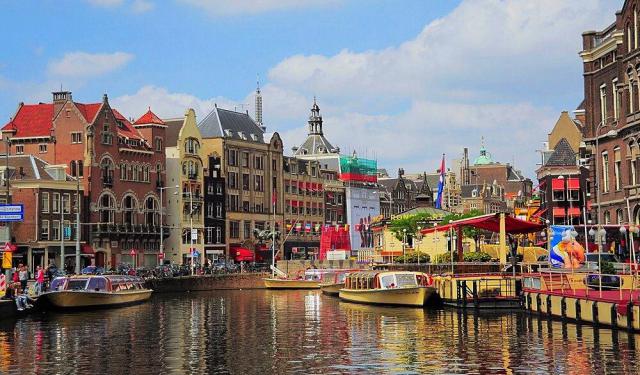
Amsterdam Introduction Walking Tour
The Dutch capital, Amsterdam, some say, “dances to its own beat.” Indeed, Amsterdam – where “hipness meets history” – has a rather unusual life rhythm and style, famously manifested in the air of legalized cannabis, coffee shops, and the Red Light District. In large part, this “air of freedom” attracts annually to the city over five million visitors.
As a small fishing village,... view more
Tour Duration: 2 Hour(s)
Travel Distance: 4.0 Km or 2.5 Miles
As a small fishing village,... view more
Tour Duration: 2 Hour(s)
Travel Distance: 4.0 Km or 2.5 Miles
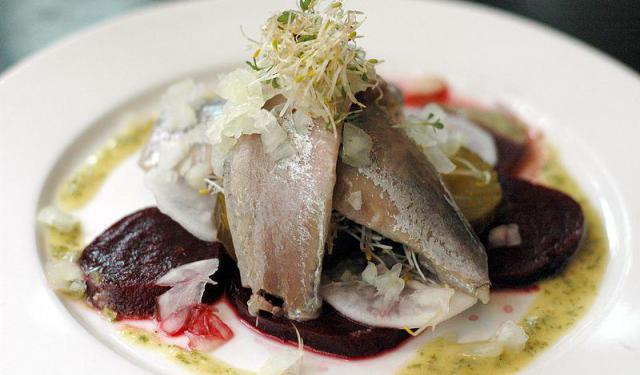
Amsterdam Food Tour
Amsterdam eats the way it lives: compact, historic, and full of personality. For centuries, ships arrived here loaded with spices, sugar, cocoa, and ideas from faraway places. In a city that has always been in trade with the world, the food scene reflects that on every corner. Nowadays, as you wander along canals, bridges, and lively streets, you’ll notice that Amsterdam takes its food... view more
Tour Duration: 1 Hour(s)
Travel Distance: 1.8 Km or 1.1 Miles
Tour Duration: 1 Hour(s)
Travel Distance: 1.8 Km or 1.1 Miles
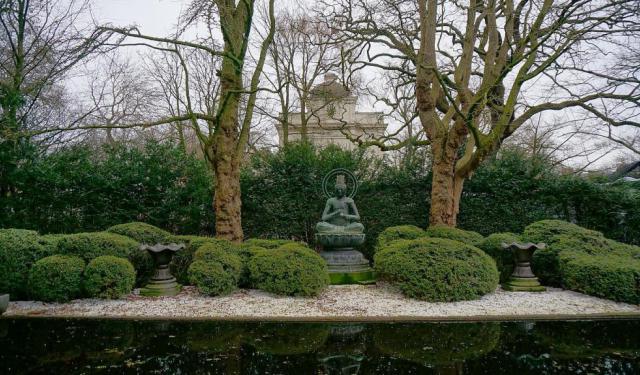
Plantage Walking Tour
Amsterdam's Plantage neighborhood has been throughout the centuries a place of rest and entertainment. Beside its impressive 19th-century architecture, there is the historic Royal Zoo, and close-by is the verdantly exotic Hortus Botanicus. Follow this self-guided walk to explore one of the greenest neighborhoods in Amsterdam – a lovely place to stroll and laze.
Tour Duration: 1 Hour(s)
Travel Distance: 1.7 Km or 1.1 Miles
Tour Duration: 1 Hour(s)
Travel Distance: 1.7 Km or 1.1 Miles
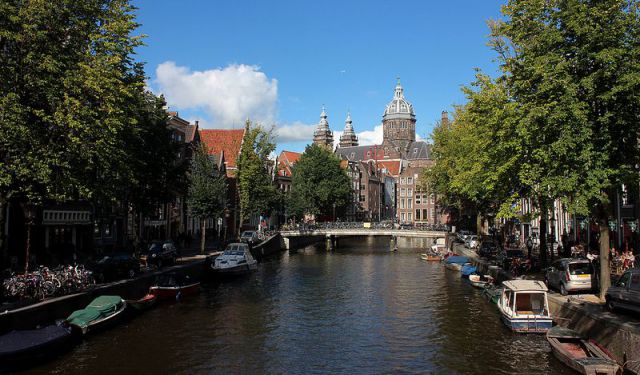
Southern Canal Belt Walking Tour
The Canal District, known as Grachtengordel in Dutch, is a globally renowned example of urban planning and architectural excellence within Amsterdam. This area has remained remarkably well-preserved for over four centuries, celebrated for its charming small bridges, canal crossings, and 17th-century residences. Encircling the Old City Centre in a horseshoe shape, the Canal Ring encompasses three... view more
Tour Duration: 2 Hour(s)
Travel Distance: 3.1 Km or 1.9 Miles
Tour Duration: 2 Hour(s)
Travel Distance: 3.1 Km or 1.9 Miles
Jordaan Walking Tour
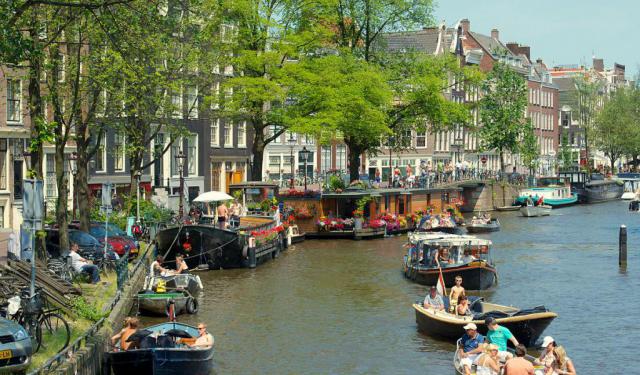
The Jordaan district of Amsterdam is a popular neighborhood renowned for its charming, narrow streets, quaint courtyards, and picturesque canals. Replete with beautiful historic houses, many of which have been converted into cozy cafés, trendy boutiques, and art galleries, this district has a distinctive atmosphere that sets it apart from other areas in the city.
The Jordaan was originally... view more
Tour Duration: 1 Hour(s)
Travel Distance: 2.4 Km or 1.5 Miles
The Jordaan was originally... view more
Tour Duration: 1 Hour(s)
Travel Distance: 2.4 Km or 1.5 Miles
Museum Quarter Walking Tour
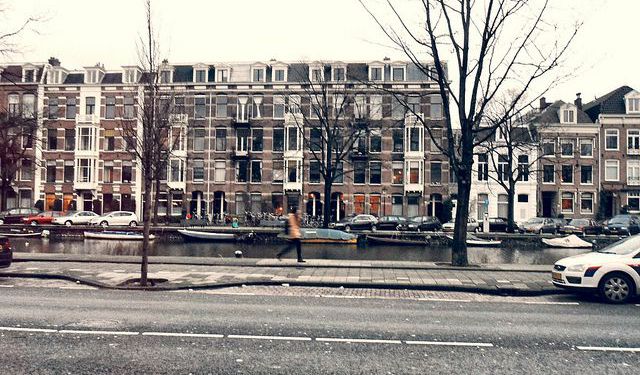
The Museum Quarter (Museumkwartier) of Amsterdam gets its name from the major museums located in Museum Square therein, namely: the Rijksmuseum, the Stedelijk Museum and the Van Gogh Museum. In fact, it is the construction of the former that boosted the development of the whole neighborhood. Other than museums, the area is also home to the world-famous IAmsterdam letters, as well as exclusive... view more
Tour Duration: 1 Hour(s)
Travel Distance: 0.7 Km or 0.4 Miles
Tour Duration: 1 Hour(s)
Travel Distance: 0.7 Km or 0.4 Miles
Useful Travel Guides for Planning Your Trip
Bars of De Pijp, Amsterdam
Sitting to the south of the Centrum (city centre) De Pijp area of Amsterdam is a fascinating mixture of trendy urbanites, students, immigrants and Amsterdammers. De Pijp has a long history as the Bohemian part of town, which is reflected in the different cafés of the area. There truly is something...

12 Traditional Dutch Foods You Must Try in Amsterdam
Cool climate, closeness to sea, and sense of adventure have made the Dutch what they are – skillful farmers, industrious seafarers and, generally, people with the taste for life and good hearty meal, whether it comes from the sea they live by or the land they set their feet on. All of this has...

Dutch Sweets and Pastries
Known primarily for their cheeses, the Dutch have proven just as passionate about their sweets and pastries, many of which have come about as a result of the centuries of colonial past that had infused Holland with Oriental flavors and ingredients. Blended with their own dairy-rich European...

Top 7 Dutch Cheeses to Try in Amsterdam
Don't mind things turning a bit "cheesy" when in Holland. After all, this small country is renowned for its cheese manufacturing and successfully competes, in terms of cheese exports, with such economic giants as the United States and Germany. Amsterdam alone and its vicinities are...
The Oldest and Historic Pubs of Amsterdam
Amsterdam is a stunningly beautiful city, steeped in history, with hidden treasures and fascinating tales practically around every corner. Like all marvelous cities, Amsterdam has its share of dining and drinking establishments from the modern to the ancient. This guide will assist you in exploring...
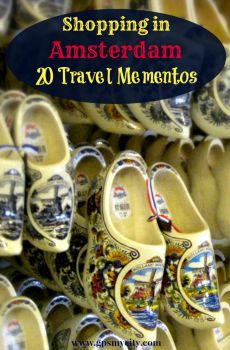
Souvenir Shopping in Amsterdam: 20 Dutch Things To Buy
Tulips, red lights, weed... Other than these, there are plenty of good things to remember Amsterdam by. What's more, you can take home some of them quite legally. Look here to see what to buy in Amsterdam and...
The Most Popular Cities
/ view all