

Audio Guide: Osaka Introduction Walking Tour (Self Guided), Osaka
Osaka is Japan’s third-largest city and the country’s second-largest metropolitan area—but its story starts long before population rankings mattered. Archaeology places people here more than 2,000 years ago, which means this isn’t a city that appeared overnight. It grew steadily, helped along by geography.
Sitting between Osaka Bay and the Yodo River, it was perfectly positioned to move goods between inland Japan and the Seto Inland Sea. Trade arrived early, stayed busy, and never really left. In ancient times, the area was known as Naniwa, and for a while it even hosted the imperial court—proof that Osaka has been important for far longer than its modern skyline suggests...
The name “Osaka” usually translates as “large hill” or “great slope,” referring to higher ground rising above what were once marshy lowlands. From around the third century, that solid ground drew people in: nobles, farmers, fishermen, artisans—anyone whose livelihood depended on access to water and movement. What followed was a city shaped less by armies and more by transactions.
By the Edo period (the early 1600s), Osaka had earned the nickname “the nation’s kitchen.” Rice flowed through its warehouses, prices were set here, and merchants—not samurai—set the tone. The result was a city known for practicality, tight-knit neighborhoods, and a no-nonsense approach to daily life.
Still, Osaka’s influence wasn’t limited to just economics. It also played a major role in shaping Japanese culture and architecture. Shrine styles, such as Sumiyoshi-zukuri, originated here before spreading elsewhere. Landmarks still carry these historical layers.
Osaka Castle, built in the late 16th century by Toyotomi Hideyoshi, remains the city’s most recognizable symbol of power and ambition. Nearby, Hokoku Shrine keeps Hideyoshi’s memory firmly in place. For a wider view, the Osaka Museum of History walks you through the city’s evolution, from ancient Naniwa to today’s dense urban landscape. Religious life continues quietly at places like Namba Shrine, surrounded by the steady hum of the modern city.
After World War II, Osaka rebuilt quickly and turned its focus toward industry and technology, becoming home to major global companies. Today, the city’s energy is felt most clearly at street level. Shinsaibashi Shopping Street carries on centuries of retail tradition, while Dotonbori leans into food, neon, and late nights, with Ebisu Bridge acting as its unofficial front row.
To really understand Osaka, don’t stand back—move through it. Walk the streets, follow short distances, and let old and new collide naturally. This is a city that explains itself as you go, in close encounters, one block at a time...
Sitting between Osaka Bay and the Yodo River, it was perfectly positioned to move goods between inland Japan and the Seto Inland Sea. Trade arrived early, stayed busy, and never really left. In ancient times, the area was known as Naniwa, and for a while it even hosted the imperial court—proof that Osaka has been important for far longer than its modern skyline suggests...
The name “Osaka” usually translates as “large hill” or “great slope,” referring to higher ground rising above what were once marshy lowlands. From around the third century, that solid ground drew people in: nobles, farmers, fishermen, artisans—anyone whose livelihood depended on access to water and movement. What followed was a city shaped less by armies and more by transactions.
By the Edo period (the early 1600s), Osaka had earned the nickname “the nation’s kitchen.” Rice flowed through its warehouses, prices were set here, and merchants—not samurai—set the tone. The result was a city known for practicality, tight-knit neighborhoods, and a no-nonsense approach to daily life.
Still, Osaka’s influence wasn’t limited to just economics. It also played a major role in shaping Japanese culture and architecture. Shrine styles, such as Sumiyoshi-zukuri, originated here before spreading elsewhere. Landmarks still carry these historical layers.
Osaka Castle, built in the late 16th century by Toyotomi Hideyoshi, remains the city’s most recognizable symbol of power and ambition. Nearby, Hokoku Shrine keeps Hideyoshi’s memory firmly in place. For a wider view, the Osaka Museum of History walks you through the city’s evolution, from ancient Naniwa to today’s dense urban landscape. Religious life continues quietly at places like Namba Shrine, surrounded by the steady hum of the modern city.
After World War II, Osaka rebuilt quickly and turned its focus toward industry and technology, becoming home to major global companies. Today, the city’s energy is felt most clearly at street level. Shinsaibashi Shopping Street carries on centuries of retail tradition, while Dotonbori leans into food, neon, and late nights, with Ebisu Bridge acting as its unofficial front row.
To really understand Osaka, don’t stand back—move through it. Walk the streets, follow short distances, and let old and new collide naturally. This is a city that explains itself as you go, in close encounters, one block at a time...
How it works: Download the app "GPSmyCity: Walks in 1K+ Cities" from Apple App Store or Google Play Store to your mobile phone or tablet. The app turns your mobile device into a personal tour guide and its built-in GPS navigation functions guide you from one tour stop to next. The app works offline, so no data plan is needed when traveling abroad.
Osaka Introduction Walking Tour Map
Guide Name: Osaka Introduction Walking Tour
Guide Location: Japan » Osaka (See other walking tours in Osaka)
Guide Type: Self-guided Walking Tour (Sightseeing)
# of Attractions: 7
Tour Duration: 2 Hour(s)
Travel Distance: 4.9 Km or 3 Miles
Author: alice
Sight(s) Featured in This Guide:
Guide Location: Japan » Osaka (See other walking tours in Osaka)
Guide Type: Self-guided Walking Tour (Sightseeing)
# of Attractions: 7
Tour Duration: 2 Hour(s)
Travel Distance: 4.9 Km or 3 Miles
Author: alice
Sight(s) Featured in This Guide:
- Osaka Castle
- Hokoku Shrine
- Osaka Museum of History
- Namba Shrine
- Shinsaibashi Shopping Street
- Dotonbori Gastronomic Area
- Ebisu Bridge
1) Osaka Castle (must see)
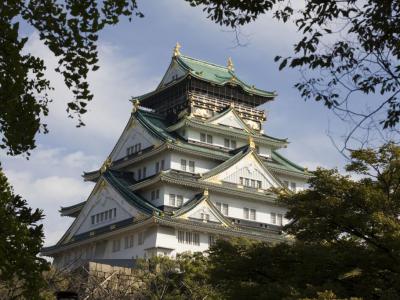
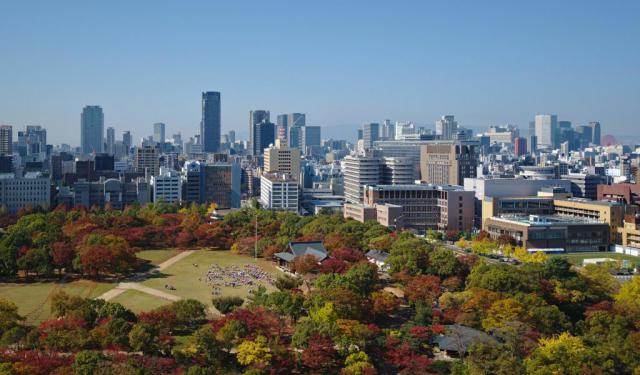
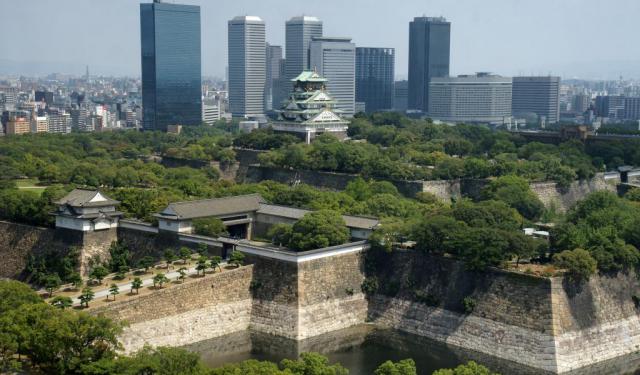
Osaka Castle is not the kind of building that quietly fades into the background. It dominates the skyline, anchors a vast park, and carries a résumé packed with ambition, destruction, reinvention, and more than a little drama. Today, it serves as a museum and a major visitor attraction, but its past is far less polite.
Construction began in 1583 under the command of Toyotomi Hideyoshi, one of the most powerful figures of Japan’s unification era. Hideyoshi modeled the fortress on Azuchi Castle, the stronghold of his former lord Oda Nobunaga, and aimed to outdo it. The result was a five-storey tower rising above massive stone walls, with three additional levels hidden underground—less a subtle palace, more a statement of authority... By 1597, the castle was complete and firmly established as a symbol of Toyotomi power.
That symbol did not last long, though. After Hideyoshi’s death, the castle passed to his son, Toyotomi Hideyori, whose rule ended violently in 1620 when the Tokugawa forces laid siege to Osaka. The original castle was destroyed by fire, and Hideyori took his own life, marking the end of the Toyotomi line and clearing the way for Tokugawa rule.
Rebuilding followed, this time with a tower that appeared to have five floors but actually contained eight inside. The stone walls erected during this period still stand today. The rest of the complex, however, had little luck. Lightning struck a gunpowder storehouse, triggering another fire, and by the early 19th century, the site had slipped into neglect.
A repair effort in 1843 briefly revived the castle, but it burned again just 25 years later. The Meiji government then repurposed the remains into a military arsenal, shifting the site from symbol to factory.
During World War II, Osaka Castle became one of the world’s largest armories. Allied bombing destroyed most of the military installations, leaving the historic core once again damaged. The castle seen today dates largely from the restoration completed between 1995 and 1997, designed to closely match the original exterior. It is surrounded by wide inner and outer moats arranged around the four cardinal directions.
Within the grounds are 13 culturally significant structures, including the Ote-mon Gate, the Rokuban-yagura Turret, the Kinmeisui Well, the Kinzo Storehouse, and the Enshogura Gunpowder Magazine—quiet reminders that this castle has always been more than just a backdrop...
Construction began in 1583 under the command of Toyotomi Hideyoshi, one of the most powerful figures of Japan’s unification era. Hideyoshi modeled the fortress on Azuchi Castle, the stronghold of his former lord Oda Nobunaga, and aimed to outdo it. The result was a five-storey tower rising above massive stone walls, with three additional levels hidden underground—less a subtle palace, more a statement of authority... By 1597, the castle was complete and firmly established as a symbol of Toyotomi power.
That symbol did not last long, though. After Hideyoshi’s death, the castle passed to his son, Toyotomi Hideyori, whose rule ended violently in 1620 when the Tokugawa forces laid siege to Osaka. The original castle was destroyed by fire, and Hideyori took his own life, marking the end of the Toyotomi line and clearing the way for Tokugawa rule.
Rebuilding followed, this time with a tower that appeared to have five floors but actually contained eight inside. The stone walls erected during this period still stand today. The rest of the complex, however, had little luck. Lightning struck a gunpowder storehouse, triggering another fire, and by the early 19th century, the site had slipped into neglect.
A repair effort in 1843 briefly revived the castle, but it burned again just 25 years later. The Meiji government then repurposed the remains into a military arsenal, shifting the site from symbol to factory.
During World War II, Osaka Castle became one of the world’s largest armories. Allied bombing destroyed most of the military installations, leaving the historic core once again damaged. The castle seen today dates largely from the restoration completed between 1995 and 1997, designed to closely match the original exterior. It is surrounded by wide inner and outer moats arranged around the four cardinal directions.
Within the grounds are 13 culturally significant structures, including the Ote-mon Gate, the Rokuban-yagura Turret, the Kinmeisui Well, the Kinzo Storehouse, and the Enshogura Gunpowder Magazine—quiet reminders that this castle has always been more than just a backdrop...
2) Hokoku Shrine
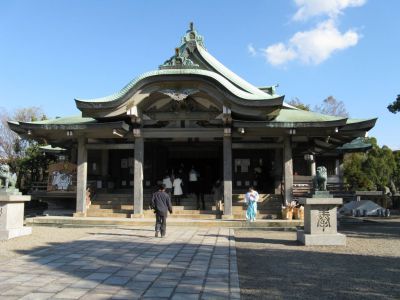
Just south of Osaka Castle’s main keep, tucked into the greenery of Osaka Castle Park, you’ll find Hokoku Shrine—a small site with very big ambitions. This temple enshrines three members of the Toyotomi family and is best known as a place to pray for success and good fortune. In other words, if you’re aiming high, this is where Osaka politely suggests you stop and say hello.
The story begins after the fall of the Tokugawa shogunate, when the Meiji Emperor ordered shrines to be built in honor of Toyotomi Hideyoshi, the man who unified Japan. The main shrine went up in Kyoto, while Osaka received a branch shrine, originally located in the Nakanoshima area.
That location didn’t last forever. In 1961, the shrine packed up and moved here to Osaka Castle Park, clearing the way for what would become the Osaka Central Public Hall on its former site. Indeed, even shrines, it seems, sometimes have to relocate for urban development...
Today, the shrine is dedicated to Hideyoshi, his son Hideyori, and his nephew Hidetsugu. A large statue of Hideyoshi stands on the grounds, keeping a watchful eye on visitors—and possibly on their career plans.
The garden, laid out in 1972, carries a strong maritime theme. Locals believed that Osaka’s prosperity was tied to seafaring and trade, so the design reflects that idea, complete with large stones forming an “Ishiyama,” or stone mountain. Look closely, and you’ll notice the overall layout echoes the shape of a horse, Hideyoshi’s personal emblem.
Many visitors come here for more than quiet reflection. The shrine is famous for its Sennari-hyotan amulet, said to bring success and good luck. The logic is simple and very Osaka: Hideyoshi started life as a low-ranking foot soldier and ended it as one of Japan’s most powerful leaders. If that kind of rise sounds appealing, this might be the most motivational stop on your walk through the park.
The story begins after the fall of the Tokugawa shogunate, when the Meiji Emperor ordered shrines to be built in honor of Toyotomi Hideyoshi, the man who unified Japan. The main shrine went up in Kyoto, while Osaka received a branch shrine, originally located in the Nakanoshima area.
That location didn’t last forever. In 1961, the shrine packed up and moved here to Osaka Castle Park, clearing the way for what would become the Osaka Central Public Hall on its former site. Indeed, even shrines, it seems, sometimes have to relocate for urban development...
Today, the shrine is dedicated to Hideyoshi, his son Hideyori, and his nephew Hidetsugu. A large statue of Hideyoshi stands on the grounds, keeping a watchful eye on visitors—and possibly on their career plans.
The garden, laid out in 1972, carries a strong maritime theme. Locals believed that Osaka’s prosperity was tied to seafaring and trade, so the design reflects that idea, complete with large stones forming an “Ishiyama,” or stone mountain. Look closely, and you’ll notice the overall layout echoes the shape of a horse, Hideyoshi’s personal emblem.
Many visitors come here for more than quiet reflection. The shrine is famous for its Sennari-hyotan amulet, said to bring success and good luck. The logic is simple and very Osaka: Hideyoshi started life as a low-ranking foot soldier and ended it as one of Japan’s most powerful leaders. If that kind of rise sounds appealing, this might be the most motivational stop on your walk through the park.
3) Osaka Museum of History
The Osaka Museum of History takes a big job seriously: telling about 1,400 years of Osaka’s past without putting you to sleep. Instead of dry timelines, it uses reconstructions, scale models, videos, and photographs to show how the city actually worked, looked, and changed. Think of it less as a quiet museum and more as a time machine with very good lighting...
Opened in 2003, the museum stands on historically loaded ground. This is the former site of the Naniwa Palace, built in 645 when Osaka briefly served as Japan’s capital under Emperor Kotoku.
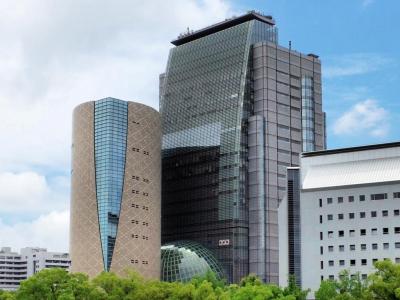
The building itself is unapologetically modern, wrapped in glass and designed to give wide views toward Osaka Castle and Osaka Castle Park just across the street. History here doesn’t hide behind walls—it comes with a skyline. Inside, the exhibitions are arranged from the top floor downward, so you begin high above the city and descend through time, era by era, floor by floor...
Along the way, the highlights keep coming. On the ground floor, you’ll find archaeological remains of the original Naniwa Palace. Outside, there’s a reconstructed fifth-century warehouse that reminds you how goods once moved through the city.
Upper floors recreate scenes from everyday life: a walk-through version of historic Dotonbori, pre–World War II shopping streets, and a dedicated section on Kabuki that brings Osaka’s theatrical traditions into focus. The lower levels round things out with a restaurant, souvenir shops, and a spacious lobby—useful pauses before or after your deep dive into the past.
Most of the labels are in Japanese, but audio guides in English are available, too, and worth picking up. They turn the exhibits into a narrated story rather than a guessing game. If you want to understand how Osaka became Osaka—without reading a textbook—this is the place to press play and start listening...
Opened in 2003, the museum stands on historically loaded ground. This is the former site of the Naniwa Palace, built in 645 when Osaka briefly served as Japan’s capital under Emperor Kotoku.
The building itself is unapologetically modern, wrapped in glass and designed to give wide views toward Osaka Castle and Osaka Castle Park just across the street. History here doesn’t hide behind walls—it comes with a skyline. Inside, the exhibitions are arranged from the top floor downward, so you begin high above the city and descend through time, era by era, floor by floor...
Along the way, the highlights keep coming. On the ground floor, you’ll find archaeological remains of the original Naniwa Palace. Outside, there’s a reconstructed fifth-century warehouse that reminds you how goods once moved through the city.
Upper floors recreate scenes from everyday life: a walk-through version of historic Dotonbori, pre–World War II shopping streets, and a dedicated section on Kabuki that brings Osaka’s theatrical traditions into focus. The lower levels round things out with a restaurant, souvenir shops, and a spacious lobby—useful pauses before or after your deep dive into the past.
Most of the labels are in Japanese, but audio guides in English are available, too, and worth picking up. They turn the exhibits into a narrated story rather than a guessing game. If you want to understand how Osaka became Osaka—without reading a textbook—this is the place to press play and start listening...
4) Namba Shrine
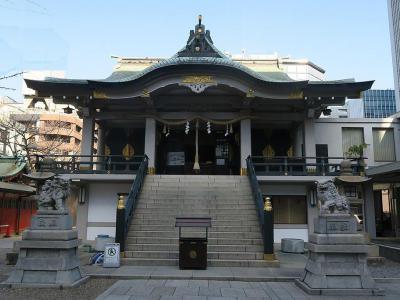
Tucked into Osaka’s Chuo ward, Namba Shrine carries a legacy that goes well beyond quiet prayer. This is where bunraku puppet theater—one of Japan’s most refined performing arts—first took shape. Long before formal stages and ticket counters, storytelling with carved figures, narration, and music began here, rooted in ritual space and community gatherings. Even today, the shrine’s calendar is busy, marked by festivals that keep this long tradition very much alive.
The shrine itself has moved with the city’s shifting priorities. It was originally founded by Emperor Hanzei in honor of his father, Emperor Nintoku, and once stood close to where Osaka Castle now rises. When Toyotomi Hideyoshi chose that site for his fortress, the shrine was relocated to make room.
Around this time, devotion to Inari—the deity associated with prosperity and success—gained popularity in Osaka. A smaller Inari shrine was added within the complex and quickly drew larger crowds than the main sanctuary. Alongside it emerged the Bunraku-za, the first theater dedicated to bunraku performances, linking sacred space and popular entertainment in a way that felt natural to merchant-era Osaka. In 1871, both the Inari shrine and the theater were moved again, this time to Nishi ward, leaving behind traces of their theatrical past.
What remains today is a shrine that still knows how to gather people. In February, the Ball of Cord Festival invites worshipers to receive a five-colored ball of string, each color tied to prayers for health and well-being. The shrine’s crest, the iris, appears not just as a symbol but as a living presence: iris flowers fill the grounds, and in June, they take center stage during the Iris Festival, accompanied by ritual dance. Summer brings the Himorogi Festival, where worshipers are offered crushed ice—a simple gesture, practical and symbolic, very much in keeping with Osaka’s character—along with traditional taiko drumming.
Just outside the grounds stands a monument marking the former Bunraku Theater, a quiet reminder that this was once a place where gods, performers, and audiences shared the same space. Pause here for a moment, and you’ll sense how Osaka’s talent for blending ritual, art, and everyday life began—not in grand halls, but right here...
The shrine itself has moved with the city’s shifting priorities. It was originally founded by Emperor Hanzei in honor of his father, Emperor Nintoku, and once stood close to where Osaka Castle now rises. When Toyotomi Hideyoshi chose that site for his fortress, the shrine was relocated to make room.
Around this time, devotion to Inari—the deity associated with prosperity and success—gained popularity in Osaka. A smaller Inari shrine was added within the complex and quickly drew larger crowds than the main sanctuary. Alongside it emerged the Bunraku-za, the first theater dedicated to bunraku performances, linking sacred space and popular entertainment in a way that felt natural to merchant-era Osaka. In 1871, both the Inari shrine and the theater were moved again, this time to Nishi ward, leaving behind traces of their theatrical past.
What remains today is a shrine that still knows how to gather people. In February, the Ball of Cord Festival invites worshipers to receive a five-colored ball of string, each color tied to prayers for health and well-being. The shrine’s crest, the iris, appears not just as a symbol but as a living presence: iris flowers fill the grounds, and in June, they take center stage during the Iris Festival, accompanied by ritual dance. Summer brings the Himorogi Festival, where worshipers are offered crushed ice—a simple gesture, practical and symbolic, very much in keeping with Osaka’s character—along with traditional taiko drumming.
Just outside the grounds stands a monument marking the former Bunraku Theater, a quiet reminder that this was once a place where gods, performers, and audiences shared the same space. Pause here for a moment, and you’ll sense how Osaka’s talent for blending ritual, art, and everyday life began—not in grand halls, but right here...
5) Shinsaibashi Shopping Street (must see)
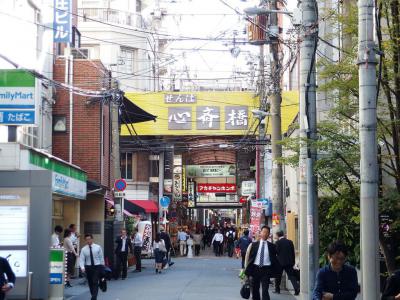
Shinsaibashi Shopping Street runs straight through central Osaka, linking North Namba with Hommachi under a single, weather-proof roof. At about 600 meters long, it’s less a quick stroll and more a steady immersion into the city’s favorite pastime: shopping, with purpose...
Indeed, this is Osaka’s largest retail district, and its name goes back to a bridge that quite literally changed local fortunes. In 1622, four merchants led by Okada Shinsai built a wooden bridge here to improve access and trade. Business boomed. The bridge was later upgraded—first to an iron structure imported from Germany, then to stone—each version marking another chapter in the area’s rise.
In 1973, the old German iron bridge was reassembled nearby to mark its 100th anniversary. Today, it lives on as a pedestrian overpass, a small but telling reminder that infrastructure and commerce have always gone hand in hand here.
What you’ll notice, as you move along Shinsaibashi, is the range. High-end international brands sit comfortably beside affordable chain stores, while traditional kimono tailors quietly continue their craft a few steps away from global fashion labels. This mix isn’t accidental—it reflects Osaka’s long-standing balance between practicality and flair.
Halfway along, the mood shifts again as you reach the western side, known as American Village, where street fashion, youth culture, and trend-driven shops take over. Cafés and restaurants follow the same pattern, moving easily between Japanese staples and international menus.
Running alongside it is Midosuji Avenue, Osaka’s main north–south artery, connecting the Kita and Umeda business districts with the lively Minami area. In autumn, the street briefly changes character during the Midosuji Parade, when marching bands from around the world replace traffic and turn the boulevard into a moving stage.
As you walk Shinsaibashi, don’t rush it. This isn’t just a place to buy things—it’s a snapshot of how Osaka trades, adapts, and keeps moving forward, one storefront after another...
Indeed, this is Osaka’s largest retail district, and its name goes back to a bridge that quite literally changed local fortunes. In 1622, four merchants led by Okada Shinsai built a wooden bridge here to improve access and trade. Business boomed. The bridge was later upgraded—first to an iron structure imported from Germany, then to stone—each version marking another chapter in the area’s rise.
In 1973, the old German iron bridge was reassembled nearby to mark its 100th anniversary. Today, it lives on as a pedestrian overpass, a small but telling reminder that infrastructure and commerce have always gone hand in hand here.
What you’ll notice, as you move along Shinsaibashi, is the range. High-end international brands sit comfortably beside affordable chain stores, while traditional kimono tailors quietly continue their craft a few steps away from global fashion labels. This mix isn’t accidental—it reflects Osaka’s long-standing balance between practicality and flair.
Halfway along, the mood shifts again as you reach the western side, known as American Village, where street fashion, youth culture, and trend-driven shops take over. Cafés and restaurants follow the same pattern, moving easily between Japanese staples and international menus.
Running alongside it is Midosuji Avenue, Osaka’s main north–south artery, connecting the Kita and Umeda business districts with the lively Minami area. In autumn, the street briefly changes character during the Midosuji Parade, when marching bands from around the world replace traffic and turn the boulevard into a moving stage.
As you walk Shinsaibashi, don’t rush it. This isn’t just a place to buy things—it’s a snapshot of how Osaka trades, adapts, and keeps moving forward, one storefront after another...
6) Dotonbori Gastronomic Area
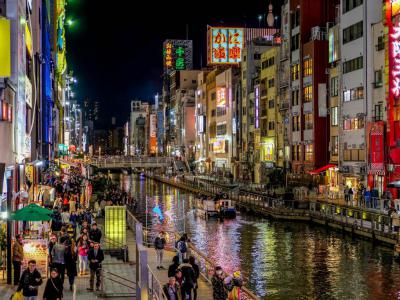
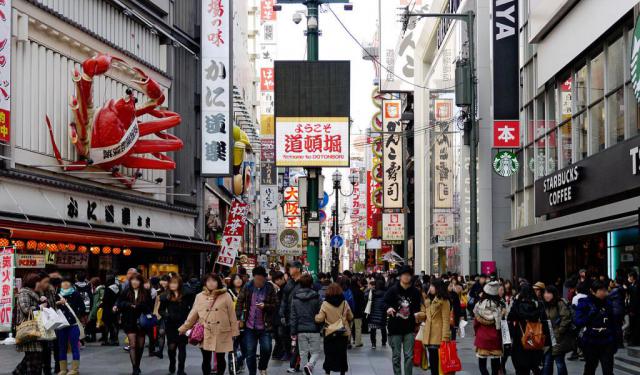
If Osaka eats, it eats here. Dotonbori is the city’s unofficial dining room, stretched along both sides of the Dotonbori-gawa Canal and operating on the simple idea that hunger should never be ignored. Restaurants come in every size and volume level, selling everything from quick street snacks to long, sit-down feasts, with shopping folded neatly in between. Food isn’t an attraction here—it’s the operating system.
Most of the action lines the canal’s south bank, where the street widens into a constant flow of signs, smells, and noise. Alongside restaurants, you’ll find theaters, storytelling halls, and entertainment spaces that recall Dotonbori’s long role as a popular culture district. The area has appeared in countless movies, including Black Rain from 1989 (starring Michael Douglas and Andy García), and still carries that cinematic energy.
Just south of the main strip sits Hozen-ji, a small 17th-century temple where a softly glowing paper lantern turns the surrounding lane amber at sunset. Nearby, narrow streets lined with Edo-period latticework buildings offer a brief pause from the sensory overload.
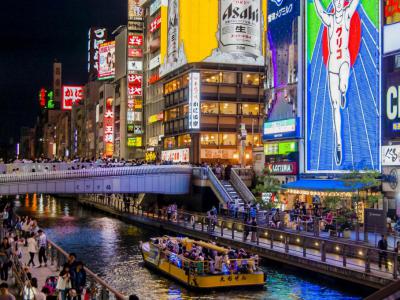
Dotonbori rarely slows down, but the tempo changes after dark. Neon signs take over, including the famous Glico Running Man and the oversized crab of Kani Doraku, both blinking tirelessly above the crowds. Kitchens stay busy, serving Osaka classics like takoyaki—octopus balls cooked on hot plates—and okonomiyaki, thick pancakes packed with vegetables and meat. More adventurous menus include fugu, the carefully prepared blowfish, alongside shabu-shabu restaurants where diners cook their own food at the table, turning dinner into a mild sport.
Dotonbori isn’t polished or quiet, and it doesn't attempt to be. It’s loud, bright, crowded, and proudly excessive—and that’s exactly the point. Walk it slowly, follow your nose, cross the canal, double back, and stop again. This is Osaka at full volume, and the only sensible response is to dive in hungry and keep moving.
Most of the action lines the canal’s south bank, where the street widens into a constant flow of signs, smells, and noise. Alongside restaurants, you’ll find theaters, storytelling halls, and entertainment spaces that recall Dotonbori’s long role as a popular culture district. The area has appeared in countless movies, including Black Rain from 1989 (starring Michael Douglas and Andy García), and still carries that cinematic energy.
Just south of the main strip sits Hozen-ji, a small 17th-century temple where a softly glowing paper lantern turns the surrounding lane amber at sunset. Nearby, narrow streets lined with Edo-period latticework buildings offer a brief pause from the sensory overload.
Dotonbori rarely slows down, but the tempo changes after dark. Neon signs take over, including the famous Glico Running Man and the oversized crab of Kani Doraku, both blinking tirelessly above the crowds. Kitchens stay busy, serving Osaka classics like takoyaki—octopus balls cooked on hot plates—and okonomiyaki, thick pancakes packed with vegetables and meat. More adventurous menus include fugu, the carefully prepared blowfish, alongside shabu-shabu restaurants where diners cook their own food at the table, turning dinner into a mild sport.
Dotonbori isn’t polished or quiet, and it doesn't attempt to be. It’s loud, bright, crowded, and proudly excessive—and that’s exactly the point. Walk it slowly, follow your nose, cross the canal, double back, and stop again. This is Osaka at full volume, and the only sensible response is to dive in hungry and keep moving.
7) Ebisu Bridge
Here we are at Ebisu Bridge, stretching across the Dotonbori River right in the middle of Osaka’s action. This short crossing links Shinsaibashi-suji with Ebisubashi-suji, two streets that rarely sleep and never really slow down. Locals also know it by a more playful nickname, Hikkake-bashi, or “pick-up bridge,” which already tells you this has long been a place to see and be seen.
For visitors, Ebisu Bridge is less about getting from one side to the other and more about stopping in the middle. The southwest side is the clear favorite, thanks to the oversized Glico running man flashing across the skyline. If you’ve seen a photo of Osaka at night, chances are it was taken right here, with that sign glowing confidently in the background.
The bridge is reserved for pedestrians only, which means no engines, no horns, and no rushing traffic pushing you along. Instead, you’re free to slow your pace, look around, and take it all in. Subtle curved spaces along the sides let you step out of the main flow, making room for photos of towering signboards, dense façades, and the canal slicing through downtown Osaka like a stage set.
Although the bridge feels very much part of modern Osaka, it has been reinvented more than once. The current structure dates to 2007 and was designed by CTI Engineering as part of the wider Dotonbori River redevelopment. Before that, this spot saw a steel bridge built in 1878, followed by a reinforced concrete arched bridge completed in 1925. Different materials, different eras—same role as a front-row seat to the city.
So, don’t hurry crossing it. Pause, look up, look around, and let Osaka perform for you. On Ebisu Bridge, the city doesn’t just pass by—it puts on a show!
For visitors, Ebisu Bridge is less about getting from one side to the other and more about stopping in the middle. The southwest side is the clear favorite, thanks to the oversized Glico running man flashing across the skyline. If you’ve seen a photo of Osaka at night, chances are it was taken right here, with that sign glowing confidently in the background.
The bridge is reserved for pedestrians only, which means no engines, no horns, and no rushing traffic pushing you along. Instead, you’re free to slow your pace, look around, and take it all in. Subtle curved spaces along the sides let you step out of the main flow, making room for photos of towering signboards, dense façades, and the canal slicing through downtown Osaka like a stage set.
Although the bridge feels very much part of modern Osaka, it has been reinvented more than once. The current structure dates to 2007 and was designed by CTI Engineering as part of the wider Dotonbori River redevelopment. Before that, this spot saw a steel bridge built in 1878, followed by a reinforced concrete arched bridge completed in 1925. Different materials, different eras—same role as a front-row seat to the city.
So, don’t hurry crossing it. Pause, look up, look around, and let Osaka perform for you. On Ebisu Bridge, the city doesn’t just pass by—it puts on a show!
Walking Tours in Osaka, Japan
Create Your Own Walk in Osaka
Creating your own self-guided walk in Osaka is easy and fun. Choose the city attractions that you want to see and a walk route map will be created just for you. You can even set your hotel as the start point of the walk.
Tennoji Shrines and Temples Walking Tour
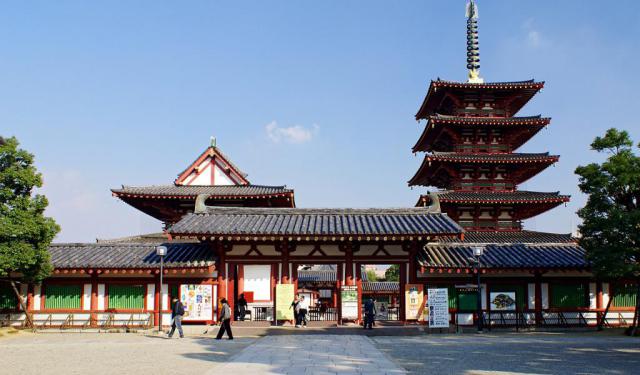
Osaka is Japan’s third largest city. It is therefore not at all surprising to find within its boundaries many religious sites. Tennoji, a district of Osaka steeped in cultural and historical significance, is particularly rich in terms of beautiful temples and shrines.
Ikukunitama Shrine, nestled amidst the city's clamor, is a dedication to the deity Ikukunitama-no-mikoto, offering... view more
Tour Duration: 2 Hour(s)
Travel Distance: 3.5 Km or 2.2 Miles
Ikukunitama Shrine, nestled amidst the city's clamor, is a dedication to the deity Ikukunitama-no-mikoto, offering... view more
Tour Duration: 2 Hour(s)
Travel Distance: 3.5 Km or 2.2 Miles
Osaka Castle Park Walking Tour
Osaka Castle Park looks, at first glance, like a generous patch of green dropped neatly into the middle of the city. Nearly two square kilometers of lawns, paths, and sports fields stretch along the south bank of the Okawa River, giving Osaka a place to breathe. But don’t let the joggers and picnic blankets fool you—this ground has been busy shaping history for more than five centuries.
... view more
Tour Duration: 1 Hour(s)
Travel Distance: 2.9 Km or 1.8 Miles
... view more
Tour Duration: 1 Hour(s)
Travel Distance: 2.9 Km or 1.8 Miles
Osaka Shopping and Dining Walking Tour
As well as being an exciting Western-style city full of cool entertainment and cultural attractions, Osaka is a great place for shopping. The appealing range of shopping venues here includes covered arcades, malls, thoroughfares, and more. Let's take a closer look at some of these locations.
Shinsaibashi Shopping Street is a bustling retail district renowned for its upscale stores and... view more
Tour Duration: 1 Hour(s)
Travel Distance: 2.2 Km or 1.4 Miles
Shinsaibashi Shopping Street is a bustling retail district renowned for its upscale stores and... view more
Tour Duration: 1 Hour(s)
Travel Distance: 2.2 Km or 1.4 Miles
The Most Popular Cities
/ view all