

Tashkent Introduction Walking Tour (Self Guided), Tashkent
The capital city of Uzbekistan, Tashkent, also historically known as Chach, is the country's cultural, industrial and administrative hub. First settled some time between the 5th and 3rd centuries BC, throughout its long history the city has had various changes in political and religious affiliations. The name Tashkent comes from the Turkic tash and kent, which literally means "Stone City" or "City of Stones".
Before Islamic influence started in the mid-8th century AD, Tashkent was part of the Sogdian and Turkic cultures. After being destroyed by Genghis Khan in 1219, Tashkent was rebuilt and profited from the Silk Road.
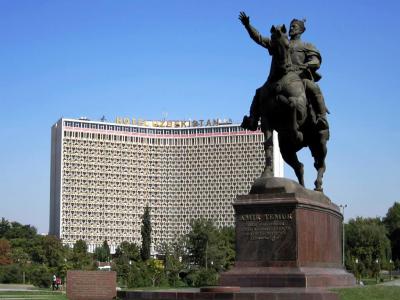
During the reign of Amir Timur, in the 14th-15th centuries, Tashkent was part of Timur's empire. From the 18th to the 19th century, it became an independent city-state, before it was re-conquered by the Khanate of Kokand. In 1865, Tashkent fell to the Russian Empire and became the capital of Russian Turkestan.
In Soviet times, it witnessed major growth and demographic changes. Largely destroyed in the 1966 earthquake, Tashkent was rebuilt as a model Soviet city, with wide streets planted with shade trees, parks, immense plazas for parades, fountains, monuments, and acres of apartment blocks. This was achieved with the help of the Soviet republics, who sent "battalions of fraternal peoples" and urban planners to help resurrect the city.
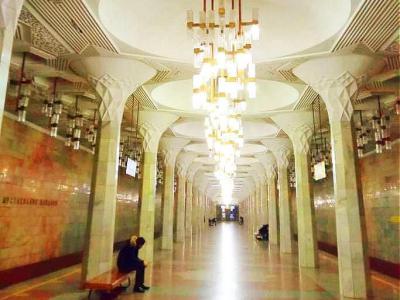
The Tashkent Metro, built during that time, was the seventh underground railway launched in the former USSR, and is still one of only two subway rapid transit systems operating in Central Asia. Its stations – like Mustakillik Maidoni (Independence Square) station, richly decorated with national Uzbek ornaments – are among the most picturesque in the world.
At the time of the collapse of the Soviet Union, in 1991, Tashkent was the fourth-largest city in the USSR, and a center of learning in the fields of science and engineering.
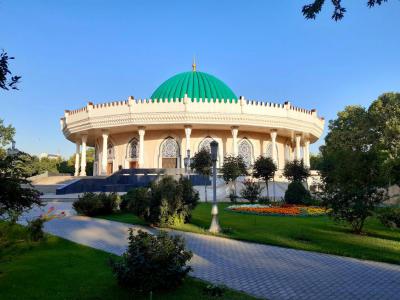
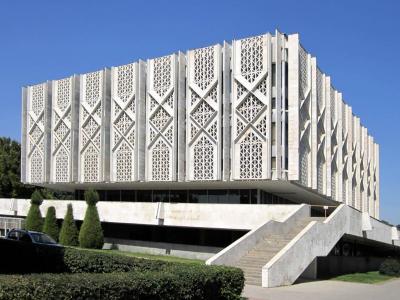
Due to the destruction following the 1917 revolution and, later, the 1966 earthquake, little remains of the city's traditional architectural heritage. Tashkent, however, is rich in museums and Soviet-era monuments. These include the Temurid History Museum, which houses relics from the Timurid dynasty period, and the nearby enormous State Museum of History of Uzbekistan, housed in the ex-Lenin Museum building, which has in its collection some rare centuries-old Buddhist artifacts.
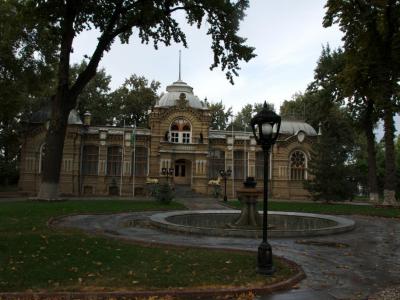
The Palace of Grand Duke Romanov is another prominent location, currently administered by the Ministry of Foreign Affairs. The city’s skyline is distinguished by Tashkent Tower, which offers city views from its observation deck.
To explore these and other notable sights of Uzbekistan's capital, follow this self-guided introductory walk.
Before Islamic influence started in the mid-8th century AD, Tashkent was part of the Sogdian and Turkic cultures. After being destroyed by Genghis Khan in 1219, Tashkent was rebuilt and profited from the Silk Road.
During the reign of Amir Timur, in the 14th-15th centuries, Tashkent was part of Timur's empire. From the 18th to the 19th century, it became an independent city-state, before it was re-conquered by the Khanate of Kokand. In 1865, Tashkent fell to the Russian Empire and became the capital of Russian Turkestan.
In Soviet times, it witnessed major growth and demographic changes. Largely destroyed in the 1966 earthquake, Tashkent was rebuilt as a model Soviet city, with wide streets planted with shade trees, parks, immense plazas for parades, fountains, monuments, and acres of apartment blocks. This was achieved with the help of the Soviet republics, who sent "battalions of fraternal peoples" and urban planners to help resurrect the city.
The Tashkent Metro, built during that time, was the seventh underground railway launched in the former USSR, and is still one of only two subway rapid transit systems operating in Central Asia. Its stations – like Mustakillik Maidoni (Independence Square) station, richly decorated with national Uzbek ornaments – are among the most picturesque in the world.
At the time of the collapse of the Soviet Union, in 1991, Tashkent was the fourth-largest city in the USSR, and a center of learning in the fields of science and engineering.
Due to the destruction following the 1917 revolution and, later, the 1966 earthquake, little remains of the city's traditional architectural heritage. Tashkent, however, is rich in museums and Soviet-era monuments. These include the Temurid History Museum, which houses relics from the Timurid dynasty period, and the nearby enormous State Museum of History of Uzbekistan, housed in the ex-Lenin Museum building, which has in its collection some rare centuries-old Buddhist artifacts.
The Palace of Grand Duke Romanov is another prominent location, currently administered by the Ministry of Foreign Affairs. The city’s skyline is distinguished by Tashkent Tower, which offers city views from its observation deck.
To explore these and other notable sights of Uzbekistan's capital, follow this self-guided introductory walk.
How it works: Download the app "GPSmyCity: Walks in 1K+ Cities" from Apple App Store or Google Play Store to your mobile phone or tablet. The app turns your mobile device into a personal tour guide and its built-in GPS navigation functions guide you from one tour stop to next. The app works offline, so no data plan is needed when traveling abroad.
Download The GPSmyCity App



Tashkent Introduction Walking Tour Map
Guide Name: Tashkent Introduction Walking Tour
Guide Location: Uzbekistan » Tashkent (See other walking tours in Tashkent)
Guide Type: Self-guided Walking Tour (Sightseeing)
Tour Duration: 2 Hour(s)
Travel Distance: 4.0 Km or 2.5 Miles
Guide Location: Uzbekistan » Tashkent (See other walking tours in Tashkent)
Guide Type: Self-guided Walking Tour (Sightseeing)
Tour Duration: 2 Hour(s)
Travel Distance: 4.0 Km or 2.5 Miles
Sights Featured in This Walk
Walking Tours in Tashkent, Uzbekistan

Create Your Own Walk in Tashkent
Creating your own self-guided walk in Tashkent is easy and fun. Choose the city attractions that you want to see and a walk route map will be created just for you. You can even set your hotel as the start point of the walk.
Islamic Architecture Walking Tour
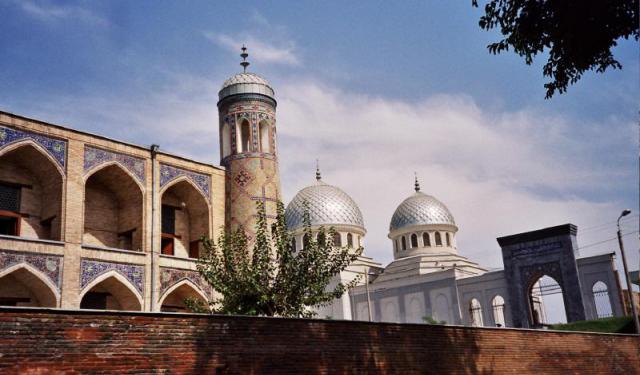
A visit to Uzbekistan is like leafing through the charred chapters of the Silk Road. Nowhere is this ambiance more exemplified than within the Islamic architecture adorning the streets of Tashkent.
One such architectural jewel is the Kukeldash Madrasah, dating back to the late 16th century. There is talk of making it into a museum, but it is currently still being used as a religious school.
... view more
Tour Duration: 2 Hour(s)
Travel Distance: 3.6 Km or 2.2 Miles
One such architectural jewel is the Kukeldash Madrasah, dating back to the late 16th century. There is talk of making it into a museum, but it is currently still being used as a religious school.
... view more
Tour Duration: 2 Hour(s)
Travel Distance: 3.6 Km or 2.2 Miles
Shopping in Tashkent
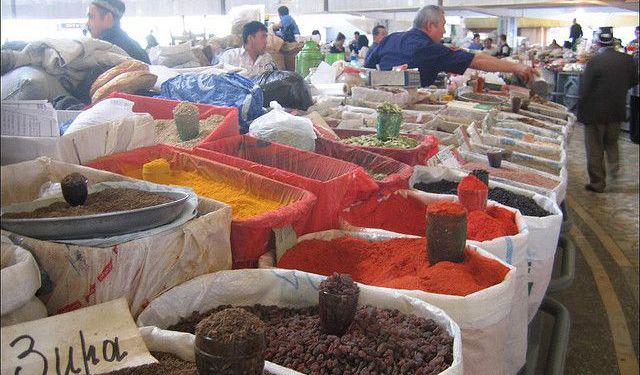
In the East they say, "A guest on your doorstep is happiness in your home!". Indeed, the Uzbeks, like no other people, are happy to welcome foreigners to their exotic world of aromas, tastes and cordial relationships manifested in authentic local food and products. In Tashkent you can find both of these, and in a great variety, on the street markets (bazaars), in smaller shops and big... view more
Tour Duration: 2 Hour(s)
Travel Distance: 6.0 Km or 3.7 Miles
Tour Duration: 2 Hour(s)
Travel Distance: 6.0 Km or 3.7 Miles
The Most Popular Cities
/ view all