Custom Walk in Palermo, Italy by hasc_61_26b37 created on 2025-07-30
Guide Location: Italy » Palermo
Guide Type: Custom Walk
# of Sights: 16
Tour Duration: 2 Hour(s)
Travel Distance: 2.8 Km or 1.7 Miles
Share Key: 8EW4H
Guide Type: Custom Walk
# of Sights: 16
Tour Duration: 2 Hour(s)
Travel Distance: 2.8 Km or 1.7 Miles
Share Key: 8EW4H
How It Works
Please retrieve this walk in the GPSmyCity app. Once done, the app will guide you from one tour stop to the next as if you had a personal tour guide. If you created the walk on this website or come to the page via a link, please follow the instructions below to retrieve the walk in the app.
Retrieve This Walk in App
Step 1. Download the app "GPSmyCity: Walks in 1K+ Cities" on Apple App Store or Google Play Store.



Step 2. In the GPSmyCity app, download(or launch) the guide "Palermo Map and Walking Tours".
Step 3. Tap the menu button located at upper right corner of the "Walks" screen and select "Retrieve custom walk". Enter the share key: 8EW4H
1) Palazzo Butera (Butera Palace)
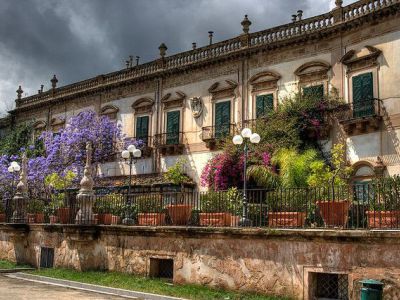
Palazzo Butera is an impressive waterside palace. Girolamo Branciforti commissioned the home in 1701. The palace welcomed Charles de Bourbon, who was crowned King of Sicily in Palmero in 1735. The terrace was built in 1750. In 1760 the Prince of Butera bought the palace next door and joined them. This addition doubles the size of the palace. The entire palace was renovated and Gioacchino Martorana and Gaspare Fumagalli painted beautiful ceiling frescoes.
In 2016, Francesa and Massimo Valsecchi bought the palace and have been restoring it. Today, it is a museum. The rooms feature ceiling paintings, frescoes, and artworks from throughout the centuries.
The Valsecchi's are moving their art collection from England to display it in the Palazzo Butera. Visitors can tour the palace, see exhibitions, and explore the courtyards and the terrace.
In 2016, Francesa and Massimo Valsecchi bought the palace and have been restoring it. Today, it is a museum. The rooms feature ceiling paintings, frescoes, and artworks from throughout the centuries.
The Valsecchi's are moving their art collection from England to display it in the Palazzo Butera. Visitors can tour the palace, see exhibitions, and explore the courtyards and the terrace.
2) Palazzo Chiaramonte-Steri (Chiaramonte-Steri Palace)
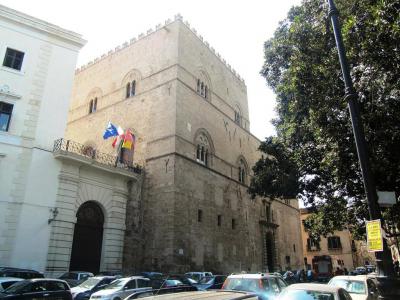
Construction on Palazzo Chiaramonte-Steri was completed in the 14th century. It was the home of Manfredi III Chiaramonte, a powerful Sicilian lord. He commissioned the Grand Hall with its impressive painted wooden ceiling. The palace's architectural style is known as Chiaramonte Gothic, which has also been described as Romanesque-Gothic.
In 1392, Andrea Chiaramonte was executed, and the family was disgraced. In the early 1500s, the palace housed Siciliy's Aragonese-Spanish viceroys.
Charles V, the Holy Roman Emperor and King of Sicily, ceded the Maltese Islands to the Order of the Hospital from here in 1530. After that, the palace housed the Royal Customs.
From 1600 to 1782, the Holy Inquisition was held in the palace. The palace is now a museum, and guests can see the paintings and inscriptions that prisoners left on cell walls. In addition, the museum houses the famous Vucciria painting by Guttuso.
In 1392, Andrea Chiaramonte was executed, and the family was disgraced. In the early 1500s, the palace housed Siciliy's Aragonese-Spanish viceroys.
Charles V, the Holy Roman Emperor and King of Sicily, ceded the Maltese Islands to the Order of the Hospital from here in 1530. After that, the palace housed the Royal Customs.
From 1600 to 1782, the Holy Inquisition was held in the palace. The palace is now a museum, and guests can see the paintings and inscriptions that prisoners left on cell walls. In addition, the museum houses the famous Vucciria painting by Guttuso.
3) Palazzo Mirto (Mirto Palace)
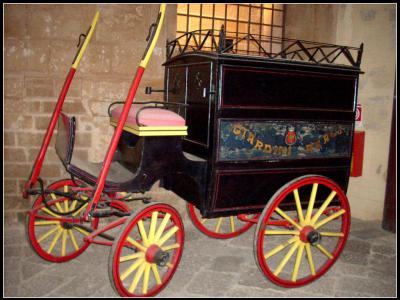
The Palazzo Mirto dates back to the 17th century. The Filangeri family owned the palace for over 400 years before donating it to the city in 1982. This fabulous palace features original artwork and gives visitors insights into the lives of a wealthy Palermo family. The Filangeri family were part of the Sicilian nobility, and the palace represents an extravagant lifestyle from the past.
The 21 rooms all feature original furnishings. Visitors can admire the swaths of velvet and silk wallpaper that cover the walls. Decorations include frescoes, tapestries, and chandeliers. In addition, the floors are covered in majolica tiles, mosaics, and colored marble.
Visitors will enjoy the ballroom, enormous library, and the Chinese Salon. The Chinese Salon has silk wallpaper and black lacquer. In addition, a ceiling painting features European artists looking down at the room. The Smoking Salon's walls are decorated with colorful Cordovan leather. The Lounge of Diana features a swiveling Apollo statue that leads to a hidden passage.
A terrace on the second floor features an enclosed garden. The palace has English tour booklets available.
The 21 rooms all feature original furnishings. Visitors can admire the swaths of velvet and silk wallpaper that cover the walls. Decorations include frescoes, tapestries, and chandeliers. In addition, the floors are covered in majolica tiles, mosaics, and colored marble.
Visitors will enjoy the ballroom, enormous library, and the Chinese Salon. The Chinese Salon has silk wallpaper and black lacquer. In addition, a ceiling painting features European artists looking down at the room. The Smoking Salon's walls are decorated with colorful Cordovan leather. The Lounge of Diana features a swiveling Apollo statue that leads to a hidden passage.
A terrace on the second floor features an enclosed garden. The palace has English tour booklets available.
4) Chiesa di San Francesco d'Assisi (Church of Saint Francis of Assisi)
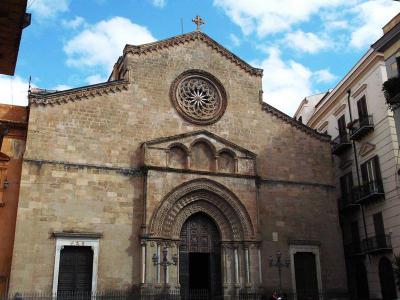
The Church of Saint Francis of Assisi, known locally as San Francesco d'Assisi, stands as a significant Renaissance-era building in Palermo and serves as the principal Conventual Franciscan church of Sicily. It holds the prestigious title of Minor Basilica, a designation bestowed by Pope Pius XI in 1924.
The Franciscans first arrived in Sicily in 1224, but faced opposition from local clergy and Saracens, leading to their temporary expulsion. They regained a foothold with the support of Pope Gregory IX, establishing a new convent in 1235, though this structure was later destroyed by Frederick II in 1239 due to conflicts with the Pope. By 1255, under the leadership of Ruffino Gorgone da Piacenza, a chaplain of Pope Alexander IV, the Franciscans solidified their presence. The church was reconstructed, this time under the supervision of Roger, the bishop of Malta. The main portal and anterior façade, both in the distinctive Chiaramontan-Gothic style, were completed by 1302.
During the 15th century, the church was further embellished with several chapels in Gothic and Renaissance styles. Among these, the Chapel Mastrantonio is notable as the earliest example of Renaissance architecture in Sicily. However, the church's structure was significantly challenged over the centuries, particularly during a severe earthquake on March 5, 1823, which necessitated extensive Neoclassical restoration.
Further damages during World War II air raids and subsequent restorations led to a melding of architectural styles, predominantly Gothic and Sicilian Baroque, giving the church its current unique appearance. Today, the Church of Saint Francis of Assisi remains a vital part of Palermo's religious landscape, notably housing the Simulacrum of the Immaculate Conception. This revered icon is central to the annual procession on December 8, celebrating the Immaculate Conception through the historic streets of Palermo.
The Franciscans first arrived in Sicily in 1224, but faced opposition from local clergy and Saracens, leading to their temporary expulsion. They regained a foothold with the support of Pope Gregory IX, establishing a new convent in 1235, though this structure was later destroyed by Frederick II in 1239 due to conflicts with the Pope. By 1255, under the leadership of Ruffino Gorgone da Piacenza, a chaplain of Pope Alexander IV, the Franciscans solidified their presence. The church was reconstructed, this time under the supervision of Roger, the bishop of Malta. The main portal and anterior façade, both in the distinctive Chiaramontan-Gothic style, were completed by 1302.
During the 15th century, the church was further embellished with several chapels in Gothic and Renaissance styles. Among these, the Chapel Mastrantonio is notable as the earliest example of Renaissance architecture in Sicily. However, the church's structure was significantly challenged over the centuries, particularly during a severe earthquake on March 5, 1823, which necessitated extensive Neoclassical restoration.
Further damages during World War II air raids and subsequent restorations led to a melding of architectural styles, predominantly Gothic and Sicilian Baroque, giving the church its current unique appearance. Today, the Church of Saint Francis of Assisi remains a vital part of Palermo's religious landscape, notably housing the Simulacrum of the Immaculate Conception. This revered icon is central to the annual procession on December 8, celebrating the Immaculate Conception through the historic streets of Palermo.
5) Chiesa di Saint Anne 'della Misericordia (Church of Saint Anne the Merciful)
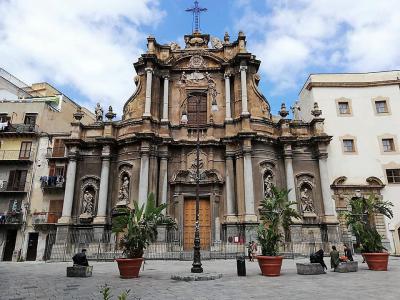
The Church of Saint Anne the Merciful, commonly referred to as Sant'Anna, stands as a significant example of Baroque architecture in the historic center of Palermo, near the ancient Lattarini market. It is associated with the Third Order Regular of Saint Francis of Penance, reflecting its deep-rooted Franciscan ties.
Historically, the site was first documented in the 16th century in the "District of Mercy" (Contrada della Misericordia) document, which mentions a chapel dedicated to Our Lady Of Pity. Notably, in this chapel, the artist Tommaso de Vigilia created a fresco of the Pietà that evolved into a focal point of local veneration. In 1596, a nearby granary was repurposed as a place of worship to house this venerated icon, and the following year, the convent of Sant'Anna was established.
By the early 17th century, the existing church structure no longer met the community's liturgical demands, prompting an expansion supported by both the aristocracy and common worshippers. The design for the expansion, characterized by its late Renaissance style, was conceived by Mariano Smiriglio, a senatorial architect. Construction began on 26 October 1606 and the church was completed in 1632, officially consecrated on 13 November 1639. It was dedicated to Saint Anne, the mother of Mary, hence its name Sant'Anna la Misericordia.
Disaster struck in 1726 when the Terrasini earthquake caused significant damage to the church's façade. The reconstruction, led by architect Giovanni Biagio Amico, adhered to the Roman Baroque style. Over the centuries, the church endured further damage from numerous earthquakes.
Following the unification of Italy in 1861, both the church and the convent were seized by the state and repurposed as a granary. It wasn't until 1925 that these were partially returned to the Franciscan friars.
In contemporary times, the convent portion of Sant'Anna has been transformed into the Galleria d'Arte Moderna Sant'Anna, a museum showcasing modern art, marrying the site’s rich historical past with modern cultural expressions. This evolution highlights the adaptive reuse of religious spaces in Italy, particularly in how they serve both historical preservation and contemporary cultural needs.
Historically, the site was first documented in the 16th century in the "District of Mercy" (Contrada della Misericordia) document, which mentions a chapel dedicated to Our Lady Of Pity. Notably, in this chapel, the artist Tommaso de Vigilia created a fresco of the Pietà that evolved into a focal point of local veneration. In 1596, a nearby granary was repurposed as a place of worship to house this venerated icon, and the following year, the convent of Sant'Anna was established.
By the early 17th century, the existing church structure no longer met the community's liturgical demands, prompting an expansion supported by both the aristocracy and common worshippers. The design for the expansion, characterized by its late Renaissance style, was conceived by Mariano Smiriglio, a senatorial architect. Construction began on 26 October 1606 and the church was completed in 1632, officially consecrated on 13 November 1639. It was dedicated to Saint Anne, the mother of Mary, hence its name Sant'Anna la Misericordia.
Disaster struck in 1726 when the Terrasini earthquake caused significant damage to the church's façade. The reconstruction, led by architect Giovanni Biagio Amico, adhered to the Roman Baroque style. Over the centuries, the church endured further damage from numerous earthquakes.
Following the unification of Italy in 1861, both the church and the convent were seized by the state and repurposed as a granary. It wasn't until 1925 that these were partially returned to the Franciscan friars.
In contemporary times, the convent portion of Sant'Anna has been transformed into the Galleria d'Arte Moderna Sant'Anna, a museum showcasing modern art, marrying the site’s rich historical past with modern cultural expressions. This evolution highlights the adaptive reuse of religious spaces in Italy, particularly in how they serve both historical preservation and contemporary cultural needs.
6) Chiesa di San Cataldo (Church of San Cataldo)
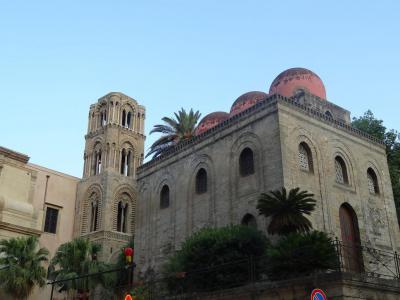
The Church of San Cataldo in Palermo stands as a quintessential monument to the Arab-Norman architecture that typified Sicily during its Norman rule. Located on Bellini Square (Piazza Bellini), this Catholic church is directly connected to the neighboring Santa Maria dell'Ammiraglio. San Cataldo gained recognition as a World Heritage Site in 2015, reflecting its historical and architectural significance.
The church was initially founded around 1160 by the admiral Majone di Bari. Its history includes a period in the 18th century when it was repurposed as a post office. In the 19th century, it underwent restoration efforts to revert it to a form more reminiscent of its original medieval structure, highlighting its enduring architectural features.
San Cataldo showcases a rectangular floor plan accentuated by blind arches and windows, a testament to the Norman preference for straightforward, robust forms influenced by their militaristic background. The exterior is marked by three distinctive red domes and Arab-style merlons that contribute to its unique silhouette. These elements not only demonstrate the fusion of Norman architectural practices but also reflect influences from Islamic and Byzantine designs, evident in the cubic forms and the spherical domes.
Internally, the church presents a single nave flanked by two aisles. The bare walls are lined with Spolia columns supporting Byzantine-style arcades, with the original mosaic-decorated pavement adding to its splendor. The main altar of the church also remains as it was initially constructed. Additionally, remnants of the old city wall are visible beneath the structure, linking it directly to the broader historical context of Palermo.
This blend of architectural influences from Northern France, England, and Byzantine and Islamic traditions makes the Church of San Cataldo a fascinating study of the cultural and architectural synthesis that characterizes much of Sicily's historical landscape.
The church was initially founded around 1160 by the admiral Majone di Bari. Its history includes a period in the 18th century when it was repurposed as a post office. In the 19th century, it underwent restoration efforts to revert it to a form more reminiscent of its original medieval structure, highlighting its enduring architectural features.
San Cataldo showcases a rectangular floor plan accentuated by blind arches and windows, a testament to the Norman preference for straightforward, robust forms influenced by their militaristic background. The exterior is marked by three distinctive red domes and Arab-style merlons that contribute to its unique silhouette. These elements not only demonstrate the fusion of Norman architectural practices but also reflect influences from Islamic and Byzantine designs, evident in the cubic forms and the spherical domes.
Internally, the church presents a single nave flanked by two aisles. The bare walls are lined with Spolia columns supporting Byzantine-style arcades, with the original mosaic-decorated pavement adding to its splendor. The main altar of the church also remains as it was initially constructed. Additionally, remnants of the old city wall are visible beneath the structure, linking it directly to the broader historical context of Palermo.
This blend of architectural influences from Northern France, England, and Byzantine and Islamic traditions makes the Church of San Cataldo a fascinating study of the cultural and architectural synthesis that characterizes much of Sicily's historical landscape.
7) La Martorana (Martorana Church) (must see)
Martorana church, also known as the Church of Saint Mary of the Admiral, was founded by George of Antioch, a Syrian Christian who served as the principal minister and admiral of King Roger II of Sicily. One of the most powerful figures at the Norman court, George commissioned the church as his personal foundation, originally following the Byzantine rite, though it was not formally Eastern Orthodox in the modern sense.
The foundation charter dates to 1143 and was written in Greek and Arabic. Construction may have begun slightly earlier, but the church was certainly completed by 1151, the year of George’s death. Tradition holds that George of Antioch was buried in the church, likely in the narthex area.
Around 1194, Eloisa Martorana, a noblewoman, established a Benedictine convent adjacent to the church. Over time, the convent absorbed the church, which then became commonly known as La Martorana. The nuns gained fame for creating marzipan sweets shaped like fruit, known as “Martorana fruit”. Although the convent community eventually left, the name and the confection remain closely associated with the site.
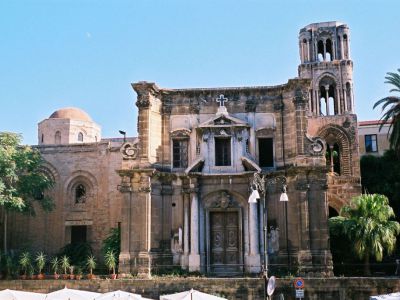
Over time, the church underwent several architectural changes. The narthex, added later, now forms part of the entrance area. The bell tower, with its layered arches and loggias, survives from the medieval structure and today serves as the main point of entry.
The church is especially renowned for its interior mosaics, among the finest Byzantine mosaics in Sicily. One of the most wonderful images shows Roger II being crowned directly by Christ, positioned to the left as you face the altar. Above, the dome features Christ Pantokrator, surrounded by angels, prophets, and evangelists, forming a luminous theological and artistic centerpiece.
The foundation charter dates to 1143 and was written in Greek and Arabic. Construction may have begun slightly earlier, but the church was certainly completed by 1151, the year of George’s death. Tradition holds that George of Antioch was buried in the church, likely in the narthex area.
Around 1194, Eloisa Martorana, a noblewoman, established a Benedictine convent adjacent to the church. Over time, the convent absorbed the church, which then became commonly known as La Martorana. The nuns gained fame for creating marzipan sweets shaped like fruit, known as “Martorana fruit”. Although the convent community eventually left, the name and the confection remain closely associated with the site.
Over time, the church underwent several architectural changes. The narthex, added later, now forms part of the entrance area. The bell tower, with its layered arches and loggias, survives from the medieval structure and today serves as the main point of entry.
The church is especially renowned for its interior mosaics, among the finest Byzantine mosaics in Sicily. One of the most wonderful images shows Roger II being crowned directly by Christ, positioned to the left as you face the altar. Above, the dome features Christ Pantokrator, surrounded by angels, prophets, and evangelists, forming a luminous theological and artistic centerpiece.
8) Chiesa di Santa Caterina (Church of Saint Catherine)
The Church of Saint Catherine (Chiesa di Santa Caterina) is a historic religious site in the heart of Palermo, between Bellini Square (Piazza Bellini) and Pretoria Square (Piazza Pretoria). It originated from the visionary efforts of a wealthy local aristocrat, Benvenuta Magistro Angelo (Mastrangelo), who in 1310 left a testament to establish a Dominican convent on the site of the former palace of George of Antioch, a notable admiral under Roger II of Sicily. The convent and its church were dedicated to Saint Catherine of Alexandria, reflecting the devout aspirations of its founder.
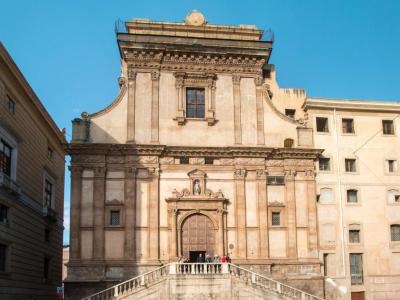
By 1532, the church saw significant expansion and underwent a series of extensive remodels from 1566 to 1596 under the direction of Mother Prioress Maria del Carretto. These renovations culminated in a grand inauguration on November 24, 1596. Architecturally, the Church of Saint Catherine is a remarkable blend of Sicilian Baroque, Rococo, and Renaissance styles. This eclectic mix is evident in its textured facades, elaborate sculptures, use of mixed marbles, stucco detailing, and vibrant frescoes.
Originally, the architectural design was attributed to Giorgio di Faccio, known for his work on San Giorgio dei Genovesi in Palermo. However, more recent scholarly work has credited additional architects such as Francesco Camilliani from Florence and Antonio Muttone from Lombardy, who were also influential in the construction of nearby Piazza Pretoria. The church’s dome, a standout feature, was designed by Francesco Ferrigno, adding to the structure's imposing presence.
The interior of the church is adorned with decorations from the 17th and 18th centuries, offering a visual feast for visitors and reflecting the artistic trends of those periods. Throughout the 19th century, the church faced several episodes of damage linked to local uprisings, including the upheaval of 1820-1821, the Sicilian revolution of 1848, the Gancia revolt in 1860, and the Seven and a Half Days revolt in 1866.
Today, the Church of Saint Catherine stands not only as a place of worship but also as a testament to the rich historical and cultural tapestry of Palermo. It remains a pivotal part of the city's historic center, attracting visitors who are keen to explore its architectural beauty and historical significance.
By 1532, the church saw significant expansion and underwent a series of extensive remodels from 1566 to 1596 under the direction of Mother Prioress Maria del Carretto. These renovations culminated in a grand inauguration on November 24, 1596. Architecturally, the Church of Saint Catherine is a remarkable blend of Sicilian Baroque, Rococo, and Renaissance styles. This eclectic mix is evident in its textured facades, elaborate sculptures, use of mixed marbles, stucco detailing, and vibrant frescoes.
Originally, the architectural design was attributed to Giorgio di Faccio, known for his work on San Giorgio dei Genovesi in Palermo. However, more recent scholarly work has credited additional architects such as Francesco Camilliani from Florence and Antonio Muttone from Lombardy, who were also influential in the construction of nearby Piazza Pretoria. The church’s dome, a standout feature, was designed by Francesco Ferrigno, adding to the structure's imposing presence.
The interior of the church is adorned with decorations from the 17th and 18th centuries, offering a visual feast for visitors and reflecting the artistic trends of those periods. Throughout the 19th century, the church faced several episodes of damage linked to local uprisings, including the upheaval of 1820-1821, the Sicilian revolution of 1848, the Gancia revolt in 1860, and the Seven and a Half Days revolt in 1866.
Today, the Church of Saint Catherine stands not only as a place of worship but also as a testament to the rich historical and cultural tapestry of Palermo. It remains a pivotal part of the city's historic center, attracting visitors who are keen to explore its architectural beauty and historical significance.
9) Palazzo delle Aquile (Palace of the Eagles)
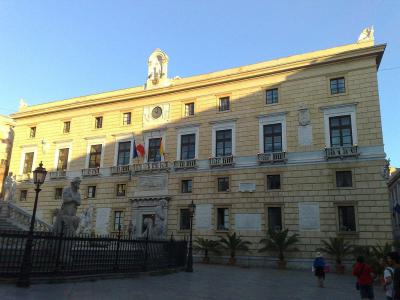
The Palace of the Eagles is also known as the Praetorian Palace. It houses the mayor's offices and the municipality offices. The palace was built between 1463 and 1478. In 1553, the facade was renovated, and the palace was expanded. Additional renovations took place in the 1600s and 1800s. As a result, the palace now has a Renaissance-Revival-Neoclassical style.
Above the main entrance door, visitors will find a wonderful marble relief depicting an eagle. On the main facade's cornice, visitors will notice the statue of Saint Rosalia.
Carlo d'Aprile crafted this impressive statue in 1661. The clock under the statue came from Paris in 1864 and is flanked by lions. The facade also features four angels decorated with four eagles.
The palace's interior houses several important artworks. Richly decorated portals feature Latin quotes. Several statues are also on display, including the small Genius of Palermo statue, which dates to the 15th century.
The ornate Baroque portal on the ground floor was built in 1691. Several of Napoleon's weapons are on display. In addition, the entire palace is filled with elaborate frescoes, reliefs, and intricately painted ceilings.
Above the main entrance door, visitors will find a wonderful marble relief depicting an eagle. On the main facade's cornice, visitors will notice the statue of Saint Rosalia.
Carlo d'Aprile crafted this impressive statue in 1661. The clock under the statue came from Paris in 1864 and is flanked by lions. The facade also features four angels decorated with four eagles.
The palace's interior houses several important artworks. Richly decorated portals feature Latin quotes. Several statues are also on display, including the small Genius of Palermo statue, which dates to the 15th century.
The ornate Baroque portal on the ground floor was built in 1691. Several of Napoleon's weapons are on display. In addition, the entire palace is filled with elaborate frescoes, reliefs, and intricately painted ceilings.
10) Fontanna della Vergogna (Fountain of Shame) (must see)
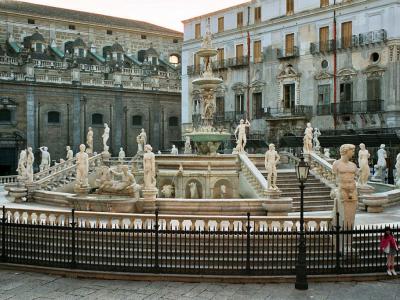
The monumental fountain, crowded with nude figures, gods, animals, and mythological creatures, was originally designed as a garden fountain in Florence. It was commissioned around 1554 by Luigi de Toledo, a Florentine nobleman. When Luigi later ran into serious financial trouble, he was forced to sell the fountain.
The work was designed by the Florentine sculptor Francesco Camilliani and originally consisted of dozens of statues arranged around concentric basins, connected by an elaborate hydraulic system. Because of its size and complexity, the fountain had to be dismantled, shipped by sea, and reassembled. Despite the challenges, the Senate of Palermo purchased the fountain in 1573, convinced it would lend prestige to the city.
An outer stone ring encloses a water-filled basin, separated from the central area by a shallow moat. Stone steps bridge the water, allowing visitors to enter the inner circle. Here, classical deities preside over the scene, while animals and fantastical figures populate the lower levels, many of them designed as water spouts, with open mouths spraying jets of water.
In Palermo, however, the fountain’s reception was mixed. During the 18th and 19th centuries, its abundance of nude figures clashed with local sensibilities. Popular tradition claims that nearby nuns damaged some statues by breaking off anatomically explicit details. A more convincing explanation links the nickname to the Praetorian Palace itself, which by that time had become a symbol of municipal corruption and misrule. The naked statues were seen as a satirical mirror of shameless civic life.
In the end, both interpretations stuck. The square became known as Pretoria Square, while the fountain earned its enduring nickname: the Fountain of Shame.
The work was designed by the Florentine sculptor Francesco Camilliani and originally consisted of dozens of statues arranged around concentric basins, connected by an elaborate hydraulic system. Because of its size and complexity, the fountain had to be dismantled, shipped by sea, and reassembled. Despite the challenges, the Senate of Palermo purchased the fountain in 1573, convinced it would lend prestige to the city.
An outer stone ring encloses a water-filled basin, separated from the central area by a shallow moat. Stone steps bridge the water, allowing visitors to enter the inner circle. Here, classical deities preside over the scene, while animals and fantastical figures populate the lower levels, many of them designed as water spouts, with open mouths spraying jets of water.
In Palermo, however, the fountain’s reception was mixed. During the 18th and 19th centuries, its abundance of nude figures clashed with local sensibilities. Popular tradition claims that nearby nuns damaged some statues by breaking off anatomically explicit details. A more convincing explanation links the nickname to the Praetorian Palace itself, which by that time had become a symbol of municipal corruption and misrule. The naked statues were seen as a satirical mirror of shameless civic life.
In the end, both interpretations stuck. The square became known as Pretoria Square, while the fountain earned its enduring nickname: the Fountain of Shame.
11) Piazza Pretoria (Pretoria Square)
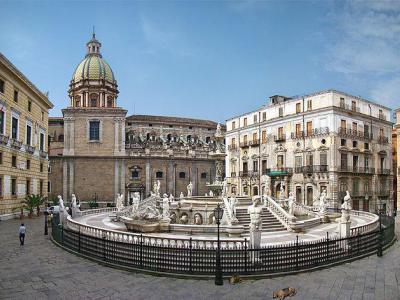
In 1573, the city senate purchased a monumental fountain originally designed for a private garden in Florence. Once reassembled, it quickly became clear that the sculpture was too large for the square. Several surrounding buildings were demolished to make room for it, leaving the fountain densely packed into the space it still occupies today.
Three sides of the square are enclosed by buildings. Dominating the south side is the Praetorian Palace, Palermo’s town hall, from which the square takes its name. The building is also known as the Palace of the Eagles, after the eagle symbols associated with the city. Originally constructed between 1463 and 1478, the palace has undergone later alterations, combining late Gothic origins with Renaissance and Neoclassical elements. Today, it houses the mayor’s offices and ceremonial rooms.
The east side of the square is bordered by the Church of Saint Catherine, which stands between Pretoria Square and Bellini Square. The church’s exterior reflects a mix of Renaissance structure and later Sicilian Baroque additions, while its interior is richly Baroque. An aristocratic residence also presses tightly against the square: Bonocore Palace on the north side.
The west side of the square opens toward Maqueda Street, where stands the Church of San Giuseppe dei Teatini, a Theatine foundation whose restrained exterior contrasts with the richly layered churches opposite it.
Three sides of the square are enclosed by buildings. Dominating the south side is the Praetorian Palace, Palermo’s town hall, from which the square takes its name. The building is also known as the Palace of the Eagles, after the eagle symbols associated with the city. Originally constructed between 1463 and 1478, the palace has undergone later alterations, combining late Gothic origins with Renaissance and Neoclassical elements. Today, it houses the mayor’s offices and ceremonial rooms.
The east side of the square is bordered by the Church of Saint Catherine, which stands between Pretoria Square and Bellini Square. The church’s exterior reflects a mix of Renaissance structure and later Sicilian Baroque additions, while its interior is richly Baroque. An aristocratic residence also presses tightly against the square: Bonocore Palace on the north side.
The west side of the square opens toward Maqueda Street, where stands the Church of San Giuseppe dei Teatini, a Theatine foundation whose restrained exterior contrasts with the richly layered churches opposite it.
12) Quattro Canti (Four Corners Square) (must see)
Although it is commonly called Four Corners, the square’s formal name is Vigliena Square. It is named after the Spanish viceroy Juan Fernández Pacheco, Duke of Escalona, who governed Sicily at the time of its construction. Four Corners Square was laid out between 1608 and 1620 by order of the Spanish viceroys as part of Palermo’s urban renewal. The project was overseen by architects Giulio Lasso and Mariano Smiriglio, who conceived the ensemble as a carefully staged urban crossroads.
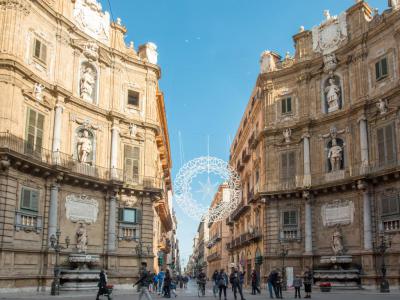
While usually described as a square, it was historically known as the “Octagon of the Sun”, since its plan is in fact eight-sided. This octagonal form is created by four streets intersecting at right angles and four concave Baroque facades closing off the corners. All four facades are uniform in height, deliberately symmetrical, and treated as a single architectural composition. Each one incorporates a fountain at ground level, above which a tiered sculptural program unfolds.
At the lowest level, the fountains are animated by allegorical figures of the Four Seasons, grounding the square in the rhythms of nature. Above them stand statues of the four Spanish kings of Sicily: Charles V, Philip II, Philip III, and Philip IV. The highest tier is reserved for Palermo’s four female patron saints: Saint Christina, Saint Ninfa, Saint Olivia, and Saint Agatha.
This sculptural hierarchy is also carefully oriented. On the south-facing facade, Spring, Charles V, and Saint Christina are aligned one above the other. Turning west, the facade presents Summer, Philip II, and Saint Ninfa. The north-facing facade carries Autumn, Philip III, and Saint Olivia, while the east-facing facade completes the cycle with Winter, Philip IV, and Saint Agatha.
While usually described as a square, it was historically known as the “Octagon of the Sun”, since its plan is in fact eight-sided. This octagonal form is created by four streets intersecting at right angles and four concave Baroque facades closing off the corners. All four facades are uniform in height, deliberately symmetrical, and treated as a single architectural composition. Each one incorporates a fountain at ground level, above which a tiered sculptural program unfolds.
At the lowest level, the fountains are animated by allegorical figures of the Four Seasons, grounding the square in the rhythms of nature. Above them stand statues of the four Spanish kings of Sicily: Charles V, Philip II, Philip III, and Philip IV. The highest tier is reserved for Palermo’s four female patron saints: Saint Christina, Saint Ninfa, Saint Olivia, and Saint Agatha.
This sculptural hierarchy is also carefully oriented. On the south-facing facade, Spring, Charles V, and Saint Christina are aligned one above the other. Turning west, the facade presents Summer, Philip II, and Saint Ninfa. The north-facing facade carries Autumn, Philip III, and Saint Olivia, while the east-facing facade completes the cycle with Winter, Philip IV, and Saint Agatha.
13) Chiesa del Gesù (Church of Jesus) (must see)
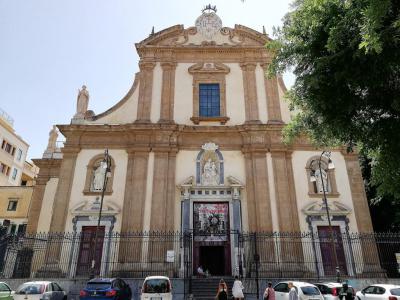
The Church of Jesus, often called Professed House, is one of the most spectacular examples of Sicilian Baroque anywhere in Italy. While its exterior is relatively restrained, the interior is overwhelmingly rich and theatrical.
Approaching the church, the facade presents three portals at ground level. Above them, niches contain statues of Saint Ignatius of Loyola, the Madonna and Child, and Saint Francis Xavier. Inside, the visual impact is immediate. The rebuilt interior is defined by its extensive marble inlay decoration, which covers nearly every structural surface. Walls, pillars, arches, and balustrades are faced with panels of white, red, yellow, and green marble arranged in geometric patterns, floral motifs, and sculptural compositions.
Moving along the nave, the pillars themselves become part of the decorative program. Their marble surfaces are carved with dense reliefs and allegorical figures, interwoven with scrollwork and symbolic motifs typical of Jesuit Baroque decoration. Behind the high altar, in the apse, are some of the most important surviving sculptural works. Here are the large marble reliefs of the Adoration of the Shepherds and the Adoration of the Magi, conceived within the artistic circle of Giacomo Serpotta and executed by Gioacchino Vitagliano.
Much of what visitors see today is the result of careful reconstruction. In 1943, an Allied bombing raid caused the collapse of the dome and destroyed large sections of the church, along with many frescoes and decorative elements. The survival of the marble decoration and apse reliefs is therefore especially significant, preserving key elements of the original program within a reconstructed architectural shell.
As the space opens at the crossing, attention shifts upward toward the dome, which today reflects a postwar reconstruction of the original decorative scheme. The original Baroque dome frescoes were destroyed. However, original frescoes by Filippo Tancredi survive in the upper vaults of the nave, depicting Marian triumphal themes with angels and allegorical figures.
Approaching the church, the facade presents three portals at ground level. Above them, niches contain statues of Saint Ignatius of Loyola, the Madonna and Child, and Saint Francis Xavier. Inside, the visual impact is immediate. The rebuilt interior is defined by its extensive marble inlay decoration, which covers nearly every structural surface. Walls, pillars, arches, and balustrades are faced with panels of white, red, yellow, and green marble arranged in geometric patterns, floral motifs, and sculptural compositions.
Moving along the nave, the pillars themselves become part of the decorative program. Their marble surfaces are carved with dense reliefs and allegorical figures, interwoven with scrollwork and symbolic motifs typical of Jesuit Baroque decoration. Behind the high altar, in the apse, are some of the most important surviving sculptural works. Here are the large marble reliefs of the Adoration of the Shepherds and the Adoration of the Magi, conceived within the artistic circle of Giacomo Serpotta and executed by Gioacchino Vitagliano.
Much of what visitors see today is the result of careful reconstruction. In 1943, an Allied bombing raid caused the collapse of the dome and destroyed large sections of the church, along with many frescoes and decorative elements. The survival of the marble decoration and apse reliefs is therefore especially significant, preserving key elements of the original program within a reconstructed architectural shell.
As the space opens at the crossing, attention shifts upward toward the dome, which today reflects a postwar reconstruction of the original decorative scheme. The original Baroque dome frescoes were destroyed. However, original frescoes by Filippo Tancredi survive in the upper vaults of the nave, depicting Marian triumphal themes with angels and allegorical figures.
14) Mercato di Ballarò (Ballarò Market)
Gaspare Palermo, a 19th-century writer, refers to Ballarò Square as “a large square in the Albergheria district, oblong in shape and not very wide, … paved with large flints.” Ballarò is widely regarded as the oldest and largest open-air market in Palermo. Rather than a single square, the market stretches through a network of streets, roughly from the area around Casa Professa Square toward Tukory Avenue.
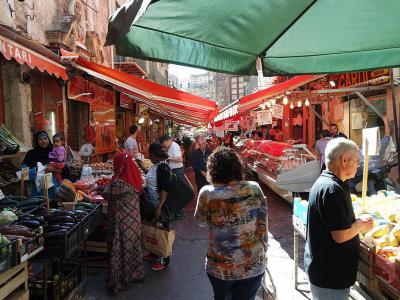
Ballarò still feels closer to an Arab souk than to a European market. The dense mix of colors, smells, and sounds creates a living scene that recalls the city’s medieval past. Here, visitors find everything from fruit and vegetables to fish, meat, spices, and everyday household goods.
The origins of the market date back to the period of Arab rule, when Palermo, then known as Balarm, was one of the most important cities in the Mediterranean. The name Ballarò is considered to be linked to Bahlara, a village from which produce may have been brought into the city. For centuries, Ballarò developed around the Church of the Carmelite Fathers. Above all, it has long functioned as a traditional food market.
Ballarò still feels closer to an Arab souk than to a European market. The dense mix of colors, smells, and sounds creates a living scene that recalls the city’s medieval past. Here, visitors find everything from fruit and vegetables to fish, meat, spices, and everyday household goods.
The origins of the market date back to the period of Arab rule, when Palermo, then known as Balarm, was one of the most important cities in the Mediterranean. The name Ballarò is considered to be linked to Bahlara, a village from which produce may have been brought into the city. For centuries, Ballarò developed around the Church of the Carmelite Fathers. Above all, it has long functioned as a traditional food market.
15) Palazzo Conte Federico (Count Federico Palace) (must see)
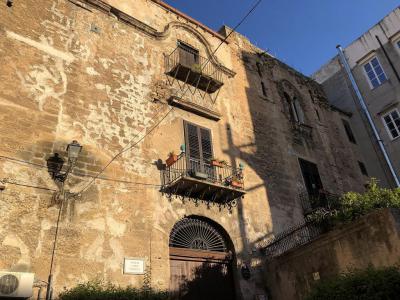
Curious to see how Palermo’s aristocracy has lived for centuries? Count Federico Palace offers a rare glimpse inside a privately owned noble residence that is still inhabited today. It is built directly over stretches of the ancient Punic and Roman city walls, and its most distinctive feature is the 12th-century Arab-Norman Busuemi Tower, which incorporates part of an earlier Islamic gateway. This layered structure makes the palace one of the clearest examples of Palermo’s continuous urban history.
The property passed into the hands of the Federico family in the 17th century, when they acquired it from the Olivetan monks of Santa Maria dello Spasimo, who had previously used parts of the complex as a hospice. Over time, the palace evolved into a noble residence organized around an internal courtyard. A marble staircase leads to the piano nobile, the palace’s main reception floor, opening onto a sequence of halls decorated in different historical styles.
Inside, the rooms preserve original furnishings and decorative elements from several periods. These include 15th-century wooden coffered ceilings, 18th-century frescoes attributed to Vito d’Anna, and collections of ceramics, weapons, and family heirlooms. One of the most memorable spaces is the ballroom, traditionally highlighted during visits. The palace also contains a historic piano associated with Richard Wagner, who stayed in Palermo in the early 1880s while working on Parsifal.
Visits are by guided tour only and are often led by a member of the Federico family, offering a personal perspective on the building’s history. The experience focuses on architecture, family heritage, and Palermo’s past.
The property passed into the hands of the Federico family in the 17th century, when they acquired it from the Olivetan monks of Santa Maria dello Spasimo, who had previously used parts of the complex as a hospice. Over time, the palace evolved into a noble residence organized around an internal courtyard. A marble staircase leads to the piano nobile, the palace’s main reception floor, opening onto a sequence of halls decorated in different historical styles.
Inside, the rooms preserve original furnishings and decorative elements from several periods. These include 15th-century wooden coffered ceilings, 18th-century frescoes attributed to Vito d’Anna, and collections of ceramics, weapons, and family heirlooms. One of the most memorable spaces is the ballroom, traditionally highlighted during visits. The palace also contains a historic piano associated with Richard Wagner, who stayed in Palermo in the early 1880s while working on Parsifal.
Visits are by guided tour only and are often led by a member of the Federico family, offering a personal perspective on the building’s history. The experience focuses on architecture, family heritage, and Palermo’s past.
16) San Giovanni degli Eremiti (Saint John of the Hermits)
Saint John of the Hermits (San Giovanni degli Eremiti) is an ancient church and former monastic site with a rich historical backdrop situated in the Albergaria quarter of Palermo. Located just two blocks south of the Palace of the Normans (Palazzo dei Normanni), near the San Giorgio in Kemonia Church, this site is steeped in history dating back to before the 6th century.
The church, initially part of a Benedictine monastery, boasts a heritage connected to notable historical figures such as Pope Gregory the Great and Pope Agatho. The latter is believed to have taken orders at this monastery. However, the site suffered under Saracen rule, possibly being converted into a mosque, until the Norman conquest around 1136 when Roger II of Sicily restored it, dedicating it to Saint John the Evangelist.
The name "Eremiti" (Hermits) may refer to the cloistered life of the Benedictine monks, or it might be linked to the nearby church of San Mercurio, known as Ermes in Greek. The exact origin of the name remains somewhat ambiguous.
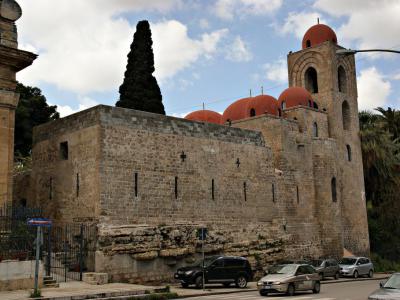
Architecturally, the church is renowned for its striking red domes-a vibrant testament to the Arab influences that persisted in Sicily during the 12th-century Arab-Norman culture. These domes, however, were not originally red. They were painted in the 19th century by Giuseppe Patricolo, who based this decision on remnants of red plaster he found, aiming to restore the church's medieval appearance.
The interior of the church is largely unadorned, a stark contrast to the vivid exterior and the beautifully preserved medieval cloister. This cloister, the heart of the former monastery, features luxuriant gardens, small double columns with vegetal motifs on their capitals, and supports ogival arches, reflecting a blend of architectural influences. It also houses an Arab cistern, further highlighting the cultural intermingling characteristic of Sicily's history.
Saint John of the Hermits stands today not only as a religious structure but as a symbol of Palermo's layered history, from its Byzantine past through its Islamic period to its Norman reconstruction, encapsulating the diverse cultural influences that have shaped Sicily.
The church, initially part of a Benedictine monastery, boasts a heritage connected to notable historical figures such as Pope Gregory the Great and Pope Agatho. The latter is believed to have taken orders at this monastery. However, the site suffered under Saracen rule, possibly being converted into a mosque, until the Norman conquest around 1136 when Roger II of Sicily restored it, dedicating it to Saint John the Evangelist.
The name "Eremiti" (Hermits) may refer to the cloistered life of the Benedictine monks, or it might be linked to the nearby church of San Mercurio, known as Ermes in Greek. The exact origin of the name remains somewhat ambiguous.
Architecturally, the church is renowned for its striking red domes-a vibrant testament to the Arab influences that persisted in Sicily during the 12th-century Arab-Norman culture. These domes, however, were not originally red. They were painted in the 19th century by Giuseppe Patricolo, who based this decision on remnants of red plaster he found, aiming to restore the church's medieval appearance.
The interior of the church is largely unadorned, a stark contrast to the vivid exterior and the beautifully preserved medieval cloister. This cloister, the heart of the former monastery, features luxuriant gardens, small double columns with vegetal motifs on their capitals, and supports ogival arches, reflecting a blend of architectural influences. It also houses an Arab cistern, further highlighting the cultural intermingling characteristic of Sicily's history.
Saint John of the Hermits stands today not only as a religious structure but as a symbol of Palermo's layered history, from its Byzantine past through its Islamic period to its Norman reconstruction, encapsulating the diverse cultural influences that have shaped Sicily.
