

Brussels Food Tour (Self Guided), Brussels
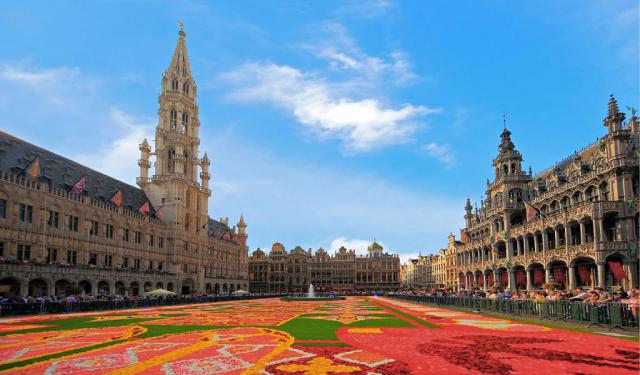
In the Middle Ages, Brussels grew as a commercial centre within the Duchy of Brabant. Markets formed around what is now the Grand Place, where traders sold bread, meat, dairy, and beer. Food production was regulated by powerful guilds, which controlled quality and pricing. Bakers, brewers, and butchers each had defined roles, establishing early standards that still influence Belgian food culture today.
Beer quickly became central to daily life. Brewing was safer than drinking water and provided a reliable source of nutrition. Monastic communities refined brewing techniques, laying the groundwork for Belgium’s enduring reputation for diverse and complex beers. Over time, Brussels developed its own distinctive styles, including spontaneous fermentation beers such as lambics.
By the 18th and 19th centuries, Brussels expanded as an urban capital. French culinary influence became more pronounced, introducing refined cooking techniques and restaurant culture. At the same time, local dishes remained grounded in hearty, accessible ingredients.
The 19th century also saw the rise of foods now closely associated with Belgium. Waffles became widely popular, with Brussels-style waffles known for their light texture and rectangular shape. Fries, often considered a national staple, gained prominence through street vendors who served them in paper cones, accompanied by a variety of sauces. Chocolate production advanced significantly during this period, with Belgian chocolatiers developing techniques that elevated it into a premium product.
In the 20th century, Brussels’ role as an international and political centre—particularly with the establishment of European institutions—brought further diversity. New communities introduced global flavours, while traditional brasseries continued to serve classic dishes such as mussels with fries and Flemish beef stew. Food markets, cafés, and restaurants adapted without losing their local character.
Walking through central Brussels, especially around the Grand Place and nearby streets, visitors encounter a mix of traditional brasseries, chocolate shops, waffle stands, and fry vendors. Window displays are filled with pralines, while the scent of freshly baked waffles and frying potatoes drifts through the air. Cafés spill onto sidewalks, serving beer in distinctive glasses, as locals and visitors pause to eat, drink, and watch the city move around them.
In Brussels, food is felt. Take your time and delve into the culinary world of Brussels!
Beer quickly became central to daily life. Brewing was safer than drinking water and provided a reliable source of nutrition. Monastic communities refined brewing techniques, laying the groundwork for Belgium’s enduring reputation for diverse and complex beers. Over time, Brussels developed its own distinctive styles, including spontaneous fermentation beers such as lambics.
By the 18th and 19th centuries, Brussels expanded as an urban capital. French culinary influence became more pronounced, introducing refined cooking techniques and restaurant culture. At the same time, local dishes remained grounded in hearty, accessible ingredients.
The 19th century also saw the rise of foods now closely associated with Belgium. Waffles became widely popular, with Brussels-style waffles known for their light texture and rectangular shape. Fries, often considered a national staple, gained prominence through street vendors who served them in paper cones, accompanied by a variety of sauces. Chocolate production advanced significantly during this period, with Belgian chocolatiers developing techniques that elevated it into a premium product.
In the 20th century, Brussels’ role as an international and political centre—particularly with the establishment of European institutions—brought further diversity. New communities introduced global flavours, while traditional brasseries continued to serve classic dishes such as mussels with fries and Flemish beef stew. Food markets, cafés, and restaurants adapted without losing their local character.
Walking through central Brussels, especially around the Grand Place and nearby streets, visitors encounter a mix of traditional brasseries, chocolate shops, waffle stands, and fry vendors. Window displays are filled with pralines, while the scent of freshly baked waffles and frying potatoes drifts through the air. Cafés spill onto sidewalks, serving beer in distinctive glasses, as locals and visitors pause to eat, drink, and watch the city move around them.
In Brussels, food is felt. Take your time and delve into the culinary world of Brussels!
How it works: Download the app "GPSmyCity: Walks in 1K+ Cities" from Apple App Store or Google Play Store to your mobile phone or tablet. The app turns your mobile device into a personal tour guide and its built-in GPS navigation functions guide you from one tour stop to next. The app works offline, so no data plan is needed when traveling abroad.
Brussels Food Tour Map
Guide Name: Brussels Food Tour
Guide Location: Belgium » Brussels (See other walking tours in Brussels)
Guide Type: Self-guided Walking Tour (Sightseeing)
# of Attractions: 9
Tour Duration: 1 Hour(s)
Travel Distance: 1.4 Km or 0.9 Miles
Author: Xena
Sight(s) Featured in This Guide:
Guide Location: Belgium » Brussels (See other walking tours in Brussels)
Guide Type: Self-guided Walking Tour (Sightseeing)
# of Attractions: 9
Tour Duration: 1 Hour(s)
Travel Distance: 1.4 Km or 0.9 Miles
Author: Xena
Sight(s) Featured in This Guide:
- Falstaff
- Maison Dandoy (dessert shop)
- A la Becasse
- A l'Imaige Nostre-Dame
- Chez Leon
- Aux Armes de Bruxelles
- Le Cercuel
- Dolle Mol
- Secret Rooftop by Warwick
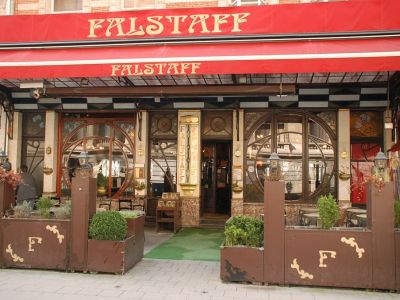
1) Falstaff
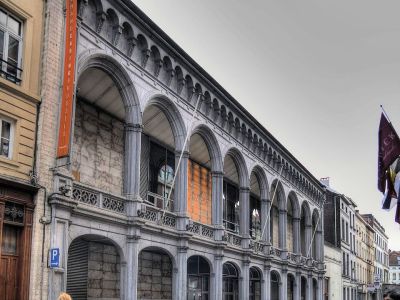
Le Falstaff is one of the historic brasseries of central Brussels. Established in 1903 at the base of a large 19th-century building, the café quickly became part of the city’s lively social scene. Its name evokes the jovial Shakespearean character Sir John Falstaff, a fitting reference for a place devoted to good food, good drink, and convivial company. Today the brasserie continues this tradition, offering classic Belgian cuisine alongside vegetarian options, with a focus on quality ingredients and warm hospitality.
The building itself is a small architectural curiosity. The decoration was created by carpenter Émile Houbion, a collaborator of the renowned Belgian architect Victor Horta. The façade reflects a playful blend of styles: the two rounded windows and entrance display delicate Art Nouveau ornamentation, while the glass canopy above the entrance is inspired by American Art Deco design. Art Nouveau stained-glass panels highlight the upper corners of the windows, and the vertical sign is distinctly Art Deco, creating a striking visual contrast that reflects the artistic transitions of the early 20th century.
Inside, the café preserves the layered character of its origins. The décor mixes Art Nouveau curves with elements of 19th-century Eclecticism, producing a richly detailed interior that feels both elegant and welcoming. Such interiors were once common in the great European cafés where writers, artists, and intellectuals gathered, but few have survived intact. As a result, Le Falstaff stands today as one of the rare remaining examples of Brussels’ early-20th-century café culture.
Recognizing its historical and architectural value, the establishment was officially listed as a protected monument in October 2000. Visitors who step through the door will discover not only an atmospheric interior but also a classic brasserie experience—whether enjoying a cup of coffee, sampling traditional Belgian dishes, or relaxing with a freshly poured Belgian beer.
The building itself is a small architectural curiosity. The decoration was created by carpenter Émile Houbion, a collaborator of the renowned Belgian architect Victor Horta. The façade reflects a playful blend of styles: the two rounded windows and entrance display delicate Art Nouveau ornamentation, while the glass canopy above the entrance is inspired by American Art Deco design. Art Nouveau stained-glass panels highlight the upper corners of the windows, and the vertical sign is distinctly Art Deco, creating a striking visual contrast that reflects the artistic transitions of the early 20th century.
Inside, the café preserves the layered character of its origins. The décor mixes Art Nouveau curves with elements of 19th-century Eclecticism, producing a richly detailed interior that feels both elegant and welcoming. Such interiors were once common in the great European cafés where writers, artists, and intellectuals gathered, but few have survived intact. As a result, Le Falstaff stands today as one of the rare remaining examples of Brussels’ early-20th-century café culture.
Recognizing its historical and architectural value, the establishment was officially listed as a protected monument in October 2000. Visitors who step through the door will discover not only an atmospheric interior but also a classic brasserie experience—whether enjoying a cup of coffee, sampling traditional Belgian dishes, or relaxing with a freshly poured Belgian beer.
2) Maison Dandoy (dessert shop)
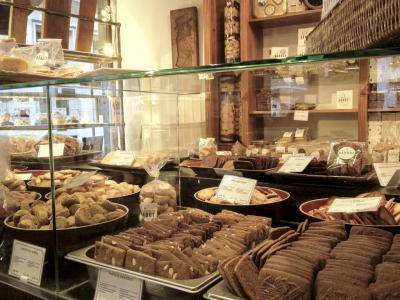
Resisting the allure of Belgian pastry shop windows is like trying not to smile at a puppy playing the piano – practically impossible! And let's be real, those scrumptious treats usually taste even better than they look. But, for those who want to march to the beat of their own biscuit drum, consider snagging some of the equally famous biscuits from a specialist like Dandoy. This historic bakery, established way back in 1829, churns out mouthwatering handmade 'speculoos' (Belgian spiced biscuits) and waffles that are dressed to impress with chocolate sauce, fruit, and whipped cream. With five branches sprinkled around the city, you can even cozy up in this one, which happens to have its very own tearoom – right off the Grand Place, no less!
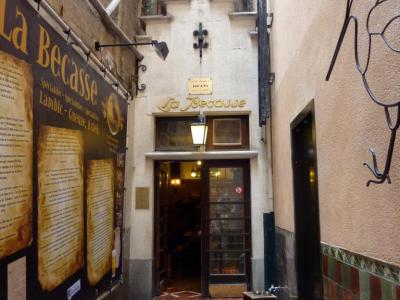
3) A la Becasse
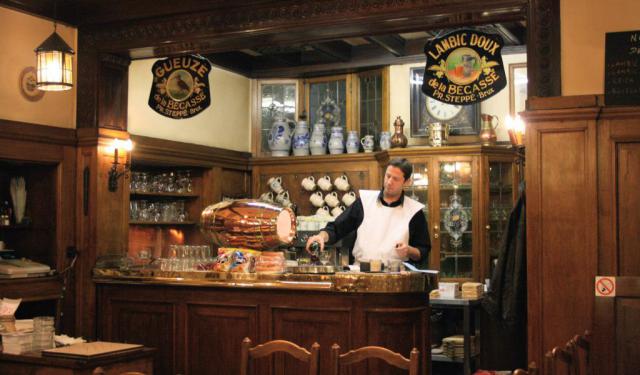
Tucked at the rear of a small alleyway just two blocks away from the Grand Place, this pub – touted to be one of the oldest in the city – is a proper little hidden gem. Once inside, you'll find a cozy and original 19th-century beer room with a quiet understated charm and mostly bench-style seating, where everyone sits together – though, weather permitting, you may also enjoy a small external seating area. The decoration features lots of dark wood paneling, iron chandeliers, framed photo portraits of former Belgian kings and queens and, of course, lots of charming old images of the woodcock (bécasse) which gives the pub its name.
The choice of in-house beers is pretty good – they serve the Lambic range and you can try a sampler platter of four (in either smaller or bigger sizes) or simply have one poured in a cute ceramic pitcher. Food mostly consists of traditional snacks to compliment the beers you drink, and prices are pretty good for what is a touristified area.
If you are looking for an authentic beer hall with loads of character, then head here!
The choice of in-house beers is pretty good – they serve the Lambic range and you can try a sampler platter of four (in either smaller or bigger sizes) or simply have one poured in a cute ceramic pitcher. Food mostly consists of traditional snacks to compliment the beers you drink, and prices are pretty good for what is a touristified area.
If you are looking for an authentic beer hall with loads of character, then head here!
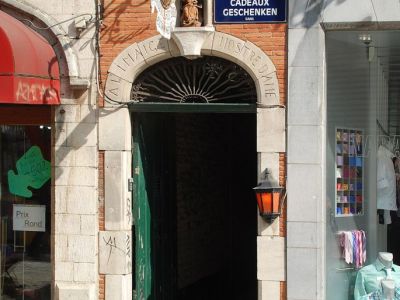
4) A l'Imaige Nostre-Dame
À l’Imaige Nostre-Dame is one of Brussels’ most historic estaminets. The tavern officially opened in 1884, though it occupies a building dating back to 1682—one of the rare structures in the area that survived the devastating bombardment of Brussels in 1695. Hidden behind a small arched doorway at the end of the alley, the establishment preserves the atmosphere of old Brussels, with rustic wooden furnishings and a traditional bar serving Belgian beers and simple regional dishes.
The building’s history stretches far beyond its role as a tavern. According to long-standing local lore, the cellars once served as detention cells for prisoners awaiting execution on the nearby Grand Place. Over time, this somber chapter gave way to a more convivial purpose as the premises evolved into a gathering place for drinkers, artists, and writers. In the early 20th century, it became especially popular with literary and artistic circles, including members of the Brussels cultural scene who met there for conversation and inspiration.
Today, À l’Imaige Nostre-Dame remains a distinctive reminder of the city’s café culture. Its setting—reached through an alley marked by a niche containing a statue of the Virgin and Child—recalls a time when pictorial signs helped guide residents through Brussels’ unnumbered streets. Visitors come not only for the beers and traditional snacks, but also for the sense of stepping into a place where centuries of urban life have left their traces, turning a once-hidden corner of the city into a living piece of Brussels’ heritage.
The building’s history stretches far beyond its role as a tavern. According to long-standing local lore, the cellars once served as detention cells for prisoners awaiting execution on the nearby Grand Place. Over time, this somber chapter gave way to a more convivial purpose as the premises evolved into a gathering place for drinkers, artists, and writers. In the early 20th century, it became especially popular with literary and artistic circles, including members of the Brussels cultural scene who met there for conversation and inspiration.
Today, À l’Imaige Nostre-Dame remains a distinctive reminder of the city’s café culture. Its setting—reached through an alley marked by a niche containing a statue of the Virgin and Child—recalls a time when pictorial signs helped guide residents through Brussels’ unnumbered streets. Visitors come not only for the beers and traditional snacks, but also for the sense of stepping into a place where centuries of urban life have left their traces, turning a once-hidden corner of the city into a living piece of Brussels’ heritage.
5) Chez Leon
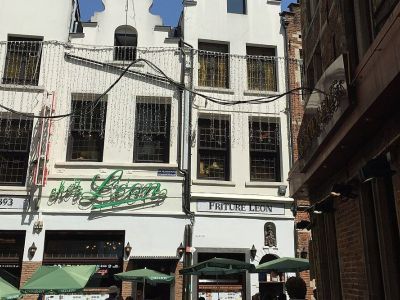
Chez Léon is one of Brussels’ most famous restaurants that has become a culinary landmark for both locals and visitors seeking an authentic taste of Brussels. The story of Chez Léon dates back to 1867, when Léon Vanlancker opened a small five-table restaurant near the Grand-Place called À la Ville d’Anvers. A few decades later, in 1893, he moved a short distance away to Rue des Bouchers and established what would become the legendary “Friture Léon.” From these modest beginnings, the restaurant gradually expanded, eventually spreading across several adjoining buildings and growing into one of the largest restaurant complexes in Brussels.
Chez Léon built its reputation on classic Belgian dishes, especially moules-frites—fresh mussels served with crisp fries—which became its signature specialty. Over time, the restaurant’s menu developed into a showcase of Belgian culinary traditions, featuring seafood, hearty meat dishes, and regional favorites prepared in a convivial brasserie setting. The aim has always been to offer visitors a genuine Belgian dining experience in the heart of the capital.
Today, Chez Léon continues to welcome diners with the same warm, bustling atmosphere that made it famous more than a century ago. Combining historic surroundings with classic Belgian flavors, it remains one of the city’s most recognizable places to experience the enduring tradition of Brussels brasserie cuisine.
Chez Léon built its reputation on classic Belgian dishes, especially moules-frites—fresh mussels served with crisp fries—which became its signature specialty. Over time, the restaurant’s menu developed into a showcase of Belgian culinary traditions, featuring seafood, hearty meat dishes, and regional favorites prepared in a convivial brasserie setting. The aim has always been to offer visitors a genuine Belgian dining experience in the heart of the capital.
Today, Chez Léon continues to welcome diners with the same warm, bustling atmosphere that made it famous more than a century ago. Combining historic surroundings with classic Belgian flavors, it remains one of the city’s most recognizable places to experience the enduring tradition of Brussels brasserie cuisine.
6) Aux Armes de Bruxelles
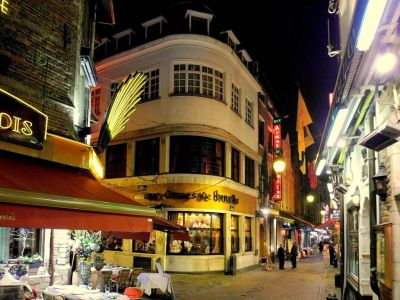
Aux Armes de Bruxelles offers a glimpse into the city’s culinary past. Opened in 1921, the restaurant has preserved the atmosphere of a classic Belgian brasserie, where dining is as much about tradition and setting as it is about the food itself.
The interior reflects this old-world charm. Wood-paneled walls, stained-glass windows decorated with coats of arms, and comfortable, formal dining rooms evoke the elegance of early twentieth-century Brussels. Waiters in formal attire move briskly between tables, maintaining a style of attentive service that has largely disappeared from modern restaurants. The setting feels deliberately traditional, offering visitors a sense of stepping back into a quieter era of the city’s dining culture.
The menu celebrates many of Belgium’s best-known dishes. Guests can choose from classics such as eels in sorrel sauce, veal kidneys in mustard, beef carbonnade slow-cooked in beer, and the creamy chicken stew known as waterzooi. Seafood also plays a prominent role, with oysters, lobster with mayonnaise, and sole meunière among the specialties.
According to tradition, the latter dish was particularly favored by Leopold III, who reportedly visited the restaurant regularly. Meals typically end on a sweet note with Belgian waffles, rich crêpes flambéed with liqueur, or other classic desserts, completing an experience that reflects a century of Brussels’ gastronomic heritage.
The interior reflects this old-world charm. Wood-paneled walls, stained-glass windows decorated with coats of arms, and comfortable, formal dining rooms evoke the elegance of early twentieth-century Brussels. Waiters in formal attire move briskly between tables, maintaining a style of attentive service that has largely disappeared from modern restaurants. The setting feels deliberately traditional, offering visitors a sense of stepping back into a quieter era of the city’s dining culture.
The menu celebrates many of Belgium’s best-known dishes. Guests can choose from classics such as eels in sorrel sauce, veal kidneys in mustard, beef carbonnade slow-cooked in beer, and the creamy chicken stew known as waterzooi. Seafood also plays a prominent role, with oysters, lobster with mayonnaise, and sole meunière among the specialties.
According to tradition, the latter dish was particularly favored by Leopold III, who reportedly visited the restaurant regularly. Meals typically end on a sweet note with Belgian waffles, rich crêpes flambéed with liqueur, or other classic desserts, completing an experience that reflects a century of Brussels’ gastronomic heritage.
7) Le Cercuel
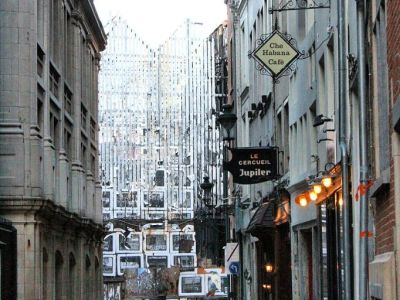
Le Cercueil is one of the most unusual bars in the historic centre of Brussels. Opened in 1974, the establishment quickly gained attention for its distinctive horror-inspired concept. The name itself—meaning “The Coffin”—reflects the bar’s theatrical atmosphere, where dark décor and macabre humor combine to create an experience unlike any typical Brussels café.
The interior is deliberately gothic and eccentric. Tables are designed as coffins, skeletons decorate the walls, and drinks are often served in skull-shaped cups, reinforcing the playful yet eerie theme. The concept reportedly took shape after the release of the horror film The Exorcist, which inspired the original owner to create a venue where Halloween seems to last all year. Dim lighting and deep red tones enhance the mysterious mood, making the bar feel both theatrical and surprisingly cosy.
The menu features Belgian beers alongside cocktails with mischievous names that match the bar’s dark aesthetic. Visitors often choose the signature drinks served in ceramic skull mugs or cocktails presented with dramatic flair.
The interior is deliberately gothic and eccentric. Tables are designed as coffins, skeletons decorate the walls, and drinks are often served in skull-shaped cups, reinforcing the playful yet eerie theme. The concept reportedly took shape after the release of the horror film The Exorcist, which inspired the original owner to create a venue where Halloween seems to last all year. Dim lighting and deep red tones enhance the mysterious mood, making the bar feel both theatrical and surprisingly cosy.
The menu features Belgian beers alongside cocktails with mischievous names that match the bar’s dark aesthetic. Visitors often choose the signature drinks served in ceramic skull mugs or cocktails presented with dramatic flair.
8) Dolle Mol
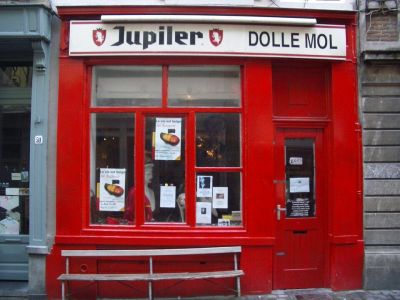
Dolle Mol is a historic café closely linked to Brussels’ libertarian and alternative cultural scene. Originally opened in a wine cellar on Rue du Marché aux Fromages and relocated in 1971 to Rue des Éperonniers, the café quickly attracted members of the surrealist circle, including Marcel Mariën. In the 1970s it became a gathering place for left-wing youth after the May 1968 protests, with an upstairs underground bookshop and multilingual alternative press library reinforcing its countercultural reputation.
Over the years, the venue became popular with beatniks and the capital’s intellectual circles. Musicians and writers such as Bob Dylan, Tom Waits, and Léo Ferré are said to have visited, along with poet William Cliff and artist Walter De Buck. Even Andreas Baader reportedly stayed here while on the run across Europe. The Flemish Belgian section of Amnesty International was also founded in the café.
Today, Dolle Mol still reflects its unconventional past, with a quirky interior filled with posters, artworks, and memorabilia that create a bohemian atmosphere. The bar specializes in Belgian beers from smaller and lesser-known breweries, making it a rewarding stop for beer enthusiasts seeking something beyond the usual selections. Guests can sit at tables inside the main room, outside along the street, or upstairs on the first floor.
Friday nights often bring an added layer of energy, when improvisation and jam sessions take place. Musicians gather informally, and visitors are welcome to join in, creating a lively and spontaneous atmosphere that keeps the café’s long tradition of artistic exchange very much alive.
Over the years, the venue became popular with beatniks and the capital’s intellectual circles. Musicians and writers such as Bob Dylan, Tom Waits, and Léo Ferré are said to have visited, along with poet William Cliff and artist Walter De Buck. Even Andreas Baader reportedly stayed here while on the run across Europe. The Flemish Belgian section of Amnesty International was also founded in the café.
Today, Dolle Mol still reflects its unconventional past, with a quirky interior filled with posters, artworks, and memorabilia that create a bohemian atmosphere. The bar specializes in Belgian beers from smaller and lesser-known breweries, making it a rewarding stop for beer enthusiasts seeking something beyond the usual selections. Guests can sit at tables inside the main room, outside along the street, or upstairs on the first floor.
Friday nights often bring an added layer of energy, when improvisation and jam sessions take place. Musicians gather informally, and visitors are welcome to join in, creating a lively and spontaneous atmosphere that keeps the café’s long tradition of artistic exchange very much alive.
9) Secret Rooftop by Warwick
The Secret Rooftop by Warwick offers a refined yet relaxed escape above the city’s historic centre. Perched atop the four-star Warwick Brussels, this elegant terrace pairs sweeping views of the skyline—including the ornate Town Hall spire—with a setting that feels both intimate and unpretentious. The space blends rustic charm with comfort, featuring lounge sofas, standing tables, and foldable sun chairs that invite guests to linger, whether for a sunset drink or a quiet evening above the bustle.
The rooftop serves a diverse selection of drinks, from classic cocktails to locally inspired creations and Belgian gins. While it operates without reservations, adding to its spontaneous appeal, the venue can be privatized for events. The addition of an indoor area means it now functions year-round, transforming into a cosy winter garden when temperatures drop. That said, access depends on weather conditions and occasional private bookings, so checking ahead is advisable. Whether for a casual after-work drink or a more romantic evening, this “secret” spot lives up to its name as one of Brussels’ quietly impressive rooftop experiences.
Walking Tours in Brussels, Belgium

Create Your Own Walk in Brussels
Creating your own self-guided walk in Brussels is easy and fun. Choose the city attractions that you want to see and a walk route map will be created just for you. You can even set your hotel as the start point of the walk.
Grand Place Walking Tour
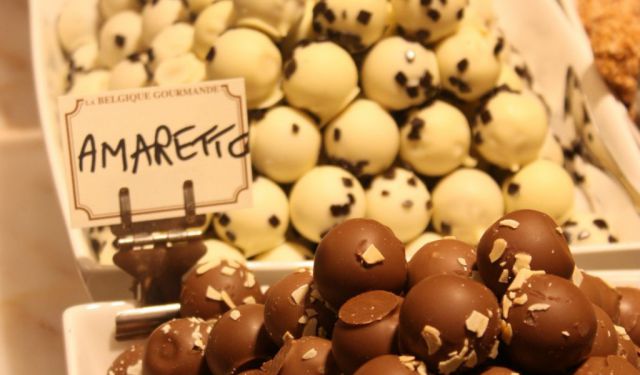
The Grand Square in Brussels-steeped in history and overflowing with architectural charm-is the city’s star attraction. Here, the buildings are dressed fancier than most people at a wedding, and every cobblestone whispers, “I’ve seen some stuff.”
Hard to believe, but back in the 11th century, this was just a humble wheat market. Eventually, the area evolved into a civic and commercial... view more
Tour Duration: 1 Hour(s)
Travel Distance: 0.3 Km or 0.2 Miles
Hard to believe, but back in the 11th century, this was just a humble wheat market. Eventually, the area evolved into a civic and commercial... view more
Tour Duration: 1 Hour(s)
Travel Distance: 0.3 Km or 0.2 Miles
The European Quarter Walking Tour
Along with Luxembourg and Strasbourg, Brussels is one of the European Union’s de facto capitals. The office blocks of the European Quarter are mainly concentrated along and between two wide boulevards – rue de la Loi and rue Belliard – which Léopold II built to connect his Parc du Cinquantenaire with the city center.
Begin your exploration with the EU’s most symbolic construction, the... view more
Tour Duration: 1 Hour(s)
Travel Distance: 1.3 Km or 0.8 Miles
Begin your exploration with the EU’s most symbolic construction, the... view more
Tour Duration: 1 Hour(s)
Travel Distance: 1.3 Km or 0.8 Miles
Mont Des Arts Cultural Walk
Mont des Arts, meaning "hill of the arts", is one of the most important cultural sites in Brussels. A classic among the city’s vantage points, it offers a fine city garden and restored showcase of architecture, in addition to several great museums.
Start your journey by traveling towards the old part of the city, where you’ll find the BOZAR Centre for Fine Arts, greatly admired... view more
Tour Duration: 1 Hour(s)
Travel Distance: 1.0 Km or 0.6 Miles
Start your journey by traveling towards the old part of the city, where you’ll find the BOZAR Centre for Fine Arts, greatly admired... view more
Tour Duration: 1 Hour(s)
Travel Distance: 1.0 Km or 0.6 Miles
Brussels Beer Tour
Belgians are not very prone to boasting, except with things such as chocolate, fries and, evidently, beer. They treat beer the way the French treat wine: for the makers, it's a prized art; for the drinkers, it is something to be savored and discussed. They say that, on average, Belgians drink 150 liters of beer per year per person, and one would often see them sipping it from early in the... view more
Tour Duration: 1 Hour(s)
Travel Distance: 2.1 Km or 1.3 Miles
Tour Duration: 1 Hour(s)
Travel Distance: 2.1 Km or 1.3 Miles
Chocolate Tour in Brussels
Belgium is considered one of, if not the, best producer of chocolate in the world. The country's capital, Brussels abounds in opportunities to taste more than 2,000 different varieties of this delectable treat. There is a plethora of chocolate shops in the city which offer chocolates of all imaginable shapes, sizes and colors.
Planète Chocolat’s chocolate-making demonstration make a... view more
Tour Duration: 1 Hour(s)
Travel Distance: 1.5 Km or 0.9 Miles
Planète Chocolat’s chocolate-making demonstration make a... view more
Tour Duration: 1 Hour(s)
Travel Distance: 1.5 Km or 0.9 Miles
Brussels Historical Churches Walking Tour
As well as being Belgium’s political and cultural capital, Brussels is the spiritual home of its most significant churches. Historically, the city has been predominantly Roman Catholic, especially since the expulsion of Protestants in the 16th century. The pre-eminent Catholic temple here, located just a couple of minutes from the Grand-Place, is the Brabantine Gothic Cathedral of St. Michael... view more
Tour Duration: 2 Hour(s)
Travel Distance: 4.6 Km or 2.9 Miles
Tour Duration: 2 Hour(s)
Travel Distance: 4.6 Km or 2.9 Miles
Useful Travel Guides for Planning Your Trip
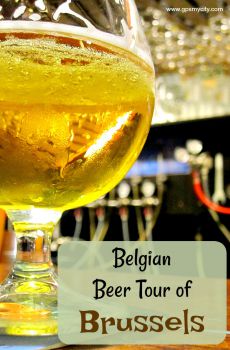
Belgian Beer Tour of Brussels
Belgium is world-renowned for its beers and Brussels is the best city to sample the huge variety of flavors. We'll show you the best places to buy them and to drink them. We'll even show you a family brewery where the liquid gold is produced right in front of your eyes! This tour is meant...
What to Buy in Brussels: 14 Ideas for Travelers
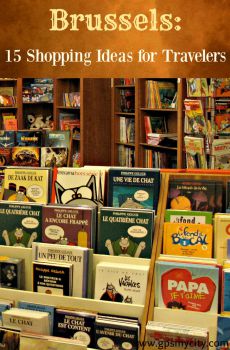
It's no secret that Brussels is not all about JCVD muscles and EU headquarters. Small country as such, Belgium abounds in signature items, such as beer, chocolates and... the peeing boy. All of these have made prime Belgian souvenirs for years. Now you can explore the Brussels gift scene in...
The Most Popular Cities
/ view all