

Audio Guide: Helsinki Introduction Walking Tour (Self Guided), Helsinki
Helsinki is the capital and largest city of Finland, located on the shores of the Gulf of Finland in the Baltic Sea. Compared with many European capitals, Helsinki is relatively young, yet its history reflects centuries of Nordic and Russian influence, as well as Finland’s emergence as an independent nation.
Helsinki was founded in 1550 by Gustav I of Sweden, who intended to create a rival port to Tallinn and strengthen Swedish trade in the eastern Baltic. The original settlement struggled for centuries because of competition and difficult natural conditions, remaining modest in size and importance.
The origin of the name “Helsinki” is not entirely certain, but the most widely accepted explanation connects it to settlers from the Swedish province of Hälsingland. These settlers gave their name to the surrounding parish, Helsinge, from which the Finnish form Helsinki later developed. The city’s Swedish name remains Helsingfors, in which fors means “rapids,” referring to the river landscape near the original settlement.
A major turning point came in the 18th century with the construction of the sea fortress of Suomenlinna, built by Sweden to strengthen its defenses against Russian expansion. Despite these efforts, Finland became part of the Russian Empire in 1809 as the autonomous Grand Duchy of Finland.
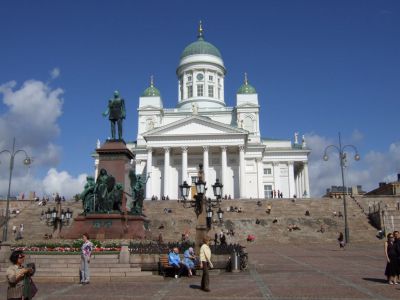
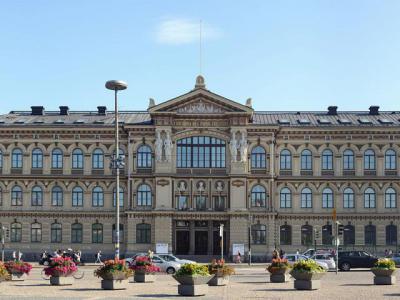
In 1812, Alexander I of Russia moved the capital from Turku to Helsinki. This decision transformed the city. Architects redesigned the center in a neoclassical style, creating the monumental ensemble around Senate Square that still defines Helsinki today.
The late 19th and early 20th centuries brought industrial growth, cultural development, and a rising sense of Finnish national identity. Following Finland’s independence in 1917, Helsinki became the political and cultural heart of the new republic.
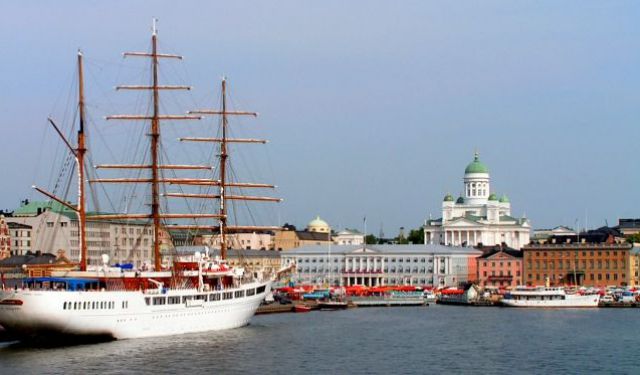
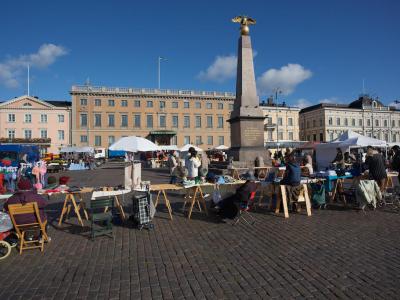
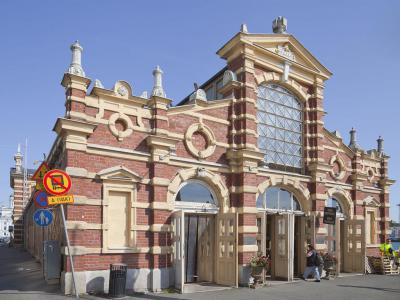
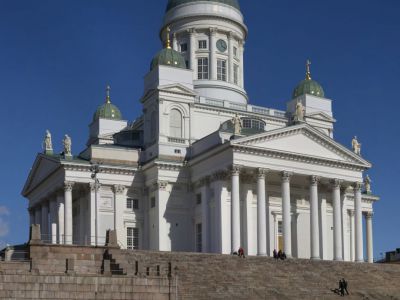
A walk through central Helsinki reveals elegant boulevards, open squares, and Baltic waterfront views. Beginning at Market Square, where ferries, food stalls, and harbor life create a lively meeting point between city and sea, the route continues toward the historic Old Market Hall before leading inland to the white-domed Helsinki Cathedral and the grand neoclassical setting of Senate Square.
As you begin this walk, take a moment to look from the city’s stone squares toward the water and remember how Helsinki began: as a planned Baltic port with great ambitions. Then take your first steps and let the city reveal how that vision grew into the capital you see today—one street, one view, and one story at a time.
Helsinki was founded in 1550 by Gustav I of Sweden, who intended to create a rival port to Tallinn and strengthen Swedish trade in the eastern Baltic. The original settlement struggled for centuries because of competition and difficult natural conditions, remaining modest in size and importance.
The origin of the name “Helsinki” is not entirely certain, but the most widely accepted explanation connects it to settlers from the Swedish province of Hälsingland. These settlers gave their name to the surrounding parish, Helsinge, from which the Finnish form Helsinki later developed. The city’s Swedish name remains Helsingfors, in which fors means “rapids,” referring to the river landscape near the original settlement.
A major turning point came in the 18th century with the construction of the sea fortress of Suomenlinna, built by Sweden to strengthen its defenses against Russian expansion. Despite these efforts, Finland became part of the Russian Empire in 1809 as the autonomous Grand Duchy of Finland.
In 1812, Alexander I of Russia moved the capital from Turku to Helsinki. This decision transformed the city. Architects redesigned the center in a neoclassical style, creating the monumental ensemble around Senate Square that still defines Helsinki today.
The late 19th and early 20th centuries brought industrial growth, cultural development, and a rising sense of Finnish national identity. Following Finland’s independence in 1917, Helsinki became the political and cultural heart of the new republic.
A walk through central Helsinki reveals elegant boulevards, open squares, and Baltic waterfront views. Beginning at Market Square, where ferries, food stalls, and harbor life create a lively meeting point between city and sea, the route continues toward the historic Old Market Hall before leading inland to the white-domed Helsinki Cathedral and the grand neoclassical setting of Senate Square.
As you begin this walk, take a moment to look from the city’s stone squares toward the water and remember how Helsinki began: as a planned Baltic port with great ambitions. Then take your first steps and let the city reveal how that vision grew into the capital you see today—one street, one view, and one story at a time.
How it works: Download the app "GPSmyCity: Walks in 1K+ Cities" from Apple App Store or Google Play Store to your mobile phone or tablet. The app turns your mobile device into a personal tour guide and its built-in GPS navigation functions guide you from one tour stop to next. The app works offline, so no data plan is needed when traveling abroad.
Download The GPSmyCity App



Helsinki Introduction Walking Tour Map
Guide Name: Helsinki Introduction Walking Tour
Guide Location: Finland » Helsinki (See other walking tours in Helsinki)
Guide Type: Self-guided Walking Tour (Sightseeing)
Tour Duration: 2 Hour(s)
Travel Distance: 3.2 Km or 2 Miles
Guide Location: Finland » Helsinki (See other walking tours in Helsinki)
Guide Type: Self-guided Walking Tour (Sightseeing)
Tour Duration: 2 Hour(s)
Travel Distance: 3.2 Km or 2 Miles
Sights Featured in This Walk
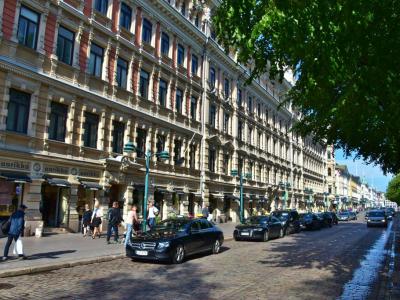
5) Esplanadi Park (must see)
Walking Tours in Helsinki, Finland

Create Your Own Walk in Helsinki
Creating your own self-guided walk in Helsinki is easy and fun. Choose the city attractions that you want to see and a walk route map will be created just for you. You can even set your hotel as the start point of the walk.
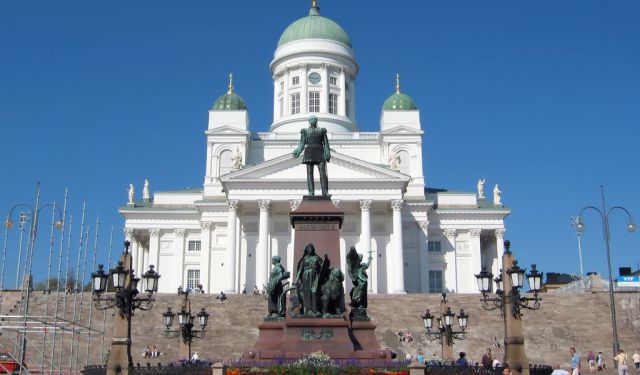
Helsinki's Historical Churches
Because of Finland's former affiliations with neighboring Sweden and Russia, it's no wonder that the religious tapestry of Helsinki is dominated by Lutheran and Orthodox churches. Nonetheless, there are also some beautiful architectural expressions of other Christian denominations like Anglican and Catholic to be found in the city, each holding a special place in its religious narrative.... view more
Tour Duration: 2 Hour(s)
Travel Distance: 3.0 Km or 1.9 Miles
Tour Duration: 2 Hour(s)
Travel Distance: 3.0 Km or 1.9 Miles
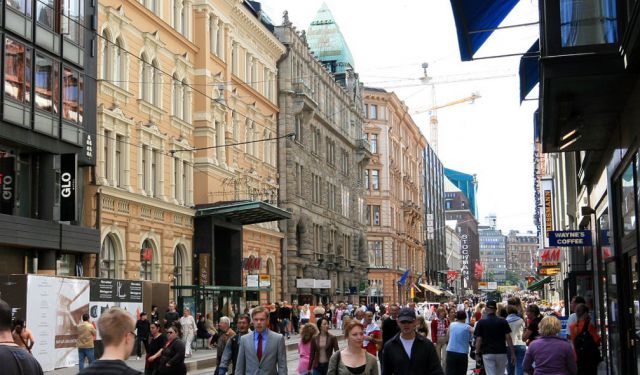
Finnish Souvenir Shopping Tour
When in Helsinki, souvenir shopping can be an exciting adventure allowing you to bring home a memorable piece of Finland worth having in your household. Depending on your inclinations, these could include sauna bucket and ladle, traditional Finnish music instruments, hand-woven long-tufted rugs (ryija), Finnish vodka made from Arctic-grown berries, or something else.
Those in the know can give... view more
Tour Duration: 1 Hour(s)
Travel Distance: 1.9 Km or 1.2 Miles
Those in the know can give... view more
Tour Duration: 1 Hour(s)
Travel Distance: 1.9 Km or 1.2 Miles
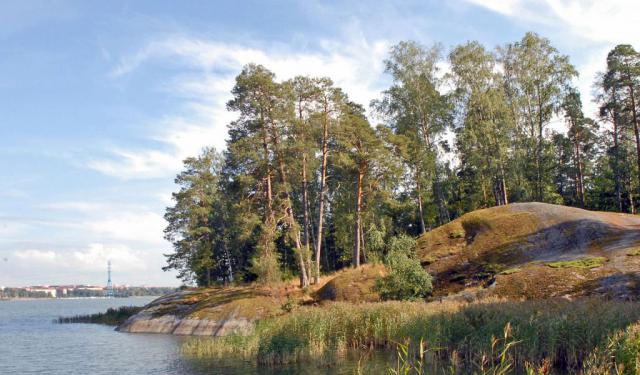
Seurasaari Island Walking Tour
Seurasaari Island in Helsinki is best known as the home to the popular open-air museum. This venue offers a glimpse into the life of Finland's countryside in various epochs, showcasing old, mainly wooden houses, some of which – once lived in by famous people in Finnish history – were transplanted to the island and thus became part of the museum.
Among the notable attractions here are... view more
Tour Duration: 2 Hour(s)
Travel Distance: 1.6 Km or 1 Miles
Among the notable attractions here are... view more
Tour Duration: 2 Hour(s)
Travel Distance: 1.6 Km or 1 Miles
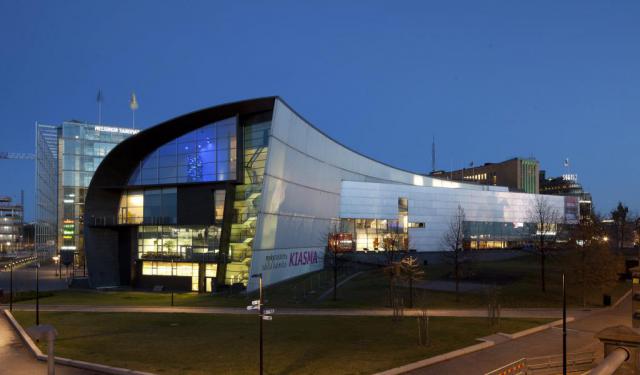
Helsinki's Architectural Jewels
Typified by Nordic minimalism and refinement, the architecture of Helsinki is shaped primarily by the early neoclassical style and a regional form of Art Nouveau called Jugendstil. Still, it is the later work by modernist architect, Alvar Aalto, as well as the thriving contemporary designs deeply rooted in nature and local craft that give Helsinki, as well as Finland in general, their current... view more
Tour Duration: 2 Hour(s)
Travel Distance: 1.9 Km or 1.2 Miles
Tour Duration: 2 Hour(s)
Travel Distance: 1.9 Km or 1.2 Miles
Useful Travel Guides for Planning Your Trip
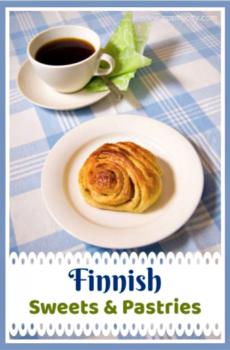
Finnish Sweets and Pastries
The country of thousands of lakes and the magical homeland of Santa Claus, Finland is also a major producer of quality chocolate and many other sweet delights without which surviving long winter nights in this Nordic part of Europe would have been far too boring. Big on coffee, the Finns love their...
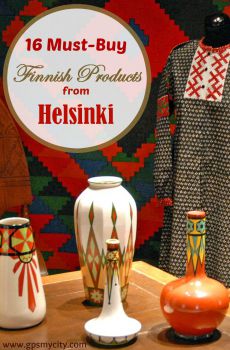
16 Distinctively Finnish Things to Buy in Helsinki
Shopping in Helsinki for an extraordinary range of tasteful and distinctive products is made simple and easy with the creation of a design district in the heart of the city which has many department stores, shopping centers, and boutique shops bunched together. The Finnish capital is a good city for...
The Most Popular Cities
/ view all