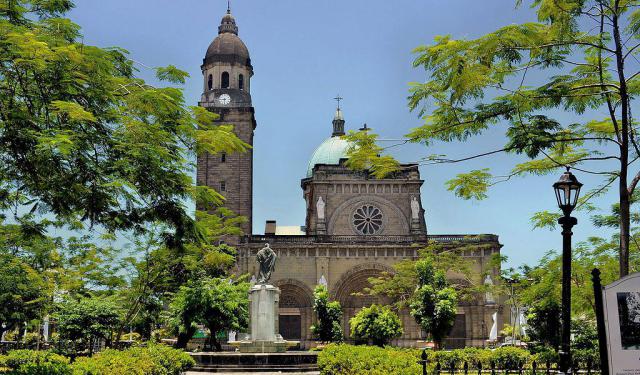


Audio Guide: Manila Introduction Walking Tour (Self Guided), Manila
For centuries, travelers arrived here searching for the 'Pearl of the Orient.' Behind these walls lies a city where Asian kingdoms, Spanish conquistadors, American planners, and Filipino revolutionaries all left their mark.
Manila, the capital of the Philippines, is one of Southeast Asia's oldest continuously inhabited cities and has served for centuries as the country's political, commercial, and cultural heart. Strategically located on the eastern shore of Manila Bay, its excellent natural harbor made it an important trading center long before the arrival of Europeans, attracting merchants from China, India, the Malay Archipelago, and the Arab world.
The city's name is widely believed to derive from the Tagalog phrase meaning "where the nilad grows." The nilad is a flowering mangrove shrub that once grew abundantly along the marshy banks of the Pasig River and Manila Bay. Over time, "Maynilad" evolved into "Maynila," which the Spanish later rendered as "Manila."
Before Spanish colonization, Manila formed part of the Kingdom of Maynila, a prosperous Muslim polity ruled by local datus and engaged in extensive regional trade. In 1571, Spanish conquistador Miguel López de Legazpi conquered the settlement and established Manila as the capital of the Spanish East Indies. At the heart of the new colonial city, the Spanish constructed Intramuros, a heavily fortified district enclosed by massive stone walls. Within its walls rose churches, monasteries, government buildings, and elegant residences, making Manila the administrative and religious center of Spain's vast Pacific empire.
The city experienced profound changes during the late 19th and 20th centuries. It became a focal point of the Philippine struggle for independence, first against Spain and later during the Philippine–American War. During World War II, the Battle of Manila devastated much of the historic city. Extensive postwar reconstruction reshaped Manila into the modern metropolis seen today.
A walk through central Manila takes visitors from the Spanish colonial charm of Intramuros to the grand Manila Cathedral and Fort Santiago. Beyond the old walls, lively plazas, museums, churches, and government buildings blend with bustling streets filled with shops and cafés. Along the waterfront, Rizal Park offers monuments, gardens, and views of Manila Bay.
As your walk comes to an end, you'll discover why Manila has captivated travelers for centuries. The "Pearl of the Orient" is not a single landmark but the remarkable story of a city where East and West have met, collided, and flourished for more than four hundred years.
Manila, the capital of the Philippines, is one of Southeast Asia's oldest continuously inhabited cities and has served for centuries as the country's political, commercial, and cultural heart. Strategically located on the eastern shore of Manila Bay, its excellent natural harbor made it an important trading center long before the arrival of Europeans, attracting merchants from China, India, the Malay Archipelago, and the Arab world.
The city's name is widely believed to derive from the Tagalog phrase meaning "where the nilad grows." The nilad is a flowering mangrove shrub that once grew abundantly along the marshy banks of the Pasig River and Manila Bay. Over time, "Maynilad" evolved into "Maynila," which the Spanish later rendered as "Manila."
Before Spanish colonization, Manila formed part of the Kingdom of Maynila, a prosperous Muslim polity ruled by local datus and engaged in extensive regional trade. In 1571, Spanish conquistador Miguel López de Legazpi conquered the settlement and established Manila as the capital of the Spanish East Indies. At the heart of the new colonial city, the Spanish constructed Intramuros, a heavily fortified district enclosed by massive stone walls. Within its walls rose churches, monasteries, government buildings, and elegant residences, making Manila the administrative and religious center of Spain's vast Pacific empire.
The city experienced profound changes during the late 19th and 20th centuries. It became a focal point of the Philippine struggle for independence, first against Spain and later during the Philippine–American War. During World War II, the Battle of Manila devastated much of the historic city. Extensive postwar reconstruction reshaped Manila into the modern metropolis seen today.
A walk through central Manila takes visitors from the Spanish colonial charm of Intramuros to the grand Manila Cathedral and Fort Santiago. Beyond the old walls, lively plazas, museums, churches, and government buildings blend with bustling streets filled with shops and cafés. Along the waterfront, Rizal Park offers monuments, gardens, and views of Manila Bay.
As your walk comes to an end, you'll discover why Manila has captivated travelers for centuries. The "Pearl of the Orient" is not a single landmark but the remarkable story of a city where East and West have met, collided, and flourished for more than four hundred years.
How it works: Download the app "GPSmyCity: Walks in 1K+ Cities" from Apple App Store or Google Play Store to your mobile phone or tablet. The app turns your mobile device into a personal tour guide and its built-in GPS navigation functions guide you from one tour stop to next. The app works offline, so no data plan is needed when traveling abroad.
Download The GPSmyCity App



Manila Introduction Walking Tour Map
Guide Name: Manila Introduction Walking Tour
Guide Location: Philippines » Manila (See other walking tours in Manila)
Guide Type: Self-guided Walking Tour (Sightseeing)
Tour Duration: 2 Hour(s)
Travel Distance: 2.3 Km or 1.4 Miles
Guide Location: Philippines » Manila (See other walking tours in Manila)
Guide Type: Self-guided Walking Tour (Sightseeing)
Tour Duration: 2 Hour(s)
Travel Distance: 2.3 Km or 1.4 Miles
Sights Featured in This Walk
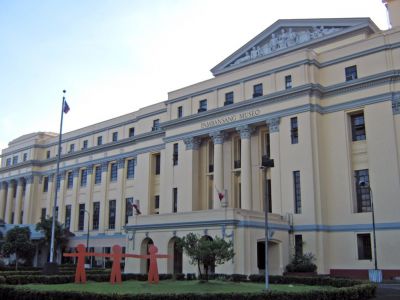
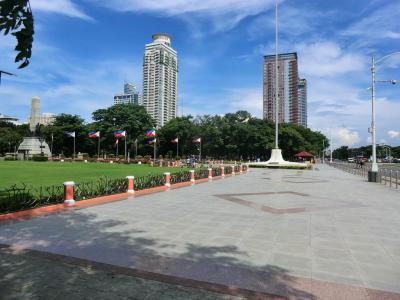
2) Rizal Park (must see)
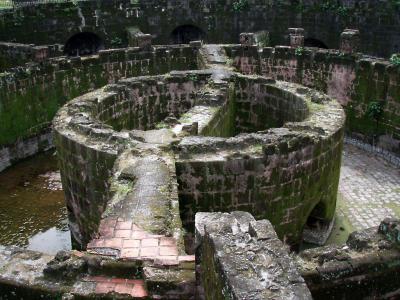
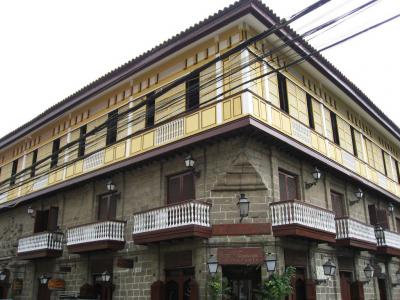
6) Casa Manila (must see)
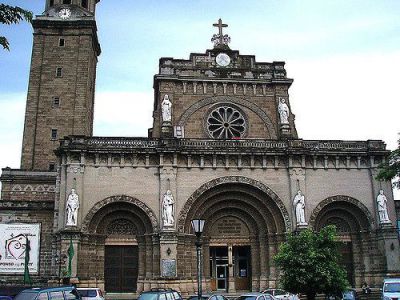
7) Manila Cathedral (must see)
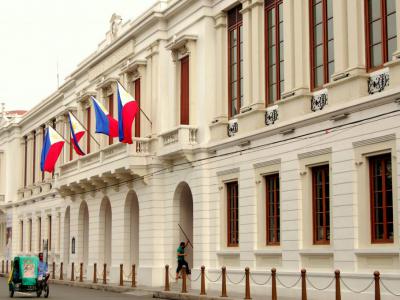
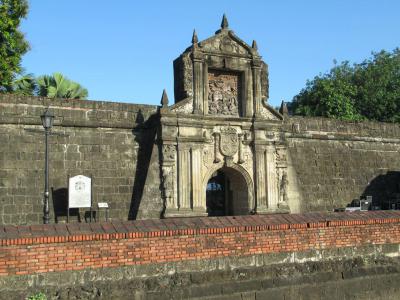
9) Fort Santiago (must see)
Walking Tours in Manila, Philippines

Create Your Own Walk in Manila
Creating your own self-guided walk in Manila is easy and fun. Choose the city attractions that you want to see and a walk route map will be created just for you. You can even set your hotel as the start point of the walk.
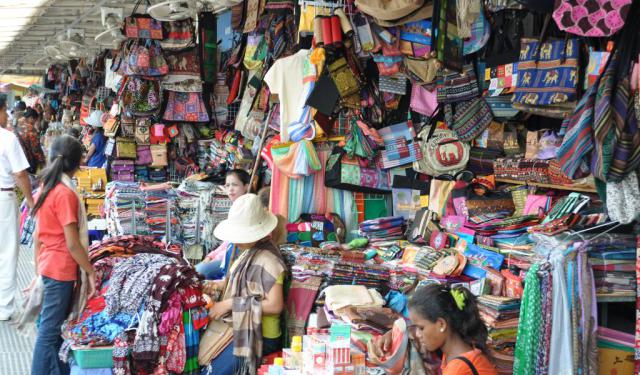
Traditional Markets
Traditional markets showcase a unique aspect of life in any city. The ones featured in this walk offer a glance into the authentic life and habits of Manila’s people and play a vital role in the Philippines' capital's economic and cultural landscape. Traditionally, local markets sell a broader range of products than regular shops can provide: from veggies and fruits to dried fish and... view more
Tour Duration: 1 Hour(s)
Travel Distance: 3.0 Km or 1.9 Miles
Tour Duration: 1 Hour(s)
Travel Distance: 3.0 Km or 1.9 Miles
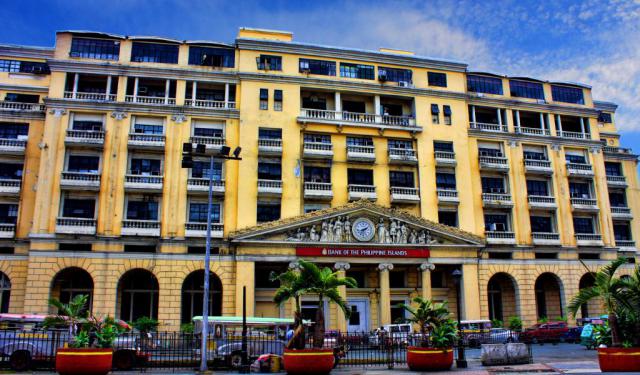
Historical Buildings Walking Tour
Every city tells a story, but few have witnessed as many triumphs and tragedies as Manila. Behind these façades lie the chapters of empire, revolution, war, and rebirth. As José Rizal wisely observed, 'To foretell the destiny of a nation, it is necessary to open the book that tells of her past.'
The historic buildings of Manila tell the story of more than four centuries of... view more
Tour Duration: 2 Hour(s)
Travel Distance: 3.3 Km or 2.1 Miles
The historic buildings of Manila tell the story of more than four centuries of... view more
Tour Duration: 2 Hour(s)
Travel Distance: 3.3 Km or 2.1 Miles
Useful Travel Guides for Planning Your Trip

Manila Shopping: 20 Filipino Goods To Bring Home
An archipelago of 7,000+ islands, The Philippines is a diverse nation populated by different tribes, each having their own culture and traditions. In Manila, one can find a whole lot of things worth keeping as a Filipino memento; it just might take one a little while to figure out what's best...
The Most Popular Cities
/ view all