Custom Walk in Athens, Greece by lynne_clemens_86b89 created on 2025-10-28
Guide Location: Greece » Athens
Guide Type: Custom Walk
# of Sights: 16
Tour Duration: 3 Hour(s)
Travel Distance: 6.2 Km or 3.9 Miles
Share Key: 6BRHW
Guide Type: Custom Walk
# of Sights: 16
Tour Duration: 3 Hour(s)
Travel Distance: 6.2 Km or 3.9 Miles
Share Key: 6BRHW
How It Works
Please retrieve this walk in the GPSmyCity app. Once done, the app will guide you from one tour stop to the next as if you had a personal tour guide. If you created the walk on this website or come to the page via a link, please follow the instructions below to retrieve the walk in the app.
Retrieve This Walk in App
Step 1. Download the app "GPSmyCity: Walks in 1K+ Cities" on Apple App Store or Google Play Store.



Step 2. In the GPSmyCity app, download(or launch) the guide "Athens Map and Walking Tours".
Step 3. Tap the menu button located at upper right corner of the "Walks" screen and select "Retrieve custom walk". Enter the share key: 6BRHW
1) Metropolitan Cathedral
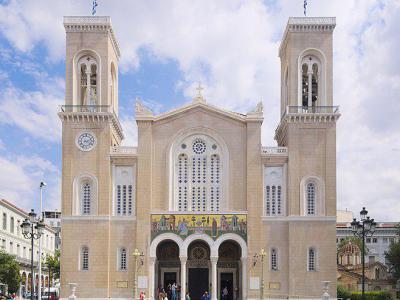
The Metropolitan Cathedral of Athens-or simply the "Metropolis", as the locals call it (because why bother with the full name when you can sound cool?). This grand cathedral has been standing tall since the mid-19th century, playing host to some of Greece’s most high-profile events-think royal weddings, state funerals, and the kind of ceremonies that make history books.
As for the story of its construction, it all started on Christmas Day, 1842, when someone had the bright idea to build a monumental church. But where to find all that marble? Easy-just dismantle 72 other churches across the country and re-purpose their stones. After 20 years and three architects juggling the job, the church was finally finished, proudly dedicated to the Annunciation of the Virgin. And its size-40 meters long, 20 meters wide, and 24 meters high-makes it the biggest religious building in Athens.
Step inside, and you’re greeted by a Greek Orthodox feast for the eyes: lavish icons, intricate murals, and an abundance of golden accents that make even the most skeptical visitor pause in awe. But beyond the grandeur, the cathedral also holds the tombs of two martyrs-Saint Philothéi, a woman who dedicated her life to rescuing Greek women from Ottoman harems (and was martyred for it in 1589), and Patriarch Gregory V, who was executed by the Ottomans in 1821. His body had quite the journey-rescued by Greek sailors from the Bosphorus, sent to Odessa (which is modern-day Ukraine), and eventually brought home to Athens 50 years later.
Out front, the statues tell even more stories. One honors the last Byzantine Emperor, who fought to the bitter end defending Constantinople in 1453. The other? A tribute to the Archbishop of Athens, a hero who helped protect the city’s Jewish community during World War II.
And if all this history has worked up your thirst, the square in front of the cathedral is the perfect place to sit back, sip a coffee, and take in the city’s rhythm-a little oasis amidst Athens' ever-busy streets.
As for the story of its construction, it all started on Christmas Day, 1842, when someone had the bright idea to build a monumental church. But where to find all that marble? Easy-just dismantle 72 other churches across the country and re-purpose their stones. After 20 years and three architects juggling the job, the church was finally finished, proudly dedicated to the Annunciation of the Virgin. And its size-40 meters long, 20 meters wide, and 24 meters high-makes it the biggest religious building in Athens.
Step inside, and you’re greeted by a Greek Orthodox feast for the eyes: lavish icons, intricate murals, and an abundance of golden accents that make even the most skeptical visitor pause in awe. But beyond the grandeur, the cathedral also holds the tombs of two martyrs-Saint Philothéi, a woman who dedicated her life to rescuing Greek women from Ottoman harems (and was martyred for it in 1589), and Patriarch Gregory V, who was executed by the Ottomans in 1821. His body had quite the journey-rescued by Greek sailors from the Bosphorus, sent to Odessa (which is modern-day Ukraine), and eventually brought home to Athens 50 years later.
Out front, the statues tell even more stories. One honors the last Byzantine Emperor, who fought to the bitter end defending Constantinople in 1453. The other? A tribute to the Archbishop of Athens, a hero who helped protect the city’s Jewish community during World War II.
And if all this history has worked up your thirst, the square in front of the cathedral is the perfect place to sit back, sip a coffee, and take in the city’s rhythm-a little oasis amidst Athens' ever-busy streets.
2) Panathenaic Stadium (must see)
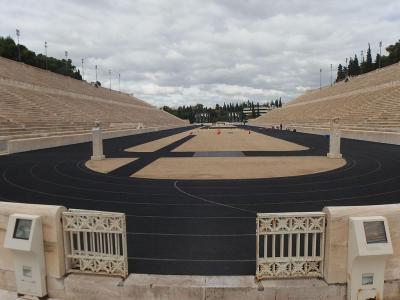
The Panathenaic is truly a remarkable historical site, being the only major stadium in the world constructed entirely of white marble. Its origins trace back to ancient times when it served as the venue for the athletic competitions of the Panathenaic Games, dedicated to the Goddess Athena and held every four years. The stadium underwent significant transformations, with a marble reconstruction in 329 BC and later expansion and renovation in 140 AD, accommodating up to 50,000 spectators.
Having fallen into disuse and disrepair after the 4th century AD, it was rediscovered and revitalized for the modern era, playing a pivotal role in the revival of the Olympic Games in the late 19th century. Despite its smaller scale compared to contemporary Olympic venues, the Panathenaic's elegant simplicity and iconic five Olympic rings continue to inspire awe. At the entrance, you'll encounter four stones engraved with the interesting history of the Olympics from the late 19th century to the present day.
The inaugural international Olympic Games in modern history were held here in 1896, with King George I of Greece opening the ceremony. Among participants were 241 male athletes from 14 countries, competing in 9 sports and 43 events. These early modern Olympic sports included athletics, cycling, fencing, gymnastics, tennis, shooting, swimming, weightlifting, and wrestling. Since then, athletes from across the globe have convened every four years, with the tradition enduring through the tumultuous 20th century wars.
Why You Should Visit:
A captivating place to explore, and you can enhance your visit with the free audio guide provided.
The on-site museum provides an engaging exhibition on the fascinating history of the Olympics.
Tip:
Don't miss the opportunity to climb to the upper tier for stunning views of the stadium.
Having fallen into disuse and disrepair after the 4th century AD, it was rediscovered and revitalized for the modern era, playing a pivotal role in the revival of the Olympic Games in the late 19th century. Despite its smaller scale compared to contemporary Olympic venues, the Panathenaic's elegant simplicity and iconic five Olympic rings continue to inspire awe. At the entrance, you'll encounter four stones engraved with the interesting history of the Olympics from the late 19th century to the present day.
The inaugural international Olympic Games in modern history were held here in 1896, with King George I of Greece opening the ceremony. Among participants were 241 male athletes from 14 countries, competing in 9 sports and 43 events. These early modern Olympic sports included athletics, cycling, fencing, gymnastics, tennis, shooting, swimming, weightlifting, and wrestling. Since then, athletes from across the globe have convened every four years, with the tradition enduring through the tumultuous 20th century wars.
Why You Should Visit:
A captivating place to explore, and you can enhance your visit with the free audio guide provided.
The on-site museum provides an engaging exhibition on the fascinating history of the Olympics.
Tip:
Don't miss the opportunity to climb to the upper tier for stunning views of the stadium.
3) Temple of Olympian Zeus (must see)
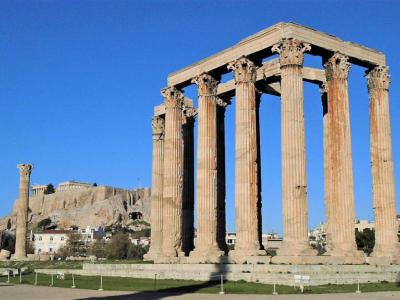
Even in its ruined state, the Athenian temple of Olympian Zeus remains a monument of awe-inspiring proportions, surpassing even the Parthenon in size. This colossal edifice saw its construction commence in the 6th century BC during the rule of the tyrant Peisistratos, who allegedly initiated the ambitious project to garner public favor. However, despite numerous attempts spanning many years to complete what would have been the greatest temple in the ancient world, it remained unfinished for over six and a half centuries.
In AD 132, the Roman emperor Hadrian, renowned for his admiration of classical Greek culture, dedicated the temple to Zeus Olympios during the Panhellenic festival, a competition of music and poetry held the year before the Olympics. This act took place during his second visit to Athens, and Hadrian also placed a gold and ivory inlaid statue of the god Zeus inside the temple. Regrettably, both the statue of Zeus and a colossal statue of the emperor himself have since been lost to history.
Today, only 15 of the original 104 Corinthian columns remain standing, each at a height of 17 meters (56 feet) – but enough to provide a sense of the temple's immense scale, which would have spanned about 96 meters (315 feet) in length and 40 meters (130 feet) in width. Nearby, there lies a 16th column that toppled during a storm in 1852, bearing witness to the passage of time. The temple's ruins extend beyond the towering columns, although entry into the temple may be restricted at times due to ongoing archaeological excavations.
Adjacent stands Hadrian's Arch, constructed in AD 131 and intentionally positioned to demarcate the boundary between the ancient city and the new Athens envisioned by Emperor Hadrian.
Tip:
For visitors who have acquired the Acropolis multi-site ticket, access to this historical site is automatically granted.
In AD 132, the Roman emperor Hadrian, renowned for his admiration of classical Greek culture, dedicated the temple to Zeus Olympios during the Panhellenic festival, a competition of music and poetry held the year before the Olympics. This act took place during his second visit to Athens, and Hadrian also placed a gold and ivory inlaid statue of the god Zeus inside the temple. Regrettably, both the statue of Zeus and a colossal statue of the emperor himself have since been lost to history.
Today, only 15 of the original 104 Corinthian columns remain standing, each at a height of 17 meters (56 feet) – but enough to provide a sense of the temple's immense scale, which would have spanned about 96 meters (315 feet) in length and 40 meters (130 feet) in width. Nearby, there lies a 16th column that toppled during a storm in 1852, bearing witness to the passage of time. The temple's ruins extend beyond the towering columns, although entry into the temple may be restricted at times due to ongoing archaeological excavations.
Adjacent stands Hadrian's Arch, constructed in AD 131 and intentionally positioned to demarcate the boundary between the ancient city and the new Athens envisioned by Emperor Hadrian.
Tip:
For visitors who have acquired the Acropolis multi-site ticket, access to this historical site is automatically granted.
4) Hadrian's Arch
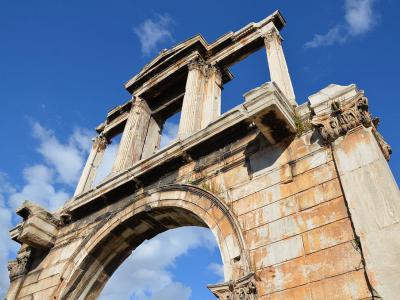
Resembling a triumphal arch, this monumental gateway was built to celebrate the arrival of Roman Emperor Hadrian and pay tribute to his many benefactions to the city. It serves as a symbolic passage between the ancient part of Athens and the newly developed district, largely conceived during Hadrian's rule, which extended until the year 138 A.D. Hadrian was a great admirer of classical Greek literature, philosophy, and arts. During his reign, he generously sponsored several significant projects in Athens, including Hadrian's Library, the Hadrianic Aqueduct, and the completion of the Temple of Olympian Zeus, among others.
The entire structure dedicated to honoring Hadrian is constructed from marble quarried from Mount Pentelicus, located 18 kilometers away. In terms of design, it is fully symmetrical, both from the front and the sides; however, while the lower section draws inspiration from similar Roman arches, the upper part is typical of Greek ones. Inscriptions etched into the monument's surfaces celebrate the new Roman era: the northwest frieze bears the inscription, 'This is Athens, the Ancient city of Theseus,' whereas the southeast frieze declares, 'This is the city of Hadrian, and not of Theseus.'
Why You Should Visit:
One of the most important Roman monuments surviving in Athens, providing an opportunity to gain insights into the relationship between the Roman Empire and its province of Achaea, conquered by the Romans in the year 146 BC.
Tip:
While the monument can be admired from a distance during a stroll through Athens, for a closer view, you may opt to purchase a ticket for the Temple of Olympian Zeus or a combination ticket providing access to the city's major archaeological sites.
The entire structure dedicated to honoring Hadrian is constructed from marble quarried from Mount Pentelicus, located 18 kilometers away. In terms of design, it is fully symmetrical, both from the front and the sides; however, while the lower section draws inspiration from similar Roman arches, the upper part is typical of Greek ones. Inscriptions etched into the monument's surfaces celebrate the new Roman era: the northwest frieze bears the inscription, 'This is Athens, the Ancient city of Theseus,' whereas the southeast frieze declares, 'This is the city of Hadrian, and not of Theseus.'
Why You Should Visit:
One of the most important Roman monuments surviving in Athens, providing an opportunity to gain insights into the relationship between the Roman Empire and its province of Achaea, conquered by the Romans in the year 146 BC.
Tip:
While the monument can be admired from a distance during a stroll through Athens, for a closer view, you may opt to purchase a ticket for the Temple of Olympian Zeus or a combination ticket providing access to the city's major archaeological sites.
5) Parthenon (must see)
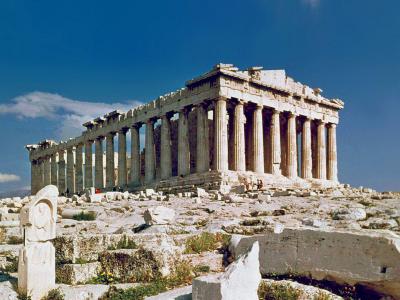
Presiding over the Acropolis like a timeless guardian of Athens, the Parthenon is one of the finest and most recognizable examples of classical architecture. This 5th-century BC temple was the brainchild of Pericles, the man who decided Athens needed an upgrade-preferably in glorious white Pentelic marble.
Replacing an older sanctuary, the Parthenon was dedicated to Athena, the city's patron goddess, whose grand 12-meter-tall statue, adorned in ivory and gold, once dazzled anyone lucky enough to lay eyes on it. More than just a temple, the Parthenon was a statement piece-loud and clear-about Athens' dominance following its victories in the Persian Wars and its leading role in the Delian League (uniting under its umbrella equal city-states against Persia). In other words, it wasn’t just about worship; it was about showing off.
Designed in the Doric style, the temple was built to withstand the test of time-but history had other plans. Over the centuries, it transformed from a Greek temple to a Byzantine church, then a Turkish mosque, and finally, in 1687, into a really unlucky storage facility for gunpowder. That decision ended about as well as you'd expect when the Venetians decided to bombard the Acropolis, causing a spectacular explosion. And if that wasn't enough, Lord Elgin of Great Britain came along in the 19th century and helped himself to much of its sculptural beauty, now sitting in the British Museum.
Yet, despite the looting, wars, and centuries of wear, the Parthenon still reigns supreme, standing as an enduring emblem of Greek culture and a favorite inspiration for neoclassical buildings worldwide.
Tips:
Go early-unless you enjoy waiting in long lines under the scorching Athenian sun.
Use both entrances to explore the site fully.
Get a combined ticket-it covers multiple iconic spots, including the Odeon of Herodes Atticus, the Theater of Dionysus, the Temple of Olympian Zeus, and the Ancient Agora. Because if you're traveling back in time, you might as well see it all.
Replacing an older sanctuary, the Parthenon was dedicated to Athena, the city's patron goddess, whose grand 12-meter-tall statue, adorned in ivory and gold, once dazzled anyone lucky enough to lay eyes on it. More than just a temple, the Parthenon was a statement piece-loud and clear-about Athens' dominance following its victories in the Persian Wars and its leading role in the Delian League (uniting under its umbrella equal city-states against Persia). In other words, it wasn’t just about worship; it was about showing off.
Designed in the Doric style, the temple was built to withstand the test of time-but history had other plans. Over the centuries, it transformed from a Greek temple to a Byzantine church, then a Turkish mosque, and finally, in 1687, into a really unlucky storage facility for gunpowder. That decision ended about as well as you'd expect when the Venetians decided to bombard the Acropolis, causing a spectacular explosion. And if that wasn't enough, Lord Elgin of Great Britain came along in the 19th century and helped himself to much of its sculptural beauty, now sitting in the British Museum.
Yet, despite the looting, wars, and centuries of wear, the Parthenon still reigns supreme, standing as an enduring emblem of Greek culture and a favorite inspiration for neoclassical buildings worldwide.
Tips:
Go early-unless you enjoy waiting in long lines under the scorching Athenian sun.
Use both entrances to explore the site fully.
Get a combined ticket-it covers multiple iconic spots, including the Odeon of Herodes Atticus, the Theater of Dionysus, the Temple of Olympian Zeus, and the Ancient Agora. Because if you're traveling back in time, you might as well see it all.
6) Erechtheion (must see)
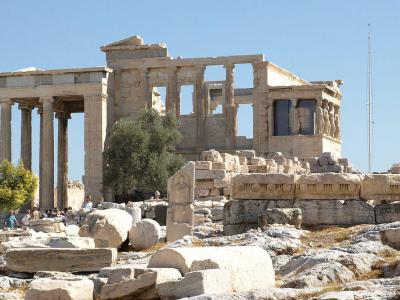
The Erechtheion-a temple with a front-row seat to one of the pettiest godly rivalries in history. Built between 421 and 406 BC, this elegant structure was dedicated to Athena (the goddess of wisdom, warfare, and handicraft) and Poseidon (the god of the sea), who once had a dramatic showdown over who would get Athens as their VIP city. Poseidon, ever the dramatic type, slammed his trident into the rock, and-voilà-a saltwater spring appeared. Impressive, but not exactly practical for drinking. Athena, on the other hand, planted an olive tree, which was far more useful for making oil, food, and, let’s be honest, rubbing into everything. The locals made their choice, and Athena took the crown as the city’s patron. Poseidon? Well, let’s just say he didn’t take it well, but they eventually made peace. Allegedly, you can still see where his trident threw a tantrum on the temple’s ground.
The Erechtheion wasn’t just a temple-it was an architectural masterpiece, showcasing the graceful Ionic style. Inside, there were three chambers: one for the sacred olivewood statue of Athena, and the others for Poseidon, presumably as a consolation prize. The temple’s north, east, and south sides were framed by grand porticoes, but the real showstopper? The Porch of the Caryatids, where six elegantly sculpted female figures held up the roof with their heads-because who needs columns when you have ancient supermodels? The ones you see today are replicas; the originals are safely housed in the Acropolis Museum, away from pollution, weather, and pigeon-related hazards.
As history marched on, the Erechtheion saw some... unexpected tenants. In 1463, it was converted into a harem for the Ottoman commander’s wives-probably not what the ancient Greeks had in mind. Later, during the Greek War of Independence, a Turkish shell crashed into it, causing significant damage. Despite all this, the Erechtheion still stands, now a UNESCO World Heritage site and a must-visit for history lovers and architecture buffs alike.
Tip:
Want the full story? A guided tour will give you all the juicy details. Prefer to wander solo? Visit in the morning to beat the heat, and don’t forget to bring water-there’s no ancient vending machine up there!
The Erechtheion wasn’t just a temple-it was an architectural masterpiece, showcasing the graceful Ionic style. Inside, there were three chambers: one for the sacred olivewood statue of Athena, and the others for Poseidon, presumably as a consolation prize. The temple’s north, east, and south sides were framed by grand porticoes, but the real showstopper? The Porch of the Caryatids, where six elegantly sculpted female figures held up the roof with their heads-because who needs columns when you have ancient supermodels? The ones you see today are replicas; the originals are safely housed in the Acropolis Museum, away from pollution, weather, and pigeon-related hazards.
As history marched on, the Erechtheion saw some... unexpected tenants. In 1463, it was converted into a harem for the Ottoman commander’s wives-probably not what the ancient Greeks had in mind. Later, during the Greek War of Independence, a Turkish shell crashed into it, causing significant damage. Despite all this, the Erechtheion still stands, now a UNESCO World Heritage site and a must-visit for history lovers and architecture buffs alike.
Tip:
Want the full story? A guided tour will give you all the juicy details. Prefer to wander solo? Visit in the morning to beat the heat, and don’t forget to bring water-there’s no ancient vending machine up there!
7) Theater of Dionysus (must see)
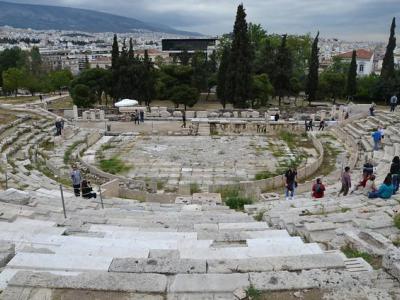
Comfortably set on the sun-kissed southern slopes of the Acropolis, the Theater of Dionysus is where drama as we know it was born. That’s right, before Broadway and Hollywood, this was the place where the ancient Greeks gathered to watch tragic heroes suffer and comic fools make a mess of things.
Now, why here, you ask? Well, it's all about the location! The theater sits conveniently close to the Temple of Dionysus, the god of wine, revelry, and, conveniently, drama. Every year in the 5th century BC, the Greeks threw a Dionysian festival-a six-day extravaganza filled with theatrical competitions where poets battled for glory. Imagine Aeschylus, Sophocles, and Euripides, nervously pacing backstage, hoping their tragedies would win over the crowd. The stakes? – Public honor, a handsome cash prize, and eternal bragging rights.
Fast forward a few centuries, and the Romans come in, super-sizing the place into a 17,000-seat venue. They even turned it into a gladiatorial arena-because, let’s be honest, they loved a bit of blood sport (more than sheer drama). Safety first, though! They added a fancy marble balustrade with metal railings to keep the audience from, well… joining the fight.
And here’s a fun detour-above the theater, you’ll find a cave dedicated to Artemis, the goddess of hunting, wilderness, wild animals, transitions, nature, vegetation, and childbirth. In the Byzantine era, this became the Our Lady of the Cave chapel, a place where desperate mothers brought their sick children, hoping for a miracle cure.
Today, the Theater of Dionysus stands as a timeless tribute to Athens’ cultural legacy. Take a seat on those ancient stones, soak in the atmosphere, and remember-you’re sitting where Western theater literally took center stage.
Now, why here, you ask? Well, it's all about the location! The theater sits conveniently close to the Temple of Dionysus, the god of wine, revelry, and, conveniently, drama. Every year in the 5th century BC, the Greeks threw a Dionysian festival-a six-day extravaganza filled with theatrical competitions where poets battled for glory. Imagine Aeschylus, Sophocles, and Euripides, nervously pacing backstage, hoping their tragedies would win over the crowd. The stakes? – Public honor, a handsome cash prize, and eternal bragging rights.
Fast forward a few centuries, and the Romans come in, super-sizing the place into a 17,000-seat venue. They even turned it into a gladiatorial arena-because, let’s be honest, they loved a bit of blood sport (more than sheer drama). Safety first, though! They added a fancy marble balustrade with metal railings to keep the audience from, well… joining the fight.
And here’s a fun detour-above the theater, you’ll find a cave dedicated to Artemis, the goddess of hunting, wilderness, wild animals, transitions, nature, vegetation, and childbirth. In the Byzantine era, this became the Our Lady of the Cave chapel, a place where desperate mothers brought their sick children, hoping for a miracle cure.
Today, the Theater of Dionysus stands as a timeless tribute to Athens’ cultural legacy. Take a seat on those ancient stones, soak in the atmosphere, and remember-you’re sitting where Western theater literally took center stage.
8) Odeon of Herodes Atticus
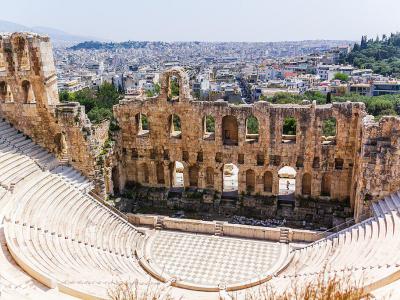
The Odeon of Herodes Atticus-or, as locals call it, the Herodeion. This name sounds like it belongs to an ancient superhero, but in reality, it’s a grand stone amphitheater sitting snug at the foot of the Acropolis. Built in 161 AD by a Greek aristocrat with a Roman title, Herodes Atticus, this wasn’t just any vanity project-it was a love letter to his late wife. And what better way to say “I miss you” than with a massive, acoustically perfect concert hall?
Originally, the Herodeion played host to the finest musical and theatrical performances of the ancient world-think tragic dramas, soaring choral arrangements, and instrumental masterpieces. The kind of cultural flex that made Athens the place to be. With no remnants of a roof (aside from the cedar one that once covered the orchestra area), this was an open-air spectacle from the very start.
A couple of millennia on, the Herodeion is still in business. By day, it’s a stunning ruin that whispers tales of the past. By night, it transforms into one of the dreamiest venues on Earth, hosting classical concerts, modern theater, and international acts beneath the Athenian moon.
Tip:
If you're planning a trip to Athens, check the event schedule ahead of time-nothing ruins a perfect ancient Greek night out like realizing all the tickets are gone. And since this is an open-air gig, always keep an eye on the weather. Rain or shine, though, this place remains one of the most breathtaking remnants of an era when entertainment was truly larger than life.
Originally, the Herodeion played host to the finest musical and theatrical performances of the ancient world-think tragic dramas, soaring choral arrangements, and instrumental masterpieces. The kind of cultural flex that made Athens the place to be. With no remnants of a roof (aside from the cedar one that once covered the orchestra area), this was an open-air spectacle from the very start.
A couple of millennia on, the Herodeion is still in business. By day, it’s a stunning ruin that whispers tales of the past. By night, it transforms into one of the dreamiest venues on Earth, hosting classical concerts, modern theater, and international acts beneath the Athenian moon.
Tip:
If you're planning a trip to Athens, check the event schedule ahead of time-nothing ruins a perfect ancient Greek night out like realizing all the tickets are gone. And since this is an open-air gig, always keep an eye on the weather. Rain or shine, though, this place remains one of the most breathtaking remnants of an era when entertainment was truly larger than life.
9) Temple of Athena Nike (must see)
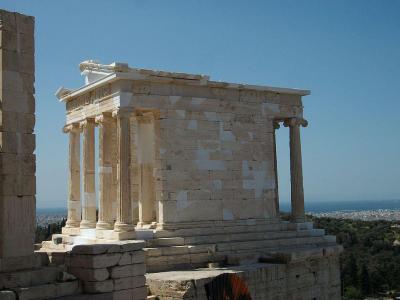
The Temple of Athena Nike-a tiny, jewel-box of a temple perched atop the Acropolis. At just 11 feet (or 3.3 meters, for the metric-minded), it’s easy to miss in the shadow of its grander neighbors. But rest assured, it’s well worth a closer look. As you pass through the mighty Propylaea Gate, sneak a glance to your upper right-there it is, standing proudly on the edge of the rock wall, as if keeping an eye on everything below.
This little temple has had a rough ride through history, being knocked down not once, but twice! Thankfully, the ancient puzzle pieces were carefully put back together using original fragments, restoring its elegant form. And what a form it is-four Ionic columns at each end, perfectly symmetrical, just as it was in 420 BC. Back in the day, Athenians gathered here to toast their victories over the Persians (its frieze even depicts scenes from the Battle of Plataea in 479 BC-because what’s a victory without some artistic bragging?).
Designed by the architect Kallikrates, this temple wasn’t just for show. It served as both a shrine and a lookout post-because even the goddess of victory needs a good vantage point. Speaking of which, the temple’s balustrade once featured a stunning sculpture of Athena Nike. But there’s a twist! Unlike your usual winged depiction of the goddess, this one is wingless-a symbolic way of saying, “Victory is staying right here in Athens, thank you very much.”
And then there’s the legend. This very spot is where King Aegeus is said to have waited anxiously for his son, Theseus, to return from slaying the Minotaur in Crete. The plan? If Theseus survived, he’d raise white sails instead of black. The reality? He forgot. And when poor Aegeus saw the black sails, he assumed the worst and hurled himself into the sea-thus giving the Aegean Sea its name. Talk about a tragic mix-up...
So next time you visit the Acropolis, don’t just rush to the Parthenon. Take a moment to appreciate this small but mighty temple-because in Athens, even the little things come with epic stories.
This little temple has had a rough ride through history, being knocked down not once, but twice! Thankfully, the ancient puzzle pieces were carefully put back together using original fragments, restoring its elegant form. And what a form it is-four Ionic columns at each end, perfectly symmetrical, just as it was in 420 BC. Back in the day, Athenians gathered here to toast their victories over the Persians (its frieze even depicts scenes from the Battle of Plataea in 479 BC-because what’s a victory without some artistic bragging?).
Designed by the architect Kallikrates, this temple wasn’t just for show. It served as both a shrine and a lookout post-because even the goddess of victory needs a good vantage point. Speaking of which, the temple’s balustrade once featured a stunning sculpture of Athena Nike. But there’s a twist! Unlike your usual winged depiction of the goddess, this one is wingless-a symbolic way of saying, “Victory is staying right here in Athens, thank you very much.”
And then there’s the legend. This very spot is where King Aegeus is said to have waited anxiously for his son, Theseus, to return from slaying the Minotaur in Crete. The plan? If Theseus survived, he’d raise white sails instead of black. The reality? He forgot. And when poor Aegeus saw the black sails, he assumed the worst and hurled himself into the sea-thus giving the Aegean Sea its name. Talk about a tragic mix-up...
So next time you visit the Acropolis, don’t just rush to the Parthenon. Take a moment to appreciate this small but mighty temple-because in Athens, even the little things come with epic stories.
10) Propylaea
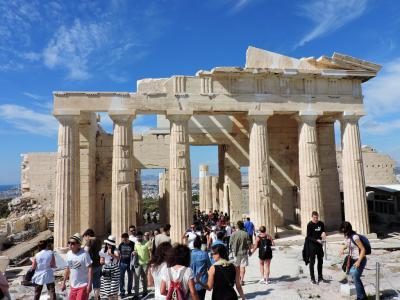
The Propylaea, the grand entrance to the Acropolis-because even in ancient Greece, you needed a proper gateway to impress your guests. Every year, thousands of visitors pass through this monumental doorway, retracing the steps of philosophers, warriors, and possibly a few very lost tourists from antiquity. Now, if you’re wondering where the original staircase went… well, time took care of that. Instead, modern pathways guide you in and out, making your ascent a little smoother than what ancient Athenians might have experienced.
Designed by architect Mnesicles-who clearly had an eye for drama-the Propylaea was built between 437 and 432 BC, proving that even the entrances in Athens had to be masterpieces. The structure boasts a central building flanked by two wings, with Doric columns holding things down on the east and west, while Ionic columns add a bit of flair in the middle. This was actually the first classical structure to mix Doric and Ionic styles so visibly-like an architectural trendsetter before trends were a thing. The ceiling? – It was originally painted with a heavenly scene, just in case the sky itself wasn’t impressive enough.
Now, picture this: ancient pilgrims making their way through, as five heavy wooden doors opened one by one-like the ultimate suspenseful reveal. To the north, the only fully completed room, the Pinakotheke, served as a resting spot for visitors and doubled as an art gallery. According to the geographer Pausanias, its walls once displayed stunning frescoes and paintings.
Through Greek, Roman, and Byzantine rule, the Propylaea stood strong-until 1656, when an unfortunate explosion turned part of it into rubble. Thankfully, restoration efforts since 1984 have helped bring some of its lost grandeur back.
Tip:
Just beyond the Propylaea, on your right, you’ll spot the remains of the Sanctuary of Artemis Brauronia, dating back to the 4th century BC. Because why stop at one historical marvel when you can have two?
Designed by architect Mnesicles-who clearly had an eye for drama-the Propylaea was built between 437 and 432 BC, proving that even the entrances in Athens had to be masterpieces. The structure boasts a central building flanked by two wings, with Doric columns holding things down on the east and west, while Ionic columns add a bit of flair in the middle. This was actually the first classical structure to mix Doric and Ionic styles so visibly-like an architectural trendsetter before trends were a thing. The ceiling? – It was originally painted with a heavenly scene, just in case the sky itself wasn’t impressive enough.
Now, picture this: ancient pilgrims making their way through, as five heavy wooden doors opened one by one-like the ultimate suspenseful reveal. To the north, the only fully completed room, the Pinakotheke, served as a resting spot for visitors and doubled as an art gallery. According to the geographer Pausanias, its walls once displayed stunning frescoes and paintings.
Through Greek, Roman, and Byzantine rule, the Propylaea stood strong-until 1656, when an unfortunate explosion turned part of it into rubble. Thankfully, restoration efforts since 1984 have helped bring some of its lost grandeur back.
Tip:
Just beyond the Propylaea, on your right, you’ll spot the remains of the Sanctuary of Artemis Brauronia, dating back to the 4th century BC. Because why stop at one historical marvel when you can have two?
11) Anafiotika and Plaka Stairs (must see)
Nestled in the shadow of the Acropolis and frequently likened to the charming whitewashed villages of the rural Greek islands, Anafiotika is one of Athens' most delightful and idiosyncratic neighborhoods. Situated in the capital's Plaka district, it is poetically described as a "breeze of the Aegean" in the heart of the city, and as such exudes a unique character and ambiance.
Originally settled by the descendants of Anafi stonemasons, who arrived in the 19th century to work in the expanding capital, Anafiotika has retained much of its original charm. The area features simple stone houses, some of which are built directly into the bedrock. Many of them remain unchanged while others have undergone restoration over the years.
The cascades of vibrant bougainvillea and pots of geraniums and marigolds adorn the balconies and rooftops, adding to the prevailing tranquility that contrasts the bustle and noise of modern Athens. Back in antiquity, this area was abandoned because the Delphic Oracle claimed it as a sacred ground. Later, during Ottoman rule, locals ingeniously constructed their homes overnight, taking advantage of the law that granted ownership of the property if it were erected between sunset and sunrise.
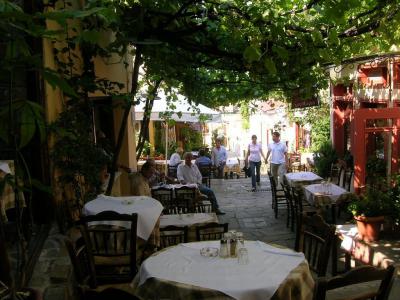
Recently renovated, the Plaka Stairs neighborhood abounds in small eateries and bars scattered on the slopes of the Acropolis, particularly along Mnisikleous pedestrian street and its vicinity. Due to the hilly landscape, this street is designed in the form of steps, lined with cafes and restaurants on both sides. Creative and often compact seating arrangements along the steps create a lively atmosphere filled with music and the cheerful voices of the passers-by. This unique dining experience is guaranteed from early lunchtime until the evening.
Tip:
For those seeking a lovely spot for dinner and drinks, the Anafiotika Cafe Restaurant, located on the narrow Plaka Steps, offers a spacious patio area and a rooftop terrace that is perfect for catching the sunset.
Originally settled by the descendants of Anafi stonemasons, who arrived in the 19th century to work in the expanding capital, Anafiotika has retained much of its original charm. The area features simple stone houses, some of which are built directly into the bedrock. Many of them remain unchanged while others have undergone restoration over the years.
The cascades of vibrant bougainvillea and pots of geraniums and marigolds adorn the balconies and rooftops, adding to the prevailing tranquility that contrasts the bustle and noise of modern Athens. Back in antiquity, this area was abandoned because the Delphic Oracle claimed it as a sacred ground. Later, during Ottoman rule, locals ingeniously constructed their homes overnight, taking advantage of the law that granted ownership of the property if it were erected between sunset and sunrise.
Recently renovated, the Plaka Stairs neighborhood abounds in small eateries and bars scattered on the slopes of the Acropolis, particularly along Mnisikleous pedestrian street and its vicinity. Due to the hilly landscape, this street is designed in the form of steps, lined with cafes and restaurants on both sides. Creative and often compact seating arrangements along the steps create a lively atmosphere filled with music and the cheerful voices of the passers-by. This unique dining experience is guaranteed from early lunchtime until the evening.
Tip:
For those seeking a lovely spot for dinner and drinks, the Anafiotika Cafe Restaurant, located on the narrow Plaka Steps, offers a spacious patio area and a rooftop terrace that is perfect for catching the sunset.
12) Tower of the Winds
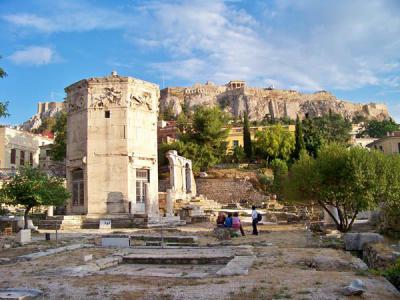
At the Tower of the Winds, you have science, mythology, and a touch of irony collide in an exquisite octagonal package. Standing proudly at 12 meters tall, this marble masterpiece was ancient Athens' answer to the weather app, a multi-functional timepiece that not only told the time but also predicted the wind’s next move. Think of it as a 2,000-year-old smart gadget, featuring sundials, a water clock, and a wind vane-all meticulously designed by a Syrian Greek astronomer around 50 BC (or perhaps even earlier, if some historians are to be believed).
Its frieze is a who’s who of the wind gods, with eight deities sculpted into the marble: from Boreas, blowing in the chill from the north, to Zephyrus, the west wind who, according to mythology, had a rather dramatic love life. Beneath them?-Eight sundials, because one just wasn’t enough. Inside?-A once-impressive water clock, powered by water piped directly from the Acropolis. And its height? Not just for show-it was designed so that Athenians could check the time and weather without craning their necks too much.
But history, as always, had its way with this tower. Early Christians turned it into a belfry, because why not? Then, during the Ottoman era, it became a tekke for whirling dervishes, where spiritual dancers twirled in meditation while the ancient sundials probably sighed in retirement. Over time, parts of the tower were buried, and today, faint Turkish inscriptions still linger on its interior walls-a nod to its many past lives.
Want to see it for yourself? Your ticket to the Roman Agora (or the Acropolis combo pass) will get you in. A small price to pay for a glimpse into one of history’s most sophisticated and repurposed buildings!
Its frieze is a who’s who of the wind gods, with eight deities sculpted into the marble: from Boreas, blowing in the chill from the north, to Zephyrus, the west wind who, according to mythology, had a rather dramatic love life. Beneath them?-Eight sundials, because one just wasn’t enough. Inside?-A once-impressive water clock, powered by water piped directly from the Acropolis. And its height? Not just for show-it was designed so that Athenians could check the time and weather without craning their necks too much.
But history, as always, had its way with this tower. Early Christians turned it into a belfry, because why not? Then, during the Ottoman era, it became a tekke for whirling dervishes, where spiritual dancers twirled in meditation while the ancient sundials probably sighed in retirement. Over time, parts of the tower were buried, and today, faint Turkish inscriptions still linger on its interior walls-a nod to its many past lives.
Want to see it for yourself? Your ticket to the Roman Agora (or the Acropolis combo pass) will get you in. A small price to pay for a glimpse into one of history’s most sophisticated and repurposed buildings!
13) Church of the Holy Apostles
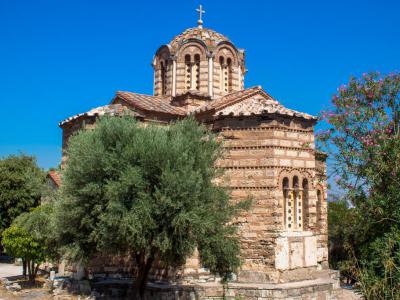
Ah, the Church of the Holy Apostles-small but mighty, still standing proud since the 10th century.
Tucked near the heart of the Ancient Roman Forum, this little Byzantine beauty has done what few buildings of its era have managed: keep most of its original structure intact. Built atop a 2nd-century shrine for Greece’s favorite mystical water nymphs, it was meant to honor Apostle Paul’s teachings in the Agora.
Speaking of its style: the exterior boasts intricate brick patterns that cleverly mimic Arabic calligraphy-because even in the 10th century, aesthetics mattered. The Ottoman era brought some changes (as they tended to do), but a mid-20th-century restoration swept away those 19th-century additions, bringing the church back to its Byzantine roots.
Visiting on a sweltering summer day, you’ll be grateful for this shady little oasis. Inside, you’ll find stunning Byzantine frescoes, lovingly salvaged from a demolished church-because good art deserves a second chance. And for the best part, this under-the-radar gem is rarely crowded, so you can soak up the history in peace.
No seating inside, but don’t worry-there are charming shaded benches nearby where you can rest, reflect, and pretend you’ve time-traveled a few centuries back.
Why else visit? Well, it’s not colossal, so it won’t leave you breathless from sheer scale-but it does offer a rare, unaltered glimpse into the world of smaller Byzantine churches. A true hidden treasure, just waiting for you to stumble upon it.
Tucked near the heart of the Ancient Roman Forum, this little Byzantine beauty has done what few buildings of its era have managed: keep most of its original structure intact. Built atop a 2nd-century shrine for Greece’s favorite mystical water nymphs, it was meant to honor Apostle Paul’s teachings in the Agora.
Speaking of its style: the exterior boasts intricate brick patterns that cleverly mimic Arabic calligraphy-because even in the 10th century, aesthetics mattered. The Ottoman era brought some changes (as they tended to do), but a mid-20th-century restoration swept away those 19th-century additions, bringing the church back to its Byzantine roots.
Visiting on a sweltering summer day, you’ll be grateful for this shady little oasis. Inside, you’ll find stunning Byzantine frescoes, lovingly salvaged from a demolished church-because good art deserves a second chance. And for the best part, this under-the-radar gem is rarely crowded, so you can soak up the history in peace.
No seating inside, but don’t worry-there are charming shaded benches nearby where you can rest, reflect, and pretend you’ve time-traveled a few centuries back.
Why else visit? Well, it’s not colossal, so it won’t leave you breathless from sheer scale-but it does offer a rare, unaltered glimpse into the world of smaller Byzantine churches. A true hidden treasure, just waiting for you to stumble upon it.
14) Temple of Hephaestus (must see)
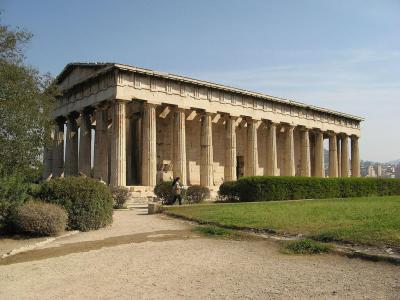
The Temple of Hephaestus is arguably the best-kept piece of real estate in ancient Athens. While other temples crumbled under time, earthquakes, and general neglect, this one decided to stick around, much like a friend who refuses to leave a party.
Dedicated to Hephaestus, the god of fire, metalworking, and crafting all things indestructible (including the Olympian gods’ celestial mansions), this temple sits proudly on Agoraios Kolonos hill, as if keeping an eye on the Agora below. Thanks to its side hustle as a Greek Orthodox church from the 7th century until 1834, it avoided the fate of so many ancient ruins-namely, becoming an oversized jigsaw puzzle.
Its construction started in 449 BC during the Golden Days of Athens, but progress was a bit delayed. Why? Because Athens was busy throwing money at the Parthenon. Eventually, circa 421–415 BC, the builders got back to it, completing this Doric peripteral beauty-a 13+ by 31+ meter marble masterpiece, with six columns at the front, thirteen on the sides, and all the classical elegance you’d expect. Inside, it once housed bronze statues of Hephaestus and Athena, as noted by the Greek travel influencer of antiquity, Pausanias.
The decoration?-A delightful mix of Doric and Ionic flair. The east pediment showed Athena being born (classic), while the west pediment depicted Hephaestus returning to Olympus (presumably after being thrown off it as a baby-tough childhood). The pronaos frieze captured Theseus vs. the Pallantides, while the opisthodomos frieze threw in a good old-fashioned Centaurs vs. Lapiths battle. Meanwhile, 18 sculpted metopes (out of 68) focused on the heroic labors of Heracles and Theseus.
Like all good historical sites, the temple went through a few career changes. By the late Roman Empire, it stopped serving as a pagan sanctuary, and by 700 AD, it was reborn as the Church of Saint George Akamates (why "Akamates"? No one quite knows). Then, in 1833, it hosted one last Divine Liturgy to welcome Greece’s first modern king, Otto, before transforming into a museum. By 1934, the temple officially retired, designated as an ancient monument.
Tips:
The surrounding garden offers shaded spots-perfect for a scenic break.
It’s included in the Acropolis multi-site ticket, so bundle up for the full Athenian experience.
An audio guide is a smart move for deeper insight.
While you can’t waltz inside, the exterior friezes are well worth the admiration.
In short, whether you're a history buff, an architecture lover, or just here for the views, the Temple of Hephaestus is a must-see survivor of ancient Athens-no time machine required.
Dedicated to Hephaestus, the god of fire, metalworking, and crafting all things indestructible (including the Olympian gods’ celestial mansions), this temple sits proudly on Agoraios Kolonos hill, as if keeping an eye on the Agora below. Thanks to its side hustle as a Greek Orthodox church from the 7th century until 1834, it avoided the fate of so many ancient ruins-namely, becoming an oversized jigsaw puzzle.
Its construction started in 449 BC during the Golden Days of Athens, but progress was a bit delayed. Why? Because Athens was busy throwing money at the Parthenon. Eventually, circa 421–415 BC, the builders got back to it, completing this Doric peripteral beauty-a 13+ by 31+ meter marble masterpiece, with six columns at the front, thirteen on the sides, and all the classical elegance you’d expect. Inside, it once housed bronze statues of Hephaestus and Athena, as noted by the Greek travel influencer of antiquity, Pausanias.
The decoration?-A delightful mix of Doric and Ionic flair. The east pediment showed Athena being born (classic), while the west pediment depicted Hephaestus returning to Olympus (presumably after being thrown off it as a baby-tough childhood). The pronaos frieze captured Theseus vs. the Pallantides, while the opisthodomos frieze threw in a good old-fashioned Centaurs vs. Lapiths battle. Meanwhile, 18 sculpted metopes (out of 68) focused on the heroic labors of Heracles and Theseus.
Like all good historical sites, the temple went through a few career changes. By the late Roman Empire, it stopped serving as a pagan sanctuary, and by 700 AD, it was reborn as the Church of Saint George Akamates (why "Akamates"? No one quite knows). Then, in 1833, it hosted one last Divine Liturgy to welcome Greece’s first modern king, Otto, before transforming into a museum. By 1934, the temple officially retired, designated as an ancient monument.
Tips:
The surrounding garden offers shaded spots-perfect for a scenic break.
It’s included in the Acropolis multi-site ticket, so bundle up for the full Athenian experience.
An audio guide is a smart move for deeper insight.
While you can’t waltz inside, the exterior friezes are well worth the admiration.
In short, whether you're a history buff, an architecture lover, or just here for the views, the Temple of Hephaestus is a must-see survivor of ancient Athens-no time machine required.
15) Ancient Agora of Athens (must see)
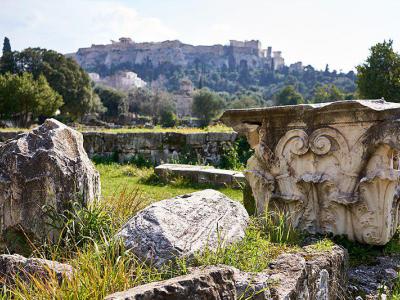
The ancient Agora of Athens sits beneath the revered hill of the Acropolis. This sprawling site contains the remnants of what was once a vast and intricate marketplace complex. In ancient times, the Agora served as the beating heart of public life in the city-state of Athens. Numerous administrative buildings, temples, altars, and roofed shopping arcades known as 'stoas', as well as fountains were constructed around the open square, which took its final shape in the 2nd century AD. Common citizens would gather here to engage in political discussions and participate in the voting process for proposed laws. It was within the Agora council buildings, law courts, and streets that democracy took root and thrived.
In 507 BC, Athenian leader Cleisthenes introduced a system of political reforms which he termed "demokratia", or the "rule of the people". This consisted of three distinct institutions, such as the "ekklesia", a sovereign governing body responsible for drafting laws and shaping foreign policy; the "boule", a council of representatives from the ten Athenian tribes; and the "dikasteria" – popular courts where citizens presented cases to a panel of randomly selected jurors. Although Athenian democracy lasted only two centuries, it stands as one of ancient Greece's most enduring legacies to the modern world.
Beyond its role as the city's political center, the Agora also served as a venue for religious ceremonies, commercial transactions, theatrical and musical shows, and even athletic competitions. The city mint producing Athens' silver currency was here, just as the state prison in which philosopher Socrates was executed in 399 BC.
Tips:
Admission to the on-site museum is included in the Agora ticket. Water fountains and restrooms are conveniently located nearby.
The site also features a well-marked ancient temple complete with the remains of the ancient drainage system.
In 507 BC, Athenian leader Cleisthenes introduced a system of political reforms which he termed "demokratia", or the "rule of the people". This consisted of three distinct institutions, such as the "ekklesia", a sovereign governing body responsible for drafting laws and shaping foreign policy; the "boule", a council of representatives from the ten Athenian tribes; and the "dikasteria" – popular courts where citizens presented cases to a panel of randomly selected jurors. Although Athenian democracy lasted only two centuries, it stands as one of ancient Greece's most enduring legacies to the modern world.
Beyond its role as the city's political center, the Agora also served as a venue for religious ceremonies, commercial transactions, theatrical and musical shows, and even athletic competitions. The city mint producing Athens' silver currency was here, just as the state prison in which philosopher Socrates was executed in 399 BC.
Tips:
Admission to the on-site museum is included in the Agora ticket. Water fountains and restrooms are conveniently located nearby.
The site also features a well-marked ancient temple complete with the remains of the ancient drainage system.
16) Hadrian's Library
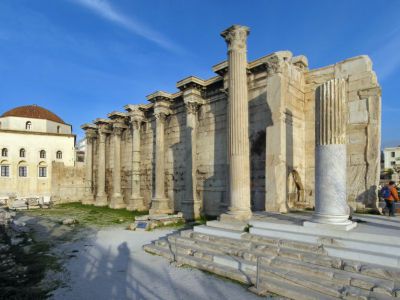
While not much remains of this Roman-era library today, back in the 2nd century AD, it was the place to be. Imagine a massive cloistered courtyard, a hundred grand columns, and enough space to make even the most extravagant book hoarder jealous. And who do we have to thank for this intellectual paradise?-Emperor Hadrian, the ultimate fanboy of Greek culture. In fact, he was so enamored with it, that they nicknamed him “Graecula” (which means “Little Greek”).
He decked out this sprawling complex with art galleries, lecture halls, and a magnificent public space-because why stop at books when you can have everything? His reign ushered in a golden age of peace and prosperity, giving arts and culture a serious upgrade across the empire.
In its prime, the library housed precious papyrus scrolls and exquisite artworks-until the barbaric Herules (from modern-day Germany) came knocking (not for a book club meeting, unfortunately). After their invasion, a Roman official named Herculius took on restoration duties, but history had more plans for the ruins. Over time, they became the foundations for not one, not two, but three different churches-a Byzantine one in the 5th century, another in the 7th, and a cathedral in the 12th. That's what they call re-purposing real estate!
These days, the site is finally open to the public, though excavation is still ongoing. A few original Corinthian columns have survived the centuries, hinting at the library’s former grandeur. And here’s a fun twist: the remains of the Tetraconch Church, smack in the middle of the ruins, were built entirely inside the library’s old courtyard.
Tip:
Your Acropolis ticket covers entry, so if you’re in the area, it’s a no-brainer to check it out. Or, if you’re feeling more mysterious, just walk along the perimeter fence and steal a few glances through the gaps-because who doesn’t love a little architectural intrigue?
He decked out this sprawling complex with art galleries, lecture halls, and a magnificent public space-because why stop at books when you can have everything? His reign ushered in a golden age of peace and prosperity, giving arts and culture a serious upgrade across the empire.
In its prime, the library housed precious papyrus scrolls and exquisite artworks-until the barbaric Herules (from modern-day Germany) came knocking (not for a book club meeting, unfortunately). After their invasion, a Roman official named Herculius took on restoration duties, but history had more plans for the ruins. Over time, they became the foundations for not one, not two, but three different churches-a Byzantine one in the 5th century, another in the 7th, and a cathedral in the 12th. That's what they call re-purposing real estate!
These days, the site is finally open to the public, though excavation is still ongoing. A few original Corinthian columns have survived the centuries, hinting at the library’s former grandeur. And here’s a fun twist: the remains of the Tetraconch Church, smack in the middle of the ruins, were built entirely inside the library’s old courtyard.
Tip:
Your Acropolis ticket covers entry, so if you’re in the area, it’s a no-brainer to check it out. Or, if you’re feeling more mysterious, just walk along the perimeter fence and steal a few glances through the gaps-because who doesn’t love a little architectural intrigue?
