

Mandraki Harbor Tour (Self Guided), Rhodes
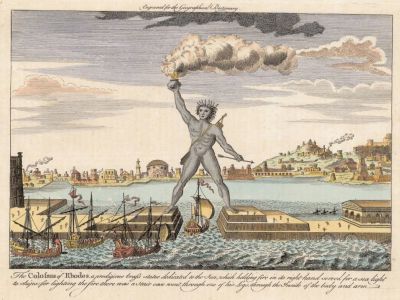
Mandraki, one of the three harbors of Rhodes, is by far the most famous of them. For centuries, this “front door” of the island has welcomed visitors to Rhodes from far and away. In large part (and quite literally so), the reason for its popularity was the enormous statue of Colossus, one of the Seven Wonders of the Ancient World, that used to crown the harbor's entrance, adding a sense of wonder.
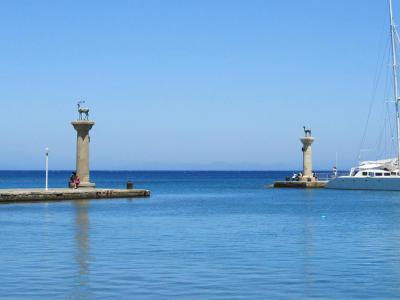
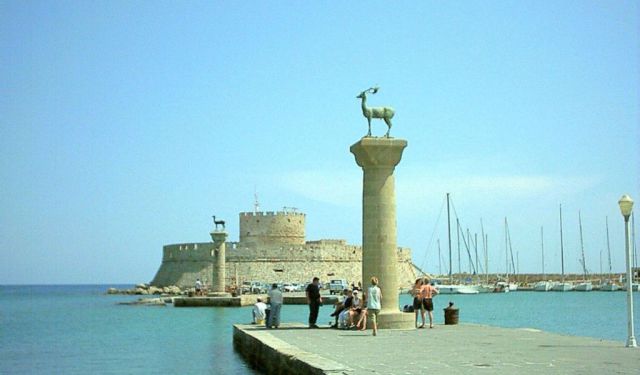
Long destroyed by the earthquakes that shattered the island back in antiquity, the only reminders of the statue now are the two sculptures of deer marking the spots where the giant's feet once stood.
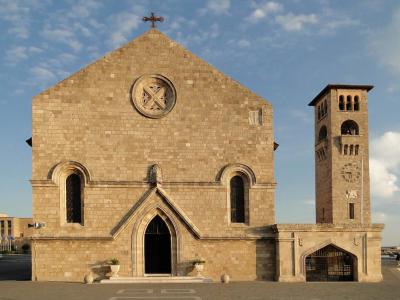
When you arrive at the harbor, you can't miss the Evangelismos Church, an imposing Gothic temple erected in the 1920s by the Italians.
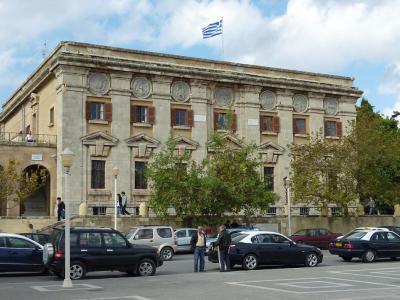
Nearby, you'll find the Main Post Office, a functional place that adds a touch of everyday life to this historic spot.
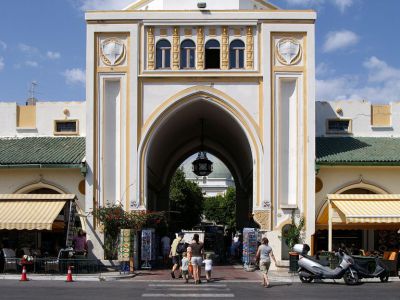
One of the highlights of Mandraki Harbor is the New Market Hall, a bustling place filled with colors and flavors. Here, locals and tourists shop for fresh produce, souvenirs, and other goodies.
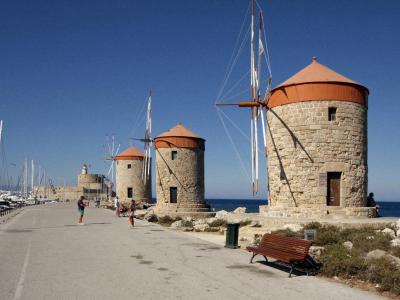
As you stroll along the harbor, you'll notice the iconic Windmills. Standing tall and proud, they are like ancient sentinels guarding the area.
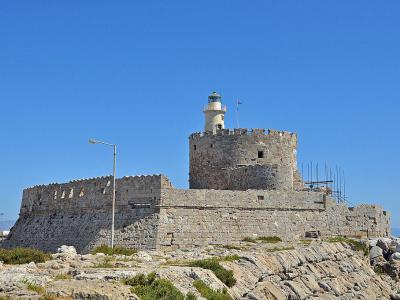
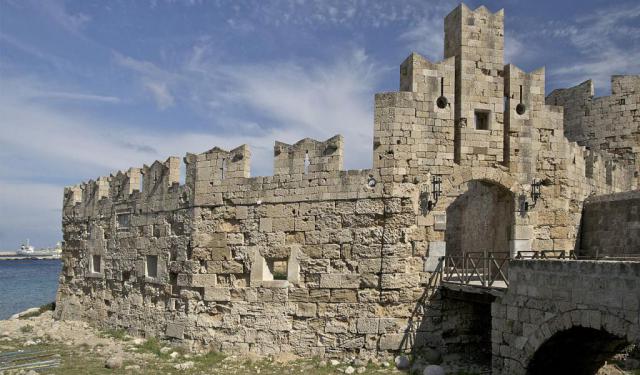
Further along, you'll spot the Saint Nicholas Fortress, an old defensive structure that once protected the harbor from invaders – a genuine piece of history right before your eyes!
Although the Colossus of Rhodes no longer exists, it remains an essential part of Mandraki Harbor. Here, history, culture, and everyday life come together beautifully. Many a boat to and from the neighboring islands pass through it every day. Our self-guided tour is designed to help you make the most of your trip to this picturesque waterfront area and explore the wonders of this enchanting place on the island of Rhodes.
Long destroyed by the earthquakes that shattered the island back in antiquity, the only reminders of the statue now are the two sculptures of deer marking the spots where the giant's feet once stood.
When you arrive at the harbor, you can't miss the Evangelismos Church, an imposing Gothic temple erected in the 1920s by the Italians.
Nearby, you'll find the Main Post Office, a functional place that adds a touch of everyday life to this historic spot.
One of the highlights of Mandraki Harbor is the New Market Hall, a bustling place filled with colors and flavors. Here, locals and tourists shop for fresh produce, souvenirs, and other goodies.
As you stroll along the harbor, you'll notice the iconic Windmills. Standing tall and proud, they are like ancient sentinels guarding the area.
Further along, you'll spot the Saint Nicholas Fortress, an old defensive structure that once protected the harbor from invaders – a genuine piece of history right before your eyes!
Although the Colossus of Rhodes no longer exists, it remains an essential part of Mandraki Harbor. Here, history, culture, and everyday life come together beautifully. Many a boat to and from the neighboring islands pass through it every day. Our self-guided tour is designed to help you make the most of your trip to this picturesque waterfront area and explore the wonders of this enchanting place on the island of Rhodes.
How it works: Download the app "GPSmyCity: Walks in 1K+ Cities" from Apple App Store or Google Play Store to your mobile phone or tablet. The app turns your mobile device into a personal tour guide and its built-in GPS navigation functions guide you from one tour stop to next. The app works offline, so no data plan is needed when traveling abroad.
Mandraki Harbor Tour Map
Guide Name: Mandraki Harbor Tour
Guide Location: Greece » Rhodes (See other walking tours in Rhodes)
Guide Type: Self-guided Walking Tour (Sightseeing)
# of Attractions: 7
Tour Duration: 1 Hour(s)
Travel Distance: 1.0 Km or 0.6 Miles
Author: rose
Sight(s) Featured in This Guide:
Guide Location: Greece » Rhodes (See other walking tours in Rhodes)
Guide Type: Self-guided Walking Tour (Sightseeing)
# of Attractions: 7
Tour Duration: 1 Hour(s)
Travel Distance: 1.0 Km or 0.6 Miles
Author: rose
Sight(s) Featured in This Guide:
- Evangelismos Church
- Main Post Office
- New Market (Nea Agora)
- Mandraki Harbor and Windmills
- Fort of St. Nicholas
- Rhodian Deer Statues
- Colossus of Rhodes
1) Evangelismos Church
Beside Mandraki Harbour stands this impressive Gothic-style Orthodox church, also known as the Church of the Annunciation. Built under Italian rule, it was completed in 1925 and originally served as a Catholic church for the Italian community until 1948, when Rhodes rejoined Greece. Renamed as a Greek Orthodox Church, it underwent a transformation, both architecturally and artistically. Greek painter Fotis Kontoglou adorned its interior with colourful Neo-Byzantine style frescoes, adding a unique touch to its initial features.
Dedicated to Saint John, the church showcases Gothic-style doors and windows, arches, and high ceilings, with decorative elements carved from local sandstone that was also used in the Medieval Town. Definitely worth exploring!
2) Main Post Office
The Post Office building in Rhodes is a standout on Liberty Square (Platia Eleftherias) in the heart of the modern city. A prime example of Renaissance Eclecticism, it started its journey in the early 20th century under Italian rule. The Italian government was behind its creation, bringing in the famous architect Florestano di Fausto, who was key in shaping Rhodes' architectural scene at the time.
Di Fausto blended Italian Rationalist styles with the local Byzantine and Islamic influences to craft the so-called Palazzo delle Poste. The result? A building that was both modern and steeped in the island's diverse cultural heritage. Completed in 1927, it was not only a post office, but also a symbol of Italy's intent to make a lasting mark on Rhodes with its architecture.
Easy to spot with its elaborate stonework and big arches, the building played a key role in the city's layout, reflecting Italy's goal to modernize Rhodes while holding onto its historical allure. And it's still serving its original purpose, housing the Greek Post-Office (ELTA).
Di Fausto blended Italian Rationalist styles with the local Byzantine and Islamic influences to craft the so-called Palazzo delle Poste. The result? A building that was both modern and steeped in the island's diverse cultural heritage. Completed in 1927, it was not only a post office, but also a symbol of Italy's intent to make a lasting mark on Rhodes with its architecture.
Easy to spot with its elaborate stonework and big arches, the building played a key role in the city's layout, reflecting Italy's goal to modernize Rhodes while holding onto its historical allure. And it's still serving its original purpose, housing the Greek Post-Office (ELTA).
3) New Market (Nea Agora)
Right by the harbor at Mandraki and adjacent to the Old Town, the New Market really stands out. This large, seven-sided building features a magnificent entrance, round domes, and an outdoor central courtyard where the old fish market once was. Built back in the 1920s by the Italians in an Arabic style, it really shows off the island's architectural mix.
While no longer functioning as a traditional market with stalls and local produce, the building remains a hub of activity. Surrounding the exterior are several small jewelry and souvenir shops catering to tourists, plus some cafes and food takeaway places. Inside the courtyard, there are even more shops and places to eat. The highlight is definitely the fancy domed building right in the middle of it all.
Whether you're looking to explore the architecture or simply kick back with a drink or grab a quick lunch, the New Market offers a cozy and inviting atmosphere for everyone to enjoy.
While no longer functioning as a traditional market with stalls and local produce, the building remains a hub of activity. Surrounding the exterior are several small jewelry and souvenir shops catering to tourists, plus some cafes and food takeaway places. Inside the courtyard, there are even more shops and places to eat. The highlight is definitely the fancy domed building right in the middle of it all.
Whether you're looking to explore the architecture or simply kick back with a drink or grab a quick lunch, the New Market offers a cozy and inviting atmosphere for everyone to enjoy.
4) Mandraki Harbor and Windmills (must see)
Mandráki Harbor, historically the principal port of the ancient city of Rhodes, today serves primarily as a marina, with private sailboats moored along its long eastern quay. In the summer months, the southwestern quays are animated by excursion boats offering short cruises along the coast to Líndos and to nearby islands.
The harbor is protected by a breakwater jetty approximately 400 meters long, at the end of which stands the Fort of Saint Nicholas. Originally constructed by the Knights Hospitaller in the 15th century to defend the harbor entrance, the fort remained in military use into the modern era and saw action during World War II. It now incorporates a lighthouse, which continues to guide vessels entering the harbor from the north.
Although popular imagery often suggests otherwise, the ancient Colossus of Rhodes did not stand at Mandráki Harbor. This long-standing myth, frequently repeated on souvenirs and promotional material, has no archaeological support. Instead, the harbor entrance is marked by two modern columns, erected during the Italian period in the early 20th century, each topped with a bronze statue of a stag and a doe, which have become symbolic emblems of Rhodes.
Along the jetty leading toward the fort stand three restored medieval windmills, once used to grind grain unloaded from ships anchored in the harbor. Historical sources suggest that as many as a dozen windmills may originally have lined this structure. The surviving three have been carefully renovated and today form one of Mandráki’s most recognizable landmarks.
The harbor is protected by a breakwater jetty approximately 400 meters long, at the end of which stands the Fort of Saint Nicholas. Originally constructed by the Knights Hospitaller in the 15th century to defend the harbor entrance, the fort remained in military use into the modern era and saw action during World War II. It now incorporates a lighthouse, which continues to guide vessels entering the harbor from the north.
Although popular imagery often suggests otherwise, the ancient Colossus of Rhodes did not stand at Mandráki Harbor. This long-standing myth, frequently repeated on souvenirs and promotional material, has no archaeological support. Instead, the harbor entrance is marked by two modern columns, erected during the Italian period in the early 20th century, each topped with a bronze statue of a stag and a doe, which have become symbolic emblems of Rhodes.
Along the jetty leading toward the fort stand three restored medieval windmills, once used to grind grain unloaded from ships anchored in the harbor. Historical sources suggest that as many as a dozen windmills may originally have lined this structure. The surviving three have been carefully renovated and today form one of Mandráki’s most recognizable landmarks.
5) Fort of St. Nicholas (must see)
The Fort of Saint Nicholas stands at the end of the Mandráki breakwater, guarding the entrance to the harbor and marking one of the most strategically important points in Rhodes’ medieval defenses. In the early 15th century, the site was initially occupied by a guard tower built by the Knights Hospitaller to control access to the port. Following the Ottoman siege of 1480, the tower was substantially reinforced and expanded into a fortified structure designed to withstand artillery attack. The completed fort took its name from a chapel dedicated to Saint Nicholas located within its walls.
The fort played a significant defensive role during the sieges of 1480 and 1522. In 1480, the strengthened harbor defenses helped repel the Ottoman assault, allowing the Knights to retain control of Rhodes. During the second siege in 1522, however, the Ottomans eventually forced the Knights’ surrender, leading to their departure from the island in early 1523.
The fortification was designed specifically to counter the increasing use of cannon warfare, with thick masonry walls and a compact layout that reduced exposure to direct fire. Much of this structure remains intact, contributing to the fort’s strong visual presence at the harbor entrance. In later periods, the fort continued to serve military purposes and was adapted during World War II, after which a lighthouse was installed to guide vessels entering Mandráki Harbor.
Today, the Fort of Saint Nicholas is primarily appreciated from the outside. Visitors can walk along the breakwater leading to the fort, which follows the line of earlier defensive works and offers views back toward Mandráki Harbor, the medieval walls, and the windmills. This route provides a clear sense of the fort’s role within the wider harbor defense system and its enduring place in the maritime landscape of Rhodes.
The fort played a significant defensive role during the sieges of 1480 and 1522. In 1480, the strengthened harbor defenses helped repel the Ottoman assault, allowing the Knights to retain control of Rhodes. During the second siege in 1522, however, the Ottomans eventually forced the Knights’ surrender, leading to their departure from the island in early 1523.
The fortification was designed specifically to counter the increasing use of cannon warfare, with thick masonry walls and a compact layout that reduced exposure to direct fire. Much of this structure remains intact, contributing to the fort’s strong visual presence at the harbor entrance. In later periods, the fort continued to serve military purposes and was adapted during World War II, after which a lighthouse was installed to guide vessels entering Mandráki Harbor.
Today, the Fort of Saint Nicholas is primarily appreciated from the outside. Visitors can walk along the breakwater leading to the fort, which follows the line of earlier defensive works and offers views back toward Mandráki Harbor, the medieval walls, and the windmills. This route provides a clear sense of the fort’s role within the wider harbor defense system and its enduring place in the maritime landscape of Rhodes.
6) Rhodian Deer Statues
Standing on slender columns at the entrance of Mandraki Harbor are sculptures depicting Rhodian deer-a stag and a doe-symbols of the elegant and cosmopolitan island of Rhodes. Legend has it that Crusaders brought deer to the island in medieval times to protect their camps from snakes. (While the deer don't directly kill snakes, their horns produce a substance that repels them.) However, findings suggest that deer have inhabited Rhodes since ancient times; in fact, in the 6th century BC, the island was named "Elafousa", meaning "deer island", due to the abundance of this species.
Interestingly, this location is also believed to be the site of one of the Seven Wonders of the Ancient World-the famed Colossus of Rhodes. Today, these two deer statues have become iconic symbols of the island and are among the most photographed sights.
Tip:
For the best photo opportunities, visit early in the morning when there are fewer tourists around.
Interestingly, this location is also believed to be the site of one of the Seven Wonders of the Ancient World-the famed Colossus of Rhodes. Today, these two deer statues have become iconic symbols of the island and are among the most photographed sights.
Tip:
For the best photo opportunities, visit early in the morning when there are fewer tourists around.
7) Colossus of Rhodes
According to legend, the Colossus of Rhodes stood astride the entrance to Mandraki Harbor, with one foot on each side of the harbor mouth, allowing ships to sail between its legs as they entered the port.
However, it’s worth noting that this dramatic image comes from later medieval accounts. Most modern historians and archaeologists agree that the Colossus of Rhodes did not stand astride the entrance to Mandráki Harbor, as such a pose would have been impractical and unsupported by ancient sources. No contemporary account places the statue spanning the harbor, and the idea is generally regarded as a later invention. The true location of the Colossus remains uncertain, though many scholars favor an inland setting, possibly near a sanctuary of Helios or on elevated ground overlooking the harbor.
The colossal bronze statue was erected in the early 3rd century BC to commemorate Rhodes’ successful defense against Demetrius Poliorcetes, who besieged the city for nearly a year. Ancient writers credit the sculptor Khares of Lindos, a pupil of Lysippos, with the project, which reportedly took twelve years to complete. The Colossus stood approximately 33–35 meters high, making it one of the tallest statues of the ancient world. Later sources relate that each of its fingers was as large as a man, though such details belong more to literary tradition than measurable fact. Stories claiming that Khares took his own life over a design flaw are also legendary and cannot be securely verified.
In 226 BC, an earthquake struck Rhodes, causing the statue to collapse at the knees. Ancient authors note that the fallen remains were considered awe-inspiring, and an oracle, traditionally identified as the Delphic Oracle, advised the Rhodians not to rebuild the monument. The fragments were therefore left where they lay for several centuries.
According to later historical accounts, the remains of the Colossus were finally removed in AD 653, when Arab forces captured Rhodes and sold the bronze as scrap. Medieval writers claim that the metal was transported by hundreds of camels.
However, it’s worth noting that this dramatic image comes from later medieval accounts. Most modern historians and archaeologists agree that the Colossus of Rhodes did not stand astride the entrance to Mandráki Harbor, as such a pose would have been impractical and unsupported by ancient sources. No contemporary account places the statue spanning the harbor, and the idea is generally regarded as a later invention. The true location of the Colossus remains uncertain, though many scholars favor an inland setting, possibly near a sanctuary of Helios or on elevated ground overlooking the harbor.
The colossal bronze statue was erected in the early 3rd century BC to commemorate Rhodes’ successful defense against Demetrius Poliorcetes, who besieged the city for nearly a year. Ancient writers credit the sculptor Khares of Lindos, a pupil of Lysippos, with the project, which reportedly took twelve years to complete. The Colossus stood approximately 33–35 meters high, making it one of the tallest statues of the ancient world. Later sources relate that each of its fingers was as large as a man, though such details belong more to literary tradition than measurable fact. Stories claiming that Khares took his own life over a design flaw are also legendary and cannot be securely verified.
In 226 BC, an earthquake struck Rhodes, causing the statue to collapse at the knees. Ancient authors note that the fallen remains were considered awe-inspiring, and an oracle, traditionally identified as the Delphic Oracle, advised the Rhodians not to rebuild the monument. The fragments were therefore left where they lay for several centuries.
According to later historical accounts, the remains of the Colossus were finally removed in AD 653, when Arab forces captured Rhodes and sold the bronze as scrap. Medieval writers claim that the metal was transported by hundreds of camels.
Walking Tours in Rhodes, Greece

Create Your Own Walk in Rhodes
Creating your own self-guided walk in Rhodes is easy and fun. Choose the city attractions that you want to see and a walk route map will be created just for you. You can even set your hotel as the start point of the walk.
Rhodes Introduction Walking Tour
Roman writer Pliny the Elder once claimed that Rhodes was home to more than three thousand statues. The most famous of them was, without doubt, the Colossus of Rhodes, a monumental bronze statue of the sun god Helios, erected in the early 3rd century BC and later counted among the Seven Wonders of the Ancient World.
Rhodes is one of the most historically layered islands in the eastern... view more
Tour Duration: 2 Hour(s)
Travel Distance: 2.2 Km or 1.4 Miles
Rhodes is one of the most historically layered islands in the eastern... view more
Tour Duration: 2 Hour(s)
Travel Distance: 2.2 Km or 1.4 Miles
Gates and Walls Tour
Owing to its geographical location, as a gateway to the Aegean Sea, Rhodes has always had a vantage position on trade routes between the West and the East – well protected against both foreign invaders and corsairs sailing the Mediterranean waters. The early defense system of Rhodes dates back as far as the 4th century BC.
Starting the Middle Ages – the year 1309, when the Knights... view more
Tour Duration: 1 Hour(s)
Travel Distance: 1.4 Km or 0.9 Miles
Starting the Middle Ages – the year 1309, when the Knights... view more
Tour Duration: 1 Hour(s)
Travel Distance: 1.4 Km or 0.9 Miles
Medieval Town Walking Tour
The medieval town of Rhodes, where every street, square, or building evokes a story about ancient times, is a living museum in its own right. Being one of the best-preserved medieval walled towns in Europe, this enchanting area boasts several remarkable locations and is quite deservedly declared a UNESCO World Heritage Site.
Welcoming you at its entrance is the Liberty (or Eleftherias) Gate.... view more
Tour Duration: 2 Hour(s)
Travel Distance: 1.9 Km or 1.2 Miles
Welcoming you at its entrance is the Liberty (or Eleftherias) Gate.... view more
Tour Duration: 2 Hour(s)
Travel Distance: 1.9 Km or 1.2 Miles
Acropolis of Rhodes
The Acropolis of Rhodes on Monte Smith is an ancient archaeological site. The excavations and restoration works here began under the Italian administration of the island (from 1912 to 1945) and continue to this day. This historic location is home to several significant structures dating back to the Hellenistic period (3rd to 2nd century BC) offering a glimpse into the history and culture of the... view more
Tour Duration: 1 Hour(s)
Travel Distance: 1.5 Km or 0.9 Miles
Tour Duration: 1 Hour(s)
Travel Distance: 1.5 Km or 0.9 Miles
The Most Popular Cities
/ view all