

Moroccan Architecture Walking Tour (Self Guided), Marrakech
No tall skyscrapers, no sophisticated giant malls, no anything else of Western architecture await you on this tour. Our self-guided walk is entirely about the genuine Moroccan style. We are going to reveal Marrakech which will amaze you with its majestic structures, traditional motifs, and mystic atmosphere.
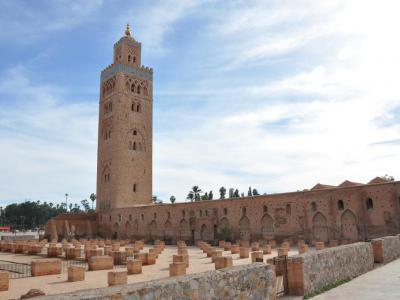
Our first stop is a prominent example of Islamic architecture, the Koutoubia Mosque. Its towering minaret is a symbol of the city that features ornate detailing, reflecting Islamic design principles.
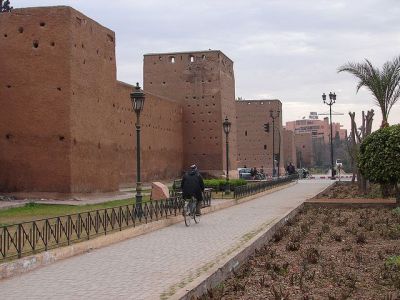
The Marrakech Ramparts are ancient fortifications encircling the old city. Built to fend off invaders in the old days, these walls showcase the craftsmanship of Moroccan artisans.
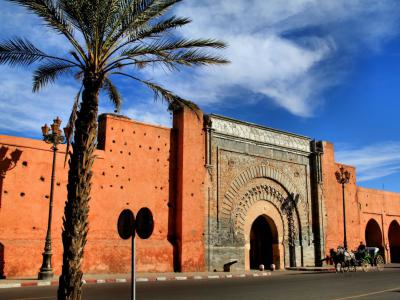
Bab Agnaou, an entryway to the historic Medina, is one of the grand gates of Marrakech, exhibiting intricate carvings.
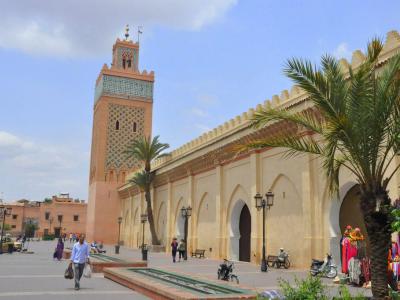
The Kasbah Mosque, a serene oasis within the city, showcases traditional Moroccan architecture, complete with graceful arches, intricate tilework, and a peaceful courtyard.
The Saadian Tombs are a hidden gem, discovered in the 20th century. This architectural wonder boasts stunning mausoleums adorned with elaborate stucco work and tile mosaics.
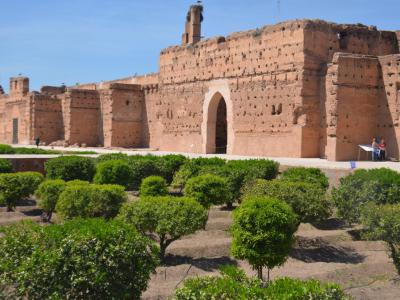
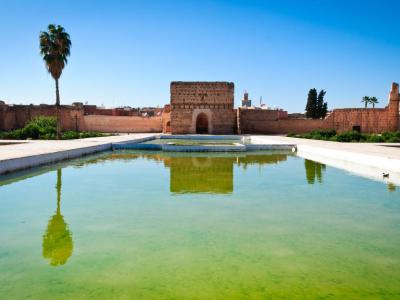
Meanwhile, El Badi Palace is a testament to Moroccan grandeur, with its vast courtyards and remnants of opulent architectural elements. Its ruins still evoke a sense of awe and wonder.
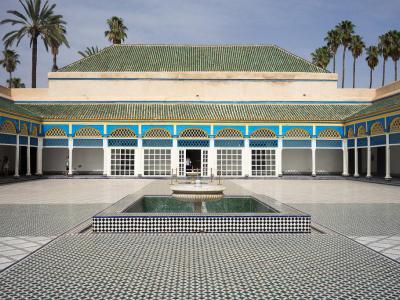
Another architectural jewel of note is Bahia Palace. Renowned for its tranquil gardens, ornate rooms, and masterly zellige tilework, it reflects the opulence of Moroccan aristocracy.
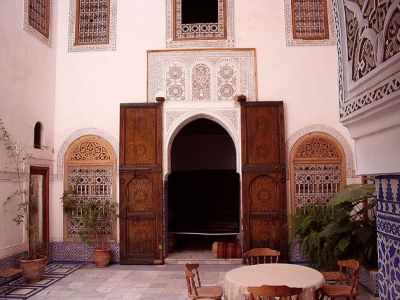
Finally, the Ben Youssef Madrasa, an ancient Islamic school, is a marvel of Islamic masonry, characterized by its complex geometric patterns, carved cedarwood, and serene courtyards.
Exploring these and other architectural wonders in Marrakech is not only a visual delight but a cultural and historical journey through the heart of this vibrant city. In the realm of Instagram, Marrakech stands tall, with every single building here having its own legend. So, spare some time to discover them with the help of our self-guided walk. You'll find it rewarding!
Our first stop is a prominent example of Islamic architecture, the Koutoubia Mosque. Its towering minaret is a symbol of the city that features ornate detailing, reflecting Islamic design principles.
The Marrakech Ramparts are ancient fortifications encircling the old city. Built to fend off invaders in the old days, these walls showcase the craftsmanship of Moroccan artisans.
Bab Agnaou, an entryway to the historic Medina, is one of the grand gates of Marrakech, exhibiting intricate carvings.
The Kasbah Mosque, a serene oasis within the city, showcases traditional Moroccan architecture, complete with graceful arches, intricate tilework, and a peaceful courtyard.
The Saadian Tombs are a hidden gem, discovered in the 20th century. This architectural wonder boasts stunning mausoleums adorned with elaborate stucco work and tile mosaics.
Meanwhile, El Badi Palace is a testament to Moroccan grandeur, with its vast courtyards and remnants of opulent architectural elements. Its ruins still evoke a sense of awe and wonder.
Another architectural jewel of note is Bahia Palace. Renowned for its tranquil gardens, ornate rooms, and masterly zellige tilework, it reflects the opulence of Moroccan aristocracy.
Finally, the Ben Youssef Madrasa, an ancient Islamic school, is a marvel of Islamic masonry, characterized by its complex geometric patterns, carved cedarwood, and serene courtyards.
Exploring these and other architectural wonders in Marrakech is not only a visual delight but a cultural and historical journey through the heart of this vibrant city. In the realm of Instagram, Marrakech stands tall, with every single building here having its own legend. So, spare some time to discover them with the help of our self-guided walk. You'll find it rewarding!
How it works: Download the app "GPSmyCity: Walks in 1K+ Cities" from Apple App Store or Google Play Store to your mobile phone or tablet. The app turns your mobile device into a personal tour guide and its built-in GPS navigation functions guide you from one tour stop to next. The app works offline, so no data plan is needed when traveling abroad.
Moroccan Architecture Walking Tour Map
Guide Name: Moroccan Architecture Walking Tour
Guide Location: Morocco » Marrakech (See other walking tours in Marrakech)
Guide Type: Self-guided Walking Tour (Sightseeing)
# of Attractions: 12
Tour Duration: 3 Hour(s)
Travel Distance: 4.6 Km or 2.9 Miles
Author: DanaOffice
Sight(s) Featured in This Guide:
Guide Location: Morocco » Marrakech (See other walking tours in Marrakech)
Guide Type: Self-guided Walking Tour (Sightseeing)
# of Attractions: 12
Tour Duration: 3 Hour(s)
Travel Distance: 4.6 Km or 2.9 Miles
Author: DanaOffice
Sight(s) Featured in This Guide:
- Koutoubia Mosque and Minaret
- Marrakech Ramparts
- Bab Agnaou
- Kasbah Mosque
- Saadian Tombs
- El Badi Palace
- Bahia Palace
- Musee Tiskiwin
- Musee Dar Si Said (Museum of Moroccan Arts)
- Almoravid Koubba
- Musee de Marrakech (Marrakech Museum)
- Ben Youssef Madrasa
1) Koutoubia Mosque and Minaret (must see)
The Koutoubia Mosque and its soaring minaret are the most recognizable landmarks of Marrakech, standing at the edge of the bustling Jemaa el-Fnaa square and marking the spiritual heart of the city. Construction began in 1150, shortly after the Almohad dynasty seized Marrakech from the Almoravids. The mosque was built on the site of an earlier structure and later expanded, with its final form taking shape by the late 12th century. Its name, “Koutoubia,” comes from the Arabic term meaning “booksellers,” because it once stood beside a thriving market of manuscript vendors and scholars.
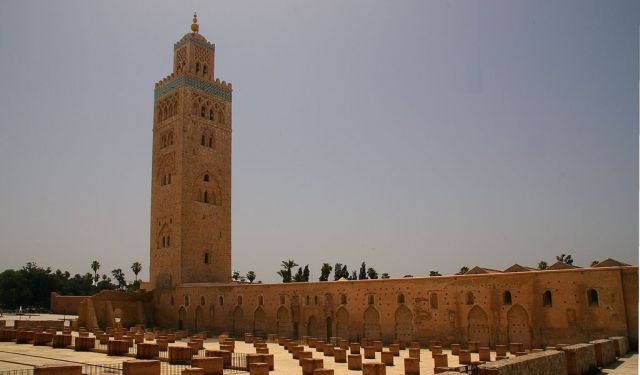
The minaret, rising approximately 77 meters including its spire, is a masterpiece of Almohad architecture and a model for later towers, including the Giralda in Seville and the Hassan Tower in Rabat. Built of red sandstone, it features harmonious proportions, decorative arches, and intricate geometric stonework, topped with a golden finial of four copper spheres. Its design reflects both the religious ambition and political authority of the Almohad empire, which sought to redefine Islamic architecture across North Africa and Al-Andalus.
The mosque itself is still in active use and not accessible to non-Muslims, but its exterior and surroundings offer much to appreciate. The gardens surrounding the mosque, known as the Koutoubia Gardens or Lalla Hasna Park, provide shaded paths, fountains, and views of the minaret framed by palms and roses. At sunset, when the tower glows softly against the sky and the call to prayer echoes across the city, the site becomes one of the most atmospheric places in Marrakech.
A Marrakech walking tour cannot be complete without its symbol. Wherever your legs take you, the Koutoubia Mosque is watching over you and is making sure that you will come back to take in the liveliness of its surroundings.
The minaret, rising approximately 77 meters including its spire, is a masterpiece of Almohad architecture and a model for later towers, including the Giralda in Seville and the Hassan Tower in Rabat. Built of red sandstone, it features harmonious proportions, decorative arches, and intricate geometric stonework, topped with a golden finial of four copper spheres. Its design reflects both the religious ambition and political authority of the Almohad empire, which sought to redefine Islamic architecture across North Africa and Al-Andalus.
The mosque itself is still in active use and not accessible to non-Muslims, but its exterior and surroundings offer much to appreciate. The gardens surrounding the mosque, known as the Koutoubia Gardens or Lalla Hasna Park, provide shaded paths, fountains, and views of the minaret framed by palms and roses. At sunset, when the tower glows softly against the sky and the call to prayer echoes across the city, the site becomes one of the most atmospheric places in Marrakech.
A Marrakech walking tour cannot be complete without its symbol. Wherever your legs take you, the Koutoubia Mosque is watching over you and is making sure that you will come back to take in the liveliness of its surroundings.
2) Marrakech Ramparts
The ramparts of Marrakech form one of the city’s most enduring symbols, encircling the historic old town with kilometers of warm, reddish-pink walls that have stood for centuries. They were first constructed in the early 12th century under the Almoravid dynasty, shortly after Marrakech was founded as the capital of a growing North African empire. Later expanded and reinforced by the Almohads, the ramparts served both defensive and symbolic functions—protecting the city from outside threats while projecting its power and prestige.
Built from a mixture of clay, lime, and red earth, the walls stretch for roughly 19 kilometers and originally included more than 200 defensive towers, along with several monumental gates that controlled movement in and out of the city. These gates—such as Bab Agnaou—became architectural landmarks in their own right, often adorned with decorative patterns and inscriptions.
For visitors, the ramparts offer multiple points of interest. Walking or driving along their length provides a changing view of the city, from bustling markets and palm-lined avenues to quieter stretches where the walls meet open fields or gardens. Sunset is a particularly atmospheric time, when the walls glow in deep shades of ochre and rose. Some sections of the ramparts are accessible on foot, allowing visitors to get a closer look at the construction methods and weathered textures that tell the story of nearly 900 years of history.
Built from a mixture of clay, lime, and red earth, the walls stretch for roughly 19 kilometers and originally included more than 200 defensive towers, along with several monumental gates that controlled movement in and out of the city. These gates—such as Bab Agnaou—became architectural landmarks in their own right, often adorned with decorative patterns and inscriptions.
For visitors, the ramparts offer multiple points of interest. Walking or driving along their length provides a changing view of the city, from bustling markets and palm-lined avenues to quieter stretches where the walls meet open fields or gardens. Sunset is a particularly atmospheric time, when the walls glow in deep shades of ochre and rose. Some sections of the ramparts are accessible on foot, allowing visitors to get a closer look at the construction methods and weathered textures that tell the story of nearly 900 years of history.
3) Bab Agnaou
Bab Agnaou is one of the most historically important gates of Marrakech, serving as a ceremonial entrance to the royal kasbah, the fortified district built by the Almohad dynasty in the 12th century. Constructed during the reign of Sultan Yaqub al-Mansur around 1185–1190, the gate was designed not for defense but as a monumental statement of power and prestige. Its name is often translated as “Gate of the Black People,” possibly referring to the sub-Saharan soldiers who once guarded this part of the city, or to the dark-colored stone originally used in its construction.
Architecturally, Bab Agnaou is an exceptional example of Almohad design, showcasing a refined balance between strength and ornament. The gate features a large horseshoe arch framed by intricate carved decoration, including inscriptions, floral motifs, and interlacing patterns typical of the period. The two damaged sections at the top corners suggest that slender towers once rose here, which may explain the name Agnaou — meaning “sheep without horns” in ancient Berber.
Today, Bab Agnaou remains one of the most photographed landmarks in Marrakech, both for its dramatic form and for its position at the edge of the historic kasbah quarter, close to the Saadian Tombs and the Kasbah Mosque. Standing before the gate, it’s easy to imagine processions, guards, and dignitaries passing beneath its arch during the height of Marrakech’s imperial era.
For travelers interested in history, architecture, or the layers of power that shaped the city, Bab Agnaou offers a vivid point of connection — a silent witness to eight centuries of royal life, ritual, and urban evolution.
Architecturally, Bab Agnaou is an exceptional example of Almohad design, showcasing a refined balance between strength and ornament. The gate features a large horseshoe arch framed by intricate carved decoration, including inscriptions, floral motifs, and interlacing patterns typical of the period. The two damaged sections at the top corners suggest that slender towers once rose here, which may explain the name Agnaou — meaning “sheep without horns” in ancient Berber.
Today, Bab Agnaou remains one of the most photographed landmarks in Marrakech, both for its dramatic form and for its position at the edge of the historic kasbah quarter, close to the Saadian Tombs and the Kasbah Mosque. Standing before the gate, it’s easy to imagine processions, guards, and dignitaries passing beneath its arch during the height of Marrakech’s imperial era.
For travelers interested in history, architecture, or the layers of power that shaped the city, Bab Agnaou offers a vivid point of connection — a silent witness to eight centuries of royal life, ritual, and urban evolution.
4) Kasbah Mosque
The Kasbah Mosque was built in the late 12th century, around 1185–1190, during the reign of Sultan Yaqub al-Mansur, the same ruler responsible for the iconic Koutoubia Mosque. Located within the royal kasbah — the fortified citadel that once served as the seat of power — the mosque was intended as the official place of worship for the sultan, his court, and the military elite. Its position near the Saadian Tombs underscores the sacred and ceremonial role of this district.
Although the mosque suffered damage from a massive explosion in the 16th century and later required reconstruction under the Saadians, it retains much of its original Almohad character. The minaret, built in a distinct style with decorative brickwork and subtle geometric motifs, stands as a quieter counterpart to the more famous Koutoubia. The prayer hall is supported by rows of arches and simple but elegant plasterwork, reflecting the Almohad preference for austere beauty rather than excessive ornamentation.
For visitors, the Kasbah Mosque is meaningful not only for its architecture but also for its context. It remains an active place of worship, offering a living connection to centuries of Moroccan religious life. While non-Muslims cannot enter the prayer hall, the exterior and surrounding neighborhood — including the nearby Saadian Tombs and the old kasbah walls — create a rich historical atmosphere.
Although the mosque suffered damage from a massive explosion in the 16th century and later required reconstruction under the Saadians, it retains much of its original Almohad character. The minaret, built in a distinct style with decorative brickwork and subtle geometric motifs, stands as a quieter counterpart to the more famous Koutoubia. The prayer hall is supported by rows of arches and simple but elegant plasterwork, reflecting the Almohad preference for austere beauty rather than excessive ornamentation.
For visitors, the Kasbah Mosque is meaningful not only for its architecture but also for its context. It remains an active place of worship, offering a living connection to centuries of Moroccan religious life. While non-Muslims cannot enter the prayer hall, the exterior and surrounding neighborhood — including the nearby Saadian Tombs and the old kasbah walls — create a rich historical atmosphere.
5) Saadian Tombs (must see)
The Saadian Tombs date back to the late 16th century, during the reign of Sultan Ahmad al-Mansur, who ruled from 1578 to 1603. He ordered the creation of an elaborate mausoleum to house his own tomb, as well as those of his family and high-ranking officials. The Saadians were known for their appreciation of beauty and refinement, and the tombs reflect this through exquisite craftsmanship and architectural detail.
After the fall of the Saadian dynasty, their successors — the Alaouites — sealed off the tombs, hiding them from sight rather than destroying them. For more than two centuries, the site remained largely forgotten, preserved by neglect rather than intention. It wasn’t until 1917, when French aerial photography revealed their presence, that the tombs were rediscovered and opened to the public.
The complex of the Saadian Tombs is made up of two mausoleums. The larger and more significant one is located on the western end of the complex. It consists of three interconnecting rooms, with the Chamber of the Twelve Columns as the main attraction. From the outside, this chamber sits between the other two rooms. Once you step inside, you can easily recognize the space thanks to its twelve marble columns arranged in groups of three. Three principal tombs stand at the centre of the chamber, with the middle one belonging to Sultan al-Mansur himself. The beauty of the room cannot be overstated: it is a masterpiece of marble, calligraphy, plasterwork, and flowing geometric design.
When you step back outside, quiet garden pathways lead past dozens of lesser royal family members’ graves, many of them covered in beautiful mosaic tiles.
For anyone interested in history, architecture, or Morocco’s royal past, this is one of Marrakech’s most essential — and hauntingly beautiful — stops.
After the fall of the Saadian dynasty, their successors — the Alaouites — sealed off the tombs, hiding them from sight rather than destroying them. For more than two centuries, the site remained largely forgotten, preserved by neglect rather than intention. It wasn’t until 1917, when French aerial photography revealed their presence, that the tombs were rediscovered and opened to the public.
The complex of the Saadian Tombs is made up of two mausoleums. The larger and more significant one is located on the western end of the complex. It consists of three interconnecting rooms, with the Chamber of the Twelve Columns as the main attraction. From the outside, this chamber sits between the other two rooms. Once you step inside, you can easily recognize the space thanks to its twelve marble columns arranged in groups of three. Three principal tombs stand at the centre of the chamber, with the middle one belonging to Sultan al-Mansur himself. The beauty of the room cannot be overstated: it is a masterpiece of marble, calligraphy, plasterwork, and flowing geometric design.
When you step back outside, quiet garden pathways lead past dozens of lesser royal family members’ graves, many of them covered in beautiful mosaic tiles.
For anyone interested in history, architecture, or Morocco’s royal past, this is one of Marrakech’s most essential — and hauntingly beautiful — stops.
6) El Badi Palace (must see)
El Badi Palace is one of the city’s most evocative historical sites—less a traditional palace today than a grand ruin that invites the imagination to travel back to Morocco’s golden age. It was commissioned in the late 16th century by Sultan Ahmad al-Mansur of the Saadian dynasty, who ordered its construction after his victory over the Portuguese at the Battle of the Three Kings in 1578. Built with the finest materials available—Italian marble, gold from Sudan, carved cedarwood, and onyx—it took roughly 25 years to complete and was intended to symbolize the sultan’s wealth, power, and refined taste. Its name, “El Badi,” meaning “The Incomparable,” reflects that ambition.
In its prime, the palace featured more than 300 rooms, vast reception halls, sunken gardens, fountains, pavilions, and a massive courtyard surrounded by richly decorated chambers. Diplomats and dignitaries described it as one of the most magnificent residences of its time. However, its glory was short-lived. When the Alaouite dynasty came to power in the 17th century, Sultan Moulay Ismail stripped El Badi of its precious materials to embellish his own palace in Meknes, leaving behind the monumental shell that still stands today.
The enormous courtyard with its pools and orange trees remains the palace's focal point. The courtyard is hard to miss as its size is almost two hectars. A water basin sits at the center and is surrounded by four sunken gardens that can be accessed by stairs. Upon entering the palace, the best vantage point is a terrace immediately on the left that offers sweeping views of the palace's elements and the surrounding old town.
Throughout the palace's ruins, remnants of carved decor, fragments of tilework, and traces of stucco work hint at former splendor. Despite the loss of its former embellishments, the palace is enlivened by a colony of storks who made the ruins' ramparts their home. They truly have some good taste.
El Badi Palace invites you to explore its treasures that have been taken away by time. Fill the gaps by using your imagination and you are in for a memorable experience.
In its prime, the palace featured more than 300 rooms, vast reception halls, sunken gardens, fountains, pavilions, and a massive courtyard surrounded by richly decorated chambers. Diplomats and dignitaries described it as one of the most magnificent residences of its time. However, its glory was short-lived. When the Alaouite dynasty came to power in the 17th century, Sultan Moulay Ismail stripped El Badi of its precious materials to embellish his own palace in Meknes, leaving behind the monumental shell that still stands today.
The enormous courtyard with its pools and orange trees remains the palace's focal point. The courtyard is hard to miss as its size is almost two hectars. A water basin sits at the center and is surrounded by four sunken gardens that can be accessed by stairs. Upon entering the palace, the best vantage point is a terrace immediately on the left that offers sweeping views of the palace's elements and the surrounding old town.
Throughout the palace's ruins, remnants of carved decor, fragments of tilework, and traces of stucco work hint at former splendor. Despite the loss of its former embellishments, the palace is enlivened by a colony of storks who made the ruins' ramparts their home. They truly have some good taste.
El Badi Palace invites you to explore its treasures that have been taken away by time. Fill the gaps by using your imagination and you are in for a memorable experience.
7) Bahia Palace (must see)
The Bahia Palace in Marrakech is one of the finest examples of late 19th-century Moroccan architecture, built to showcase the wealth and status of its owners. Construction began in the 1860s under the grand vizier of Sultan Muhammad IV and was later expanded by his son, Ba Ahmed, who served as regent of Morocco until 1900. The name “Bahia,” meaning “brilliance” in Arabic, reflects the intention behind the palace: to create a masterpiece of beauty, craftsmanship, and luxury. Although much of its original furniture and decoration was removed after Ba Ahmed’s death, the palace itself remains an exceptional expression of power and refined taste.
What makes the Bahia Palace particularly fascinating is not just its scale but its intricate design. The complex includes grand reception halls, intimate private rooms, open courtyards, gardens of cypress and orange trees, and elaborate decorative details at every turn. Carved cedar ceilings, zellige tilework, stucco patterns, and painted wooden panels demonstrate the highest level of craftsmanship of the period. Unlike traditional palaces arranged along a strict central axis, the Bahia consists of multiple irregular wings added over time, giving it a layered and almost labyrinthine character.
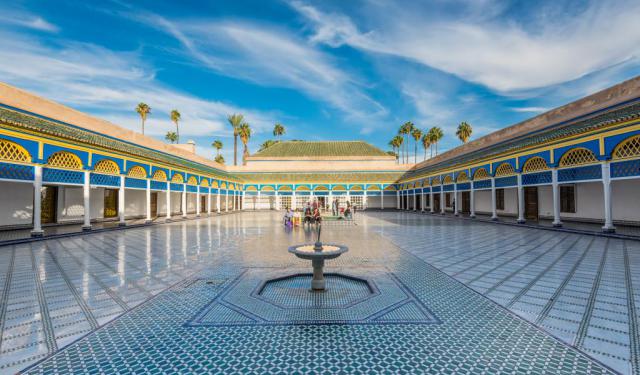
As you enter the palace grounds through a horseshoe archway, you are met by a path lined with orange trees, cypresses, hibiscus, and palms. The Grand Courtyard is the highlight of the palace and can be reached by walking straight ahead from the main entrance through a sequence of smaller rooms and courtyards. Once there, you can admire the delicate blue and yellow arches surrounding the courtyard. Together with the central fountain and the marble-tiled floor, the Grand Courtyard blends beautifully with the open sky above.
The palace carries strong cultural resonance, embodying the height of 19th-century Moroccan aristocratic life on the eve of the French Protectorate.
What makes the Bahia Palace particularly fascinating is not just its scale but its intricate design. The complex includes grand reception halls, intimate private rooms, open courtyards, gardens of cypress and orange trees, and elaborate decorative details at every turn. Carved cedar ceilings, zellige tilework, stucco patterns, and painted wooden panels demonstrate the highest level of craftsmanship of the period. Unlike traditional palaces arranged along a strict central axis, the Bahia consists of multiple irregular wings added over time, giving it a layered and almost labyrinthine character.
As you enter the palace grounds through a horseshoe archway, you are met by a path lined with orange trees, cypresses, hibiscus, and palms. The Grand Courtyard is the highlight of the palace and can be reached by walking straight ahead from the main entrance through a sequence of smaller rooms and courtyards. Once there, you can admire the delicate blue and yellow arches surrounding the courtyard. Together with the central fountain and the marble-tiled floor, the Grand Courtyard blends beautifully with the open sky above.
The palace carries strong cultural resonance, embodying the height of 19th-century Moroccan aristocratic life on the eve of the French Protectorate.
8) Musee Tiskiwin
Marrakech has some excellent museums and the Musée Tiskiwin, which stands on Rue de la Bahia, is among the most fascinating. The structure itself is not as impressive as (e.g.) the Bahia Palace, but again, it gives you an idea of 19th-century Spanish/Moroccan architecture - the former property of Dutch anthropologist and art historian Bert-Flint, who began his superb collection in 1946, with the museum having opened its doors in 1996.
Inside, you will find the finest examples of Moroccan arts, carpets, tents, musical instruments, sculpture, jewelry, ceramics, basketwork, textiles and furniture not only from the area but also from villages and settlements along the legendary trans-Saharan "Gold Route". The maze of small rooms within this former riad offers a fascinating "physical" tour from Marrakech to the Touareg region of Algeria and Niger, and on to Mali and Timbuktu before heading back to Morocco via Mauritania.
Mr. Flint (who can still from time to time be glimpsed on the premises) wasn't just happy spreading out his collection and sticking a name and date on it. Being an anthropologist and a historian, he has studied not only the details but the ethnology of each piece. Make sure you pick up one of the photo-copied booklets at the reception desk, as these clearly guide you through the origin and the history of every item, which makes the visit all the more interesting.
Why You Should Visit:
Eclectic and eccentric – it would never win any museum design award but very interesting content.
The setting is small and intimate and doesn't seem to attract large tour groups.
There is a lovely courtyard that you find as you finish viewing the collection.
Tip:
The Berber tent made totally out of camel hair is an unmistakable must-see!
Inside, you will find the finest examples of Moroccan arts, carpets, tents, musical instruments, sculpture, jewelry, ceramics, basketwork, textiles and furniture not only from the area but also from villages and settlements along the legendary trans-Saharan "Gold Route". The maze of small rooms within this former riad offers a fascinating "physical" tour from Marrakech to the Touareg region of Algeria and Niger, and on to Mali and Timbuktu before heading back to Morocco via Mauritania.
Mr. Flint (who can still from time to time be glimpsed on the premises) wasn't just happy spreading out his collection and sticking a name and date on it. Being an anthropologist and a historian, he has studied not only the details but the ethnology of each piece. Make sure you pick up one of the photo-copied booklets at the reception desk, as these clearly guide you through the origin and the history of every item, which makes the visit all the more interesting.
Why You Should Visit:
Eclectic and eccentric – it would never win any museum design award but very interesting content.
The setting is small and intimate and doesn't seem to attract large tour groups.
There is a lovely courtyard that you find as you finish viewing the collection.
Tip:
The Berber tent made totally out of camel hair is an unmistakable must-see!
9) Musee Dar Si Said (Museum of Moroccan Arts)
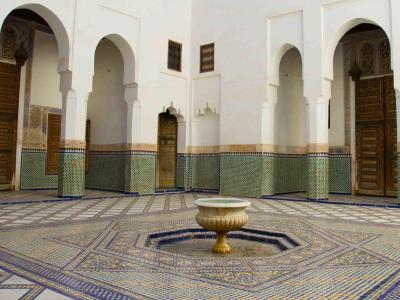
The Museum of Moroccan Arts is a 19th-century palace turned museum that offers visitors a rich blend of architectural elegance and Moroccan artistic heritage. Its story begins with its original use as a private residence: the building was constructed between 1894 and 1900 for the minister of defence. Under the French Protectorate, the palace was converted in 1932 into a museum devoted to Moroccan native crafts, with a particular emphasis on woodwork. Following independence and later restorations, it reopened in 2018 as the “National Museum of Weaving and Carpets.”
Architecturally, the building is a highlight in its own right. It reflects the decorative richness of late-19th-century Moroccan domestic design, featuring carved cedar-wood ceilings, geometric tilework, intricate plaster decoration, courtyard fountains, and a multi-level layout.
The museum’s collections draw from Marrakech and southern Morocco, showcasing a wide variety of traditional arts. Exhibits include carved wooden elements such as lintels, corbels, and doors, as well as domestic furnishings like chests, mirrors, and bridal objects. Visitors will also find jewellery, ceramics, weapons, carpets, and textiles.
One of the most remarkable pieces is a 10th-century marble basin from al-Andalus, the region of medieval Arab-ruled Spain and Portugal. Before its donation to the museum, the basin was used in a mosque, despite its carved imagery of eagles and griffins — motifs that typically conflict with Islamic restrictions on depicting living beings.
Compared to the street bustle of the medina, the museum offers a calmer interior space where you can appreciate craftsmanship in a historic house.
Architecturally, the building is a highlight in its own right. It reflects the decorative richness of late-19th-century Moroccan domestic design, featuring carved cedar-wood ceilings, geometric tilework, intricate plaster decoration, courtyard fountains, and a multi-level layout.
The museum’s collections draw from Marrakech and southern Morocco, showcasing a wide variety of traditional arts. Exhibits include carved wooden elements such as lintels, corbels, and doors, as well as domestic furnishings like chests, mirrors, and bridal objects. Visitors will also find jewellery, ceramics, weapons, carpets, and textiles.
One of the most remarkable pieces is a 10th-century marble basin from al-Andalus, the region of medieval Arab-ruled Spain and Portugal. Before its donation to the museum, the basin was used in a mosque, despite its carved imagery of eagles and griffins — motifs that typically conflict with Islamic restrictions on depicting living beings.
Compared to the street bustle of the medina, the museum offers a calmer interior space where you can appreciate craftsmanship in a historic house.
10) Almoravid Koubba
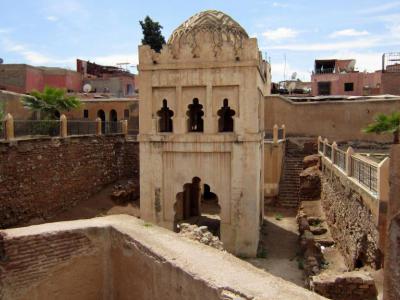
The Almoravid Koubba is the only surviving structure from the Almoravid period in Marrakech, dating back to the early 12th century. Built around 1117 under the rule of Ali ibn Yusuf, the koubba once formed part of a larger religious and ablution complex attached to the nearby Ben Youssef Mosque. Its purpose was practical rather than ceremonial: it housed the water facilities where worshippers performed ablutions before prayer, fed by an advanced hydraulic system that showcased the Almoravids’ engineering skill.
Though modest in size, the building is architecturally significant. Its design blends influences from Andalusia, North Africa, and even older Abbasid styles, making it a valuable link in the evolution of Moroccan Islamic architecture. The structure sits partially below ground today because the level of the medina has risen over the centuries. Visitors enter the site by descending a few steps into an elegant, domed pavilion decorated with carved stucco, Kufic inscriptions, and intricate geometric motifs. The interior of the dome is particularly striking, featuring star-shaped openings and ribbed patterns that reveal the sophistication of 12th-century craftsmanship.
The Almoravid Koubba offers a rare glimpse into a chapter of Marrakech’s history that is otherwise largely invisible. Nearly all Almoravid architecture was altered or demolished by the succeeding Almohad dynasty, making this building a rare survivor. Standing within its cool, quiet chamber, you can imagine the rhythms of daily life nine centuries ago, when water, worship, and community converged at this small yet pivotal Almoravid masterpiece.
Though modest in size, the building is architecturally significant. Its design blends influences from Andalusia, North Africa, and even older Abbasid styles, making it a valuable link in the evolution of Moroccan Islamic architecture. The structure sits partially below ground today because the level of the medina has risen over the centuries. Visitors enter the site by descending a few steps into an elegant, domed pavilion decorated with carved stucco, Kufic inscriptions, and intricate geometric motifs. The interior of the dome is particularly striking, featuring star-shaped openings and ribbed patterns that reveal the sophistication of 12th-century craftsmanship.
The Almoravid Koubba offers a rare glimpse into a chapter of Marrakech’s history that is otherwise largely invisible. Nearly all Almoravid architecture was altered or demolished by the succeeding Almohad dynasty, making this building a rare survivor. Standing within its cool, quiet chamber, you can imagine the rhythms of daily life nine centuries ago, when water, worship, and community converged at this small yet pivotal Almoravid masterpiece.
11) Musee de Marrakech (Marrakech Museum)
The Marrakech Museum, housed in the magnificent Dar Mnebhi Palace, offers one of the city’s most captivating blends of history, architecture, and art. Built at the end of the 19th century by Mehdi Mnebhi, a powerful defense minister under Sultan Moulay Abdelaziz, the palace reflects the wealth and refinement of Morocco’s elite during the final decades before the French Protectorate.
After the establishment of the French Protectorate, the palace served for a time as a girls’ school before falling into disrepair. In the 1990s, it was restored and transformed into the Marrakech Museum. Today, visitors experience not only its striking architecture but also a carefully curated exhibition space that highlights Moroccan heritage in many forms.
The museum’s collection is eclectic and engaging. It includes historical objects such as ceramics, coins, manuscripts, textiles, and jewelry from various regions of Morocco, often displayed alongside contemporary art that illustrates the country’s evolving creative expression. Temporary exhibitions rotate through the galleries, offering insight into modern Moroccan artistic movements and international collaborations.
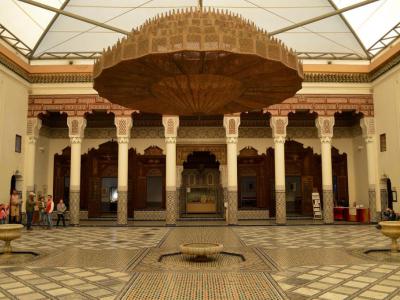
The true highlight, however, is the palace itself. The central patio—now the museum’s main attraction—can be reached by walking straight ahead from the entrance, through a short corridor. It is impossible to miss the massive wrought-iron chandelier hanging above the tiled floor, casting intricate shadows across the space. All four sides of the courtyard are framed by carved cedar-wood arches and elegant doorways, creating a harmonious visual rhythm. The central patio makes an immediate impression, drawing visitors into its world through the sheer beauty of its craftsmanship.
After the establishment of the French Protectorate, the palace served for a time as a girls’ school before falling into disrepair. In the 1990s, it was restored and transformed into the Marrakech Museum. Today, visitors experience not only its striking architecture but also a carefully curated exhibition space that highlights Moroccan heritage in many forms.
The museum’s collection is eclectic and engaging. It includes historical objects such as ceramics, coins, manuscripts, textiles, and jewelry from various regions of Morocco, often displayed alongside contemporary art that illustrates the country’s evolving creative expression. Temporary exhibitions rotate through the galleries, offering insight into modern Moroccan artistic movements and international collaborations.
The true highlight, however, is the palace itself. The central patio—now the museum’s main attraction—can be reached by walking straight ahead from the entrance, through a short corridor. It is impossible to miss the massive wrought-iron chandelier hanging above the tiled floor, casting intricate shadows across the space. All four sides of the courtyard are framed by carved cedar-wood arches and elegant doorways, creating a harmonious visual rhythm. The central patio makes an immediate impression, drawing visitors into its world through the sheer beauty of its craftsmanship.
12) Ben Youssef Madrasa (must see)
Ben Youssef Madrasa is one of Marrakech’s most celebrated historic monuments and one of the largest and finest Islamic colleges ever built in North Africa. Madrasa means “centre of learning” and can refer to a school, a college, or a university. Founded in the 14th century under the Marinid dynasty and later rebuilt in the mid-16th century by the Saadian sultans, the madrasa served for centuries as a centre of religious scholarship, attracting students from across Morocco and the wider Arab world. At its peak, it housed around 150 students, many of whom lived in tiny dormitory cells arranged around the upper floors.
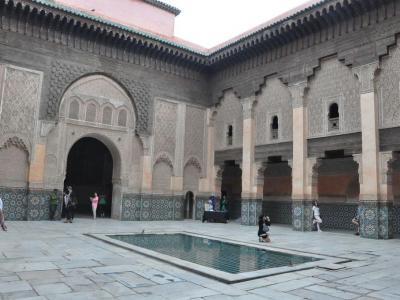
After you walk through the entrance passage, you enter the central courtyard of the madrasa. Like most of Marrakech’s architectural gems, the vast courtyard is the heart of the complex, with all other parts radiating from it. The space is paved in marble, with a large reflecting pool that mirrors the surrounding ornamentation. Every surface seems carefully considered: walls covered in carved cedarwood, stucco panels etched with flowing Arabic calligraphy, and geometric tilework forming dazzling patterns. The beauty of the space was meant to inspire contemplation, discipline, and spiritual focus—qualities essential to the life of a Quranic scholar.
Equally striking is the contrast between the madrasa’s grand public spaces and its modest student quarters. The small, bare rooms offer a poignant reminder of the austere lives led by students who devoted themselves entirely to study. The rooms are arranged on two levels: the lower dormitory cells are accessible via doorways off the courtyard, while the upper ones can be reached by staircases located in the corners of the same courtyard.
Although the madrasa ceased operating as a school in the 1960s, it remains one of Marrakech’s cultural treasures. Its meticulous restoration allows visitors to appreciate the artistry of Saadian craftsmanship and the atmosphere of learning that once animated its halls. For anyone interested in Moroccan architecture, Islamic art, or the intellectual history of the Maghreb, Ben Youssef Madrasa offers an unforgettable window into the city’s past.
After you walk through the entrance passage, you enter the central courtyard of the madrasa. Like most of Marrakech’s architectural gems, the vast courtyard is the heart of the complex, with all other parts radiating from it. The space is paved in marble, with a large reflecting pool that mirrors the surrounding ornamentation. Every surface seems carefully considered: walls covered in carved cedarwood, stucco panels etched with flowing Arabic calligraphy, and geometric tilework forming dazzling patterns. The beauty of the space was meant to inspire contemplation, discipline, and spiritual focus—qualities essential to the life of a Quranic scholar.
Equally striking is the contrast between the madrasa’s grand public spaces and its modest student quarters. The small, bare rooms offer a poignant reminder of the austere lives led by students who devoted themselves entirely to study. The rooms are arranged on two levels: the lower dormitory cells are accessible via doorways off the courtyard, while the upper ones can be reached by staircases located in the corners of the same courtyard.
Although the madrasa ceased operating as a school in the 1960s, it remains one of Marrakech’s cultural treasures. Its meticulous restoration allows visitors to appreciate the artistry of Saadian craftsmanship and the atmosphere of learning that once animated its halls. For anyone interested in Moroccan architecture, Islamic art, or the intellectual history of the Maghreb, Ben Youssef Madrasa offers an unforgettable window into the city’s past.
Walking Tours in Marrakech, Morocco

Create Your Own Walk in Marrakech
Creating your own self-guided walk in Marrakech is easy and fun. Choose the city attractions that you want to see and a walk route map will be created just for you. You can even set your hotel as the start point of the walk.
Marrakech Top Religious Sites
Islam is the official religion in Morocco, which is why it is only natural that mosques are the dominant religious sites in the country, and Marrakech is no exception. Outside these places of worship, the city's religious scene is represented by unique historical monuments (koubbas), cemeteries, and mausoleums – all quite interesting to explore.
Our journey starts with the Ben Youssef... view more
Tour Duration: 1 Hour(s)
Travel Distance: 2.7 Km or 1.7 Miles
Our journey starts with the Ben Youssef... view more
Tour Duration: 1 Hour(s)
Travel Distance: 2.7 Km or 1.7 Miles
Marrakech Introduction Walking Tour
“The sunset over Marrakech is like nothing else in the world.” Winston Churchill clearly could not hide his admiration for the city. The proof lies in the more than fifty trips he made throughout his life, many of them marked by his paintings of Marrakech—especially of that glowing, unforgettable sunset.
Marrakech was founded in 1070 by the Almoravids, a Berber dynasty that transformed a... view more
Tour Duration: 2 Hour(s)
Travel Distance: 3.9 Km or 2.4 Miles
Marrakech was founded in 1070 by the Almoravids, a Berber dynasty that transformed a... view more
Tour Duration: 2 Hour(s)
Travel Distance: 3.9 Km or 2.4 Miles
Marrakech Shopping Tour
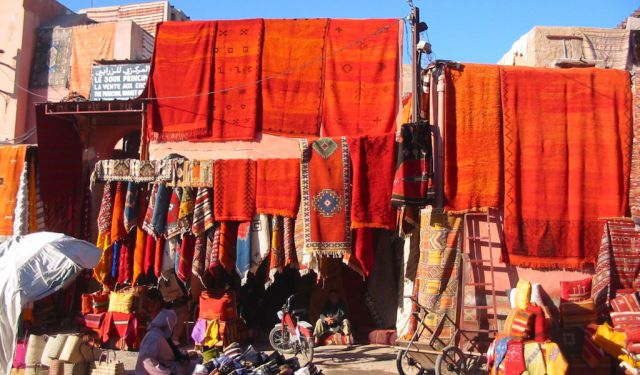
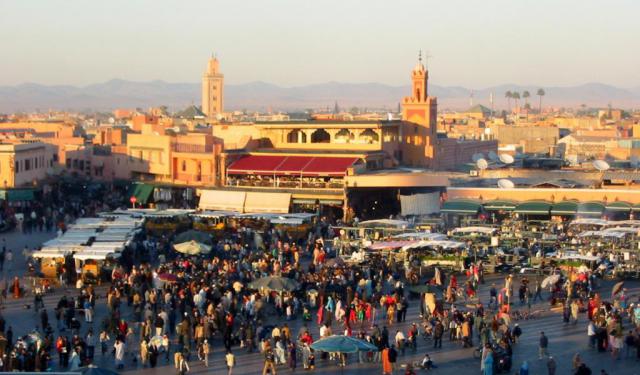
Shopping in Marrakech is an extraordinary experience that captivates the senses. Perhaps no other shopping in your life will compare to it: vivid, bright, juicy colors of carpets, clothes, and shoes; enchanting smells of local perfumes and spices; crafts, handmade jewelry, pottery; and of course, the long shopping mazes and souks.
One of the most iconic shopping destinations in Marrakech is... view more
Tour Duration: 1 Hour(s)
Travel Distance: 1.0 Km or 0.6 Miles
One of the most iconic shopping destinations in Marrakech is... view more
Tour Duration: 1 Hour(s)
Travel Distance: 1.0 Km or 0.6 Miles
Gueliz Walking Tour
Gueliz, also known as the New City (Nouvelle Ville), is more like the downtown of Marrakech. Here you will definitely feel the Western influence: McDonald's, KFC, brand stores, and even a supermarket. Still, Gueliz is also famous for its art galleries and parks.
We'll start our acquaintance with Gueliz in the El-Harti Gardens (Jnane El Harti), a peaceful oasis amidst the bustling... view more
Tour Duration: 2 Hour(s)
Travel Distance: 3.1 Km or 1.9 Miles
We'll start our acquaintance with Gueliz in the El-Harti Gardens (Jnane El Harti), a peaceful oasis amidst the bustling... view more
Tour Duration: 2 Hour(s)
Travel Distance: 3.1 Km or 1.9 Miles
Moroccan Palaces Walking Tour
One of the meaningful ways to pass the time away in Marrakech is to visit the local palaces. This is particularly true given that some of them, now restored and refurbished, function as museums. Others, on the other hand, are slowly turning into ruins, which is sad. Nonetheless, they all have a long story to tell and spectacular architecture fit to amaze any beholder.
Among the most renowned... view more
Tour Duration: 1 Hour(s)
Travel Distance: 2.7 Km or 1.7 Miles
Among the most renowned... view more
Tour Duration: 1 Hour(s)
Travel Distance: 2.7 Km or 1.7 Miles
Medina Walking Tour
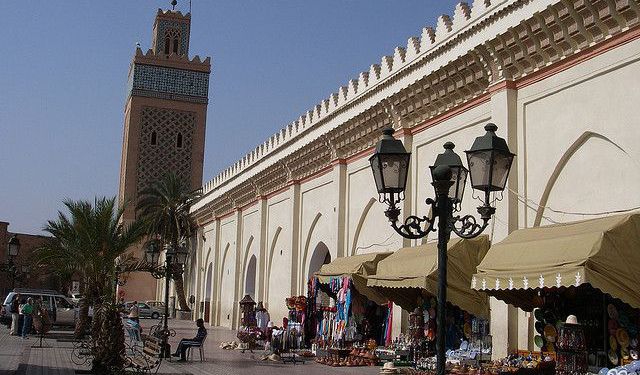
“Here everything is red — the walls, the earth, the dust that rises at every step.” French novelist and naval officer Pierre Loti was visibly impressed by the medina's choice of color. Who is there to say that Loti's visit in the 19th century did not foreshadow the French Protectorate two decades later?
The medina of Marrakech, today one of the most recognisable historic... view more
Tour Duration: 1 Hour(s)
Travel Distance: 1.9 Km or 1.2 Miles
The medina of Marrakech, today one of the most recognisable historic... view more
Tour Duration: 1 Hour(s)
Travel Distance: 1.9 Km or 1.2 Miles
The Most Popular Cities
/ view all