

Singapore Introduction Walking Tour, Singapore

Singapore Introduction Walking Tour (Self Guided), Singapore

Singapore may well be a tiny nation, sitting on a patch of land in Southeast Asia, but it has mastered the art of making a grand impression. Here, centuries-old temples share the skyline with futuristic glass towers, and you can walk from a quiet shrine to a neon-lit mall in the time it takes to finish an iced coffee. The city’s multicultural spirit—shaped by Chinese, Malay, and Indian communities—gives each local neighbourhood a personality of its own, so a short stroll often feels like switching countries without the passport check.

According to Malay legend, Singapore’s story began with a Sumatran prince, who, while seeking shelter from a storm, landed on the island of Temasek and saw there a mysterious creature, believed to be a lion. Inspired, he founded a settlement and named it Singapura, which means the “Lion City” in Sanskrit. In the 14th century, things got a little less glamorous when the neighboring kingdoms of Thailand and Java—vying for dominance—turned the area into a battleground, leaving the once-promising Singapura as little more than just a quiet fishing village.

Everything changed in 1819, when Sir Stamford Raffles of the British East India Company took one look at the island's excellent harbour and found it perfect for a free port. His instinct was spot-on. Trade boomed immediately, and the port grew into one of the busiest in the world—a title it still confidently holds.

Today, Singapore’s real charm lies in its diversity. You can taste, hear, and see different cultures within minutes: the spices of Little India, the traditions of Chinatown, and the rhythm of Malay heritage districts. Museums, colonial buildings, and lively riverfronts add texture to this layered city, offering plenty of stories to uncover.

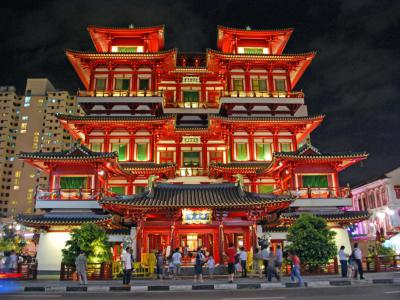
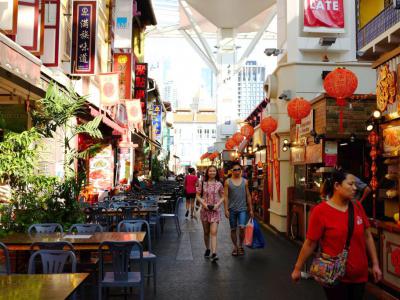
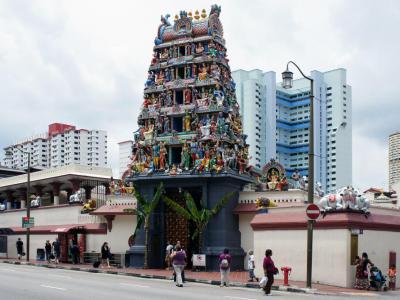
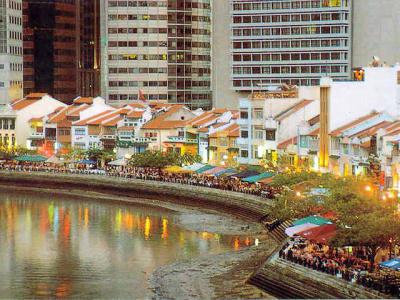
Chinatown makes an easy starting point for exploring Singapore, with the Buddha Tooth Relic Temple & Museum drawing attention in bold reds and golds. Smith Street, also known as Chinatown Food Street, tempts you with sizzling noodles and late-night snacks. Just around the corner, the Sri Mariamman Temple adds its colourful, sculpture-covered tower to the scene. Following the river leads to Boat Quay’s restored shophouses, the historic Cavenagh Bridge, and the Asian Civilisations Museum, where the region’s shared past comes to life.

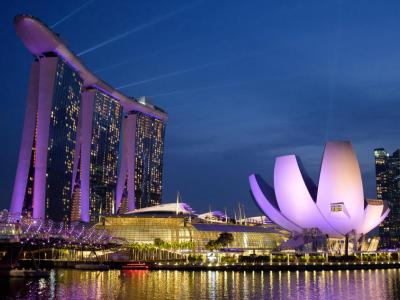
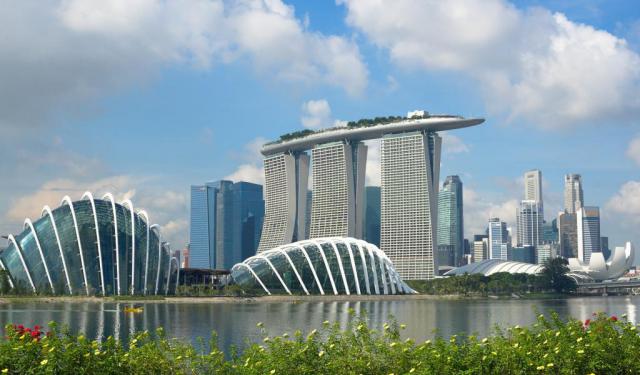
The waterfront rounds out the experience with Merlion Park and its iconic half-lion, half-fish guardian of the bay. Across the water, the Esplanade’s durian-shaped domes and the unmistakable silhouette of Marina Bay Sands—with the Sands SkyPark perched on top—showcase the city’s modern ambition in full glow.

In short, Singapore is a place where tradition and innovation walk hand in hand. So, take your time, explore it at your own pace, and let each stop reveal a new layer—in Singapore, you’ll never run out of things to discover...
How it works: Download the app "GPSmyCity: Walks in 1K+ Cities" from Apple App Store or Google Play Store to your mobile phone or tablet. The app turns your mobile device into a personal tour guide and its built-in GPS navigation functions guide you from one tour stop to next. The app works offline, so no data plan is needed when traveling abroad.

Download The GPSmyCity App

Singapore Introduction Walking Tour Map

Guide Name: Singapore Introduction Walking Tour
Guide Location: Singapore » Singapore (See other walking tours in Singapore)
Guide Type: Self-guided Walking Tour (Sightseeing)
# of Attractions: 10
Tour Duration: 2 Hour(s)
Travel Distance: 3.6 Km or 2.2 Miles
Author: vickyc
Sight(s) Featured in This Guide:
  • Buddha Tooth Relic Temple & Museum
  • Smith Street (Chinatown Food Street)
  • Sri Mariamman Temple
  • Boat Quay
  • Cavenagh Bridge
  • Asian Civilisations Museum
  • Merlion Park and Statue
  • Esplanade – Theatres on the Bay
  • Marina Bay
  • Sands Skypark and Observation Deck
1
Buddha Tooth Relic Temple & Museum

1) Buddha Tooth Relic Temple & Museum (must see)

Situated right in the heart of Singapore’s Chinatown, this temple isn't shy to announce its presence. The local Chinese community treasures it, and once you see the lavish façade, you’ll understand why. Step inside and the drama continues, with an interior that matches the exterior’s grandeur note for note.

You’ll notice the lights glowing even at midnight because the temple never closes. What does close, however, is the dress code loophole. Shoulders must be covered for women, conservative dress or slacks advised for the lower part, and for men—sorry, no shorts or tank tops allowed. Strangely, shoes are completely fine, and you can take non-flash photos in selected areas, just not in the relic chamber and other sacred spots.

As you walk through, don’t be surprised if you hear a monk chanting into a microphone. It’s all part of the rhythm of daily worship. At the back, you’ll spot rows of Buddha statues linked to the astrological signs. Front and centre in the main hall is Maitreya—the future Buddha—represented by a wooden statue said to be nearly a thousand years old.

One whole floor is packed with statues, including Guan Yin, the Bodhisattva of Compassion, Mercy, and Kindness. Head upstairs and you’ll find life-sized wax figures of temple leaders, both past and present. The level of detail is impressive—down to the wrinkles—and could give some wax museums a confidence crisis. From here, a balcony lets you peek through drapes into the enormous prayer hall below.

But the real treasure sits on the 4th floor: the Buddha Tooth Relic Stupa. This golden chamber reportedly houses a tooth of Gautama Buddha, found in Myanmar in 1980. You can’t get right up to it, but for a closer look, a helpful scale model stands nearby.

Before you step back outside, take a detour to the rooftop orchid garden. Hidden from most visitors, it’s calm, colourful, and home to a giant prayer wheel surrounded by 10,000 small Buddha images. It’s the perfect quiet moment before diving back into the vibrant streets of Chinatown.
2
Smith Street (Chinatown Food Street)

2) Smith Street (Chinatown Food Street) (must see)

Smith Street in Singapore’s Chinatown may look like a simple food haven today, but its story starts back in the 1840s, when the British were busy drawing straight lines on maps and calling it urban planning. Into this neat little grid came waves of Chinese migrants—people who built trades, set up shops, and basically turned the place into a buzzing, elbow-to-elbow micro-city. The street was eventually named after Sir Cecil Clementi Smith, a colonial governor remembered for calming down secret societies and trying to keep Chinatown from turning into a late-night action movie.

By the late 19th and early 20th centuries, Smith Street was at full volume. Traditional shophouses packed the road, filled with clan associations, herbal pharmacies, workshops, and eateries so small you could order your food without standing up. Outside, hawkers stirred noodles, grilled satay, and ladled desserts from carts that rattled from dawn to midnight. It was lively, it was messy, and it was absolutely essential to Singapore’s early food scene. The air was thick with steam, spices, and the constant soundtrack of people trying to fit daily life into very narrow spaces.

After World War II, the government stepped in with new hygiene rules, and many hawkers were moved into proper centres. Modernisation in the 1970s smoothed some of Chinatown’s edges, and Smith Street went from chaotic hotspot to quiet side street. But the early 2000s flipped the script again. As part of a heritage revival, the street was reborn as “Chinatown Food Street,” a pedestrian-friendly space covered with a sleek glass canopy and lined with stalls serving classics like char kway teow, satay, and chicken rice—basically, a greatest-hits album of Singaporean comfort food.

Today, Smith Street blends the old and the new with charming ease. Historic shophouses frame a mix of restaurants, tea shops, and snack stands offering everything from local sweets to adventurous bites like durian. It’s also the only English-named street in Chinatown, a fun reminder of its colonial roots.

Anyone coming here for souvenirs, supper, or just a slow wander under the canopy lights, will find Smith Street serving up a lively slice of Singapore’s evolving culinary heritage—one steaming plate at a time...
3
Sri Mariamman Temple

3) Sri Mariamman Temple

Singapore’s oldest Hindu shrine, the Sri Mariamman Temple, doesn’t exactly try to blend in. Its soaring entrance tower—called a “gopura”—is packed so tightly with brightly painted gods and mythical figures that it feels like they’re all leaning over to greet you at once. Set right in the heart of Chinatown, this temple has long been the spiritual home of Singapore’s Tamil Hindu community.

Step inside and tilt your head up to be rewarded with a parade of colourful friezes. Here you’ll spot the big three manifestations of the supreme being: Brahma, the creator, showing off three of his four heads; Vishnu, the preserver; and Shiva, the destroyer, casually holding one of his sons. The main sanctum straight ahead is dedicated to Mariamman, a goddess known for her healing powers.

Around the walkway, smaller sanctums honour other deities, including Periachi Amman. Her statue is quite dramatic, to say the least: she’s shown holding a queen on her lap after removing the queen’s evil child—a striking image, considering Periachi Amman is the protector of children and the one-month-old babies brought to her for blessings. For something gentler, Sri Aravan—with his dramatic moustache and oversized ears—waits quietly in a sanctum at the back.

On the left of the main sanctum, you’ll notice a simple patch of sand. Once a year, during the Thimithi festival, this humble square turns into a runway of burning coals. Male devotees sprint across it to demonstrate the power of their faith, protected—so they say—by prayer. Crowds line South Bridge Road to watch the ritual, which is as intense as it sounds.

Visit at the right moment, and you’ll catch daily rituals, chants, and offerings that bring the temple to life. It’s a deeply cultural experience, but one that asks a bit in return—and that is respect. Follow the locals, keep your voice down, cover your shoulders, and take off your shoes. A quick tip—bring socks. The temple floor heats up fast under the afternoon sun, and your feet will thank you.

And yes, entry is free, though there’s a small “camera fee” for tourists who want to take photos. Honestly? It’s worth every cent...
4
Boat Quay

4) Boat Quay

Just upstream from the mouth of the Singapore River lies Boat Quay. Back in the 1860s, it wasn’t simply busy—it was the place where the city’s port life happened. Picture it as the old financial engine room, handling three-quarters of all shipping traffic while everyone else was still waking up. Its booming reputation wasn’t accidental either. The southern curve of the river looks a bit like the belly of a carp, and in Chinese belief, that’s where prosperity and good fortune lie. Naturally, shop-houses multiplied until the area was packed tighter than a festival crowd.

These days, the ships have long moved on, but the shop-houses stayed put. After a thoughtful makeover in the early 1990s—when the place was more run-down than romantic—they’ve taken on a new role. Now they host colourful restaurants, bars, and quirky little shops, turning the whole waterfront into a cheerful stretch of modern leisure built on historic bones. Urban regeneration, as planners call it, but with a lot more satay smoke and river breeze...

Boat Quay is also where you’ll find some of the most inviting riverfront dining spots in the city. It’s a global buffet in one compact strip: Singaporean classics, rich curries, German comfort food, Korean barbecue, and enough seafood options to make choosing a small adventure. And if all you want is a cold drink while the boats drift past, that works beautifully too. The skyline of the Financial District rises just behind you, the river sparkles in front of you, and the whole scene feels almost designed for warm evening strolls.

A small word of advice before you grab a menu: ask about prices. Many dishes are charged by the 100 grams, and surprise seafood math can turn into an expensive life lesson. Wander just a bit further down the road and you’ll find more local street food spots where your taste buds and your wallet can both breathe easy.
5
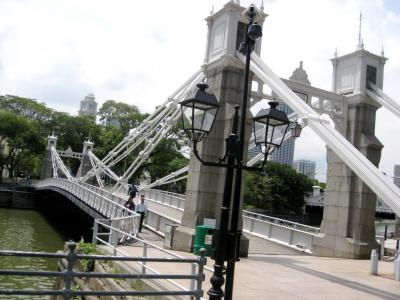
Cavenagh Bridge

5) Cavenagh Bridge

Stretching across the Singapore River with a neat little swagger, Cavenagh Bridge links Empress Place to the stately Fullerton Building—now a luxury hotel with more stories than its guests. Built in 1869, it holds the proud title of the only bridge in Singapore that still stands in its original form. In other words, it has survived progress, fashion changes, tropical storms, and the occasional tourist stampede far better than most things its age.

Back in the day, it debuted as Edinburgh Bridge, a polite nod to the visiting Duke of Edinburgh. Later, it took on the name of Major General William Cavenagh, the last India-appointed Governor of the Straits Settlements—probably because “Cavenagh Bridge” rolls off the tongue far better than “Let’s-meet-at-the-bridge-named-after-a-royal-visit.” Crafted in Glasgow, shipped in pieces, and assembled on-site by Indian convict labourers, the bridge was almost demolished in 1910 after the nearby Anderson Bridge opened. Luckily, practicality won the day, and Cavenagh was turned into a footbridge instead. Today, it still welcomes walkers—as long as each one stays under 152 kilograms, a detail the bridge announces with the confidence of an old aunt reminding you not to overload her good china.

Indeed, as a charming slice of Singapore’s past, this bridge offers great river views and a few quirky surprises. Near the Fullerton side, an undeniably cute bronze cat and her kittens lounge as if they own both banks of the river—which, in true cat fashion, they probably believe they do. On the opposite end, bronze children leap joyfully into the water, capturing a nostalgia so strong you may briefly consider joining them (before remembering the river is not exactly a swimming pool)...

Tip: If you’re collecting photo memories, wander to the south bank for more sculptures showing scenes from old Singapore. It’s like walking through a living postcard—minus the need for stamps...
6
Asian Civilisations Museum

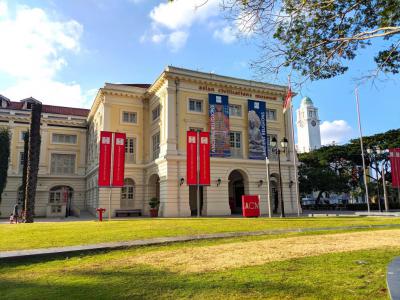
6) Asian Civilisations Museum

With the resemblance of a grand old neighbour watching the city, the former Empress Place Building has been in place—at the mouth of the Singapore River—since 1867. It’s the kind of structure that looks like it was sketched with a ruler in one hand and a fan in the other—perfectly balanced, elegantly decorated, and proudly Neoclassical. The Palladian exterior still shows off its original Roman Doric façade, pitched clay roofs, and long arcaded verandahs. Add in those timber-louvered French windows—Singapore’s early, natural version of “air-conditioning”—, and you can imagine how many migrants arriving by boat must have stared up at it, thinking, “So, this is Singapore...”

Today, the building has swapped colonial administration for cultural exploration as the home of the Asian Civilisations Museum. Its mission is to connect the dots between Asian cultures—from the Middle East to China—and show how their stories blend into Singapore’s multicultural identity. It’s a tall order, but the museum pulls it off with confidence.

Inside, the galleries shine in more ways than one. The Hindu-Buddhist section glows with beautifully lit displays, including an impressive 18th-century Burmese Buddha head and a massive bronze drum. The Chinese galleries are equally rich, especially the collection of ceramics recovered from a 1998 shipwreck—over 60,000 pieces in total, some dating back to the Tang dynasty. In the Malay World section, keep an eye out for the Kelantan Makara, a wide-eyed mythical creature that once starred in ritual ceremonies. And scattered throughout the museum are striking examples of textiles, lacquerware, porcelain, costumes, and towering processional figures.

When you’re ready for a break, the building has you covered. “Empress” restaurant offers Chinese cuisine with waterfront views, while “Privé ACM” cafe lets you unwind alfresco-style beside the river, with Singapore’s business district rising in the background. The museum shop is also worth a browse, with books and souvenirs that match the quality of the exhibits.

If you want a deeper dive, free English tours are offered daily, usually at 11:30 am, 1:30 pm, and 3 pm. And for anyone planning to explore more local museums, a multi-museum pass is a smart way to make the most of your visit.
7
Merlion Park and Statue

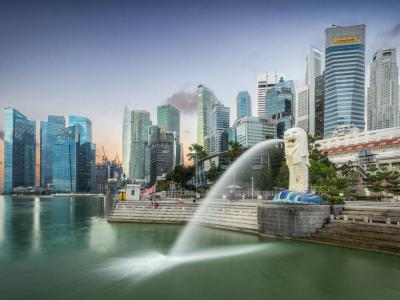
7) Merlion Park and Statue (must see)

No visit to Singapore feels quite “official” until you’ve met the Merlion—the city’s most famous resident who, despite being made of stone, still manages to greet more tourists than anyone else. This half-fish, half-lion creature has been Singapore’s mascot since 1964, and its design sums up the country’s story in one glance: the fish nods to old Temasek, a humble fishing village, while the lion’s head traces back to the legend that inspired the name “Singapura,” or the “Lion City” in Sanskrit.

The Merlion may look unique, but it actually has distant cousins scattered across history. Lions with fishtails show up on ancient murals in Ajanta and Mathura in India, appear on Etruscan coins, and even swim through Western heraldry. Variations of this creature decorate the coats of arms of Portsmouth and Great Yarmouth in the UK, the City of Manila, and the old East India Company. In other words, Singapore didn’t invent the sea-lion—it just made it iconic.

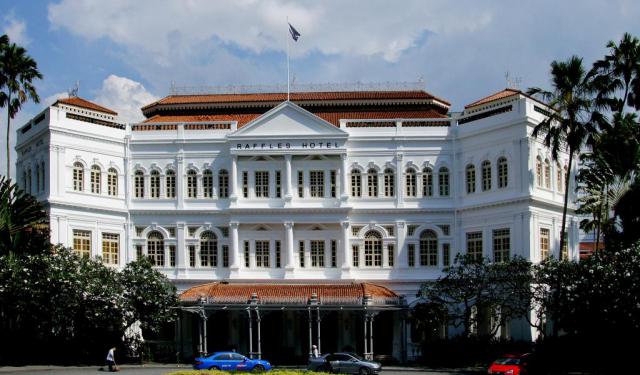
Kitschy or not, the Merlion knows how to work a crowd. At nine meters tall and constantly spouting water, it offers prime views over Marina Bay, with the city’s skyscrapers rising behind it and the Singapore Flyer peeking in—that is, if you stand in just the right spot. And if you’ve already toasted the city with a Singapore Sling (an iconic gin-based cocktail invented at the Long Bar in Singapore's Raffles Hotel), dropping by to see the Merlion feels like the natural sequel.

Yes, it gets crowded. Everyone wants their moment with the stone celebrity. But the flow of people moves fast, and with a bit of patience, you’ll get your photo. Or, even better, take a breather, look around, and enjoy the scene. The Merlion may be quirky, but its little corner of the bay has a charm that always lands with visitors...
8
Esplanade – Theatres on the Bay

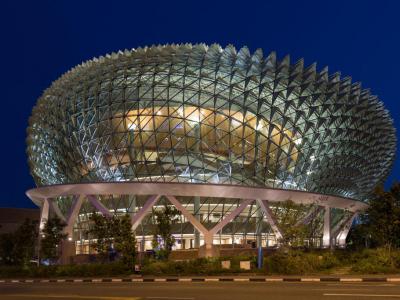
8) Esplanade – Theatres on the Bay

Art and architecture team up in spectacular fashion at this spiky, slightly outrageous performing arts centre—Singapore’s own dramatic way of saying, “Yes, we can build something truly iconic, too.” The Esplanade arrived just as the city decided it needed a landmark to hold its own in the global theatre of tourism. Since its opening in 2002, it has become one of modern Singapore’s favourite calling cards—a kind of answer to the Sydney Opera House, but with a very different personality and a front-row Marina Bay location to show it off.

Now, the eternal debate: what does the Esplanade look like? A durian? A fly’s eye? A giant silver microphone dropped from the sky? Locals lovingly go with “The Big Durians,” but the design actually takes its cue from traditional Asian reed weaving, not a tropical fruit. Its two glass domes are covered with more than 7,000 metal sunshades—tiny spikes that tilt and shift at all angles. They don’t just make the roofline ripple like a living creature, but also keep the blazing equatorial sun from turning the place into a greenhouse, while still letting in plenty of natural light.

Inside, things get even more impressive. The twin auditoriums are large, dramatic, and acoustically tuned to perfection. Between performances, you can wander through the building to find cafés, restaurants, and an assortment of arts-related shops, including a vinyl store and a wind-instrument specialist—because why not? Weekends often bring free outdoor shows and major events, all advertised online or in the monthly programme, so you might catch something delightful without planning ahead.

And for those who like a quieter moment, the Esplanade also hosts a branch of the National Library. Here, you can browse digital newspapers, explore an extensive collection of music and art materials, or simply enjoy the cool air and striking surroundings. If you want a great photo of the Merlion, just head to the top floor—it offers one of the best vantage points around.

Guided tours of the theatre run on weekdays at 11 am, except on public holidays, if you’d like a deeper peek behind the scenes.
9
Marina Bay

9) Marina Bay (must see)

Roll into Marina Bay, and you quickly realise you’ve stepped into Singapore’s favourite showroom—an entire 360-hectare stage built on reclaimed land and polished into what many now call the city’s “new downtown.” Surrounded by the Downtown Core, Marina East, Marina South, and Straits View, the bay feels like the point where Singapore looked at the sea and probably thought, “Why not have a bit more land here?” and then went ahead and made it happen.

Here, the skyline performs graciously. Marina Bay Sands leans in with its iconic three-tower silhouette, Marina Bay Financial Centre and Asia Square compete for the title of “Most Serious Business Address,” and The Sail@Marina Bay stretches upward like it’s trying to catch a breeze that doesn’t exist. Marina One rounds out the cast with lush greenery tucked between its futuristic curves. The Urban Redevelopment Authority treats this whole district like its prized project, imagining Marina Bay as a 24-hour playground where you can work all day, enjoy dinner with a view, and still squeeze in a late-night stroll without ever leaving the neighbourhood.

And if you think the place only looks dramatic, wait until you hear it. Since 2008, the Formula One Singapore Grand Prix has turned the streets around the bay into a glowing, high-speed racetrack. The Float@Marina Bay—built in 2007—has hosted everything from National Day Parades and New Year’s Eve countdowns to fireworks festivals and the Opening and Closing Ceremonies of the first-ever Youth Olympic Games in 2010. It’s basically the city’s open-air living room, only with better lighting and a much larger guest list.

For something gentler but just as striking, the annual i Light Marina Bay festival transforms the waterfront with glowing, eco-friendly art installations. It’s a reminder that even in the middle of all the steel and glass, Singapore still enjoys a moment of creative play.

In other words, Marina Bay is where Singapore is showing off, and doing it very well...
10
Sands Skypark and Observation Deck

10) Sands Skypark and Observation Deck (must see)

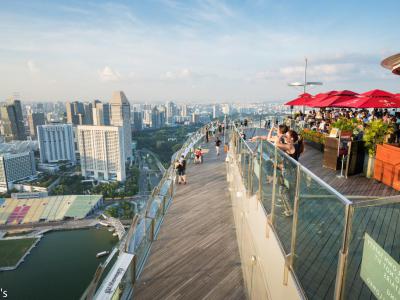
To some, it may appear as a giant celestial surfboard balancing on three skyscrapers, or maybe a sleek spaceship touching down for refuelling. Either way, the Sands SkyPark is hard to miss. Spanning 1.2 hectares across the tops of the three 55-storey Marina Bay Sands towers, it looks like it’s defying gravity for the sheer fun of it.

Dreamed up by architect Moshe Safdie, the SkyPark isn’t just big—it’s “longer-than-the-Eiffel-Tower-lying-on-its-side” big. In fact, there’s room up there for four and a half A380 jumbo jets (!!!), though luckily the only things landing are visitors armed with cameras and enthusiasm.

Once you step onto the platform, the surprise continues. You’ll find gardens filled with trees and plants that seem almost too relaxed for a rooftop setting. Scattered among the greenery are some of Marina Bay’s most talked-about bars, restaurants, and nightlife spots. These include the likes of Michelin-starred CUT by Wolfgang Puck, Black Tap Craft Burgers and Beer, AVENUE Singapore, LAVO Italian Restaurant & Rooftop Bar, and the ever-iconic Cé La Vi. It’s a place where fine dining meets high altitude, and nobody complains about the view.

But the real scene-stealer is the SkyPark’s 150-meter infinity pool—also known as the world’s largest elevated outdoor pool and quite possibly the most dramatic spot to float around at 191 meters above the ground. With a vanishing edge stretching 146 meters, it creates a perfect illusion of swimming straight into the skyline. The only catch is—you need to be a Marina Bay Sands hotel guest to slip in for a dip or access the SkyPark for free.

If you’re not staying overnight, don’t worry—the public observation deck is your VIP pass to the panorama. Cantilevered above the city, it delivers a full 360-degree sweep of Marina Bay. Open from 11:30 a.m. to 8:00 p.m., the deck lets you soak up the views, browse the souvenir shop, and tune into an audio guide that points out Singapore’s landmarks while you gaze down at them.

Up here, everything feels a little unreal—and that’s exactly the point.

Walking Tours in Singapore, Singapore

Create Your Own Walk in Singapore

Create Your Own Walk in Singapore

Creating your own self-guided walk in Singapore is easy and fun. Choose the city attractions that you want to see and a walk route map will be created just for you. You can even set your hotel as the start point of the walk.
Chinatown Walking Tour

Chinatown Walking Tour

Chinatown is one of Singapore’s most culturally layered districts, shaped over two centuries by the Chinese community, which today makes up the majority of the local population. Here, history, heritage, and the irresistible smell of good food all try to grab your attention at once.

The story began in 1819, when Stamford Raffles set up Singapore as a trading post and drew up a town plan that...  view more

Tour Duration: 1 Hour(s)
Travel Distance: 1.4 Km or 0.9 Miles
Colonial District Walking Tour

Colonial District Walking Tour

Singapore’s Colonial District, also known as the Civic District, is the birthplace of modern Singapore. From a quiet island to a thriving global city, its transformation began right here.

The story kicked off in 1819, when Sir Stamford Raffles of the British East India Company established a trading post on the strategically positioned island. Recognizing the importance of the Singapore River...  view more

Tour Duration: 1 Hour(s)
Travel Distance: 1.7 Km or 1.1 Miles
Useful Travel Guides for Planning Your Trip

Traveler's Guide to Singapore: 15 Souvenirs to Bring Home

Traveler's Guide to Singapore: 15 Souvenirs to Bring Home

Known as one of the Four Asian Tigers (or Dragons), Singapore is a thriving metropolis and one of the most fascinating tourist destinations in Asia. Home to multi-ethnic community, the city carefully preserves and proudly exhibits its colorful identity, manifested - among other forms - in the...
12 Singapore Foods You Should Not Miss

12 Singapore Foods You Should Not Miss

Food is a national passion for Singaporeans. Locals think and talk about food incessantly, often thinking nothing of travelling for miles across the island and queuing for hours just to taste one of their favourite dishes. Singaporeans abroad will bemoan being parted from their favourite foods,...