

Audio Guide: Philadelphia Introduction Walking Tour (Self Guided), Philadelphia
The sixth largest city in the United States and the largest in the Commonwealth of Pennsylvania, Philadelphia is a dynamic city heaped with old-world charm and contemporary infrastructure. Notable for its rich history, primarily as the birthplace of "life, liberty, and the pursuit of happiness."
Often called Philly, Philadelphia is also known as the City of Brotherly Love – a combination of two Greek words: love (phileo) and brother (adelphos). Its founder, English Quaker William Penn, envisioned a city of religious tolerance where everyone was free to practice their religion without fear of persecution. Pursuant to this goal, he made treaties with the Native Americans living on the land to ensure peace.
Prior to the arrival of Europeans, the area was inhabited by the Lenape (Delaware) Indians. The first European colony, founded by the Dutch in the early 17th century and known as New Netherland, was captured by an English fleet in 1664. 1682 is considered the year of Philadelphia's foundation when the area was included in William Penn's charter for Pennsylvania which was granted to him by King Charles II of England a year earlier.
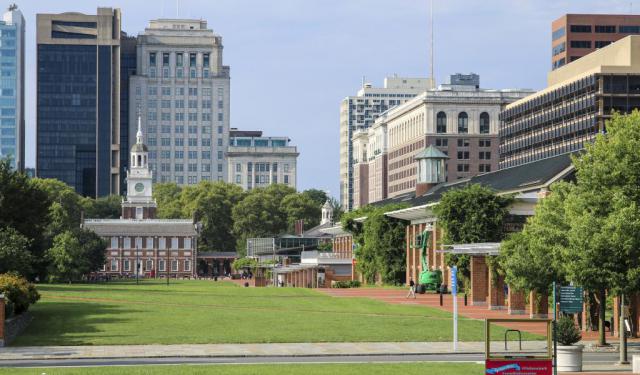
The city served as the capital of the Pennsylvania Colony during the British colonial era and went on to play a vital role in the 18th century as the central meeting place for the nation's founding fathers whose plans and actions ultimately inspired and resulted in the American Revolution. Philadelphia hosted the First Continental Congress in 1774, preserved the Liberty Bell, and hosted the Second Continental Congress during which the Declaration of Independence was signed in what's now known as Independence Hall.
The U.S. Constitution was later ratified at the Philadelphia Convention of 1787. The city remained the nation's largest until 1790, and served as its first capital, from May 10, 1775 until December 12, 1776, and on four subsequent occasions during and following the American Revolution.
The architectural history of Philadelphia, started in colonial times, includes a wide range of styles. During the 18th century, the cityscape was dominated by Georgian architecture, seen in the likes of Christ Church.
In the 19th century, the city became a key national industrial center and railroad hub flooded by immigrants, first Europeans and then African Americans who came from the South. In the 20th century, Philadelphia enjoyed further vitalization and gentrification of neighborhoods.
To explore the most famous sights of Philadelphia, some of which have seen actions that shaped the United States as we know today, take this self-guided walk!
Often called Philly, Philadelphia is also known as the City of Brotherly Love – a combination of two Greek words: love (phileo) and brother (adelphos). Its founder, English Quaker William Penn, envisioned a city of religious tolerance where everyone was free to practice their religion without fear of persecution. Pursuant to this goal, he made treaties with the Native Americans living on the land to ensure peace.
Prior to the arrival of Europeans, the area was inhabited by the Lenape (Delaware) Indians. The first European colony, founded by the Dutch in the early 17th century and known as New Netherland, was captured by an English fleet in 1664. 1682 is considered the year of Philadelphia's foundation when the area was included in William Penn's charter for Pennsylvania which was granted to him by King Charles II of England a year earlier.
The city served as the capital of the Pennsylvania Colony during the British colonial era and went on to play a vital role in the 18th century as the central meeting place for the nation's founding fathers whose plans and actions ultimately inspired and resulted in the American Revolution. Philadelphia hosted the First Continental Congress in 1774, preserved the Liberty Bell, and hosted the Second Continental Congress during which the Declaration of Independence was signed in what's now known as Independence Hall.
The U.S. Constitution was later ratified at the Philadelphia Convention of 1787. The city remained the nation's largest until 1790, and served as its first capital, from May 10, 1775 until December 12, 1776, and on four subsequent occasions during and following the American Revolution.
The architectural history of Philadelphia, started in colonial times, includes a wide range of styles. During the 18th century, the cityscape was dominated by Georgian architecture, seen in the likes of Christ Church.
In the 19th century, the city became a key national industrial center and railroad hub flooded by immigrants, first Europeans and then African Americans who came from the South. In the 20th century, Philadelphia enjoyed further vitalization and gentrification of neighborhoods.
To explore the most famous sights of Philadelphia, some of which have seen actions that shaped the United States as we know today, take this self-guided walk!
How it works: Download the app "GPSmyCity: Walks in 1K+ Cities" from Apple App Store or Google Play Store to your mobile phone or tablet. The app turns your mobile device into a personal tour guide and its built-in GPS navigation functions guide you from one tour stop to next. The app works offline, so no data plan is needed when traveling abroad.
Philadelphia Introduction Walking Tour Map
Guide Name: Philadelphia Introduction Walking Tour
Guide Location: USA » Philadelphia (See other walking tours in Philadelphia)
Guide Type: Self-guided Walking Tour (Sightseeing)
# of Attractions: 12
Tour Duration: 2 Hour(s)
Travel Distance: 2.3 Km or 1.4 Miles
Author: leticia
Sight(s) Featured in This Guide:
Guide Location: USA » Philadelphia (See other walking tours in Philadelphia)
Guide Type: Self-guided Walking Tour (Sightseeing)
# of Attractions: 12
Tour Duration: 2 Hour(s)
Travel Distance: 2.3 Km or 1.4 Miles
Author: leticia
Sight(s) Featured in This Guide:
- President's House
- Liberty Bell
- Congress Hall
- Independence Hall
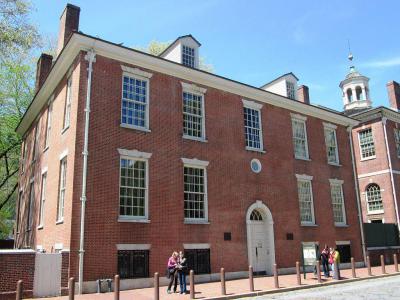
- Philosophical Hall
- Carpenters' Hall
- Museum of the American Revolution
- Benjamin Franklin Museum and Court
- Christ Church
- Elfreth's Alley
- Betsy Ross House
- Christ Church Burial Ground
1) President's House
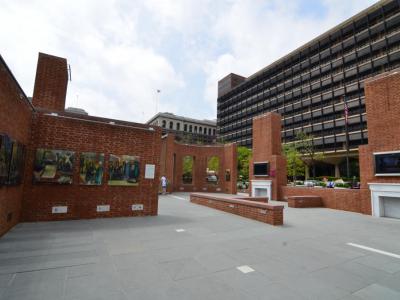
The President's House in Philadelphia holds a unique place in American history as the third U.S. Presidential Mansion and a pivotal site during the nation's early years. Occupied by George Washington from November 27, 1790, to March 10, 1797, and by John Adams from March 21, 1797, to May 30, 1800, this residence served as the executive mansion before the White House was completed.
Constructed around 1767 by Mary Masters, a widow, the house was situated just one block north of the Pennsylvania Statehouse, now known as Independence Hall. It briefly played a significant role during the British occupation of Philadelphia in 1777–1778, serving as headquarters for General Sir William Howe and the British Army. After the British evacuated in June 1778, the house became the headquarters for Military Governor Benedict Arnold.
Philadelphia was the national capital from 1790 to 1800, a period during which the city was the heart of American political life. The house was owned by Robert Morris, a financier of the Revolutionary War and a Founding Father, who provided it for George Washington's use. Reflecting the complexities of the era, Washington brought nine enslaved Africans from his Mount Vernon estate to work in the presidential household, a fact that underscores the entwined histories of freedom and slavery in the United States.
However, the exact location of The President's House was forgotten over time, leading to the unintentional demolition of its surviving walls in 1951. This loss sparked a significant historical and cultural reassessment, culminating in the 2010 commemoration of the site. This effort was driven by historians and African American groups, who advocated for the recognition of the house's complex legacy, including its role in the history of slavery in the United States.
Constructed around 1767 by Mary Masters, a widow, the house was situated just one block north of the Pennsylvania Statehouse, now known as Independence Hall. It briefly played a significant role during the British occupation of Philadelphia in 1777–1778, serving as headquarters for General Sir William Howe and the British Army. After the British evacuated in June 1778, the house became the headquarters for Military Governor Benedict Arnold.
Philadelphia was the national capital from 1790 to 1800, a period during which the city was the heart of American political life. The house was owned by Robert Morris, a financier of the Revolutionary War and a Founding Father, who provided it for George Washington's use. Reflecting the complexities of the era, Washington brought nine enslaved Africans from his Mount Vernon estate to work in the presidential household, a fact that underscores the entwined histories of freedom and slavery in the United States.
However, the exact location of The President's House was forgotten over time, leading to the unintentional demolition of its surviving walls in 1951. This loss sparked a significant historical and cultural reassessment, culminating in the 2010 commemoration of the site. This effort was driven by historians and African American groups, who advocated for the recognition of the house's complex legacy, including its role in the history of slavery in the United States.
2) Liberty Bell (must see)
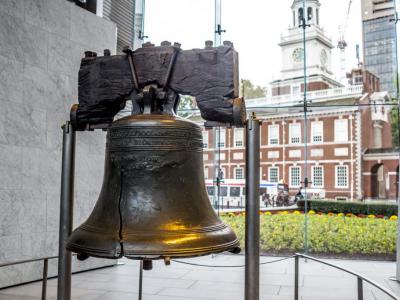
The Liberty Bell, an iconic symbol of American freedom and independence, has a rich and storied history closely tied to Philadelphia, Pennsylvania. Cast in 1752 by the Whitechapel Bell Foundry in London, England, the bell was originally commissioned to mark the 50th anniversary of Pennsylvania's original constitution and to symbolize the ideals of liberty and justice.
Initially hung in the Pennsylvania State House (now known as Independence Hall), the bell gained fame not only for its impressive size and sound but also for its role in important historical events. One popular but apocryphal story links the Liberty Bell to the reading of the Declaration of Independence on July 4, 1776, claiming that it rang out to announce the birth of the new nation. While there is no historical evidence to support this specific event, the bell did gain significance as a symbol of American independence in the ensuing decades.
The bell's inscription, "Proclaim LIBERTY Throughout all the Land unto all the Inhabitants Thereof," from the Bible, became its defining feature and a powerful statement in support of abolitionist movements in the 19th century. Its association with the abolitionist cause led to the bell being dubbed the "Liberty Bell" around the 1830s.
By the mid-19th century, as the bell's structural integrity deteriorated, it was retired from active service. In 1852, it was moved to a pavilion near Independence Hall where it became an object of public veneration. During World War II, the bell's iconic status was further solidified as it was used as a symbol of liberty and freedom, inspiring war bond drives and patriotic sentiment.
Today, the Liberty Bell is housed in the Liberty Bell Center, part of Independence National Historical Park in Philadelphia. It continues to attract millions of visitors each year who come to see and reflect upon its enduring message of liberty, justice, and the ongoing struggle for equality.
Initially hung in the Pennsylvania State House (now known as Independence Hall), the bell gained fame not only for its impressive size and sound but also for its role in important historical events. One popular but apocryphal story links the Liberty Bell to the reading of the Declaration of Independence on July 4, 1776, claiming that it rang out to announce the birth of the new nation. While there is no historical evidence to support this specific event, the bell did gain significance as a symbol of American independence in the ensuing decades.
The bell's inscription, "Proclaim LIBERTY Throughout all the Land unto all the Inhabitants Thereof," from the Bible, became its defining feature and a powerful statement in support of abolitionist movements in the 19th century. Its association with the abolitionist cause led to the bell being dubbed the "Liberty Bell" around the 1830s.
By the mid-19th century, as the bell's structural integrity deteriorated, it was retired from active service. In 1852, it was moved to a pavilion near Independence Hall where it became an object of public veneration. During World War II, the bell's iconic status was further solidified as it was used as a symbol of liberty and freedom, inspiring war bond drives and patriotic sentiment.
Today, the Liberty Bell is housed in the Liberty Bell Center, part of Independence National Historical Park in Philadelphia. It continues to attract millions of visitors each year who come to see and reflect upon its enduring message of liberty, justice, and the ongoing struggle for equality.
3) Congress Hall
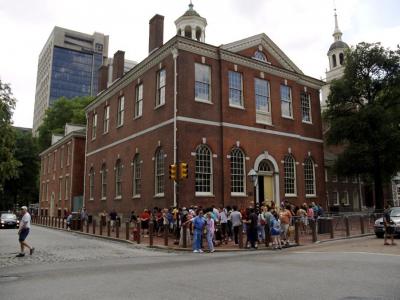
Congress Hall, a significant landmark in Philadelphia, is situated at the intersection of Chestnut and 6th Streets. Notably, it served as the seat of the United States Congress from December 6, 1790, to May 14, 1800. During this decade, Philadelphia was the temporary capital of the United States.
The building's architecture and use reflect the formative years of the U.S. government. The House of Representatives convened on the first floor, while the Senate met upstairs. This period in Congress Hall was marked by pivotal moments in American history, including the inauguration of Presidents George Washington (for his second term) and John Adams.
The first floor, home to the House chamber, features a simple design with mahogany desks and leather chairs. By 1796, it accommodated 106 representatives from 16 states, including the original 13, plus Vermont in 1791, Kentucky in 1792, and Tennessee in 1796. This room has been meticulously restored to its 1796 condition.
In contrast, the Senate chamber on the second floor is more elaborate. It was adorned with heavy red drapes and, by 1796, equipped with 32 secretary desks, 28 of which are original and akin to those in the current Senate chamber at the United States Capitol. The room also displays portraits of Louis XVI and Marie Antoinette, gifts from France post-Revolution. Noteworthy features include a ceiling fresco of an American bald eagle, symbolizing peace, and a plaster medallion depicting a sunburst with 13 stars for the original colonies.
The building's architecture and use reflect the formative years of the U.S. government. The House of Representatives convened on the first floor, while the Senate met upstairs. This period in Congress Hall was marked by pivotal moments in American history, including the inauguration of Presidents George Washington (for his second term) and John Adams.
The first floor, home to the House chamber, features a simple design with mahogany desks and leather chairs. By 1796, it accommodated 106 representatives from 16 states, including the original 13, plus Vermont in 1791, Kentucky in 1792, and Tennessee in 1796. This room has been meticulously restored to its 1796 condition.
In contrast, the Senate chamber on the second floor is more elaborate. It was adorned with heavy red drapes and, by 1796, equipped with 32 secretary desks, 28 of which are original and akin to those in the current Senate chamber at the United States Capitol. The room also displays portraits of Louis XVI and Marie Antoinette, gifts from France post-Revolution. Noteworthy features include a ceiling fresco of an American bald eagle, symbolizing peace, and a plaster medallion depicting a sunburst with 13 stars for the original colonies.
4) Independence Hall (must see)
By the late 1720s, Philadelphia realized it was running a colony with big decisions to make, but was lacking a proper stage to make them—so, naturally, it decided to build one.
Construction began in 1732 on Chestnut Street, guided by architect Edmund Woolley, and by 1753, the Colonial Government of Pennsylvania moved in without hesitation. For nearly half a century, this was where the business of the province—and later the commonwealth—was handled, until the capital duties packed up and moved on in 1799.
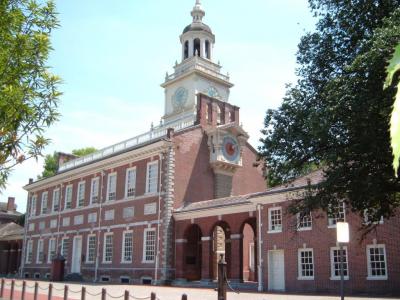
The building itself, now known as Independence Hall, keeps things elegantly symmetrical. Red brick, Georgian style, a central block crowned with a bell tower and a steeple rising 169 feet. Arcaded passageways link the main structure to its side wings, while nearby, Old City Hall, Congress Hall, and Philosophical Hall gather around Independence Square like a well-organized ensemble cast.
Inside, the layout is straightforward but loaded with history. The Assembly Room and Supreme Court Room sit on the ground floor, divided by a vestibule, with the Tower Stair Hall waiting just beyond the entrance. The interiors you see today are the result of careful restorations in the 19th and 20th centuries, all aimed at returning the building to its 18th-century look—because when your past includes founding a nation, you tend to preserve the décor...
And then, of course, came the moments. In June 1775, George Washington was appointed commander-in-chief of the Continental Army right here. A month later, Benjamin Franklin was named the first Postmaster General—arguably launching one of the longest-running institutions in American life. Between 1775 and 1783, this was the meeting place of the Second Continental Congress, where, on July 4, 1776, the Declaration of Independence was approved. Eleven years later, in 1787, the Constitution followed.
Since then, Independence Hall has remained more than just a historic building. It continues to serve as a backdrop for speeches, rallies, and protests—less a frozen monument, more an ongoing conversation about democracy, still very much in progress.
Construction began in 1732 on Chestnut Street, guided by architect Edmund Woolley, and by 1753, the Colonial Government of Pennsylvania moved in without hesitation. For nearly half a century, this was where the business of the province—and later the commonwealth—was handled, until the capital duties packed up and moved on in 1799.
The building itself, now known as Independence Hall, keeps things elegantly symmetrical. Red brick, Georgian style, a central block crowned with a bell tower and a steeple rising 169 feet. Arcaded passageways link the main structure to its side wings, while nearby, Old City Hall, Congress Hall, and Philosophical Hall gather around Independence Square like a well-organized ensemble cast.
Inside, the layout is straightforward but loaded with history. The Assembly Room and Supreme Court Room sit on the ground floor, divided by a vestibule, with the Tower Stair Hall waiting just beyond the entrance. The interiors you see today are the result of careful restorations in the 19th and 20th centuries, all aimed at returning the building to its 18th-century look—because when your past includes founding a nation, you tend to preserve the décor...
And then, of course, came the moments. In June 1775, George Washington was appointed commander-in-chief of the Continental Army right here. A month later, Benjamin Franklin was named the first Postmaster General—arguably launching one of the longest-running institutions in American life. Between 1775 and 1783, this was the meeting place of the Second Continental Congress, where, on July 4, 1776, the Declaration of Independence was approved. Eleven years later, in 1787, the Constitution followed.
Since then, Independence Hall has remained more than just a historic building. It continues to serve as a backdrop for speeches, rallies, and protests—less a frozen monument, more an ongoing conversation about democracy, still very much in progress.
5) Philosophical Hall
Philosophical Hall has spent more than two centuries doing exactly what its name suggests—hosting big ideas, lively debates, and the occasional intellectual ego, all under one roof. It serves as the headquarters of the American Philosophical Society, founded in 1743, back when its members had plenty of opinions but no fixed address. For decades, they met wherever they could—think less “esteemed institution,” more “we’ll take any room available.” That changed in 1783, when they finally decided it was time to build something permanent.
Their first choice was a plot near Arch Street, but plans shifted when a far better option appeared—a site in the State House yard, right next to what we now call Independence Hall. The Pennsylvania Assembly stepped in and granted the land in 1785, essentially implying that, “If you’re going to think big, you might as well do it next to history in the making.”
Construction, however, was not exactly swift or straightforward. The Society got started with enthusiasm—digging the cellar and laying the groundwork—but quickly ran into a familiar problem: money. Progress dragged on for four years until Benjamin Franklin came forward with a loan to get things over the finish line.
Since then, Philosophical Hall has stood quietly beside Independence Hall, less dramatic but no less important. While one building helped shape a nation, the other helped shape the thinking behind it—a reminder that before revolutions are declared, someone usually has to sit down and think them through...
Their first choice was a plot near Arch Street, but plans shifted when a far better option appeared—a site in the State House yard, right next to what we now call Independence Hall. The Pennsylvania Assembly stepped in and granted the land in 1785, essentially implying that, “If you’re going to think big, you might as well do it next to history in the making.”
Construction, however, was not exactly swift or straightforward. The Society got started with enthusiasm—digging the cellar and laying the groundwork—but quickly ran into a familiar problem: money. Progress dragged on for four years until Benjamin Franklin came forward with a loan to get things over the finish line.
Since then, Philosophical Hall has stood quietly beside Independence Hall, less dramatic but no less important. While one building helped shape a nation, the other helped shape the thinking behind it—a reminder that before revolutions are declared, someone usually has to sit down and think them through...
6) Carpenters' Hall
Everyone knows the sequel—the Second Continental Congress—the one that signed the Declaration of Independence at Independence Hall. Big moment, lots of drama... But the prequel—The First Continental Congress—rarely gets top billing, even though it was the first time the thirteen American colonies got together in one spot in defiance of British rule.
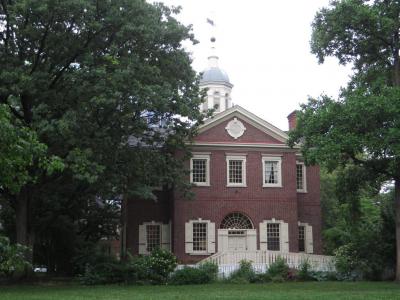
Carpenters' Hall was completed in 1773 by the Carpenters' Company of the City and County of Philadelphia—a group that clearly believed in building things that would age well, including history itself. Designed by Robert Smith in clean, confident Georgian style, the hall looked every bit the part: orderly, elegant, and ready for some very disorderly conversations.
From September 5 to October 26, 1774, delegates from twelve colonies—excluding Georgia, which sat this one out—gathered here to compare notes on British policies and collectively decided they were not happy. Inside these rooms, they drafted a unified list of rights and grievances addressed to King George III, essentially the 18th-century version of a strongly worded letter… with consequences.
And because no good political gathering is complete without a bit of secrecy, the hall also hosted quiet, behind-the-scenes meetings. Figures like Benjamin Franklin were already thinking ahead, discreetly exploring the idea of French support—because, if you’re going to challenge an empire, it helps to have a backup plan...
After its revolutionary moment, the building didn’t retire—it pivoted. In 1775, it briefly welcomed the Second Continental Congress before the action shifted back to Independence Hall, and later served as everything—from a bank to a library. By the time it was declared a National Historic Landmark in 1970, Carpenters’ Hall had already lived several lives.
Today, it stands open to visitors—a place where the “less famous meeting” quietly set the stage for everything that followed.
Carpenters' Hall was completed in 1773 by the Carpenters' Company of the City and County of Philadelphia—a group that clearly believed in building things that would age well, including history itself. Designed by Robert Smith in clean, confident Georgian style, the hall looked every bit the part: orderly, elegant, and ready for some very disorderly conversations.
From September 5 to October 26, 1774, delegates from twelve colonies—excluding Georgia, which sat this one out—gathered here to compare notes on British policies and collectively decided they were not happy. Inside these rooms, they drafted a unified list of rights and grievances addressed to King George III, essentially the 18th-century version of a strongly worded letter… with consequences.
And because no good political gathering is complete without a bit of secrecy, the hall also hosted quiet, behind-the-scenes meetings. Figures like Benjamin Franklin were already thinking ahead, discreetly exploring the idea of French support—because, if you’re going to challenge an empire, it helps to have a backup plan...
After its revolutionary moment, the building didn’t retire—it pivoted. In 1775, it briefly welcomed the Second Continental Congress before the action shifted back to Independence Hall, and later served as everything—from a bank to a library. By the time it was declared a National Historic Landmark in 1970, Carpenters’ Hall had already lived several lives.
Today, it stands open to visitors—a place where the “less famous meeting” quietly set the stage for everything that followed.
7) Museum of the American Revolution (must see)
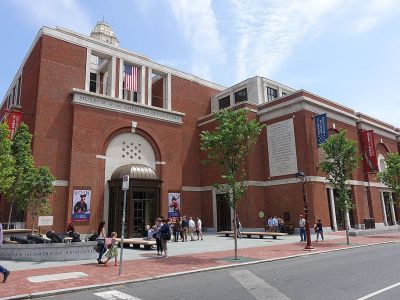
The Museum of the American Revolution, located in Philadelphia, is dedicated to chronicling the story of the American Revolution. This institution, originally known as The American Revolution Center, opened its doors to the public on April 19, 2017. This date holds particular historical importance as it marks the 242nd anniversary of the Battles of Lexington and Concord, pivotal conflicts in the American Revolutionary War that occurred on April 19, 1775.
The Museum of the American Revolution boasts a vast collection of several thousand artifacts, forming a rich tapestry of the nation's history. Among its prized possessions are items personally owned and used by General George Washington during the War of Independence. The collection is also renowned for its extensive array of historic firearms, edged weapons, significant art, invaluable manuscripts, and rare books. A notable part of this collection originated from the early 20th-century efforts of Rev. W. Herbert Burk, forming the core of the museum's offerings.
The current building was unveiled in 2012 with 32,000 square feet dedicated to exhibits and interpretive spaces. The first floor, which houses a museum shop and the Cross Keys Café, is built around a skylit central interior court. It also features a cross-vaulted ticketing lobby, a multi-use theater, and a gallery for changing exhibitions. The second floor is home to 18,000 square feet of galleries, including a theater showcasing George Washington's marquee tent.
The third floor of the museum offers event spaces and two terraces with views of the Independence National Historical Park and the Philadelphia skyline.
Tip:
The museum's highlight is the tent used by George Washington during the independence war. Check what times the presentation is playing, and make sure to show up a little bit early, as the theater is not large and fills up quickly.
The Museum of the American Revolution boasts a vast collection of several thousand artifacts, forming a rich tapestry of the nation's history. Among its prized possessions are items personally owned and used by General George Washington during the War of Independence. The collection is also renowned for its extensive array of historic firearms, edged weapons, significant art, invaluable manuscripts, and rare books. A notable part of this collection originated from the early 20th-century efforts of Rev. W. Herbert Burk, forming the core of the museum's offerings.
The current building was unveiled in 2012 with 32,000 square feet dedicated to exhibits and interpretive spaces. The first floor, which houses a museum shop and the Cross Keys Café, is built around a skylit central interior court. It also features a cross-vaulted ticketing lobby, a multi-use theater, and a gallery for changing exhibitions. The second floor is home to 18,000 square feet of galleries, including a theater showcasing George Washington's marquee tent.
The third floor of the museum offers event spaces and two terraces with views of the Independence National Historical Park and the Philadelphia skyline.
Tip:
The museum's highlight is the tent used by George Washington during the independence war. Check what times the presentation is playing, and make sure to show up a little bit early, as the theater is not large and fills up quickly.
8) Benjamin Franklin Museum and Court
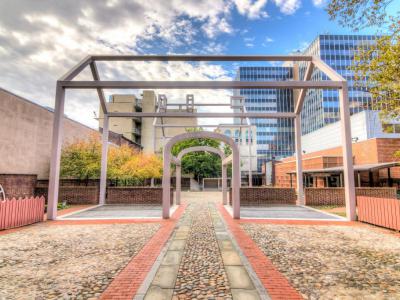
The Benjamin Franklin Museum sits in a courtyard that’s doing its best impression of the past—right where Franklin’s house and print shop once stood before history decided to clear the stage. The buildings themselves are long gone, but look down, and you’ll spot their story still lingering: archaeological remains tucked beneath glass panels, quietly reminding you that this was once a very busy corner of early America.
To help fill in the blanks, the site leans into a bit of creative storytelling. “Ghost” houses rise in clean white outlines exactly where the originals stood—less haunted mansion, more architectural sketch come to life—so you can picture the space as it once was. Just nearby, a working 18th-century print shop keeps things lively, clanking and pressing like the 1700s haven't gone anywhere.
Wandering through Franklin Court won’t cost you a thing, and neither will a peek at the ghost houses or the print shop. The museum itself asks for a modest fee, and in return, it packs in a surprisingly rich look at Franklin’s life. It’s not enormous, but it doesn’t need to be—between interactive exhibits for kids and plenty of clever details for adults, it manages to cover a lot of ground without wearing out your attention span.
Inside, you’ll get the full Franklin experience: inventor, diplomat, writer, and occasional mischief-maker. Alongside the big-picture story are smaller, more human moments—quirks, trivia, and anecdotes that make him feel less like a textbook figure and more like someone you might have bumped into… probably mid-experiment. Add in a few entertaining video segments—equal parts informative and amusing—and you’ve got a visit that manages to be both educational and genuinely fun.
To help fill in the blanks, the site leans into a bit of creative storytelling. “Ghost” houses rise in clean white outlines exactly where the originals stood—less haunted mansion, more architectural sketch come to life—so you can picture the space as it once was. Just nearby, a working 18th-century print shop keeps things lively, clanking and pressing like the 1700s haven't gone anywhere.
Wandering through Franklin Court won’t cost you a thing, and neither will a peek at the ghost houses or the print shop. The museum itself asks for a modest fee, and in return, it packs in a surprisingly rich look at Franklin’s life. It’s not enormous, but it doesn’t need to be—between interactive exhibits for kids and plenty of clever details for adults, it manages to cover a lot of ground without wearing out your attention span.
Inside, you’ll get the full Franklin experience: inventor, diplomat, writer, and occasional mischief-maker. Alongside the big-picture story are smaller, more human moments—quirks, trivia, and anecdotes that make him feel less like a textbook figure and more like someone you might have bumped into… probably mid-experiment. Add in a few entertaining video segments—equal parts informative and amusing—and you’ve got a visit that manages to be both educational and genuinely fun.
9) Christ Church (must see)
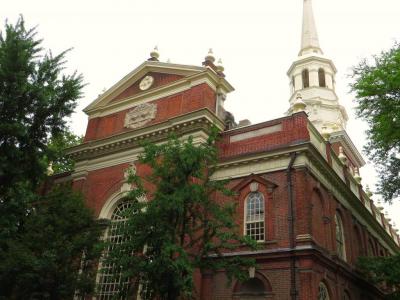
Christ Church in Philadelphia dates back to 1695, when the Church of England set up shop in what was still very much a growing colonial town. Within a year, they had a wooden building up—but clearly, that didn’t hold the crowd for long. By the 1720s, they replaced it with something far more ambitious, creating what was considered one of the most elegant churches in the Thirteen Colonies.
The new parish became known as the “Nation’s Church,” and for good reason. Fifteen signers of the Declaration of Independence were part of this congregation. Names like George Washington, Benjamin Franklin, Robert Morris, and Betsy Ross all passed through these doors. If you’re wondering where they sat, you’re in luck—this place keeps receipts. Brass plaques mark their pews: Washington in #56, Franklin in #70, Betsy Ross in #12. No guessing required.
Architecturally, the church is themed around Georgian style, with a clear nod to Christopher Wren’s London designs—all that symmetry, tall arched windows, and a clean, orderly interior with fluted columns and rows of wooden pews. And instead of dramatic stained glass, you get clear windows—meaning plenty of natural light and a direct connection to the outside world. Revolutionary thinking, in more ways than one...
Construction stretched from 1727 to 1744, with the steeple added in 1754. At that point, it was the tallest building in what would become the United States, holding that title for over fifty years. Not bad for a church... Along the way, it saw changes, including a rebuild in 1777 and interior updates in 1883, but its overall character has held steady.
Step outside into the churchyard, and you’ll find the graves of Robert Morris and James Wilson, both signers of the Declaration of Independence. Today, Christ Church is still an active Episcopal parish and a National Historic Landmark, welcoming more than 250,000 visitors each year—so you won’t be the only one curious about who sat where...
And before you leave, take a moment to look at the artifacts. There’s a 14th-century baptismal font used for William Penn, the founder of Pennsylvania. Add in a rare book collection and communion pieces from the 1790s, and you start to realize: this place doesn’t just tell history—it quietly keeps it on display.
The new parish became known as the “Nation’s Church,” and for good reason. Fifteen signers of the Declaration of Independence were part of this congregation. Names like George Washington, Benjamin Franklin, Robert Morris, and Betsy Ross all passed through these doors. If you’re wondering where they sat, you’re in luck—this place keeps receipts. Brass plaques mark their pews: Washington in #56, Franklin in #70, Betsy Ross in #12. No guessing required.
Architecturally, the church is themed around Georgian style, with a clear nod to Christopher Wren’s London designs—all that symmetry, tall arched windows, and a clean, orderly interior with fluted columns and rows of wooden pews. And instead of dramatic stained glass, you get clear windows—meaning plenty of natural light and a direct connection to the outside world. Revolutionary thinking, in more ways than one...
Construction stretched from 1727 to 1744, with the steeple added in 1754. At that point, it was the tallest building in what would become the United States, holding that title for over fifty years. Not bad for a church... Along the way, it saw changes, including a rebuild in 1777 and interior updates in 1883, but its overall character has held steady.
Step outside into the churchyard, and you’ll find the graves of Robert Morris and James Wilson, both signers of the Declaration of Independence. Today, Christ Church is still an active Episcopal parish and a National Historic Landmark, welcoming more than 250,000 visitors each year—so you won’t be the only one curious about who sat where...
And before you leave, take a moment to look at the artifacts. There’s a 14th-century baptismal font used for William Penn, the founder of Pennsylvania. Add in a rare book collection and communion pieces from the 1790s, and you start to realize: this place doesn’t just tell history—it quietly keeps it on display.
10) Elfreth's Alley (must see)
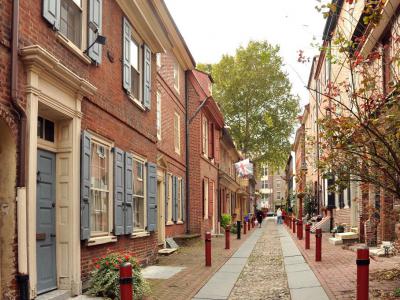
In the 18th century, Philadelphia became a bustling city, overcrowded with artisans, tradesmen, shipwrights, metalsmiths, glassblowers, and furniture makers. As a result, the landowners Arthur Wells and John Gilbert started a cart path from Front Street to Second Street in 1703. The path became Elfreth's Alley, named after Jeremiah Elfreth, an 18th-century blacksmith and a man of property in young Philadelphia.
By the 1770s Georgian and Federal-style houses lined the cobblestone Alley. Many of the structures were uniquely Philadelphian Trinity houses. These were three-story houses, exceptionally narrow, with one room on each floor. The floors were referred to as "Father, Son, and Holy Ghost." And that is how Trinity houses got their name.
In the 19th and 20th centuries, the industry started to close in on the Alley. A stove factory took its place in a row of residential houses. Immigrants, hoping for jobs, came in waves. In 1934 the Elfreth's Alley Association (EAA) was founded by Alley resident Dolly Ottey. Ottey fought to combat the deterioration of the Alley by encroaching industry in the early 20th century.
Elfreth's Alley Museum is located in houses 124 and 126. The museum preserves the home of 18th-century dressmakers. Tour guides discuss other homes and inhabitants of the Alley. On "Fete Day" in early June, which celebrates Alley's diverse ethnic heritage, the residents open their homes. There are historical reenactments with drum and fife bands. The Alley also host events for the 4th of July, Oktoberfestivities, and Halloween.
By the 1770s Georgian and Federal-style houses lined the cobblestone Alley. Many of the structures were uniquely Philadelphian Trinity houses. These were three-story houses, exceptionally narrow, with one room on each floor. The floors were referred to as "Father, Son, and Holy Ghost." And that is how Trinity houses got their name.
In the 19th and 20th centuries, the industry started to close in on the Alley. A stove factory took its place in a row of residential houses. Immigrants, hoping for jobs, came in waves. In 1934 the Elfreth's Alley Association (EAA) was founded by Alley resident Dolly Ottey. Ottey fought to combat the deterioration of the Alley by encroaching industry in the early 20th century.
Elfreth's Alley Museum is located in houses 124 and 126. The museum preserves the home of 18th-century dressmakers. Tour guides discuss other homes and inhabitants of the Alley. On "Fete Day" in early June, which celebrates Alley's diverse ethnic heritage, the residents open their homes. There are historical reenactments with drum and fife bands. The Alley also host events for the 4th of July, Oktoberfestivities, and Halloween.
11) Betsy Ross House (must see)
The story goes that Mrs. Eizabeth Claypoole, also known as Betsy Ross, had a visit from George Washington in 1776. She persuaded him, some say, that a five-pointed star was better than a six-pointed star. Betsy was an upholsterer, and she had been making flags for the Pennsylvania Navy. Flags were her specialty.
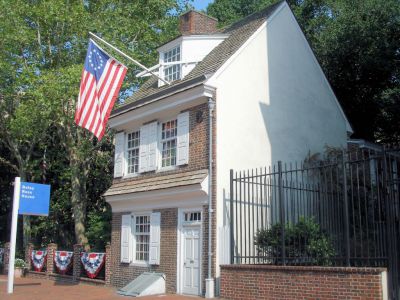
True or not, this captivating tale was told by her grandsons, William and George Canby, in the 1870s. People loved it, and it became a popular national legend. Number 239 Arch Street in Philadelphia is where Betsy is said to have lived with her third husband, John Claypoole. The house is a restoration done by architect Richardson Okie in 1940.
The "Betsy Ross" house that stands today may have been the house used by Betsy for her business. The residence of Betsy and her husband was adjacent to the present house. The houses next door were demolished and turned into a courtyard.
Richardson Okie used materials from the demolished houses in his restoration. A brick structure was built behind the house. Windows and a dormer were replaced. The whole property was gifted to the city of Philadelphia in 1941. In 1974 the courtyard was provided with a fountain.
As part of the American Bicentennial of 1976, city authorities moved the remains of Betsy and her husband, John Claypoole. They were reinterred in the courtyard of the Betsy Ross House. Betsy is thought to have resided in the house from 1776 until 1779.
John Ross, Betsy's first husband, a member of the militia, died in a gunpowder explosion. Her second husband, Joseph Ashburn, a mariner captured by the British, died in prison in Plymouth, England. John Claypoole was a fellow prisoner. He knew Ashburn. Betsy married Claypoole in 1783.
The Betsy Ross House is traditionally the site of Philadelphia's celebration of Flag Day. This legendary woman lived and worked here for a few short years when the Great Experiment began. Whatever else she may have done, she made flags.
True or not, this captivating tale was told by her grandsons, William and George Canby, in the 1870s. People loved it, and it became a popular national legend. Number 239 Arch Street in Philadelphia is where Betsy is said to have lived with her third husband, John Claypoole. The house is a restoration done by architect Richardson Okie in 1940.
The "Betsy Ross" house that stands today may have been the house used by Betsy for her business. The residence of Betsy and her husband was adjacent to the present house. The houses next door were demolished and turned into a courtyard.
Richardson Okie used materials from the demolished houses in his restoration. A brick structure was built behind the house. Windows and a dormer were replaced. The whole property was gifted to the city of Philadelphia in 1941. In 1974 the courtyard was provided with a fountain.
As part of the American Bicentennial of 1976, city authorities moved the remains of Betsy and her husband, John Claypoole. They were reinterred in the courtyard of the Betsy Ross House. Betsy is thought to have resided in the house from 1776 until 1779.
John Ross, Betsy's first husband, a member of the militia, died in a gunpowder explosion. Her second husband, Joseph Ashburn, a mariner captured by the British, died in prison in Plymouth, England. John Claypoole was a fellow prisoner. He knew Ashburn. Betsy married Claypoole in 1783.
The Betsy Ross House is traditionally the site of Philadelphia's celebration of Flag Day. This legendary woman lived and worked here for a few short years when the Great Experiment began. Whatever else she may have done, she made flags.
12) Christ Church Burial Ground
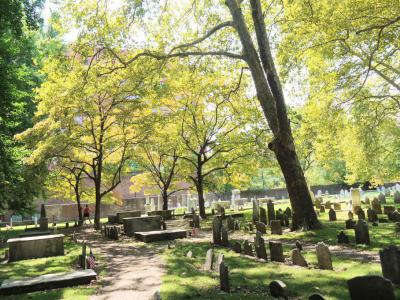
Christ Church Burial Ground in Philadelphia is one of those places where history both happened and decided to stay put. Still an active cemetery, it sits three blocks west of Christ Church itself, despite the name suggesting otherwise. The land was acquired back in 1719, when the original churchyard ran out of room, and this spot—then considered the edge of town—became the logical expansion. Today, it feels anything but remote.
Christ Church, founded in 1695, was the spiritual home of several key figures of the American Revolution, including George Washington. And just nearby, this burial ground gathers an equally impressive cast. Benjamin Franklin rests here with his wife Deborah, joined by four other signers of the Declaration of Independence: Benjamin Rush, Francis Hopkinson, Joseph Hewes, and George Ross. Two more—James Wilson and Robert Morris—are buried at the church itself, keeping things neatly divided.
The Burial Ground is open to visitors for a small fee, but even when the gates are closed, Franklin remains accessible—quite literally. At the corner of 5th and Arch Streets, a section of iron railing was added in 1858, so passersby could peer in. It didn’t take long for a tradition to form: tossing pennies onto Franklin’s grave, a small tribute to the man who famously advised that a penny saved is a penny earned...
Move a little farther from the crowd gathered around Franklin, and the atmosphere shifts. The space becomes quieter, with rows of lesser-known graves—carefully kept, often overlooked, and occasionally just as intriguing as the famous names that draw people in.
Christ Church, founded in 1695, was the spiritual home of several key figures of the American Revolution, including George Washington. And just nearby, this burial ground gathers an equally impressive cast. Benjamin Franklin rests here with his wife Deborah, joined by four other signers of the Declaration of Independence: Benjamin Rush, Francis Hopkinson, Joseph Hewes, and George Ross. Two more—James Wilson and Robert Morris—are buried at the church itself, keeping things neatly divided.
The Burial Ground is open to visitors for a small fee, but even when the gates are closed, Franklin remains accessible—quite literally. At the corner of 5th and Arch Streets, a section of iron railing was added in 1858, so passersby could peer in. It didn’t take long for a tradition to form: tossing pennies onto Franklin’s grave, a small tribute to the man who famously advised that a penny saved is a penny earned...
Move a little farther from the crowd gathered around Franklin, and the atmosphere shifts. The space becomes quieter, with rows of lesser-known graves—carefully kept, often overlooked, and occasionally just as intriguing as the famous names that draw people in.
Walking Tours in Philadelphia, Pennsylvania

Create Your Own Walk in Philadelphia
Creating your own self-guided walk in Philadelphia is easy and fun. Choose the city attractions that you want to see and a walk route map will be created just for you. You can even set your hotel as the start point of the walk.
Franklin Parkway Walking Tour
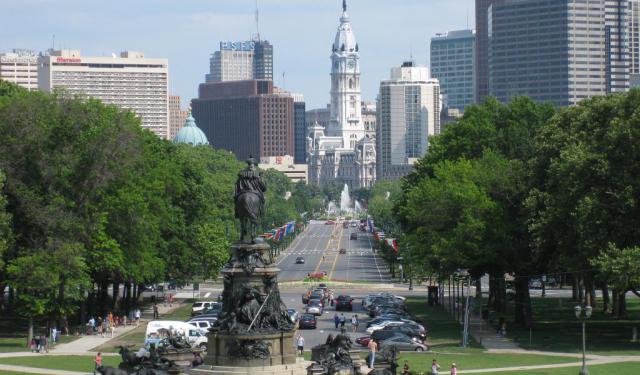
Benjamin Franklin Parkway is a scenic boulevard running through the cultural heart of Philadelphia. Named for America's Founding Father, Benjamin Franklin, this mile-long tree-lined parkway is lined with several notable sights and world-class museums.
At its heart lies Logan Circle, a charming green space centered around a picturesque fountain. This spot can provide a refreshing break on... view more
Tour Duration: 2 Hour(s)
Travel Distance: 2.6 Km or 1.6 Miles
At its heart lies Logan Circle, a charming green space centered around a picturesque fountain. This spot can provide a refreshing break on... view more
Tour Duration: 2 Hour(s)
Travel Distance: 2.6 Km or 1.6 Miles
Benjamin Franklin's Philadelphia
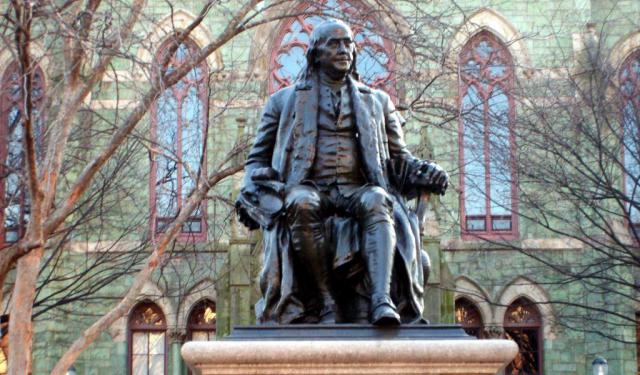
Benjamin Franklin's journey to becoming one of the most influential figures in Revolutionary America began when he, as a teenager, ventured from a Puritan family in Boston to Philadelphia. This city would not only become his home but also a stage for his remarkable life as a writer, printer, philosopher, postmaster, scientist, inventor, statesman, and diplomat. His life epitomizes the... view more
Tour Duration: 2 Hour(s)
Travel Distance: 2.5 Km or 1.6 Miles
Tour Duration: 2 Hour(s)
Travel Distance: 2.5 Km or 1.6 Miles
University of Pennsylvania Walking Tour
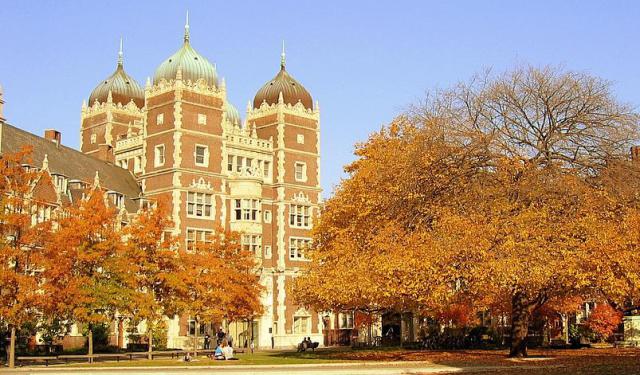
As America's first university, The University of Pennsylvania (aka Penn or Upenn, for short) has a history stretching back to the mid-18th century, closely bound with the city's colonial past and the birth of the United States. Initially, this Ivy League institution emerged as the College of Philadelphia, one of the nine colonial colleges chartered before the US Declaration of... view more
Tour Duration: 2 Hour(s)
Travel Distance: 2.2 Km or 1.4 Miles
Tour Duration: 2 Hour(s)
Travel Distance: 2.2 Km or 1.4 Miles
Philadelphia Old City Walking Tour
King Charles II of England, while seriously indebted to Admiral Sir William Penn, settled his debt in 1681 by granting lands in America to William Penn, the Admiral's Quaker son. A thorn in the King's side, young Penn sailed to America, where he envisioned a utopian society based on tolerance and founded Philadelphia, the "City of Brotherly Love."
The Old City Center, the... view more
Tour Duration: 2 Hour(s)
Travel Distance: 3.2 Km or 2 Miles
The Old City Center, the... view more
Tour Duration: 2 Hour(s)
Travel Distance: 3.2 Km or 2 Miles
Fairmount Park Historical Houses Walking Tour
Fairmount Park, Philadelphia's oldest park, established since 1867, is also the city's largest municipal park, sprawling over 2,000 acres adjacent to the banks of the Schuylkill River. The park grew out of the Lemon Hill estate of Henry Pratt, whose land was originally owned by Robert Morris, signer of the Declaration of Independence.
In 1972, the park was placed on the National... view more
Tour Duration: 2 Hour(s)
Travel Distance: 4.7 Km or 2.9 Miles
In 1972, the park was placed on the National... view more
Tour Duration: 2 Hour(s)
Travel Distance: 4.7 Km or 2.9 Miles
Rocky Movie Sites Walking Tour
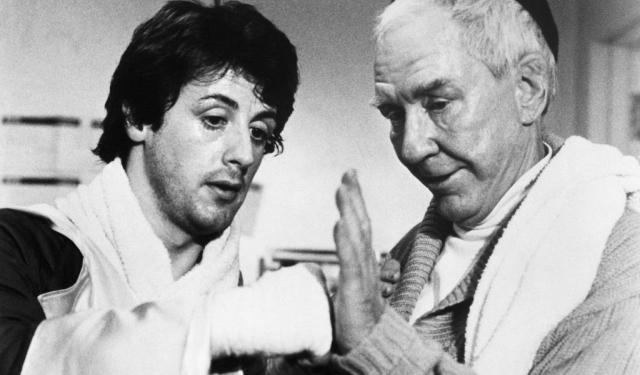
There's hardly any other character, fictional or real, as iconically Philadelphian as Rocky. Indeed, this American sports drama franchise, centered on the boxing career of Rocky Balboa, released in 1976, has become synonymous with and arguably done more for the city of Philadelphia than anyone else since Ben Franklin.
The cultural phenomenon was created by Sylvester Stallone, who wrote,... view more
Tour Duration: 3 Hour(s)
Travel Distance: 6.3 Km or 3.9 Miles
The cultural phenomenon was created by Sylvester Stallone, who wrote,... view more
Tour Duration: 3 Hour(s)
Travel Distance: 6.3 Km or 3.9 Miles
Useful Travel Guides for Planning Your Trip

Philadelphia Souvenirs: 13 Unique Gift Ideas from the City of Brotherly Love
Looking for a great gift while visiting Philadelphia? Famous for its history, arts and culture, championship sports teams, and award-winning food and drink, Philadelphia is a top-rated shopping destination. Here, you'll find an amazing selection of items to choose from - something uniquely...
The Most Popular Cities
/ view all