

Audio Guide: Hanover Introduction Walking Tour (Self Guided), Hanover
Hanover began in medieval times as a small settlement of fishermen along the River Leine. Its name, first recorded as “Honovere,” likely meant “high river bank,” referring to the slightly elevated ground that offered protection from flooding. Positioned on the North German Plain, the settlement benefited early on from both navigable river routes and overland trade paths, making it a natural crossroads for regional movement, including mule-train traffic.
By the 13th century, Hanover had grown into a sizable town by the standards of the time. It received town privileges in 1241, formalizing its status as an urban centre. Over the following century, the city developed defensive walls, churches, and an increasingly active commercial life.
A major turning point came in the 17th century when the House of Welf elevated Hanover’s political role. In 1638, Duke of Brunswick-Lüneburg, who is simply referred to as George, moved his residence to the city, establishing it as a political centre. In 1692, the Holy Roman Emperor granted the duchy the status of Electorate, marking the rise of the House of Hanover. This shift led to one of the city’s most notable historical connections. George's grand daughter, Sophia Dorothea, later married George I of Great Britain who became King of Great Britain in 1714, initiating a personal union between Hanover and the British crown.
Despite this close link, the British monarchs rarely visited Hanover. The union ended in 1837 when Queen Victoria inherited the British throne but could not succeed in Hanover due to Salic law, which barred female succession. Hanover remained a kingdom until 1866, when it was annexed by Prussia following the Austro-Prussian War.
In the 19th century, industrialization transformed Hanover into an important economic hub, with expanding railways, manufacturing, and trade. World War II brought widespread destruction, heavily damaging the historic centre. In the decades that followed, the city was rebuilt, but it still preserved key elements of its historical identity. Today, Hanover is known as a major trade fair city, hosting internationally important events like Hanover Fair.
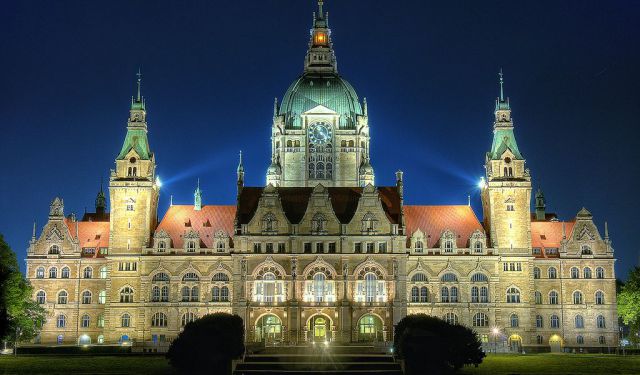
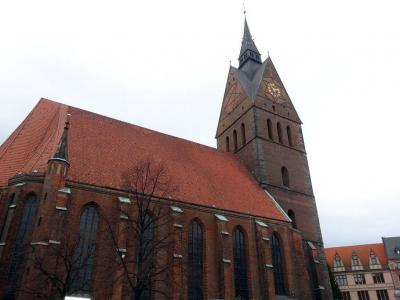
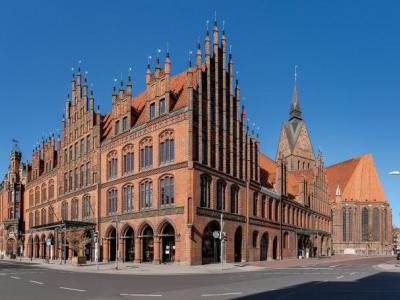
In Hanover’s city centre, visitors move between reconstructed Old Town streets and wide modern boulevards. Around Market Square, the red-brick Market Church and Old Town Hall anchor the historic core, while nearby lanes reveal timber-framed houses rebuilt after the war. A short walk leads to the grand New City Hall, set beside parkland and Maschsee Lake. Along the way, shops, cafés, and museums reflect a city shaped equally by history, reconstruction, and everyday urban life.
And as you explore the streets of Hanover, you are, in a way, still walking along that original “high bank.” The difference now is that instead of guarding against floods, it invites you to see how a small riverside settlement grew into a city that continues to evolve while staying true to its character.
By the 13th century, Hanover had grown into a sizable town by the standards of the time. It received town privileges in 1241, formalizing its status as an urban centre. Over the following century, the city developed defensive walls, churches, and an increasingly active commercial life.
A major turning point came in the 17th century when the House of Welf elevated Hanover’s political role. In 1638, Duke of Brunswick-Lüneburg, who is simply referred to as George, moved his residence to the city, establishing it as a political centre. In 1692, the Holy Roman Emperor granted the duchy the status of Electorate, marking the rise of the House of Hanover. This shift led to one of the city’s most notable historical connections. George's grand daughter, Sophia Dorothea, later married George I of Great Britain who became King of Great Britain in 1714, initiating a personal union between Hanover and the British crown.
Despite this close link, the British monarchs rarely visited Hanover. The union ended in 1837 when Queen Victoria inherited the British throne but could not succeed in Hanover due to Salic law, which barred female succession. Hanover remained a kingdom until 1866, when it was annexed by Prussia following the Austro-Prussian War.
In the 19th century, industrialization transformed Hanover into an important economic hub, with expanding railways, manufacturing, and trade. World War II brought widespread destruction, heavily damaging the historic centre. In the decades that followed, the city was rebuilt, but it still preserved key elements of its historical identity. Today, Hanover is known as a major trade fair city, hosting internationally important events like Hanover Fair.
In Hanover’s city centre, visitors move between reconstructed Old Town streets and wide modern boulevards. Around Market Square, the red-brick Market Church and Old Town Hall anchor the historic core, while nearby lanes reveal timber-framed houses rebuilt after the war. A short walk leads to the grand New City Hall, set beside parkland and Maschsee Lake. Along the way, shops, cafés, and museums reflect a city shaped equally by history, reconstruction, and everyday urban life.
And as you explore the streets of Hanover, you are, in a way, still walking along that original “high bank.” The difference now is that instead of guarding against floods, it invites you to see how a small riverside settlement grew into a city that continues to evolve while staying true to its character.
How it works: Download the app "GPSmyCity: Walks in 1K+ Cities" from Apple App Store or Google Play Store to your mobile phone or tablet. The app turns your mobile device into a personal tour guide and its built-in GPS navigation functions guide you from one tour stop to next. The app works offline, so no data plan is needed when traveling abroad.
Download The GPSmyCity App



Hanover Introduction Walking Tour Map
Guide Name: Hanover Introduction Walking Tour
Guide Location: Germany » Hanover (See other walking tours in Hanover)
Guide Type: Self-guided Walking Tour (Sightseeing)
Tour Duration: 2 Hour(s)
Travel Distance: 2.3 Km or 1.4 Miles
Guide Location: Germany » Hanover (See other walking tours in Hanover)
Guide Type: Self-guided Walking Tour (Sightseeing)
Tour Duration: 2 Hour(s)
Travel Distance: 2.3 Km or 1.4 Miles
Sights Featured in This Walk
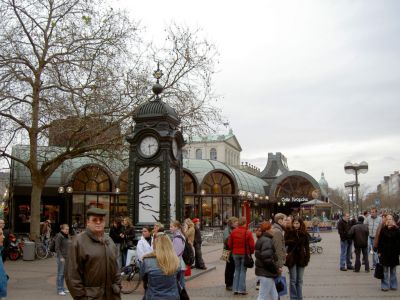
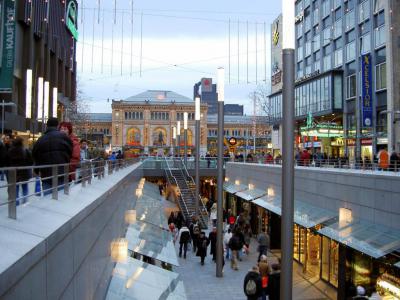
Walking Tours in Hanover, Germany

Create Your Own Walk in Hanover
Creating your own self-guided walk in Hanover is easy and fun. Choose the city attractions that you want to see and a walk route map will be created just for you. You can even set your hotel as the start point of the walk.
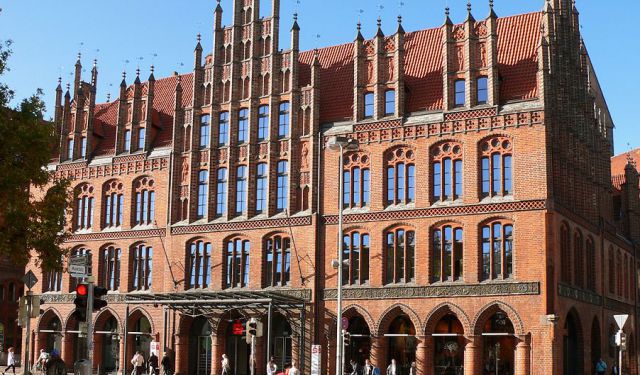
Architectural Jewels
Even though some may find Hannover rather new looking, the city in fact has a long and eventful history. As a crucial transportation hub, Hannover couldn’t escape Allied bombing during World War II; what used to be a grand city was turned into the rubble – with 90% of the local buildings destroyed. Yet, despite the bombing and ensued reconstruction, many pre-war architectural gems have... view more
Tour Duration: 1 Hour(s)
Travel Distance: 1.5 Km or 0.9 Miles
Tour Duration: 1 Hour(s)
Travel Distance: 1.5 Km or 0.9 Miles
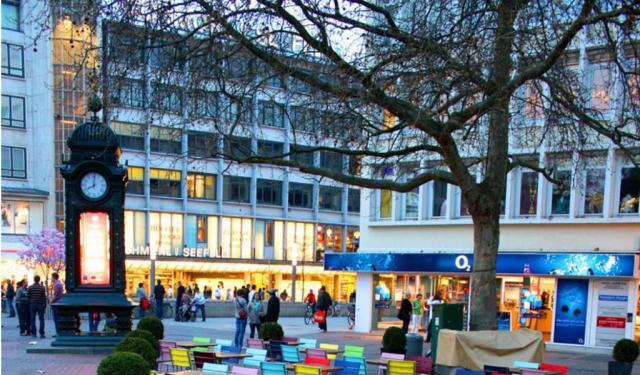
Shopping Areas in Hannover
Hannover is ideally suited for shopping – replete with wonderful markets and elegant boutiques fit to satisfy most shoppers. All the world's top brands are packed here within easily accessible areas. Only a few cities in Germany can offer such a high density of shopping opportunities within just a few hundred meters of each other.
Subject to your interest, you can find here what you need... view more
Tour Duration: 1 Hour(s)
Travel Distance: 1.9 Km or 1.2 Miles
Subject to your interest, you can find here what you need... view more
Tour Duration: 1 Hour(s)
Travel Distance: 1.9 Km or 1.2 Miles
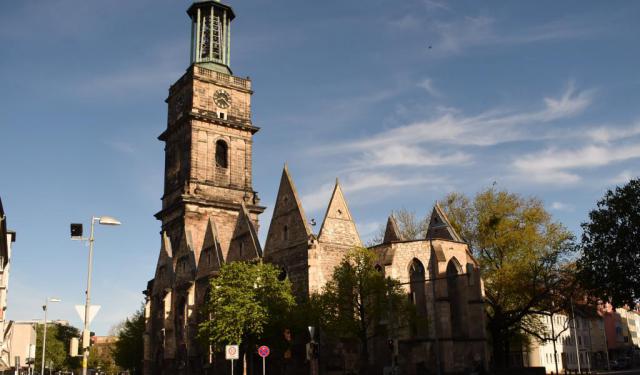
Hannover's Historical Churches Walking Tour
Hannover, Germany, boasts a great deal of history that is beautifully reflected in its ancient churches. A good number of them were built as far back as the 14th century. Despite the passage of time, today these architectural marvels remain largely intact, standing as a testament to Hannover's cultural and religious heritage.
One such is the Aegidia Church (Aegidienkirche). Originally... view more
Tour Duration: 1 Hour(s)
Travel Distance: 1.6 Km or 1 Miles
One such is the Aegidia Church (Aegidienkirche). Originally... view more
Tour Duration: 1 Hour(s)
Travel Distance: 1.6 Km or 1 Miles
The Most Popular Cities
/ view all