

Istanbul Old City Walking Tour, Istanbul

Audio Guide: Istanbul Old City Walking Tour (Self Guided), Istanbul

The Old City of Istanbul, occupying a triangular peninsula between the Golden Horn and the Sea of Marmara, is one of the most historically layered urban areas in the world. Its evolution reflects a succession of empires that shaped its architecture, culture, and spiritual life. The city’s origins date to around 657 BC, when Greek settlers from Megara founded Byzantium for its ideal harbor and strategic location on trade routes linking the Black Sea to the Aegean. Its fortunes rose under Roman control, culminating in Emperor Constantine the Great’s decision to make it the eastern capital of the Roman Empire in 324 AD, renaming it Constantinople six years later.

During the Byzantine era, Constantinople flourished as the heart of Eastern Christendom. The massive Theodosian Walls safeguarded the city for centuries, while Emperor Justinian I’s Hagia Sophia, completed in 537 AD, symbolized both imperial ambition and religious devotion. For nearly a millennium, the city remained a center of power, commerce, and learning, bridging Europe and Asia. This era ended in 1453 when Sultan Mehmed II of the Ottoman Empire captured the city, transforming it into an Islamic imperial capital. Churches became mosques, new monuments such as the Topkapi Palace and later the Blue Mosque redefined the skyline, and bustling bazaars, hammams, and caravanserais shaped daily life.

The 20th century brought another turning point with the founding of the Republic of Turkey in 1923. Although the capital moved to Ankara, Istanbul retained its status as the nation’s cultural and economic heart. In 1985, the Old City’s core monuments and districts were inscribed as a UNESCO World Heritage Site, recognizing its outstanding universal value as a crossroads of civilizations.

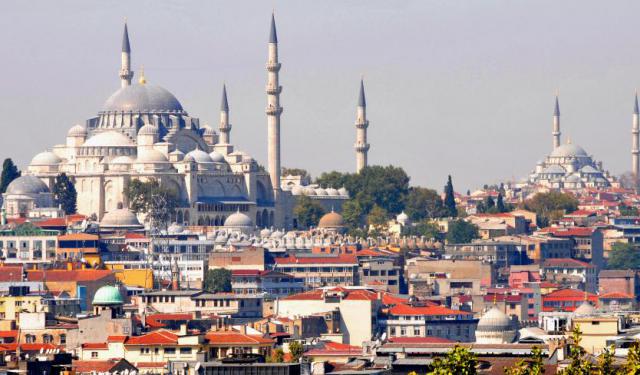
Many of the city’s landmarks cluster around Sultanahmet Square, the ancient site of the Hippodrome of Constantinople. Here, relics like the Obelisk of Theodosius and the Stone of Million evoke the grandeur of imperial times. Facing the square stand the Hagia Sophia and the Blue Mosque—two icons representing the city’s Christian and Islamic legacies.

Beneath the surface, the Basilica Cistern recalls the city’s engineering prowess, while museums such as the Turkish and Islamic Arts Museum and the Great Palace Mosaics Museum preserve its artistic heritage. Nearby, Topkapi Palace, Hagia Irene, and the Fountain of Ahmed III illustrate Ottoman refinement, complemented by the Arasta Bazaar, Sogukcesme Street, and the Hurrem Sultan Hamam, which capture the rhythms of everyday life.

Together, these layers create a living museum where empire, faith, and modern vitality continue to coexist. In Istanbul’s Old City, every corner breathes history… and every whisper comes with a spectacular view.
How it works: Download the app "GPSmyCity: Walks in 1K+ Cities" from Apple App Store or Google Play Store to your mobile phone or tablet. The app turns your mobile device into a personal tour guide and its built-in GPS navigation functions guide you from one tour stop to next. The app works offline, so no data plan is needed when traveling abroad.

Download The GPSmyCity App

Istanbul Old City Walking Tour Map

Guide Name: Istanbul Old City Walking Tour
Guide Location: Turkey » Istanbul (See other walking tours in Istanbul)
Guide Type: Self-guided Walking Tour (Sightseeing)
# of Attractions: 14
Tour Duration: 2 Hour(s)
Travel Distance: 2.3 Km or 1.4 Miles
Author: DanaOffice
Sight(s) Featured in This Guide:
  • Turkish and Islamic Arts Museum
  • Obelisk of Theodosius (Egyptian Obelisk)
  • Sultanahmet Square
  • Blue Mosque
  • Arasta Bazaar
  • Great Palace Mosaics Museum
  • Hurrem Sultan Hamam
  • Hagia Sophia (Ayasofya)
  • The Stone of Million
  • Basilica Cistern (Yerebatan Sarnıcı)
  • Sogukcesme Street
  • Fountain of Ahmed III
  • Hagia Irene
  • Topkapi Palace
1
Turkish and Islamic Arts Museum

1) Turkish and Islamic Arts Museum

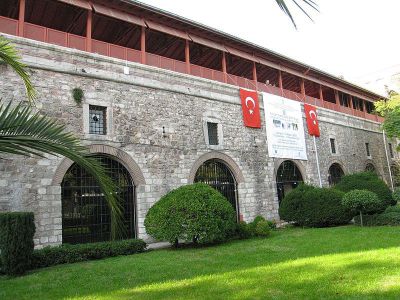
The Turkish and Islamic Arts Museum is a vivid illustration that even palace drama can end in a very classy exhibition. This grand residence was completed in 1524 for Pargalı Ibrahim Pasha, best friend and right-hand man to Suleiman the Magnificent. He even married the Sultan’s sister, because why not combine work and family? But as history loves a plot twist, Ibrahim climbed a little too high. Court rivals whispered, jealousy brewed, and eventually the Sultan was convinced that his trusted vizier was getting too magnificent. The result? Let’s just say Ibrahim never got to enjoy retirement...

His palace, however, survived—and reinvented itself as a cultural treasure chest. Inside, over 40,000 pieces of Islamic art line the galleries: shimmering illuminated Korans, richly woven carpets, miniature paintings so tiny yet so detailed, elegant calligraphy, brilliantly glazed tiles, carved woodwork, and ceramics from both the Ottoman and Seljuk eras. Think of it as a crash course in a thousand years of beauty, craftsmanship, and royal taste.

Head downstairs and you’ll stumble into an ethnographic journey through Turkey’s diverse communities. Full-scale traditional dwellings show how nomadic life looked long before air-conditioning, Wi-Fi, and Instagram filters became everyday realities. It’s a quiet reminder that tents once ruled the land—and did it stylishly...

Best of all, though, is that the museum is just steps away from the Blue Mosque and Hagia Sophia—close enough to hear the tour groups, but far enough to escape them. If you need a breather from the crowds and a peek into centuries of artistry and intrigue, Ibrahim Pasha’s former home is your perfect refuge. Just be sure to appreciate the palace more than its original owner ever had the chance to...
2
Obelisk of Theodosius (Egyptian Obelisk)

2) Obelisk of Theodosius (Egyptian Obelisk)

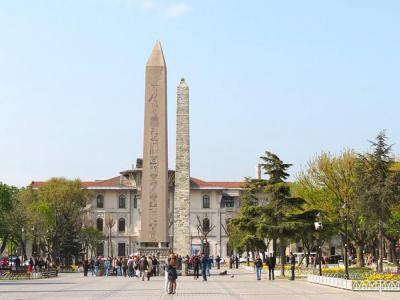
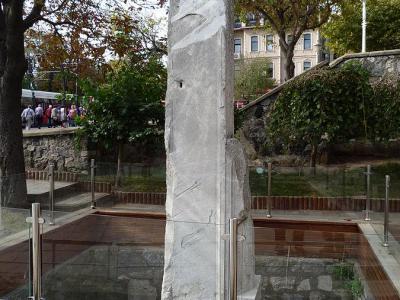
Meet one of Sultanahmet’s oldest landmarks — the Obelisk of Theodosius (though technically it’s far more Egyptian than Constantinopolitan). This stone needle was commissioned by Pharaoh Thutmose III back in the 15th century BC to brag about a victory over the Mitanni near the Euphrates. Imagine ancient political propaganda — but carved in granite and meant to last longer than any press release ever could...

Now, before you admire its height, here’s the twist: you’re only looking at the top third of the original monument. The whole thing once stood in the grand temple of Karnak, until the Romans decided they wanted a piece of it — quite literally. So, they chopped it up, floated it down the Nile to Alexandria in 390 AD, and then shipped it off again to Constantinople, where Emperor Theodosius set it up as his own imperial victory souvenir. Indeed, there's nothing like redecorating an empire to celebrate your 20th anniversary on the throne...

Take a good look at the pedestal holding it up. You’ll see the scenes of Theodosius sitting in the Hippodrome’s imperial box — the Kathisma — handing out victory wreaths as if he invented winning as such. Meanwhile, the obelisk itself, despite its age of nearly 3,500 years, still looks as good as new.

So, if you’re wandering through Sultanahmet Square, don’t just rush between the Blue Mosque and Hagia Sophia. Stop by and say hello to this time-traveling monument. It’s tall, it’s ancient, and it has more drama in its backstory than most streaming series.
3
Sultanahmet Square

3) Sultanahmet Square (must see)

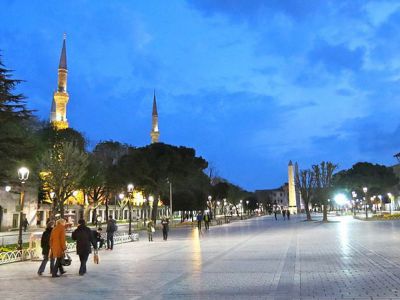
Roll back the clock some 1,500 years and you’d find yourself cheering on thundering chariots at the Hippodrome of Constantinople. Nowadays, that same spot has traded in its roaring crowds for camera-clicking tourists: welcome to Sultanahmet Square, the beating heart of Istanbul’s Old City! It’s the kind of place where history is casually hanging out right beside you. Ancient monuments, world-famous landmarks—all here. The Blue Mosque, Hagia Sophia, the Museum of Turkish & Islamic Arts, even the Serpent Column—have gathered like celebrities on a very exclusive red carpet...

And if you’re wondering about the Basilica Cistern—yes, that mysterious underground palace of water and marble columns—is barely a 40-meter stroll away. The Grand Bazaar, with its labyrinth of stalls and endless bargaining opportunities, is also close by. Basically, from this square, everything you want to see has decided to arrange itself within walking distance. How thoughtful...

Sultanahmet Square is big enough to stretch your legs and dotted with benches perfect for regrouping after a marathon of sightseeing. Feeling hungry? Not a problem. Food carts pop up everywhere, tempting you with roasted corn, warm chestnuts, and simit—the Turkish cousin of the pretzel—sometimes even filled with chocolate for the sweet-toothed adventurer. Along the tram line, cafés and shops are ready to caffeinate you, feed you Turkish Delights, and send you home with gift packs that may or may not make it through airport security unopened.

This square never really rests. Families enjoy the colorful fountain, kids race through the greenery, and Istanbul’s famously relaxed street cats and dogs seem rather friendly and keep to themselves. Just one tip: the area is open to the elements and provides very little shelter, so carrying an umbrella or raincoat, if the weather looks moody, is highly recommended—unless, of course, you enjoy dramatic, cinematic rainfall during vacations...

So, take a seat, grab a simit, and soak it all in—you’re standing where empires once entertained the masses, and where Istanbul still gathers the world...
4
Blue Mosque

4) Blue Mosque (must see)

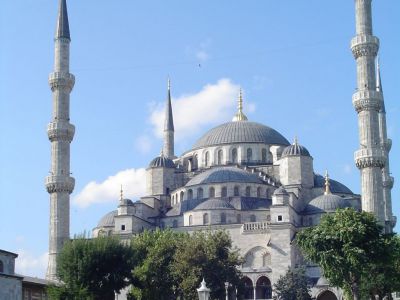
If there's one “celebrity monument” with its own fan club in Istanbul, it is undoubtedly the Sultan Ahmed Mosque — better known as the “Blue Mosque.” Why this nickname? Step inside and you’ll see for yourself —thousands of shimmering blue tiles that turn the whole interior into a calming ocean of color. Built between 1609 and 1616 under Sultan Ahmed I, this place isn’t just a pretty façade but is also home to the Sultan’s tomb. Formerly a religious school (or madrassah), it also housed, once, what used to be a hospice. And despite welcoming tourists from sunrise to sunset, it still functions as a real mosque. That means the call to prayer — five times a day — pauses sightseeing (for approximately half an hour) and reminds everyone that this is primarily a place of worship rather than a photo backdrop...

The Blue Mosque stands right across from Hagia Sophia, making Sultanahmet Square the heavyweight championship ring of world architecture. Surrounded by museums, cafés, parks, and postcard-perfect views in every direction, it’s basically the center of Istanbul’s charm offensive. Curious fact: the mosque was built on top of the old Byzantine Imperial Palace grounds and parts of the Hippodrome. Inside, the walls are covered with breathtaking Islamic art and masterful calligraphy that feels like history’s own handwriting.

The fact that it’s free, world-famous, and (unlike many other similar attractions) is incredibly easy to reach, makes this mosque a definite must-visit. Yes, there are dress codes, security checks, and lines that might make you consider new career paths while waiting… but once inside that peaceful, domed interior — despite all the crowds — you will gladly realize it's been worth it.

Pro tip: Arrive early to avoid queues — your future self will thank you. While waiting, instead of counting heads in line, admire the details around you; Islamic design rewards those who actually look up. And when hunger strikes, don’t worry — great food and drinks are just steps away. Even from the outside, the mosque is a dream for photographers… So, go ahead, circle it like a curious cat and capture every angle.
5
Arasta Bazaar

5) Arasta Bazaar

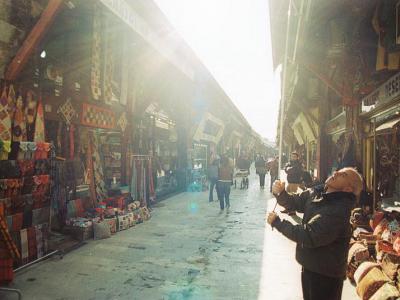
The Arasta Bazaar can be easily regarded as the Blue Mosque’s stylish backyard market. Built back in the 17th century, its original purpose was very practical: its shop rent helped pay for the mosque’s maintenance. You could say it was history’s most elegant fundraising program. For a long time, though, the shops sat empty… until the tourism boom of the 1980s and ’90s breathed life (and bargaining) back into the place.

Now, if Grand Bazaar feels like too much cardio or too many elbows, Arasta Bazaar is your happy middle ground. It offers a slimmed-down version of the Istanbul shopping experience: fewer crowds, less chaos, and still plenty of temptation. With over 70 shops selling everything from carpets and kilims to ceramic tiles, spices, teas, and jewelry, you can tick all your souvenir boxes in one relaxed stroll. And don’t worry — the salesmen here are multilingual charm-machines who can joke, flatter, and caffeinate you into seeing why that extra scarf is suddenly essential. Prices start reasonably and get friendlier the moment you start negotiating.

While you’re browsing, look down — literally beneath your feet lies a piece of Byzantine luxury. Excavations revealed that this area once belonged to the Great Palace, the imperial stomping grounds of Constantinople. Today, you can head downstairs to the Great Palace Mosaic Museum and admire vivid scenes of ancient life: animals, hunters, mythical creatures… basically the original “floor stickers.”

So, take your time. Enjoy a coffee, admire the craftsmanship, and leave with a story — plus at least one more bag than you intended. Arasta Bazaar may be modest in size, but it’s rich in history, charm, and shopping victories.
6
Great Palace Mosaics Museum

6) Great Palace Mosaics Museum

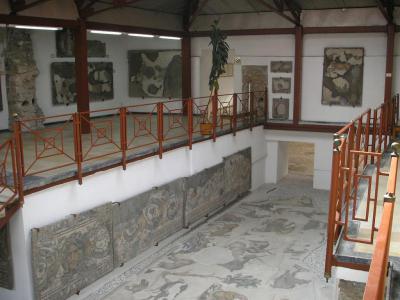
Tucked just behind the majestic Blue Mosque — or actually under it — the Museum of Great Palace Mosaics is one of Istanbul’s best surprises waiting beneath your feet. Hidden below the Arasta Bazaar, this two-level gallery shelters what was once the glittering floor of the Byzantine Great Palace. If you’ve already swooned over the mosaics in Hagia Sophia or the Chora Church, brace yourself: there’s more ancient eye-candy down here.

These mosaics may have lost their palace, but not their flair. Crafted around 450–550 AD, about 40,000 tiny pieces of limestone, earthenware, and colorful stone once covered a sprawling (over 1,800-square-meter) courtyard in Constantine the Great’s imperial residence — centuries before the Ottomans thought up the Blue Mosque next door.

In the 7th and 8th centuries, when painting was frowned upon, the entire mosaic carpet was buried under heavy marble slabs and sealed away (like a time capsule nobody remembered). Under the Ottomans, the palaces were moved to the Golden Horn (to avoid potential threat from the sea), and later the entire neighborhood was turned into a residential district. They unknowingly built homes right over this ancient masterpiece, and everyone just walked on top of it for centuries, completely oblivious.

It wasn't until 1921, when a fire ripped through the area, that the excavation works that followed cracked the ground open, and suddenly — surprise! — a forgotten palace floor showed up. Archaeologists, mostly from the University of St Andrews in Scotland, spent decades (from 1935 to 1951) carefully unearthing it, piecing together the world’s most precious jigsaw puzzle.

Today, the mosaics remain almost exactly where they were rediscovered, still bursting with life. You’ll meet more than 150 figures: hunters chasing wild beasts, kids riding exotic animals, mythological characters acting dramatic — basically, a highly illustrated Byzantine “Instagram” feed...

Finally granted museum status in 1997, this site is one of Istanbul’s most exciting archaeological wins of the modern era — and a thrilling reminder that in this city, history isn’t just around every corner… sometimes it’s right under your very shoes.
7
Hurrem Sultan Hamam

7) Hurrem Sultan Hamam

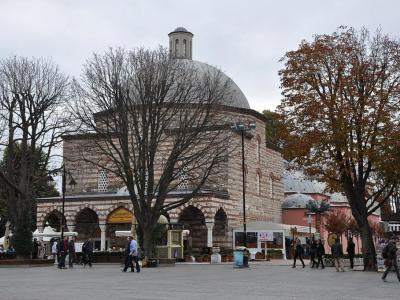
Right between the Blue Mosque and Hagia Sophia—because why not claim the most prime real estate in all of Istanbul if you can afford it—stands the Ayasofya Hurrem Sultan Hamam. Commissioned in the 1550s by Hurrem Sultan, the brilliant and formidable wife of Suleiman the Magnificent, this bathhouse was her way of saying, “Cleanliness is next to queenliness.” She ensured that both royalty and everyday citizens could enjoy it.

The location has a history layered as thick as Turkish delight. Before Ottomans were steaming away stress here, the ancient Romans ran their own spa—the Baths of Zeuxippus. And before that, a Temple of Zeus marked the spot. Clearly, this patch of land has always been devoted to divine treatments...

Stretching 75 meters and built in classical Ottoman style, the hamam served both men and women (albeit separately—to avoid scandal) until 1910. Then it took a break from bubbles and scrubs to become… a storage warehouse. Thankfully, the 1950s gave it a second act as a carpet shop—because in Istanbul, carpets are never a bad idea.

But the hamam’s true comeback story arrived in 2011, after a 13-million-dollar makeover and three years of polishing every marble tile to perfection. Today, it is pure luxury—steam, massage, foam, and bliss offered in packages so indulgent you may forget what century you’re in. There’s even an outdoor café, if you need to recharge between pampering sessions.

The place's motto says, “Some rituals never die.” And indeed, after a visit here, you may walk out feeling like Hurrem Sultan herself—minus the palace intrigue, plus very soft skin...
8
Hagia Sophia (Ayasofya)

8) Hagia Sophia (Ayasofya) (must see)

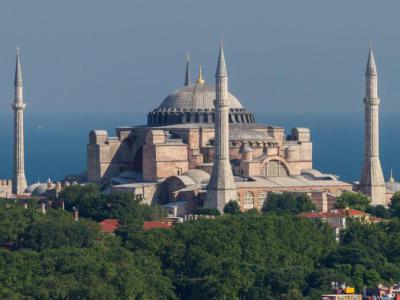
Hagia Sophia is the ultimate overachiever of both architecture and religion. Built in the 6th century for Emperor Justinian I, it began life as a grand Christian cathedral—basically the power seat of the Eastern Orthodox world. Its giant dome was such an engineering feat that people said it hung from heaven by a chain. At 180 feet tall and 100 feet wide, it still gets a lot of impressed neck-craning today.

Still, history wasn’t satisfied with just one identity for Hagia Sophia. When the Ottomans conquered Constantinople in 1453, Sultan Mehmed II turned it into a mosque. Up went the minarets, out came the church bells, and Christian images were masterly covered—like someone switching décor for a very different house party... Today, you’ll see a fascinating mash-up: Islamic calligraphy panels right beside shimmering mosaics of the Virgin Mary and Jesus. History lesson and cultural fusion rolled into one.

Inside, look for the famous Deësis mosaic from the 13th century, featuring Christ, John the Baptist, and the Virgin Mary, expressing emotion so well it almost feels like they’re watching you back. And don’t miss the “wishing column.” Legend says that if you stick your thumb in the little hole and rotate it just right, you get a miracle. Rumor has it, even Emperor Justinian tried it for headaches—indeed, who needs aspirin when you have ancient architecture?

Recognized as a UNESCO World Heritage Site, Hagia Sophia continues to reinvent itself. After a stretch as a museum, it has returned to its original mission as a place of worship, while its historical displays now live at the nearby Ibrahim Pasha Palace.

Indeed, one shouldn't miss the opportunity to visit here, because where else can you stand in one spot and admire 1,500 years of spiritual remixing? Hagia Sophia’s layers of faith, art, and genius design make it impossible to look away—so go ahead and stare in awe!
9
The Stone of Million

9) The Stone of Million

Don't be surprised if they say, you’re now standing at what used to be the center of the world. Not metaphorically—the actual center, according to the Byzantines. The Stone of Million, this humble remnant before you, once marked Zero Mile for the entire empire. Want to know how far it was to Thessaloniki, Antioch, or Rome? The answer started right here. It was Constantinople’s way of saying, “All roads lead to us—thanks for acknowledging it.”

Back in the 4th century, this wasn’t just a stone stub. It was a flashy double triumphal arch topped with a dome, supported by four arches, and crowned with statues of Emperor Constantine and his mother Helena—posing confidently with a cross and staring eastward, as if waiting for applause. Behind them stood Tyche, the goddess of good fortune, presumably making sure the city stayed fabulous.

And get this: long before the world cared about Greenwich, Istanbul was Time Zero. Literally. The global meridian was drawn through the Million’s location. If you set a clock in Paris or Cairo, the time traced back here—Constantinople kept everyone punctual. Maps pointed to this exact spot to tell sailors where "home" really was.

Then came 1884. A bunch of delegates gathered at the International Meridian Conference and said, “Actually… what if we made England the middle?” Just like that, Greenwich got the glory, and the Million Stone was demoted from world anchor to historical footnote.

Yet it still sits proudly in Sultanahmet, quietly reminding us that this was once the center of everything...

So, take a moment. You’re not just visiting a stone—you’re standing on the coordinates where empires measured distance, time, and importance. Not bad for one little marker holding onto its superstar past...
10
Basilica Cistern (Yerebatan Sarnıcı)

10) Basilica Cistern (Yerebatan Sarnıcı) (must see)

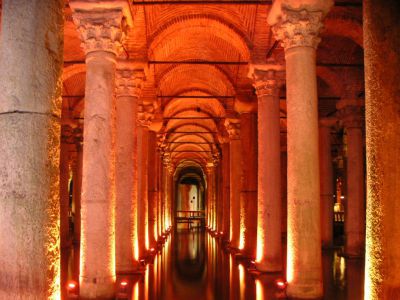
Deep beneath the busy streets near Hagia Sophia lies one of Istanbul’s coolest secrets — literally — the Basilica Cistern. Its Turkish name, translating to something like “the cistern that sank into the ground,” sounds dramatic… and honestly, it lives up to the hype. Built in the 6th century AD by Emperor Justinian I, this underground wonder once helped supply water to the Great Palace of Constantinople. And yes, history tells us, more than 7,000 slaves worked on it, which in turn explains how it became so massive.

The endless rows of columns, dim lighting, and still water reflecting everything like a spooky mirror... If this feels a bit like stepping into a fantasy movie set, that’s because thousands of years ago, the Byzantines were already masters of atmospheric design. Even when the Ottomans took over, the cistern kept doing its job quietly — providing water to Topkapi Palace and proving itself far more reliable than your average plumbing system.

These days, the Basilica Cistern is less about water supply and more about blowing visitors’ minds. You can stroll past ancient triumphal arches, admire rows of marble pillars, and, of course, meet the most famous residents: two giant Medusa heads casually holding up columns in the northwest corner. One sideways, one upside-down… because when you have mythological monster heads lying around, why not get creative?

And if you like incredible photos, mysterious echoes, and that thrilling “did I just feel a ghost breeze?” vibe — this place delivers. Plus, it’s right next to Hagia Sophia, Topkapi Palace, and the Blue Mosque, so you can easily squeeze it into your ancient-monument marathon.

A word of warning: surfaces can get slippery — especially around Medusa — so walk like you’re in a suspense movie. And also bring a jacket, for it gets rather chilly underground... Ready to descend into Istanbul’s past? The cistern is waiting below… just mind the water.
11
Sogukcesme Street

11) Sogukcesme Street

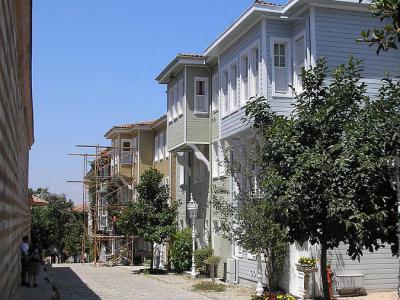
Though its name translates literally to the “Street of the Cold Fountain,” the vibe here is anything but chilly. This little cobblestone lane slips quietly downhill between two absolute show-offs: Hagia Sophia on one side and Topkapı Palace on the other. It’s car-free, calm, and determined to remind everyone that Istanbul wasn’t always made of concrete and traffic jams.

The street is lined with charming Ottoman-era wooden houses (well, charming 1980s recreations of Ottoman-era wooden houses, to be frank, but let’s not ruin the fantasy...). Restored in 1985–86, they show what Istanbul’s residential life looked like around the turn of the 20th century: cozy façades, narrow windows, and just enough creaking timber to feel authentic. Today, nine of these “Hagia Sophia Mansions” moonlight as boutique accommodations, each named after the fragrant shrubs out front—Jasmine, Wisteria, Honeysuckle… basically a perfume aisle you can sleep in. The interiors go full period drama with silk curtains, velvet chairs, and gilded mirrors.

Over the years, these houses have welcomed quite a guest list, including Queen Sofía of Spain, Oscar-winning actors and actresses (such as Sam Neil and Hilary Swank), Bond girls (remember Ursula Anders?), and even Roman Polanski, the renowned film director. Indeed, if these walls could talk, they’d demand an autograph book.

There’s more history tucked into this short stretch than meets the eye. Turkey’s 6th president, Fahri Sabit Korutürk, was born right here. One house now guards a treasure trove of over 10,000 books on Istanbul. And at the Gülhane Park end, a former Byzantine cistern has reinvented itself as the charming Sarnıç Restaurant—because who wouldn't want to dine underground in a fashionable medieval water pipe?

So, whenever the grandeur of old Constantinople starts to overload your senses, take a breather along this cute street—where tranquility, nostalgia, and very good lighting come together. And before you wander off, swing by the nearby Fountain of Sultan Ahmed III—a solo-standing splash of 18th-century Ottoman rococo flair proving that even fountains can have star power...
12
Fountain of Ahmed III

12) Fountain of Ahmed III

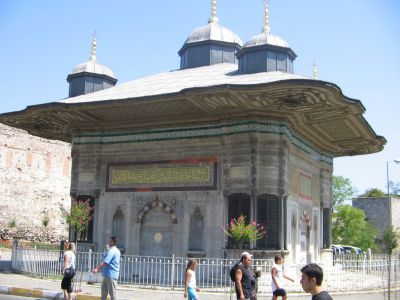
Right outside the Imperial Gate of Topkapı Palace stands one of Istanbul’s most glamorous refreshment stops of the 18th century: the Fountain of Ahmed III. Before this beauty emerged in 1728, there was a humble Byzantine fountain on the spot — but Sultan Ahmed III clearly felt the neighborhood deserved an upgrade. So, he ordered a showpiece in full Turkish Rococo style, and the result became the Ottoman equivalent of a stylish social hub. Think of it as the place to chat, be seen, and sip something cool — long before iced lattes came into fashion...

Architecturally, it’s a delightful mash-up. A kind of grand square kiosk topped with smaller domes, as if the building is proudly wearing a crown with matching accessories. Foliate and floral motifs swirl across the walls, and each of the four sides features its own decorative niche (shaped a bit like a mosque’s mihrab) and, of course, a drinking fountain. Inside, there’s even a small space for an attendant, because excellent service was a must when distributing water and sherbet to the public completely free of charge. That’s right: the Ottomans were doing community hydration long before trendy water stations became a thing.

Look up, and you’ll see elegant calligraphic panels bordered with red and blue tiles, turning the act of quenching your thirst into a poetic moment. The fourteen-line verses are dedicated to the beauty of water — courtesy of 18th-century poet Seyyid Vehbi — because naturally, even refreshment deserved fine literature.

So, as you pass by this ornate fountain, imagine the chatter of courtiers, the splash of water, and the pride of a sultan who wanted to make everyday life just a little more fabulous...
13
Hagia Irene

13) Hagia Irene

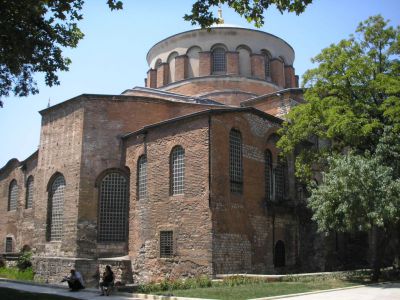
Hagia Irene—whose name means “Holy Peace,” though she’s seen more drama than the title suggests—sits quietly in the outer courtyard of Topkapi Palace. For centuries, she was off-limits to the public, which only made her more mysterious. But since 2014, she’s opened her doors as a museum, happily welcoming curious visitors… for a modest fee.

Long before minarets and sultans ruled the skyline, this exact spot hosted a pagan temple. Then along came Constantine the Great, in the 4th century AD, who said, “Let there be a church!” And thus Hagia Irene became one of the very first in Constantinople. That first version burned down in 532—because history loves a little chaos—so, Emperor Justinian stepped in and rebuilt it a few years later. For a brief moment, before Hagia Sophia stole the spotlight, Hagia Irene was the superstar Patriarchal Church of the city.

Architecturally, she’s a classic Roman basilica: two naves, an aisle, and plenty of elegant columns dividing the space. She also boasts something rare for Istanbul—an original Byzantine atrium still intact. In the 8th century, Emperor Constantine V added mosaics and frescoes, giving the interior some well-earned sparkle.

But here’s the twist: unlike many Byzantine churches, Hagia Irene never became a mosque. That means no massive calligraphic discs, no mihrab—just pure, echo-friendly stone. And that acoustics-friendly design has earned her a new gig. Today, she transforms into one of Istanbul’s most atmospheric concert halls, hosting spine-tingling classical performances during the Istanbul Music Festival.

So, regardless of whether you’re here for history, architecture, or the chance to hear a violin note resonate for what feels like eternity, Hagia Irene offers a peaceful—and seriously impressive—pause in the heart of the Old City all the same...
14
Topkapi Palace

14) Topkapi Palace (must see)

For most tourists, the Topkapi Palace is usually the number one attraction in Istanbul. And if you don’t have it on your list, are you sure you're visiting Istanbul? Constructed soon after the Ottoman conquest of Constantinople in 1453, it was commissioned by Sultan Mehmed II and was completed in the late 15th century. For nearly 400 years, it served as the political and ceremonial center of the Ottoman Empire, as well as the primary residence of its sultans.

Unlike many European royal residences, which typically consist of a single grand building, Topkapi was designed as a sprawling complex, covering about 700,000 square meters on the tip of the historic peninsula. It includes numerous pavilions, courtyards, gardens, mosques, and state rooms, each added and modified by different sultans over time. One of its most famous sections is the Harem, where the sultan’s family, including Valide Sultan (or the Queen Mother) and other influential women of the court, lived. This private space played an important role in politics, especially during a period often called the “Sultanate of Women,” when leading females inside the Harem influenced major state decisions.

Although Topkapi symbolized imperial authority for centuries, its role changed in the 19th century as the empire modernized. Sultan Abdulmejid I moved the royal court to the newly constructed Dolmabahçe Palace, which offered European-style luxury and modern conveniences. Even after the move, Topkapi retained great importance by housing sacred relics of Islam, including personal items (notably, the swords) of the Prophet Muhammad and his close companions.

After the fall of the Ottoman Empire and the founding of the Republic of Turkey in 1923, Topkapi Palace was turned into a museum the following year by the country's first president, Mustafa Kemal Atatürk. In 1985, it was recognized as part of Istanbul’s UNESCO World Heritage Sites.

At Topkapi, every stone whispers a secret, every doorway leads to another chapter of history, and the views of the Bosphorus Strait are always throne-worthy. To take it all in, especially the Harem and Holy Relics that really steal the show, visitors are encouraged to allocate a whole day. Practical tips include arriving early to avoid crowds, renting an audio guide with a valid ID, and respecting photography restrictions in many exhibit areas.

So, get ready: enjoy the royal treatment—minus the sultan’s responsibilities...

Walking Tours in Istanbul, Turkey

Create Your Own Walk in Istanbul

Create Your Own Walk in Istanbul

Creating your own self-guided walk in Istanbul is easy and fun. Choose the city attractions that you want to see and a walk route map will be created just for you. You can even set your hotel as the start point of the walk.
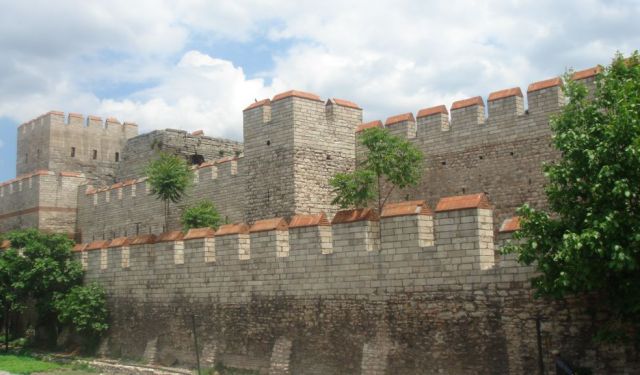
Istanbul City Walls

Istanbul City Walls

One of the most elaborate fortification systems of ancient times, the Walls of Constantinople were built by Constantine the Great to protect the city, the then newly-established capital of the Eastern Roman Empire, from attacks by land and sea. Of these, only the Golden Gate, an old ceremonial gateway into the city, had survived by the late Byzantine Era when a new series of land walls were added...  view more

Tour Duration: 2 Hour(s)
Travel Distance: 5.2 Km or 3.2 Miles
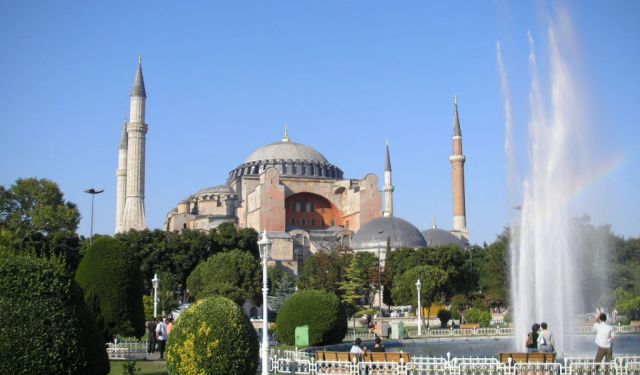
Bosphorus Coast Walking Tour

Bosphorus Coast Walking Tour

One of the planet's most praised stretches of water, the Bosphorus is a source of great pride for Istanbulites and of admiration for travelers. The 30-km strait dividing Europe and Asia and connecting the Marmara with the Black Sea is one of the city's highlights, having been for all ages the subject of legend and art.

This self-guided walk will take you along the coast so that you...  view more

Tour Duration: 3 Hour(s)
Travel Distance: 5.9 Km or 3.7 Miles
Asian Side and Bosphorus Walking Tour

Asian Side and Bosphorus Walking Tour

Istanbul is the only megalopolis in the world that straddles two continents. The Bosphorus Strait splits Turkey's biggest city into two parts: European and Asian. The latter, known locally as Asya Yakası (“Asian Side”), or more commonly as Anadolu Yakası (“Anatolian Side”), is found east of the strait, geographically on the Asian mainland.

The vast Anatolian shore, wrongly...  view more

Tour Duration: 2 Hour(s)
Travel Distance: 4.6 Km or 2.9 Miles
Istanbul Introduction Walking Tour

Istanbul Introduction Walking Tour

Once called Byzantium, Constantinople, and New Rome, Istanbul has had more name changes over the years than a celebrity avoiding paparazzi... The largest city in Turkey and one of the world’s most historic urban centers, it straddles the Bosphorus Strait like it couldn’t decide whether to sit on its European or Asian side and ultimately opted for both. The result was a cultural smoothie...  view more

Tour Duration: 2 Hour(s)
Travel Distance: 4.3 Km or 2.7 Miles
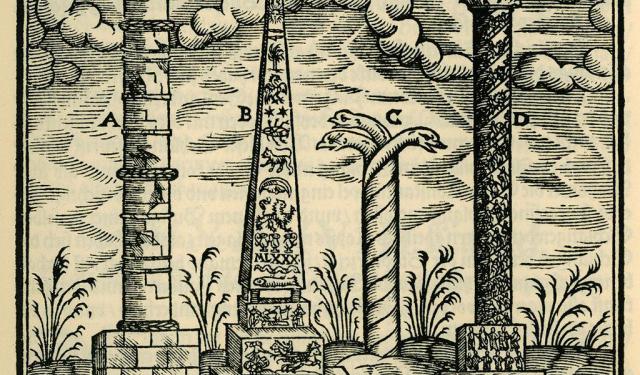
Old European Quarter Walk

Old European Quarter Walk

Back in the Ottoman era, the Beyoğlu neighborhood (then known as Pera), together with Galata, formed the stylish European Quarter of Istanbul. Home to embassies, trading houses, and Parisian-style apartment blocks, it all looks like it wandered in straight from the French capital. This area was where the city’s non-Islamic communities worked, lived, and possibly argued over the best pastries......  view more

Tour Duration: 2 Hour(s)
Travel Distance: 2.4 Km or 1.5 Miles
Byzantine Heritage Walking Tour

Byzantine Heritage Walking Tour

Originated as a Greek city called Byzantium, what's now known as Istanbul initially made name as Constantinople, an Eastern Roman imperial capital whose greatness had lasted for over a millennium, from 330 AD until the Ottoman invasion in 1453.

The Byzantine Empire’s rich cultural and architectural heritage is still preserved in dazzling sites throughout the city. Away from its Islamic...  view more

Tour Duration: 2 Hour(s)
Travel Distance: 2.5 Km or 1.6 Miles
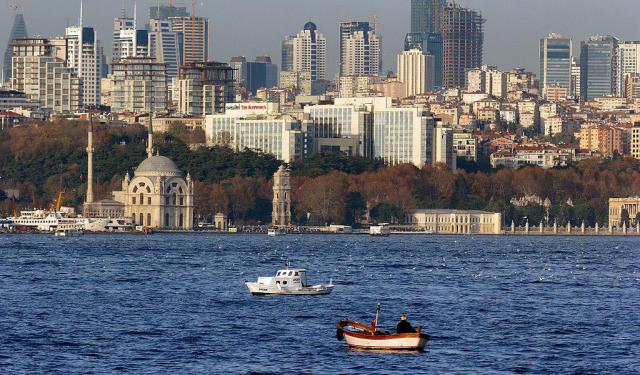
Useful Travel Guides for Planning Your Trip
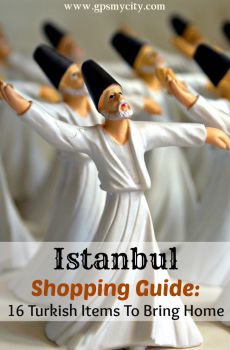

Istanbul Shopping Guide: 16 Turkish Items To Bring Home

Istanbul Shopping Guide: 16 Turkish Items To Bring Home

Istanbul, known throughout history as Byzantium and Constantinople, has been a major center of commerce and trade, a place where merchants and general folk would rush to regularly in search of exotic things. In our days, modern travelers to Istanbul are also bound to enjoy a truly magnificent...