

Audio Guide: Quebec City Introduction Walking Tour (Self Guided), Quebec City
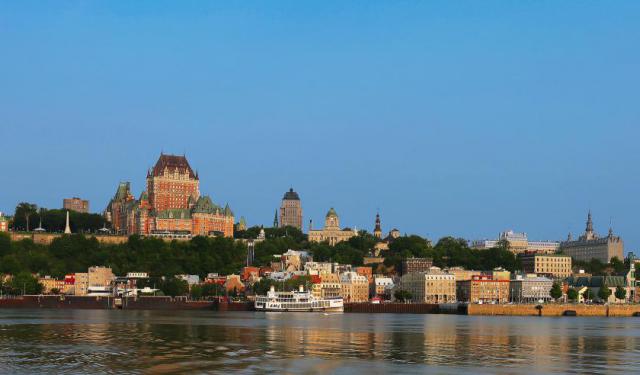
Cresting a cliff above the St. Lawrence River, Quebec City is the soul of the province of Quebec - a place all its own; a country within a country with its own traditions, architecture, and French-speaking population.
The Algonquian people had originally named this area Kébec, which means "where the river narrows", because the Saint Lawrence River indeed narrows proximate to the promontory of Quebec and its Cape Diamant. French explorer and diplomat Samuel de Champlain, also known as "The Father of New France", founded a settlement here in 1608 and served as its administrator for the rest of his life.
In fact, the name "Canada" refers to this very settlement. Up until the late 18th century, Quebec was the most populous city in present-day Canada. In 1867, it was confirmed as the capital of the newly created province of Quebec, three years after the Quebec Conference on Canadian Confederation took place in the city.
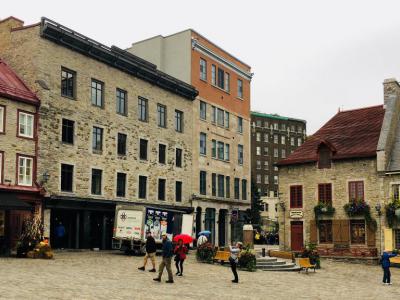
Quebec City is one of the oldest European settlements in North America. The self-proclaimed "National Capital", it has a fortified colonial core, with stone buildings and narrow streets. The ramparts surrounding Old Quebec are the only fortified city walls still existing in the Americas north of Mexico. This area was declared a World Heritage Site by UNESCO in 1985 as the "Historic District of Old Quebec".
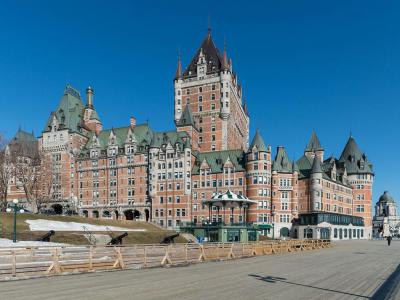
The city's key landmarks include the imposing Citadel of Quebec, a Canadian Forces installation and the federal vice-regal secondary residence, and the nearby massive Château Frontenac hotel, perched atop Cap-Diamant, dominating the skyline. During World War II, two conferences were held in these buildings, attended by Churchill and Roosevelt, during which a large part of the D-Day landing was planned.
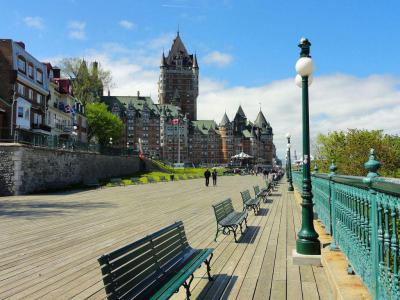
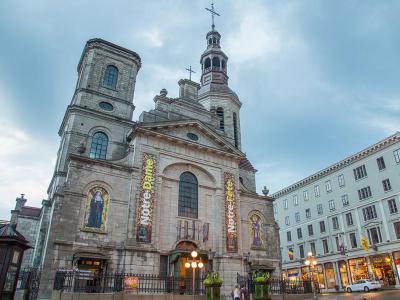
Near the Château Frontenac is Notre-Dame de Quebec Cathedral, the mother church of the Roman Catholic Archdiocese of Quebec. Alongside the Castle is Dufferin Terrace, a walkway along the edge of the cliff, offering views of the Saint Lawrence River. The terrace leads toward the nearby Plains of Abraham, site of the battle in which the British took Quebec from France. The Parliament Building, seat of the province's parliament, is also near the Citadel.
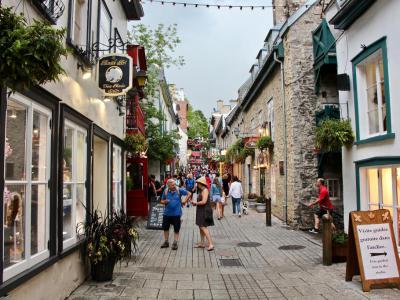
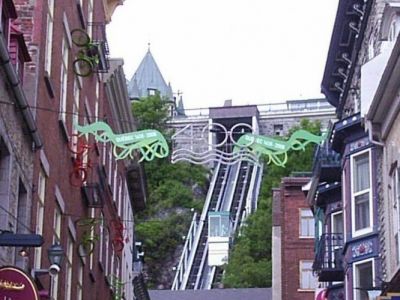
The Upper and Lower Towns are linked by numerous stairs, such as the so-called "Breakneck Staircase," or the Old Quebec Funicular on the historic Petit-Champlain street, home to numerous boutiques. There are a total of 37 National Historic Sites of Canada located in Quebec City and its enclaves. To see the most notable of them and other prominent landmarks, take this self-guided introductory walk.
The Algonquian people had originally named this area Kébec, which means "where the river narrows", because the Saint Lawrence River indeed narrows proximate to the promontory of Quebec and its Cape Diamant. French explorer and diplomat Samuel de Champlain, also known as "The Father of New France", founded a settlement here in 1608 and served as its administrator for the rest of his life.
In fact, the name "Canada" refers to this very settlement. Up until the late 18th century, Quebec was the most populous city in present-day Canada. In 1867, it was confirmed as the capital of the newly created province of Quebec, three years after the Quebec Conference on Canadian Confederation took place in the city.
Quebec City is one of the oldest European settlements in North America. The self-proclaimed "National Capital", it has a fortified colonial core, with stone buildings and narrow streets. The ramparts surrounding Old Quebec are the only fortified city walls still existing in the Americas north of Mexico. This area was declared a World Heritage Site by UNESCO in 1985 as the "Historic District of Old Quebec".
The city's key landmarks include the imposing Citadel of Quebec, a Canadian Forces installation and the federal vice-regal secondary residence, and the nearby massive Château Frontenac hotel, perched atop Cap-Diamant, dominating the skyline. During World War II, two conferences were held in these buildings, attended by Churchill and Roosevelt, during which a large part of the D-Day landing was planned.
Near the Château Frontenac is Notre-Dame de Quebec Cathedral, the mother church of the Roman Catholic Archdiocese of Quebec. Alongside the Castle is Dufferin Terrace, a walkway along the edge of the cliff, offering views of the Saint Lawrence River. The terrace leads toward the nearby Plains of Abraham, site of the battle in which the British took Quebec from France. The Parliament Building, seat of the province's parliament, is also near the Citadel.
The Upper and Lower Towns are linked by numerous stairs, such as the so-called "Breakneck Staircase," or the Old Quebec Funicular on the historic Petit-Champlain street, home to numerous boutiques. There are a total of 37 National Historic Sites of Canada located in Quebec City and its enclaves. To see the most notable of them and other prominent landmarks, take this self-guided introductory walk.
How it works: Download the app "GPSmyCity: Walks in 1K+ Cities" from Apple App Store or Google Play Store to your mobile phone or tablet. The app turns your mobile device into a personal tour guide and its built-in GPS navigation functions guide you from one tour stop to next. The app works offline, so no data plan is needed when traveling abroad.
Download The GPSmyCity App



Quebec City Introduction Walking Tour Map
Guide Name: Quebec City Introduction Walking Tour
Guide Location: Canada » Quebec City (See other walking tours in Quebec City)
Guide Type: Self-guided Walking Tour (Sightseeing)
Tour Duration: 2 Hours
Travel Distance: 3.2 Km or 2 Miles
Tour Best Suited For: First-time visit
Guide Location: Canada » Quebec City (See other walking tours in Quebec City)
Guide Type: Self-guided Walking Tour (Sightseeing)
Tour Duration: 2 Hours
Travel Distance: 3.2 Km or 2 Miles
Tour Best Suited For: First-time visit
Sights Featured in This Walk
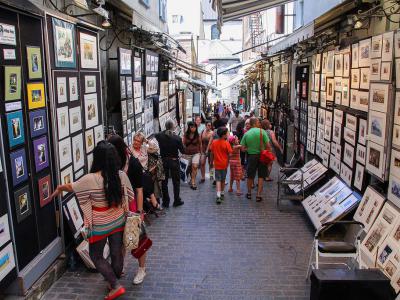
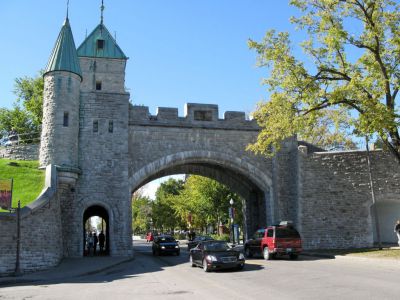
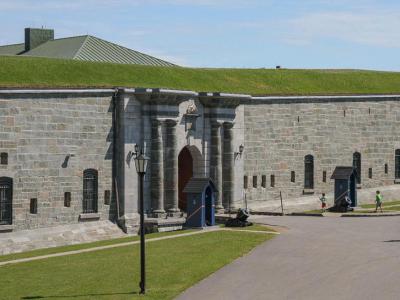
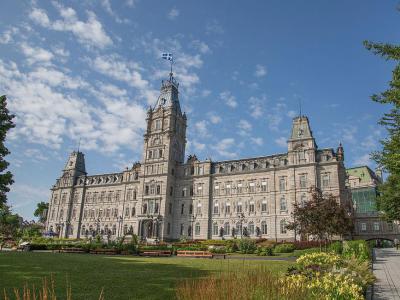
Walking Tours in Quebec City, Quebec

Create Your Own Walk in Quebec City
Creating your own self-guided walk in Quebec City is easy and fun. Choose the city attractions that you want to see and a walk route map will be created just for you. You can even set your hotel as the start point of the walk.
Historical Houses Walking Tour
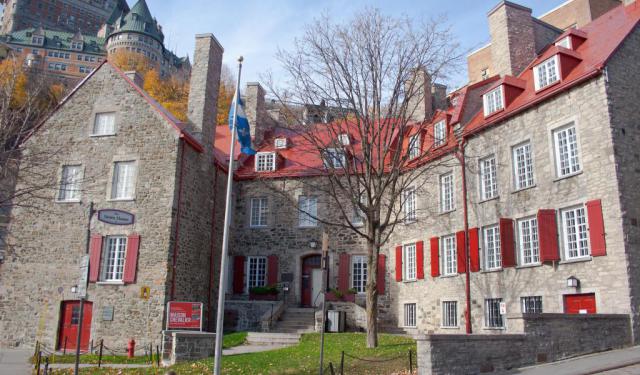
Quebec City, particularly evocative of Europe in its atmosphere, is often referred to as the cradle of New France. The city boasts one of the richest architectural heritages in North America, though most of its buildings had to be adapted to harsh winters and the lack of specialized workers and materials in the colony. As such, the majority of local houses were designed as simple and efficient... view more
Tour Duration: 2 Hours
Travel Distance: 2.5 Km or 1.6 Miles
Tour Duration: 2 Hours
Travel Distance: 2.5 Km or 1.6 Miles
Old Quebec Walk
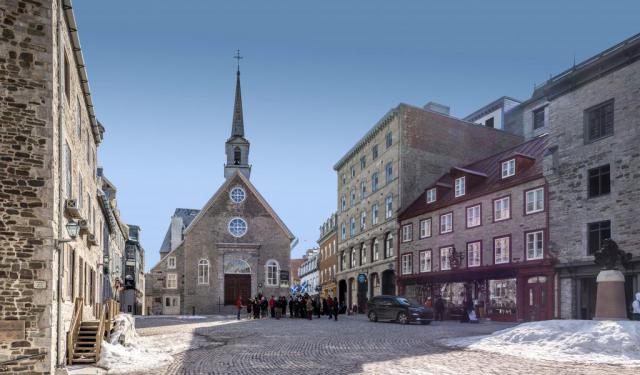
The historic part of Quebec City known as Old Quebec (French: Vieux-Québec), sometimes also referred to as the Latin Quarter (Quartier Latin), is the neighborhood centered around Cape Diamond (Cap Diamant), located on the eastern edge of Quebec hill promontory. The area comprises Upper Town (Haute-Ville) and Lower Town (Basse-Ville) and is currently listed among UNESCO’s World Heritage Sites.
... view more
Tour Duration: 2 Hours
Travel Distance: 2.6 Km or 1.6 Miles
... view more
Tour Duration: 2 Hours
Travel Distance: 2.6 Km or 1.6 Miles
Qucbec City's Historical Churches Walking Tour
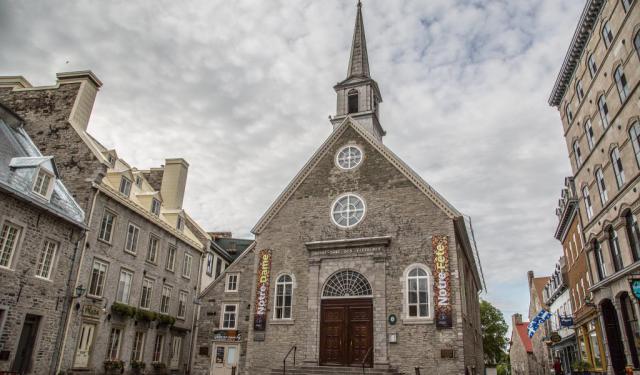
The first religious buildings in Canada were established by the Récollets and Jesuits, in 1615 and 1625, respectively, when they first arrived in New France. Later on, the French colonists brought along their culture and architectural traditions, and the establishment of British and evangelical society triggered further major developments in Quebec City.
Over the course of the 17th and 18th... view more
Tour Duration: 1 Hour
Travel Distance: 2.9 Km or 1.8 Miles
Over the course of the 17th and 18th... view more
Tour Duration: 1 Hour
Travel Distance: 2.9 Km or 1.8 Miles
The Most Popular Cities
/ view all